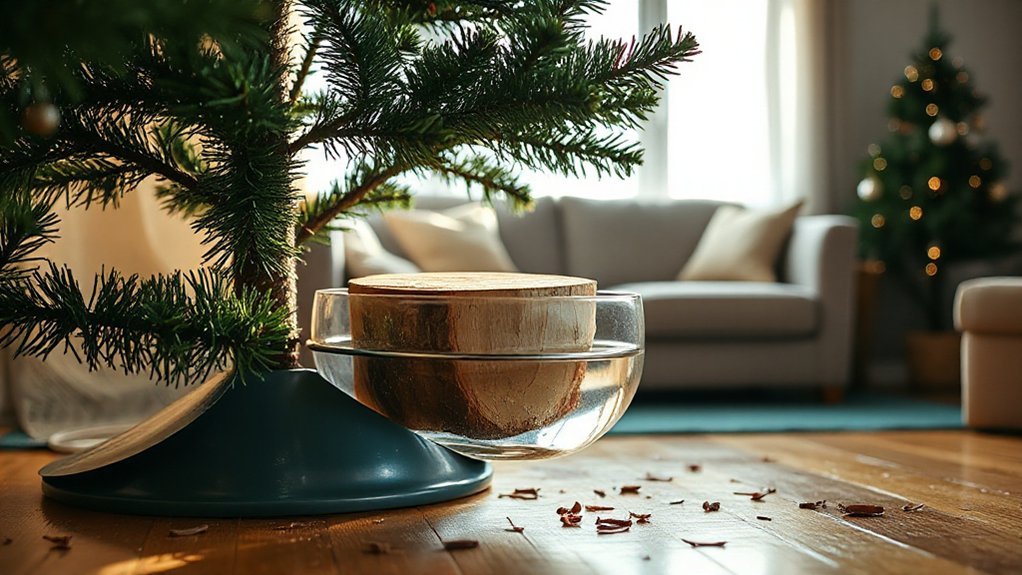
You want a tree that smells like pine and not like a pile of needles, right? Start by picking one with flexible branches and a trunk that’s sticky with sap, saw off a sliver at the base, and set it straight into plenty of water—then check that water every day. Keep it cool, away from vents and sunny windows, mist the needles sometimes, and don’t overload it with hot lights. I’ll tell you the tricks that actually work next.
Key Takeaways
- Choose a fresh tree: look for flexible, green needles and a moist, sap-covered stump when buying.
- Make a clean straight cut of 1–2 inches off the trunk before setting in water.
- Place the tree away from heat sources and direct sunlight, keeping room temperature 60–68°F.
- Keep the stand filled with room-temperature water, checking and topping off daily so it never drops below the cut.
- Change water every other day, optionally adding a teaspoon of sugar or tree-preservative mix to boost hydration.
Choosing the Freshest Tree at the Lot

If you want a tree that’ll still look like Christmas on New Year’s Eve, start by sniffing it like you mean it—seriously, lean in and take a big, piney breath; that fresh, resinous scent is the first autograph of a healthy tree. I tell you this like a coach with a nose. Walk the lot, squint, posture like you own the place, and consider tree variety—fir holds scent, spruce drops faster, pine looks classic. Ask the seller where they cut it, watch for fresh sap at the base, and check the stump; you’ll learn more than you expect. Trust your nose, trust your gut, and don’t be shy about bargaining—this is holiday crime scene investigation, with better lighting.
Inspecting Needles and Branch Flexibility
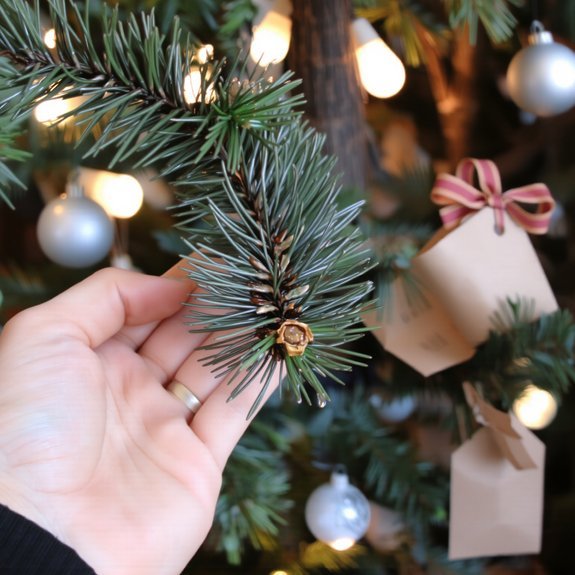
Grab a low branch and give it a firm squeeze—don’t be shy, the tree won’t mind. I watch how needles stay put, not raining down like confetti from a sad parade. You’ll check needle health by rubbing a few between thumb and finger; green, flexible, slightly sticky means happy tree. If needles break off or crumble, move on — no sad wreath can fix that. Next, bend a few branches gently, feel the branch strength, listen for snaps, sense resilience. Strong branches hold ornaments without sagging, weak ones turn your décor into a floor display. I joke about my ornament disasters, but you’ll thank me later. Take your time, use all senses, trust your hands — trees don’t lie.
Making the Proper Fresh Cut
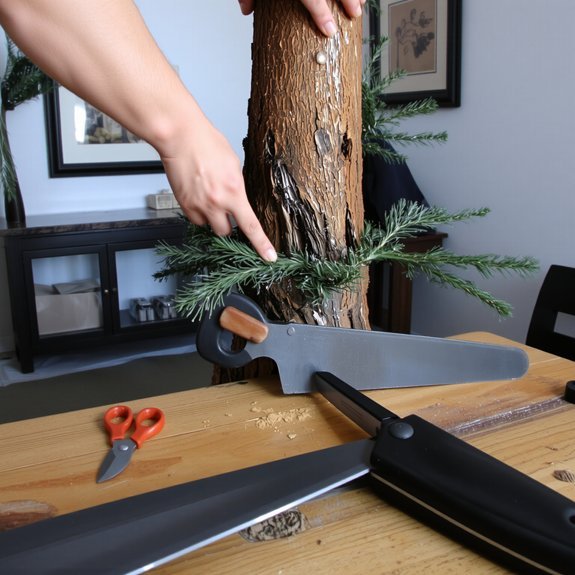
Okay, let’s get to work: measure an inch or two off the trunk so the tree can drink, mark the spot with your thumb, and don’t be shy—this is carpentry, not surgery. Cut straight across with a sharp saw, remove any old wounds or dried, discolored wood so sap can flow, and you’ll hear that fresh, piney scent hit you like a holiday high-five. Trust me, a clean, even cut is boring but brilliant—do it right and the tree will thank you by staying green longer.
Measure and Trim Base
One quick cut is all it takes to make or break your tree’s stay-fresh streak, so I’ll show you how to do it like you mean it. First, measure tree height against your ceiling and stand—don’t guess, unless you enjoy awkward gaps. Mark the trunk where the stand grips, imagine the water line, then plan your cut. Lay the tree flat, feel the sap, smell the green—there’s your reward. Use a saw, steady your hands, cut straight across a half-inch to an inch to expose fresh wood. Trim base, toss shavings, set trunk immediately into water. Don’t fiddle, don’t delay; that first clean face drinks like a champ, and you’ll brag about it later.
Remove Old Wounds
Don’t let ancient cuts sip all the water while your fresh face goes thirsty — you’ve got to remove old wounds before the tree ever meets the stand. I tell you straight: grab a sharp saw, set the trunk on a flat surface, and trim off about half an inch to an inch, until you see bright, moist wood. You’ll smell resin, like pine gum and campfire, that means it’s fresh. While you’re at it, consider removing branches that block the stand or weigh down the lower skirt; don’t be sentimental, you can always save them for wreaths. Treating wounds properly means clean cuts, no tearing, and immediate placement in water. Do this, and your tree will drink like a champ.
Immediate and Ongoing Watering Practices
If you want that tree to look—and smell—alive through New Year’s, you’ve got to water it like it’s a very thirsty houseguest. Start with immediate watering the minute the trunk hits the stand, pour slowly until the reservoir’s full, watch sap bead like tiny trophies. I check the water twice that first day, because I’m paranoid and honest about it. After that, ongoing maintenance means topping off daily, never letting the level drop below the cut. Use room-temperature water, listen for the soft gulp as the tree drinks, feel the needles, they’ll be pliant not crunchy. Keep a pitcher nearby, set a phone reminder if you forget—yes, I’ve forgotten—and enjoy the piney perfume that rewards the effort.
Ideal Placement and Room Conditions
While you’re admiring the lights, don’t park your tree next to a radiator like it’s a decorative hostage; I keep mine at least three feet from heat sources, because dry air and warm metal will turn a festive fir into a sad, crunchy stick faster than you can say “re-gift.” I put the stand on a drip tray, angle the tree away from direct sun, and close any nearby vents so the room stays cool and humidish—around 60–68°F feels right—because the needles drink more than you’d think and they hate dry blast-furnace air. Pick a steady tree location, away from doors that slam and drafty windows. Low, indirect light keeps color without baking needles. Humidity matters, so run a humidifier or set water-filled trays nearby, you’ll thank me when the needles stay perky and you don’t end up sweeping the living room every morning.
Preventing Needle Drop and Pest Issues
Because needle drop and uninvited insects are the two little betrayals that ruin a perfect tree, I tackle them like a single annoying mystery: inspect, hydrate, and seal the perimeter. You scan branches, sniff resin, look for sticky sap or tiny webs, and yes, I make a dramatic eyebrow raise at any crawling thing. For needle care, trim a half-inch off the trunk, keep the stand full, mist needles lightly, and sweep up loose bits daily — your socks will thank you. For pest prevention, blast the perimeter with a vacuum, seal nearby firewood, and avoid bringing infested greens inside. If you find bugs, isolate the tree, hose off and dry in sun, then reassess. You’re not helpless; you’re vigilant, slightly smug, and winning.
Safe Lighting and Ornament Strategies
I’ll tell you straight: pick cool LED lights, they stay dim and gentle, not hot enough to parch needles or singe your fingers when you’re untangling them at midnight. Hang lightweight ornaments, please—think paper, wood, or thin glass—so branches won’t sag or snap under holiday guilt. Together they keep the tree looking alive longer, and save you from a late-night tree rescue I’ve sadly performed more than once.
Choose Cool LED Lights
Pick LED lights—your tree, and your socks, will thank you. I tell you this because LEDs stay cool, they barely hum, and they won’t draw heat that dries needles. You’ll string them up easy, feel the faint plastic warmth, not the oven-blast of old bulbs. They offer energy efficiency, so your meter smiles, and you won’t cringe at holiday bills. Pick a color palette that actually looks good, too; LEDs give tons of color options, bright whites, soft ambers, playful blues — mix or match, I won’t judge. I plug them in, step back, adjust a strand, and the tree perks up like it just had coffee. Trust me, cool lights prolong freshness, and they make your living room feel like magic, not a sauna.
Hang Lightweight Ornaments
1 simple rule: less weight, less worry. You’ll thank me later. Pick ornaments that respect ornament weight limits, light enough to rest on fragile tips without sagging them into the carpet. I like paper stars, thin glass baubles, and tiny wooden toys—things you can hang with a soft tug and no drama.
Check tree balance by stepping back, squinting, and nudging branches gently; redistribute clusters if one side leans like it had too much eggnog. Clip hooks close to the branch, hang heavier pieces near the trunk where it’s sturdier, but honestly, keep those rare, heavy heirlooms off the tree unless you’ve bribed your cat to behave.
Less clutter, more air, longer-lasting needles. Simple, right?
Tips for Maintaining Scent and Disposal
If you want that piney, walk-in-a-Christmas-card smell to stick around, you’ve got to both feed and fend the tree—yes, trees need attention and you’re the designated caretaker. Keep the stand full, change the water every other day, and tuck a teaspoon of sugar or tree-preserving mix in there for scent preservation; it’s like coffee for conifers. Mist the needles lightly, don’t soak them, you want aroma, not a swamp. Vacuum dropped needles before they crush the scent, and open a window now and then to refresh indoor air. When its time to go, be kind: choose eco friendly disposal, chip branches for mulch, or recycle via city pickup. I’ll help load the truck, if you lift.
Conclusion
You’ve got this. Trim the trunk, plunge it in water, and check the bowl every day — like feeding a needy houseplant that also wants to glitter. I once left a tree thirsty for two days; it went from proud spruce to sad broomstick faster than my aunt’s eggnog runs out, and that was the wake-up call. Keep it cool, away from heat, mist the needles, and enjoy the scent — simple, smart, and merry.
Leave a Reply