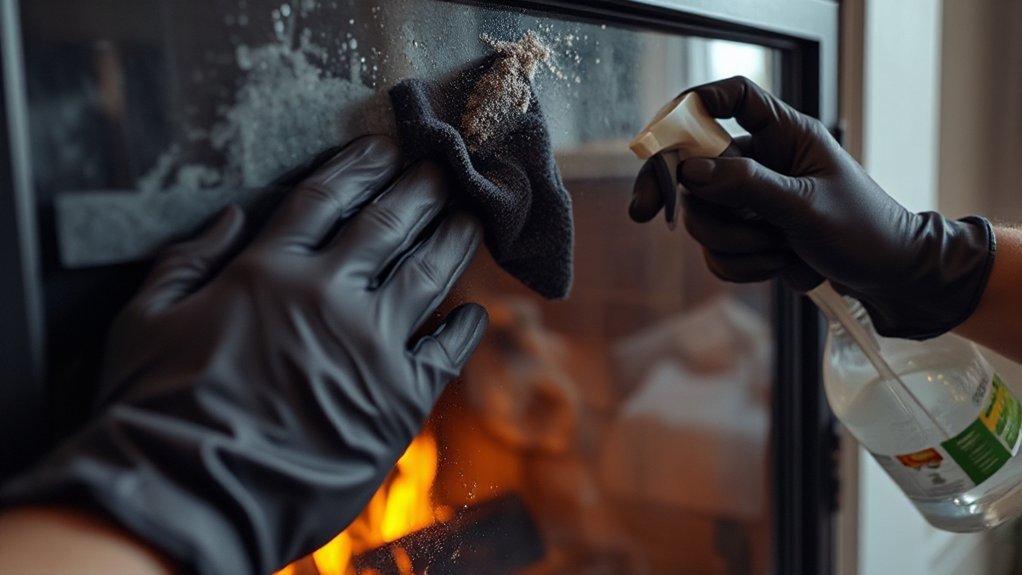
Most folks don’t know that soot actually bonds to glass like cheap glue, so you can’t just wipe and hope. You’ll want to wait until the glass is cold, pull on gloves, and clear away loose ash with a vacuum or brush—trust me, your shirt will thank you—then I’ll show you a simple mix and a few scrubbing tricks that make the glass sparkle again, and yes, we’ll tackle the stubborn black streaks too, but first you need to check the seals and cracks.
Key Takeaways
- Ensure the fire and embers are completely cold before starting and, for gas units, turn off the gas and pilot.
- Remove loose ash and soot with a soft brush or vacuum before applying any cleaner.
- Clean with a damp microfiber cloth and warm soapy water for lightsoiling; dry immediately to avoid streaks.
- For stubborn stains, apply a baking soda paste or commercial fireplace-glass cleaner, let sit 5–10 minutes, then gently scrub.
- Inspect seals and glass for cracks, wipe monthly, and establish a regular cleaning schedule to prevent heavy buildup.
When and How Often to Clean Fireplace Glass
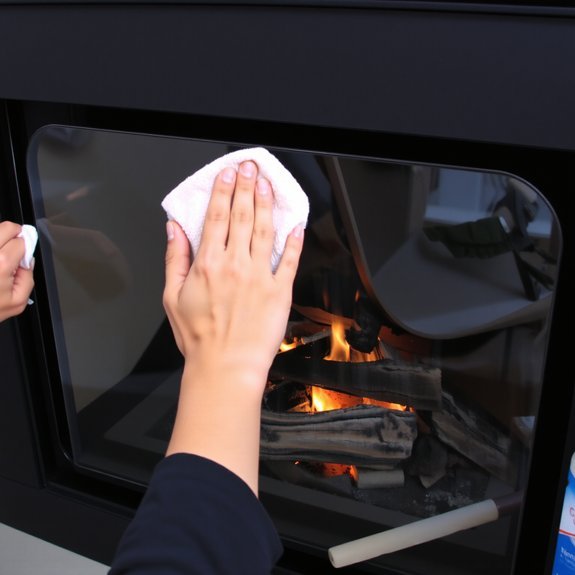
Once or twice a season is a good rule of thumb, but I’ll admit I’m the guy who checks the glass every time I walk past the fireplace—because I can’t stand that ashy haze stealing the view. You’ll want to set a cleaning frequency that fits your use: heavy burners mean monthly checks, occasional fires mean seasonal maintenance. After a long burn, wait until the glass cools, then peek—if you see streaks or a fog, it’s time. Don’t wait for a layer that scrapes like sandpaper; deal with light sooting while it’s easy. Make it part of your routine, like swapping filters, and you’ll enjoy crystal flames, not a gray curtain. You’ll thank yourself, and so will guests.
Tools and Supplies You’ll Need
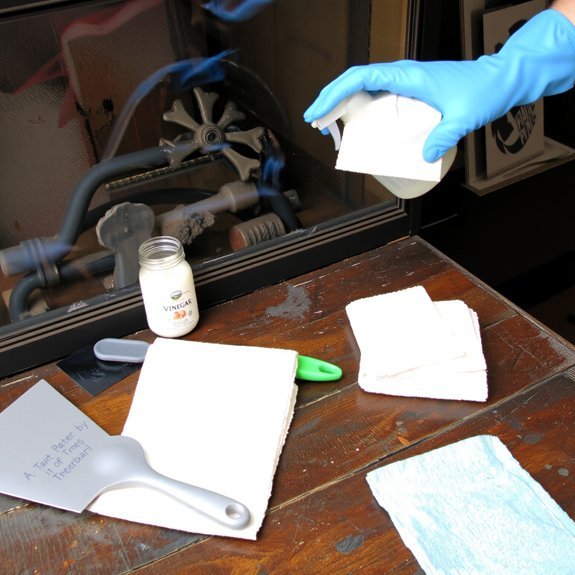
Before you plunge in, you’ll want to lay out a small toolkit so cleaning goes fast and doesn’t turn into a “where did I leave the rag?” scavenger hunt. I like to spread everything on a towel, so you see it, grab it, and don’t eat the stray soot (kidding, but seriously). Essential tools include a microfiber cloth, non-abrasive scrub pad, razor scraper for stubborn spots, a spray bottle, and rubber gloves. For cleaning solutions, pick a commercial fireplace glass cleaner or make a paste with baking soda and water — both smell tolerable, both work. Add paper towels for quick blotting, a bucket for rinse water, and a soft brush to whisk away loose ash. You’re set, ready, and mildly smug.
Preparing the Fireplace Safely
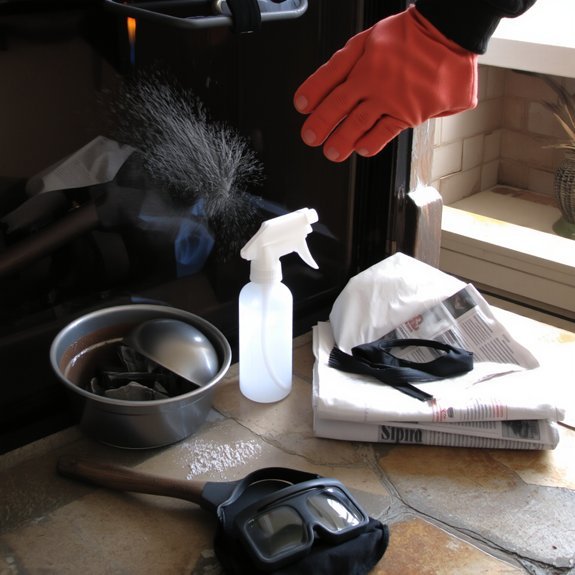
Okay, first things first: make sure the fire is completely out and the coals have stopped glowing, you don’t want surprise heat or smoke while you work. Wait until the glass is totally cool to the touch, I mean cold enough that even your impatient fingers would quit — no quick peeks or hand-tests. If you have a gas fireplace, turn off the gas supply and double-check the pilot, because nobody wants you playing hero with fumes.
Ensure the Fire Is Out
If you can still hear the faint snap and hiss of embers, don’t fool yourself — that fire isn’t done, and neither are the risks; I always wait until the whole bed is cold to the touch, because trust me, a glowing coal will ghost through your plans faster than you can say “oops.” I squat down, palms hovering over the grate to feel for heat, peeking for any hidden orange pinpricks and poking gently with a metal tool to be sure nothing’s smoldering; if there’s even a whisper of warmth, I feed it more time and set a timer so I don’t get complacent. You’ll want this ritual, because fire safety matters, and different glass types react to heat differently; respect both. Check ash depth, sniff for stale smoke, and don’t rush — it’s worth the wait.
Cool Glass Completely
Since glass holds heat like a stubborn cat, you’ve got to let it cool fully before you even think about touching a rag to it — I wait until the surface’s chill makes my fingertips tingle, not just until the room “feels” cooler. Don’t rush this; cooling techniques matter. I open the damper or vents to speed air flow, stand back, and watch the glass lose its dull glow. You’ll feel warmth fade under your palm before the whole pane is safe. Keep pets and kids out, and don’t wipe hot soot — it’ll smear. For glass protection, lay down a soft towel on the hearth to catch drips, and wear gloves so oils don’t betray you. Patience now saves cracked glass later, trust me.
Turn off Gas Supply
All right, the glass is finally cool under your palm — victory dance later — now we’ve got to quiet the gas. You walk to the valve, feel the cool metal, and say aloud, “No more drama.” Locate the gas shutoff, usually near the fireplace or at the wall, and turn it perpendicular to the pipe; that small click is sweet relief. Take safety precautions: double-check the pilot is out, sniff for leaks, and keep a phone handy. If anything smells off, don’t play hero — call a pro. I’ll wait while you tighten the last screw, because I’ve learned the hard way that skipping this step leads to regret and locksmith bills I don’t need. Good. We’re safe.
Step-by-Step Cleaning Method for Wood-Burning Glass
Before we get your glass sparkling, put on gloves and goggles — I’m not saying you’ll start a chemistry experiment, but better safe than smoky. You’ll scrape and wipe away soot like a pro, feeling the gritty residue lift under a damp cloth and a bit of elbow grease. Follow my simple steps and you’ll be looking through clear glass and grinning, not squinting at a fogged-up mess.
Safety First Always
When I say safety first, I mean it—so don your gloves and step back like you’re about to meet a slightly grumpy bear; the glass is still hot, the ashes are dusty, and you don’t want a surprise smudge or worse, a burned finger, reminding you of a bad life choice. I’ll walk you through basics: check the damper, let embers cool, and clear loose ash with a soft brush. Fire safety isn’t a suggestion, it’s policy. Wear eye protection, heat-resistant gloves, and a dust mask—protective gear that makes you look serious, not paranoid. Keep kids and pets out, open a window for ventilation, and have a metal ash bucket nearby. Pause, assess, then proceed; haste breeds regrets.
Remove Soot Effectively
Since soot’s a clingy little villain, you’re going to tackle it like a crime scene investigator—only without the dramatic trench coat. I’ll talk you through soot removal step by step. First, let the glass cool, then vacuum loose ash with a soft brush—hear the whisper of dry grit leaving. Dampen a microfiber with warm water and a drop of dish soap, wipe in circles, watch the gray smear loosen. For stubborn patches, sprinkle baking soda, spritz vinegar, scrub gently with a damp pad, rinse, repeat. Wipe dry with a clean cloth to avoid streaks. Those cleaning techniques cut grime without scratching. You’ll end with clear glass, a satisfied grin, and fewer smoke ghosts to haunt your evenings.
Cleaning Gas and Pellet Fireplace Glass
Gas and pellet fireplace glass gets a grimy look faster than you’d think, and if you’re like me, that cloudy film makes the whole hearth feel sad and neglected. You’ll want to cool the unit, shut off gas or empty the pellet hopper, and remove the glass panel—carefully, gloves on—so you don’t chip it or your dignity. Use a soft cloth, warm soapy water, and a non-abrasive cleaner made for glass; for a gas fireplace, avoid ammonia fumes near pilot lights. Wipe in circular motions, rinse, then dry with a microfiber to dodge streaks. Reinstall gently, check seals, and light it up. Honestly, it feels like magic when that sparkle comes back.
Removing Stubborn Stains and Creosote
If you’ve done the basic cleaning and the glass still looks like someone sneezed soot on it, don’t panic — you’re up against stubborn stains and creosote, and they’re beatable. I’ll walk you through it. First, wear gloves, open windows, and feel the grit under your nails — satisfying, gross. Spray a dedicated fireplace glass cleaner, or make a paste with vinegar and baking soda, smear it on the worst spots. Let it sit five to ten minutes, breathe, sip coffee. Scrub with a nylon pad or razor for really tough creosote buildup, hold the blade flat, don’t gouge. Wipe clean with microfiber, buff till it gleams. Repeat only where needed, inspect for cracks, and admire your reflection — you earned it.
Preventive Care and Maintenance Tips
You’ll save time, money, and a surprising amount of elbow grease if you treat fireplace glass like a pet—feed it respect, don’t ignore the mess, and it’ll behave. I tell you this like a friend who’s scrubbed glass at midnight. Set simple preventive measures: burn well-seasoned wood, keep air vents open, and clear ash after each use. I walk through a quick maintenance routine every month — wipe cool glass with a damp microfiber, check seals, vacuum soot from crevices. If you smell smoke, I don’t ignore it; I inspect gaskets and flues. Little rituals save big headaches. You’ll notice clearer views, less scrubbing, and a warmer room. Trust me, it’s less heroic cleaning, more regular care.
Conclusion
You’ve got a clear plan now, and that warm, soot-free glass will let the flames glare like a campfire in a mason jar. Trust me, you’ll feel smug wiping soot away, the cloth leaving a streak-free shine while the room smells faintly of ash and lemon. Do this regularly, check for cracks, and you’ll keep the fire cozy and safe. Now go light one—carefully—and enjoy the view.
Leave a Reply