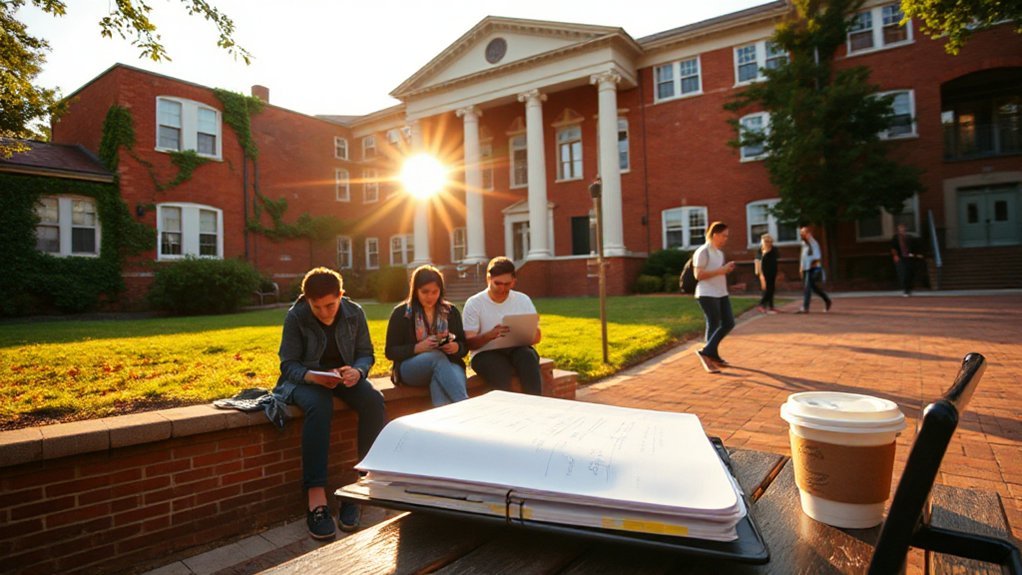
You might think planning housing is just paperwork and luck, but you can actually tame it without losing sleep. I’ll talk you through picking dorms or off-campus spots, budgeting for rent, utilities, and that omnipresent pizza fund, and snagging campus resources so you don’t overpay—picture yourself hauling a twin XL mattress from a thrift run, keys jangling, victory-smelling coffee in hand—so stick around while I show the exact steps that make this painless.
Key Takeaways
- Compare on-campus options (dorms, suites, apartments) and associated meal plans to pick the best cost/amenity balance.
- Create a monthly housing budget listing rent, meal plan, utilities, insurance, laundry, and a one-month rent emergency cushion.
- Read lease and housing contracts carefully for deposits, refunds, early-termination penalties, and utility responsibility.
- Use campus resources—financial aid, emergency housing assistance, student employment, and housing referrals—to reduce costs.
- Save on furnishings and utilities by buying used, sharing items with roommates, and splitting bills via a joint app or account.
Understand the Different Types of Student Housing Available

Because housing can make or break your freshman year, I want you to know exactly what you’re walking into. You’ll see traditional dorms first: narrow halls, community bathrooms, and the comforting hum of late-night study sessions — think posters, instant ramen steam, roommate negotiations. Suite-style units give you a private bathroom and a tiny living room, so you can actually host people without tripping over backpacks. Apartments? You’ll have a kitchenette, real dishes, and the freedom to burn popcorn once. Honors housing often comes with quieter floors and a curfew that’s more suggestion than law. Off-campus rentals feel grown-up, with keys that jingle and laundry that costs actual quarters. Walk each space, sniff the carpet, listen for noise, picture your life there.
Estimate Your Total Housing Budget for the Academic Year
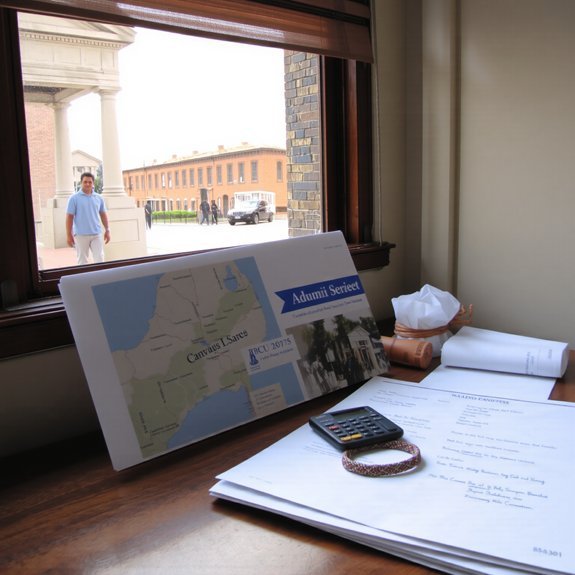
Think of your housing budget like a playlist you can’t skip—get it right and the year flows, mess it up and you’ll be stuck on repeat. Start by listing fixed beats: rent or dorm fees, meal plans if separate, mandatory insurance, and campus parking. Add variable tracks: utilities, laundry quarters, toiletries, and that emergency pizza at 2 a.m. Count moving costs, storage, and travel home for breaks. Multiply per-semester charges by two, or use your school’s calendar if weird. Build a cushion, I keep one equal to a month’s rent — call it your safety solo. Total it, divide by months, and set up automatic transfers. You’ll sleep better, promise — even if I still hog the aux.
Compare On-Campus Room and Board Options

Now that you’ve mapped out the dollars and emergency pizza fund, let’s stare down the actual places you’ll live and eat. You’ll walk into dorms that smell like detergent and late-night coffee, tours in hand, comparing singles, doubles, suites. Listen for thin walls, test the mattress bounce, open closet doors — tiny victories matter. Check meal plans: unlimited swipe, block meals, declining balance; picture cafeteria lines, the stew that somehow tastes like home, the grill that saves your life. Ask about guests, quiet hours, AC, and laundry costs — those surprise fees sting. Talk to RAs, peek at bulletin boards, read the housing contract slowly, yes, out loud. Pick the combo that fits your budget, sleep needs, and snack habits.
Finding Affordable Off-Campus Apartments and Roommates
Where do you even start when the dorms feel like a cozy trap and you’re ready to fly the coop? You hop online, squint at listings, sniff for scams, and call landlords like you’re auditioning for a reality show. Look near campus first, then widen out — safer streets, cheaper buses, maybe a killer taco spot. Split rent with roommates who actually clean, not ghosts; meet them in person, ask about sleep schedules, guests, and dish duty. Tour at daylight, open cabinets, run faucets, listen for creaks. Budget for deposits, utilities, and that emergency pizza fund. Sign a lease only after you read it, annotate weird clauses, and take photos on move-in day. You’ll be proud, tired, and mostly ready.
How to Use Campus Resources to Lower Housing Costs
If your wallet’s whispering “help” every rent day, campus resources can be the duct tape that holds your budget together — and yeah, I’ve used them. Walk the student services office, feel the cool linoleum under your shoes, ask for housing referrals, and don’t flinch when they hand you a list. Hit the student employment board, apply for gigs, and imagine pocket money padding your rent. Pop into the counseling center for emergency assistance info, speak plainly, they’ll point you to short-term aid. Use the campus thrift closet, grab a lamp that smells faintly of library dust, and save on furnishing. Join student groups that barter skills, tutor for housing credit, trade meals for chores. Talk to your RA, negotiate, be human.
Financial Aid, Scholarships, and Grants for Housing Expenses
You did the walk-and-talk with student services, snagged a thrift-club lamp that smells faintly of library dust, and maybe even bartered your way into a meal plan — now let’s talk money that doesn’t require folding your dignity into a job application. I’ll tell you where to look: FAFSA first, always, then campus housing waivers, emergency grants, and need-based awards that cover room charges. Hunt departmental scholarships — some are earmarked for students from your neighborhood or major. Apply early, tailor each essay, and name-check the housing line item so reviewers know you’re serious. Ask the financial aid office to review offers, negotiate work-study swaps, and set reminders for renewal deadlines. Small grants stack, so collect them like souvenirs.
Short-Term Housing Solutions and Moving Timeline Tips
Think of me as your overprepared roommate: I’ll walk you through quick on-campus options like summer pods and overflow dorms, then help scout short-term off-campus rentals—furnished, month-to-month, and preferably with a coffee shop downstairs. Start packing two–four weeks before move-in, make a timeline checklist (tour, lease, keys, emergency cash), and don’t forget a “first-night” bag with PJs and chargers. You’ll thank me when you’re sipping instant coffee in a bed that’s actually yours, instead of staring at boxes at midnight.
Temporary On-Campus Options
Because moving week can feel like a sprint through a crowded cafeteria, I’m going to walk you through the short-term on-campus options that’ll keep you sane for those first messy days. You can grab a welcome-week dorm spot, crash in temporary housing, or book a guest room in the residence hall office, each option smelling faintly of detergent and instant coffee — comforting, if you’re jittery. Pack a small kit: sheets, towel, power strip, earplugs. Check move-in windows, they’re sacred, and RSVP online so you don’t end up on a waiting list, bleary-eyed. Talk to housing staff, they’re helpful and human. Swap numbers with a neighbor, share a cart, make a quick plan to move into your permanent digs within a week.
Short-Term Off-Campus Rentals
How long can you crash off-campus without turning your life into a suitcase graveyard? You’ll want stakes, not chaos. Short-term rentals keep you flexible, let you test neighborhoods, and save you from a yearlong mistake. I say pack light, bring a lamp that actually works, and learn where the nearest laundromat smells decent.
- Inspect fast: check locks, outlets, water pressure, and Wi‑Fi speed — if the shower whispers, don’t trust it.
- Negotiate stay length: ask for month-to-month, prorated rent, and a clear move-out policy; get everything texted.
- Furnish smart: bring a foldable bed, basic cookware, and blackout curtains; buy thrifted rugs to tame echoes.
You’ll move smarter, not harder, and sleep better.
Moving Timeline Checklist
1 smart checklist will save you from moving-day chaos, trust me — I’ve learned the hard way with missing keys and a lamp that only sort-of works. Start three weeks out: book a truck, text roommates, label boxes with bold markers, tape a note on fragile stuff. Two weeks out, purge the junk, donate the weird stuff you’ll never use, snap photos of electronics for returns. One week, pack an essentials bag—charger, meds, a towel, snacks that don’t require a microwave. Day before, confirm arrival times, map parking, charge your phone, stash cash. Moving morning, breathe, play a song loud, check closets, lock up. Unpack the bed first, you’ll thank me at 2 a.m.
Understanding Lease Terms, Security Deposits, and Utilities
You’re signing a lease, not a mystery novel, so read the length and clauses like you mean it — fixed terms, break fees, and who fixes the AC all matter. I’ll say it plain: expect deposits and possible extra fees, so check how much they hold, what’s refundable, and what could be docked for scratches or late rent. And don’t forget utilities — ask which ones you’ll pay, picture the thermostat battles and the electric bill shock, then plan accordingly.
Lease Length and Clauses
If you’re signing a lease, read it like you’re decoding a secret map—because those dates, clauses, and dollar signs actually lead somewhere. I’ll say it plain: lease length locks your calendar, so picture move-in day, finals week, and Thanksgiving trips before you sign. Check automatic renewal, subletting rules, and break clauses; they smell like trouble if you don’t sniff them out. I’ve learned this the hard way — cue awkward couch moves at midnight.
- Read the term: note start/end dates, renewal windows, and early-termination penalties, mark them on your phone.
- Spot restrictions: guests, pets, noise curfews, and sublet permissions; they shape daily life.
- Examine clauses: repairs, landlord entry, and dispute steps; know who fixes what, and when.
Deposits, Fees, Utilities
Alright, so you’ve wrestled the lease dates into your calendar and survived the fine-print scavenger hunt — now let’s talk money that actually moves: deposits, fees, and who’s paying the lights. I’ll be blunt: deposits are your refundable IOUs, usually one month’s rent, sometimes more. Take photos when you move in, timestamp everything, and don’t let the landlord ghost you over a scratch. Fees lurk everywhere — application, admin, pet, late — read the list like it’s a menu you can’t afford. Utilities? Ask who covers water, trash, electricity, internet; get average monthly numbers, not hopeful estimates. Split utilities fairly with roommates, set a joint account or app, and budget a cushion. You’ll sleep better knowing you didn’t miss a charge.
Money-Saving Strategies for Furnishings and Household Essentials
One smart move: treat your dorm like a tiny stage and set it up for scenes, not storage. I’ll show you how to save cash, cut clutter, and make your space feel like yours without looking like a yard sale exploded. You’ll shop smart, swap smarter, and laugh when you score a vintage lamp for five dollars.
Treat your dorm like a tiny stage—style scenes, not storage; save cash, cut clutter, and score vintage finds.
- Thrift and upcycle: hit local thrift stores, campus swaps, and online groups; sand, paint, and swap knobs, and you’ve got boutique vibes.
- Buy multi-use gear: a futon, collapsible table, and storage ottoman do triple duty—sit, sleep, store—your wallet nods approvingly.
- Share essentials: split cookware, vacuums, and tools with roommates; fewer buys, more party cred.
Planning for Unexpected Housing Costs and Emergency Funds
Because surprises happen—your A/C dies during a heatwave, a pipe bursts at midnight, or your roommate’s “borrowed” microwave starts a kitchen fire—you’ve got to plan like a pro and stash a little cash for chaos. I tell you, build an emergency fund, even if it’s small at first. Put $20 a week in a locked jar or separate bank account, label it “uh-oh,” and watch it grow. Know your school’s maintenance policies, get vendor quotes, photograph damage, and text your roommate like a grown-up. Ask about campus emergency loans and local nonprofits. Practice quick fixes—turn valves, unplug faulty cords, fan out damp towels—so you don’t panic. If you ever need it, that fund feels like a warm blanket, honestly lifesaving.
Conclusion
You’ve got this. Treat your housing plan like a playlist—pick what fits, ditch what’s noisy, and cue backups for the surprises. I’ll say it straight: budget the rent, food, utilities, deposits, and a small emergency stash, then scout dorms, compare meal plans, and knock on doors for roommates. Use campus aid and thrift scoring, pack a toolkit, and keep receipts. Breathe, adjust, and laugh when plans hit a speed bump.
Leave a Reply