
They say hustle builds character, but does it also build burnout? You feel stretched—study groups at midnight, meetings by day, family calls that tug at your hoodie—so you learn to breathe into the chaos, set a hard stop, and say no without guilt; I’ll show you how to protect your time, find people who get your story, and carve out small rituals that actually recharge you, so stick around and let’s map out a plan that won’t make you collapse by finals.
Key Takeaways
- Recognize burnout signs early: persistent fatigue, loss of interest, irritability, headaches, and feeling overwhelmed by small tasks.
- Set clear boundaries: say “no” when needed, schedule protected study/rest time, and communicate availability to others.
- Prioritize three must-win tasks daily and use 50/10 focus-break blocks to boost productivity without overworking.
- Build a culturally affirming support network with peers, mentors, and campus groups, and use group chats for quick check-ins.
- Access campus counseling, teletherapy, and peer support while practicing regular rest, movement, and micro-rests for recovery.
Recognizing Signs of Burnout Specific to HBCU Life

When you live the HBCU life, you learn a rhythm — tailgate beats, late-night study groups, campus cookout smells — and when that rhythm stumbles, you notice the silence in a different way. You feel tired in a way sleep won’t fix, your favorite marching band track sounds flat, your laugh gets clipped. You skip step team practice, dodge student org meetings, and say “I’m fine” so often it becomes a reflex. You get headaches from too much screen time, your appetite flips, and small tasks balloon into mountains. You snap at friends, then apologize with too much sugar. Notice the smells, the empty quad, the iced coffee you forgot to drink; these little clues tell you something’s off. Listen, don’t shrug.
Setting Boundaries Around Academics, Leadership, and Family
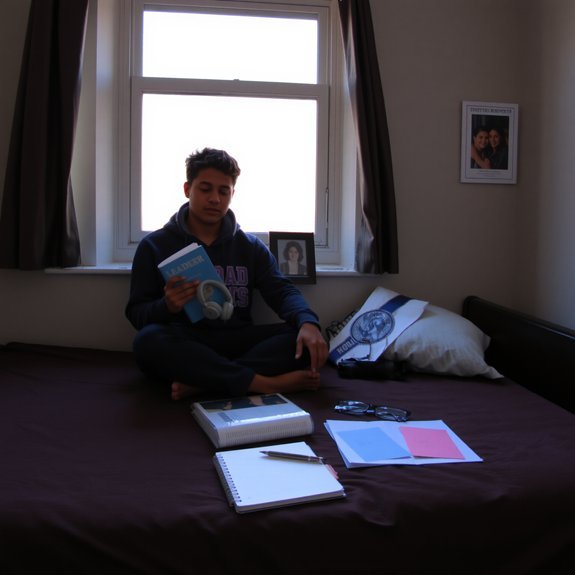
Listen, you don’t have to say yes to every meeting or extra committee slot — I’ll bet your stomach will thank you when you start practicing a firm, polite no. Block out protected study time on your calendar, set an alarm, close the laptop, and treat that slot like a sacred class you won’t bail on. Tell your family what you can realistically handle, give them concrete hours you’re offline, and remind them with a smile that you’re not ignoring them, you’re just surviving.
Say No Without Guilt
Even if you hate letting people down, you can say no without feeling like a villain — I promise. I’ll admit, I used to nod until my jaw ached, signing up for everything like a human RSVP machine. Stop. Start by breathing, feel the air cool your chest, and answer with a pause. “I can’t this time,” you say, not screaming it, just steady. Offer a shorter yes, or suggest someone else, or set a tiny boundary: two hours, not all night. Watch relief bloom, like cold water on hot pavement. Family texts come, club leaders ask, professors pile on; you’ll still be kind, you’ll still show up when it matters, and you’ll keep your energy for you.
Schedule Protected Study Time
Usually, you’ll think you can study anywhere — between rehearsal and a family dinner, sprawled on a couch with your phone buzzing — and then realize you’ve learned absolutely nothing. I’m blunt: protect study time like it’s concert tickets. Pick a spot that smells like focus — desk, library corner, coffee steam — and block it on your calendar. Tell teammates and club leads, “Not then.” Close tabs, silence your phone, set a timer, and actually start.
- Choose fixed windows each week, treat them as nonnegotiable.
- Break sessions into 25–50 minute sprints, with short walks.
- Keep a single notebook, jot key problems, avoid deep research rabbit holes.
- Reward yourself: snack, text, stretch — small wins matter.
Communicate Family Expectations
If you’re tired of dinner-table guilt trips and late-night group-chat lectures, set expectations with your family like you’d set a password: firm, clear, and nonnegotiable. I tell my folks, politely but bluntly, when my study block starts, what nights I’m on campus, and which texts can wait. Say it out loud, with a timer on your phone, so they hear the beep and the boundary. Offer alternatives: “Call me Sunday afternoons,” or “Invite me to family brunch, not midnight edits.” Use “I” lines — I need, I can’t — not blame. Rehearse one-liners for pushback, keep your voice steady, and laugh when Auntie tests you. Protect your time, keep your love, survive the semester.
Building a Culturally Affirming Support Network on Campus

When you’re on a campus that hums with history and basslines, don’t try to patch together support alone — build a crew that gets you, down to the slang and the grandma’s cooking references. You want folks who mirror your wins and name your weird moods, who’ll drag you out when you’re stuck in your room, who’ll bring sweet tea and real talk. I scout spaces, join clubs, and sit in on chapel or open mic nights, listening for people who laugh like I do. Try concrete moves:
- Attend interest meetings, meet leaders, swap numbers.
- Host a small dinner, invite classmates, test vibes.
- Partner with a mentor, schedule monthly check-ins.
- Use group chats for quick, honest check-ins.
Practical Self-Care Practices That Honor Your Identity
Because your self-care should sound like your playlist and taste like your grandma’s Sunday plate, I’m not here to hand you bland, one-size-fits-all advice — I want practical moves that feel like you. Imagine this: you, in a favorite hoodie, lighting a candle that smells like church pews and citrus, texting a friend a dumb joke, then actually laughing. Mix movement with culture — step to your favorite song for five minutes between classes, cook a family recipe and jot stories while it simmers. Say no without guilt, practice micro-rests: close your eyes, sip tea, feel steam on your lip. Create a ritual altar, play old sermons, wear a color that powers you. These tiny rituals add up, they honor you, and they work.
Accessing Counseling and Mental Health Resources at HBCUs
You’ve got options on campus, so don’t wait until you’re wobbling — swing by the counseling center, ask about sliding-scale fees or what your insurance covers, and try a teletherapy session if evenings are rough. I’ll tell you straight: peer groups can be lifesavers — real talk over pizza in a dorm lounge, or a quick text thread when anxiety spikes. Start small, you’ll find the right combo of pros, friends, and online help, and yes, that’s perfectly okay.
Campus Counseling Centers
If campus life feels like someone turned the volume to eleven and never handed you the remote, don’t sit there pretending you’ve got it all together — the counseling center’s there for exactly this. I’ll tell you straight: go in, breathe, sit in a chair that squeaks, and say what’s on your mind. Staff know campus stress, they’ll listen, they’ll map options. You don’t have to dramatize it.
- Call or drop by reception, ask about walk-ins and appointments.
- Expect confidentiality, intake forms, and a counselor who’ll help set goals.
- Try a single session, test the vibe, notice if you feel lighter.
- Use workshops, group therapy, or crisis support when things spike.
You’re not weak, you’re human — reach out.
Insurance and Teletherapy
When your inbox is full of course reminders and your brain feels like a busted Bluetooth, insurance and teletherapy can be the fast lane to help — and I’ll walk you through it without the paperwork panic. Start by checking your student health portal, your parent plan, or state options, and note copays and covered services. Call the number on your card, ask about mental health, and say “teletherapy” out loud — you’ll sound like a grown-up. Set up a quiet corner, test your Wi‑Fi, and pick a provider who gets your vibe. If sessions feel off, switch—don’t suffer. Keep a screenshot of authorizations, calendar alerts, and a comfy hoodie for video days. Small systems, big relief.
Peer Support Networks
Anyone can use a squad that listens — and at an HBCU, that squad is often closer than you think. You’ll spot them in cafeterias, lounges, even late-night library corners, offering tea, eye rolls, and real talk. I nudge you to knock on counseling center doors, but also slide into peer-led groups, where someone’s been where you are, and they don’t judge.
- Join a peer support group — meet weekly, vent, laugh, swap tips.
- Use mentorship programs — upperclassmen guide schedules, advice, sanity checks.
- Try student-run wellness booths — free snacks, breathing exercises, quick chats.
- Tap campus hotlines — text or call when midnight doubts hit.
You’ll feel lighter, more seen, and surprisingly less alone.
Managing Time, Priorities, and Sustainable Goal-Setting
Because your days can flip from calm to chaotic faster than a group text explodes, you’ve got to tame time like it’s a pet you actually want to keep. I tell you this because cluttered calendars make moods drop, meals vanish, and deadlines roar. Pick three must-win tasks each day, write them on a sticky note, stick it where you’ll see it—fridge, laptop, forehead if needed. Block 50 minutes for focus, ten for a walk, five to breathe; repeat. Learn to say no without guilt, practice “not today” like a power move. Set goals you can actually finish, not fantasy trophies. Celebrate the small wins, scan your week every Sunday, adjust, then sleep—your best work lives in rested hours.
Conclusion
You’re juggling late nights and bright campus mornings, burnt-out and brilliant at once. I want you to slow, breathe, and refuse the “do-it-all” badge like it’s last year’s sweatshirt. Set limits, call a friend, move your body, see a counselor. Honor your roots while choosing rest. Small steps beat heroic chaos. You’ll still stumble, I will too — laugh, reset, keep showing up, smarter and softer, until this feels doable.
Leave a Reply