
Funny coincidence: you walk into an HBCU chapel and the sermon echoes a class you took last fall, so you pause, smile, and lean in. I’ll tell you straight — these schools stitch history into daily life, from brass bands that rattle your chest to archives you can actually touch, oral histories that bubble with flavor, and alumni who show up like family. Stick around, I’ll point out the exact places where memory turns into movement.
Key Takeaways
- Centering Black perspectives in curricula and faculty-led research ensures courses, readings, and projects foreground Black thinkers and histories.
- Campus museums, archives, and special collections preserve artifacts, documents, and memories that reflect each HBCU’s institutional soul.
- Oral history projects and community partnerships record, digitize, and share personal narratives that map neighborhood memory and cultural legacy.
- Homecoming, Greek life, and cultural traditions sustain collective identity through rituals, music, food, mentorship, and multigenerational celebration.
- Student activism and community engagement turn protest, service, and public scholarship into living lessons that defend and transmit cultural memory.
Historical Roots and Founding Missions of HBCUs

When you walk onto the graveled paths of an HBCU campus, you can almost hear history tapping its foot—patient, a little sassy, refusing to be ignored—and I love that about these places. You’ll feel brick under your palm, smell magnolia and old books, and I’ll point out signs carved by hands that wanted learning to last. These schools began as beacons after emancipation, founders stubbornly insisting Black minds deserved more than scraps. You’ll see mission statements that read like promises: train teachers, build leaders, protect culture. Don’t expect polish over purpose; expect grit, music at convocation, debate in porches, and meals that taste like home. You’ll leave knowing heritage wasn’t just remembered here, it was built, brick by careful brick.
Curricula That Center Black Perspectives
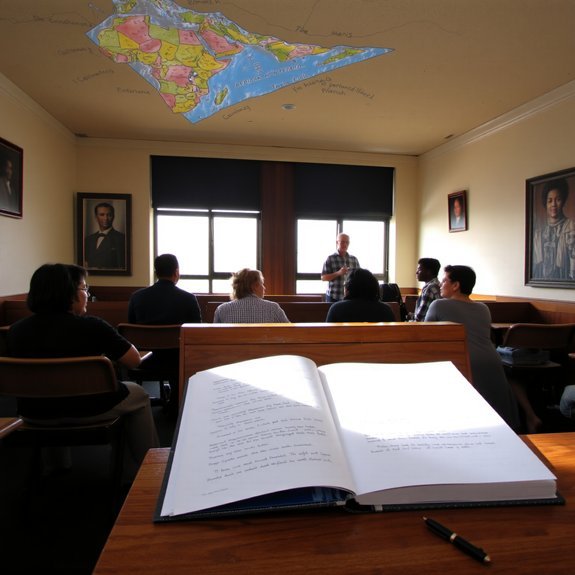
You’re about to rework courses so they put Black thinkers front and center, and yes, that means swapping dusty syllabi for Afrocentric reading lists that actually sing. I’ll show you how Black-centered course design and culturally responsive teaching change the classroom vibe — students smell the coffee, they argue, they grow. Let’s tweak assignments, bring in music, visuals, oral histories, and watch learning get loud, honest, and wise.
Black-Centered Course Design
Because I’ve spent more semesters teaching in cramped classrooms than I care to admit, I’m blunt: Black-centered course design isn’t a fancy add-on, it’s the backbone of honest education. You’ll see it in lesson plans that start with community stories, not dry theory, in assignments that ask you to walk neighborhoods, record kitchen conversations, or map music on a rainy afternoon. I’ll challenge you, you’ll push back, we’ll laugh—then do the hard work. You get assessment that values oral history, creative projects, and civic action, not just multiple-choice guesses. Classrooms smell like coffee and debate, walls hum with archives and student posters. That feel grounds learning, sharpens critical skills, and hands you tools to change systems, not just pass tests.
Afrocentric Reading Lists
If you walk into my office with a syllabus that lists no Black authors, I’ll raise an eyebrow and hand you a stack of books like I’m rescuing a plant from a windowsill — gentle, urgent, and a little dramatic. You’ll leaf through maps of Harlem streets, taste sweet paper and ink, feel chapters pulse with drumbeat cadence. I pick texts that center Black minds: poets who spit truth, historians who untangle power, novelists who fold memory into everyday life. You’ll teach works that speak back to students, not over them. Mix canonical giants with rising voices, primary sources with music and film, assign close reading and bold questions. Expect resistance, then sparks. Watch discussion bloom, loud and honest, like a porch conversation at dusk.
Culturally Responsive Pedagogy
You watched me fling books at you like a rescue mission; now let’s talk about how those books live in the classroom. You walk in, the room smells like chalk and coffee, posters hum with ancestors’ faces. I pull a text, we argue the margins alive, you trace lines with a finger, we map history onto your street. Lessons start with your questions, not chapter titles. We write, role-play, debate, stitch music into essays, bring elders via Zoom, taste recipes after a seminar — learning you can chew. I embarrass myself with a bad joke, you laugh, then teach back. That’s culturally responsive pedagogy: curriculum that sees you, centers your world, and demands your voice, every single day.
Campus Museums, Archives, and Special Collections
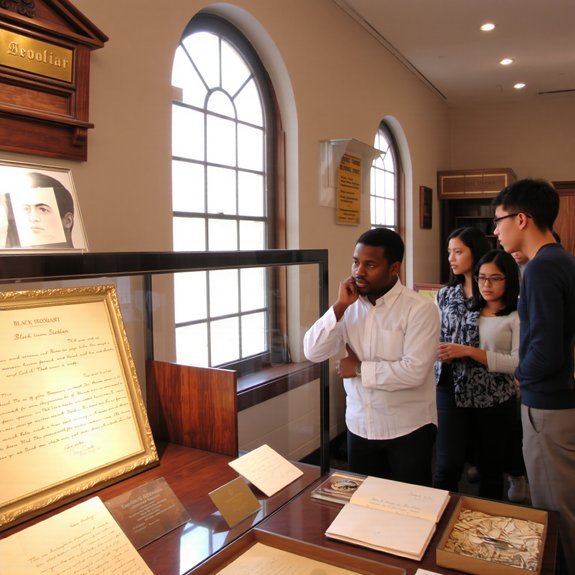
You’ll walk into a campus museum and smell old paper and lemon polish, and you’ll know you’re standing in the history that made the place. I keep a grin ready when I say archives aren’t dusty tombs, they’re living rooms where community members drop off photos, tell stories, and claim space for memory. Let’s talk about how special collections protect institutional memory, and how we can fling the doors wide so everyone can touch, read, and use their own history.
Preserving Institutional Memory
When I walk into a campus museum at an HBCU, I can almost hear the wood floors sigh under decades of footsteps, smell old paper and lemon polish, and feel the quiet hum of stories waiting to pounce—because these places aren’t just rooms with glass cases, they’re living vaults that keep a school’s soul from wandering off. You’ll see worn banners, graduation gowns, letters with shaky ink, and a president’s desk that still creaks when you sit. You learn to touch history gently, catalog it carefully, digitize it dutifully, and tell its quirks loudly. Staff and students stitch memory into exhibits, rescue fading photos, and map alumni lives. It’s careful work, often thankless, but it keeps identity pulse-strong.
Community-focused Archival Access
If I’m honest, I think of campus archives as a neighborhood living room—warm rugs, a crooked lamp, and everyone allowed to pull up a chair—because these collections aren’t meant to be locked behind ivory towers. You wander in, fingers brushing vellum and glossy yearbook pages, you hear low conversation, you sip bad coffee from a chipped mug, and you realize history here smells of lemon oil and printer ink. You can ask to see a photo, touch a program, or trace a letter with cautious reverence; staff guide you like comfy tour guides, not gatekeepers. They host story nights, pop-up exhibits, and school-bus field trips. You leave with a photocopy, a grin, and the clear sense that this history belongs to you, loud and local.
Oral History Projects and Community Memory Work
Because stories live louder when people tell them aloud, I’ve learned to lean into the crackle of a tape recorder and the small, honest pauses that make memory feel real. You’ll join me in quiet rooms, between church basements and dusty campus halls, pressing record, offering water, laughing at a shared joke, then waiting while a tale finds its breath. You’ll ask the right questions, sometimes clumsy, sometimes brilliant, and watch elders’ faces light, fingers sketching gestures you can almost hear. You’ll catalog tapes, transcribe slang, note the scent of coffee and mothballs, tag names, dates, songs. These projects turn loose memories into community maps, they hand you a voice to carry forward, and yes, they’ll make you cry — in public, proudly.
Homecoming, Greek Life, and Cultural Traditions
You walk onto campus during homecoming and the air hits you—smoke from the grill, brass bands, laughter—it’s a reunion that tastes like sweet tea and old stories. I’ll point out how Greek chapters show up with legacies and service, marching in step, handing out help and history, because those ties do more than socialize, they steward. Between step shows, parades, and whispered rites, traditions shape the campus you love, they mark who belongs, and they keep memory loud and alive.
Homecoming as Cultural Reunion
When I think of HBCU homecoming, my chest still tightens like I’ve swallowed a brass band—loud trumpets, stomping feet, the sweet snap of dollar bills in alumni hands. You walk campus and smell barbecue, perfume, and old books, you hear laughter ricochet off brick, and you nod at faces that anchor your past. Folks parade in satin jackets, moms hug like they’re sealing time, kids chase confetti. You join tailgate chatter, trade jokes, and feel histories folding into one shared afternoon. The band hits a riff you know in your bones, you clap, you cry a little, because this is reunion and repair. It’s culture performed, reaffirmed, passed on—joy as resistance, plain and proud.
Greek Life: Legacy & Service
After the band winds down and the last confetti flutters off the quad, Greek letters start to stake their claim—satin stoles, hand signs, and step lines that could snap your neck if you’re not watching. You feel the bass in your chest, see colors braid through the crowd, hear a sister call your name like she’s both proud and plotting mischief. I’ll bet you grin, because you know these chapters teach history through ritual, mentorship, and community service, not just parties. They run blood drives, tutor kids, organize voter drives, keep elders’ stories alive. You watch choreography, you clap, you hand over your time, and suddenly maintenance of culture feels active, joyful, demanding. It’s legacy you can touch, smell, and dance into.
Traditions Shaping Campus Identity
If a campus had a heartbeat, you’d hear it in stomp lines and brass riffs, in the slap of palm on palm and the rustle of alumni satin, and yes, I’m the one grinning like I’ve got the secret handshake. You step into Homecoming, smell barbecue and fresh-cut grass, feel the stands shake when the band drops a cadence. You join a line, you learn a step, you laugh when you miss it—welcome to ritual as rehearsal for belonging. Greek life cycles in, in letters and service, in toga-like robes of pride, in late-night letters and lifelong pledges. Cultural nights light up auditoriums, drums roll under stars, storytellers pass history by voice. These traditions teach you who you are, and who you’ll be.
Student Activism and Social Justice Leadership
Because I’ve seen students turn a dorm hallway into a strategy room, I can tell you HBCU activism isn’t a tidy textbook chapter — it’s loud, messy, and gloriously relentless. You watch organizers chalk sidewalk demands at dawn, taste adrenaline in the coffee, hear chants ricochet off brick. You join town hall debates where voices crack, then firm up, because someone’s hurt, someone’s proud. You learn to march in single file, then spill onto lawns, handing out flyers with a grin and a bandaged thumb. Leadership here is practical, inventive, passed down in late-night pep talks and busted pizza slices. You step up, stumble, and get better. The work roots memory into campus life, turns protest into curriculum, and trains you to keep arguing for justice.
Arts, Music, and Performance as Cultural Preservation
When I step into an HBCU rehearsal room, it hits you like a brass bell — warm breath, sticky floor, the faint smell of hairspray and fried plantains — and you know this isn’t just practice. You watch choreography stitch history into muscle, hear spirituals arc into jazz, and feel storytelling live in harmonies. You learn footwork that remembers elders, lyrics that name ancestors, beats that call you to stand taller. It’s education, it’s worship, it’s a laugh and a lesson. You’ll clap, you’ll cry, you’ll join the call-and-response even if you think you can’t sing. Trust me, you can.
- Gospel choirs turning resilience into sound
- Step teams preserving rhythm and lineage
- Theater reviving folktales, contemporary plays
- Jazz combos keeping improvisation alive
- Visual arts documenting campus memory
Community Partnerships and Intergenerational Programs
You’ll leave a rehearsal room buzzing with rhythm and walk straight into a neighborhood meeting, and it’ll feel like the same heartbeat — only louder, with coffee cups and folding chairs instead of spotlights. You see elders nodding, kids trading stickers, students passing out flyers, and you’re in the middle of a living archive. HBCUs stitch classrooms to block clubs, bring elders into oral-history circles, host cookouts where recipes double as lessons. You’ll help digitize photo albums, learn a hymn from someone who remembers the exact Sunday, and teach a workshop that makes teens laugh and listen. These partnerships keep memory moving, they train new stewards, and they turn campus knowledge into neighborhood power — practical, warm, and stubbornly joyful.
Faculty Research and Scholarship on Black Experience
If you sit in on a faculty seminar here, expect the air to smell faintly of strong coffee and old books, and don’t be surprised if a heated footnote fight breaks out before the cookies are gone. I watch scholars push archives, oral histories, and stubborn primary sources into new light, and you’ll grin when someone quotes a grandmother verbatim. You’ll hear laughter, sharp debate, and the shuffle of pages. Faculty mentor students, build curricula that center Black lives, and publish work that other campuses borrow. You get research that’s rigorous, rooted, and unapologetically honest. Engage with panels, read working papers, attend open archives nights. You’ll leave with facts, feelings, and a stubborn urge to correct the record.
- Archive digs that reveal family letters
- Oral-history workshops
- Public lectures, popcorn optional
- Student-faculty research teams
- Journal issues celebrating Black life
Alumni Networks Sustaining Legacy and Institutional Memory
Though the campus may cool by evening, alumni heat the place up — I mean literally, you can feel it when a reunion crowd walks past, laughter like warm soup. You see and hear stories everywhere, hands on brick, old jackets slung over shoulders, voices trading the same jokes, and you’re part of it whether you planned to be or not. Alumni networks pass down rituals, photo albums, scholarship funds, oral histories, and that one secret recipe for Sunday dinner. You tap into mentors, job leads, and living memory. I’ll admit I get teary when someone names a professor I never met, but you get it — memory lives, it’s curated, argued over at tailgates, preserved in archives, then handed to you, straight and stubborn.
Conclusion
You walk these campuses and hear history humming—drumbeats in dorm halls, stories warming the air like Sunday dinner. I’ll say it plain: HBCUs keep our past alive, teaching, archiving, singing, arguing, celebrating. You touch a dusty yearbook, you feel ancestors nod. I watch students carry torches—literal and figurative—into new rooms. It’s fierce, tender work, done with laughter, stubborn pride, and hands that never stop building what they were told couldn’t stand.
Leave a Reply