Author: Jordan C

  • How to Finish Your Degree at an HBCU After Time Away

    How to Finish Your Degree at an HBCU After Time Away

    Funny coincidence—you bump into your old campus map in a thrift store and suddenly you want your degree back. You can do this, but let’s be honest: it takes grit, paperwork, and a tiny bit of stubborn charm; start by tracking transcripts, booking an advisor meeting, and clearing your financials, then build a plan that fits work, life, and sleep. I’ll walk you through the exact steps, no sugarcoat, just the roadmap.

    Key Takeaways

    • Request an official transcript audit and identify transferable credits and remaining degree requirements.
    • Contact the registrar for re-enrollment/readmission deadlines and submit required forms promptly.
    • Meet with your department advisor to map remaining courses and create a semester-by-semester plan.
    • Reestablish financial aid by reviewing FAFSA, exploring scholarships, and setting a realistic tuition payment plan.
    • Use academic advising, culturally affirming tutoring, mentors, and alumni networks for ongoing support.

    Assess Your Academic Standing and Transfer Credits

    assess transcripts and requirements

    If you’re anything like me, you’ve got a folder of transcripts that looks suspiciously like modern art, and now it’s time to make sense of the mess. You roll up sleeves, spread papers on the kitchen table, feel the crisp edges, squint at tiny grades, and spot courses that might actually count. Call the registrar, don’t dread it — they’re people, not myth. Ask for your official audit, list transfer credits, and mark gaps with a bright pen. Visit your department advisor, say plainly what you want, and listen when they map remaining requirements. Take photos of weird course codes, email confirmations, and save receipts. You’ll build a clean plan, step by steady step, and yes, you’ll survive.

    re enrollment paperwork and procedures

    Okay, you’ve sorted the transcript chaos and sketched out what’s left to finish your degree — now we deal with the paperwork mountain head-on. You’ll call the registrar, hear that hold-click music, and take notes like a detective. Ask about re-enrollment deadlines, readmission forms, and any required petitions; don’t guess. Bring ID, proof of residency, and those awkward old student numbers. Expect an academic advisor meeting, someone who’ll map classes and sign you back into the system. If a dean’s signature is needed, I’ll walk you through the staging—email first, then show up with coffee and resolve. Track submission receipts, scan documents, and set calendar reminders. Celebrate small wins, like a cleared hold; it feels way better than you’d think.

    Rebuild Your Financial Aid and Tuition Plan

    financial aid optimization strategy

    Okay, here’s the plan: you’ll recheck your FAFSA and aid letters, I’ll nag you like a helpful alarm clock, and we’ll spot any lost grants or changing eligibility. Then we’ll shop payment options—monthly plans, short-term loans, work-study tweaks—and pick the one that doesn’t make your wallet cry. Trust me, with a quick paper shuffle and a phone call or two, you’ll get a tuition map that actually fits.

    Reassess Aid Eligibility

    Want to keep your tuition from sneaking up on you like a surprise exam? You should check your FAFSA status first thing, light up your student portal, and print or screenshot deadlines—you’ll thank me later when panic would’ve been the only syllabus. Call financial aid, ask for an appointment, and say, “I’m back—what changed?” Listen close, take notes, and confirm residency, enrollment status, and any new dependency rules. Hunt down scholarships you missed before, reapply for institutional aid, and update income info—paperwork smells worse than it is, trust me. If appeal routes exist, file one with crisp documents and a short, honest letter. Keep copies, set calendar reminders, and celebrate small wins with coffee or a victory snack.

    Explore Payment Options

    If you’re coming back to campus and your wallet’s sending you passive-aggressive texts, let’s rebuild your tuition plan like we’re duct-taping a spaceship—practical, a little desperate, but it works. I’ll walk you through quick moves: call financial aid, ask for appeal routes, and scent the unpaid-bill panic in the air. Scan grants, scholarships, work-study; dig up alumni funds and department awards like treasure. Split payments into installments, set autopay, negotiate late fees, and find a campus job that pays in both cash and community. Consider short-term loans, but read the fine print, don’t romanticize debt. I’ll map deadlines, draft emails with you, and celebrate each payment like it’s a tiny victory parade. You can do this.

    Use Academic Advising, Tutoring, and Culturally Affirming Supports

    You should check in with your advisor every term, sit with your degree map, and say out loud, “This is my plan,” even if it feels a little dramatic. Pop into tutoring that gets you — tutors who know the culture, the jokes, the pressures — so it’s easier to ask the questions that make your brain click. I’ll keep pushing you to use these supports, because they cut confusion, save time, and actually make finishing feel possible.

    Meet With Advisors Regularly

    Because I learned early that winging it in college looks impressive only in movies, I started making my advisors my secret weapon—calendar alerts, quick check-ins, the whole nine yards. You’ll want that same steady hand. Meet monthly, bring a typed list, and don’t apologize for being direct. Say exactly what you need: degree audit fixes, transfer credits, internship leads. Watch their faces, take notes, ask for deadlines aloud. If they suggest a plan, repeat it back, like a court reporter. Keep emails short, polite, and timestamped. Use campus resources they name. Don’t ghost them when life gets loud.

    1. Prep questions before the meeting.
    2. Bring documents, transcripts, syllabi.
    3. Confirm next steps aloud.
    4. Send a one-line follow-up.

    Use Culturally Affirming Tutoring

    When a tutor actually gets where you’re coming from—your slang, your stress, that weird family dinner schedule—you study better, plain and simple. I want you to seek tutors who look, talk, and think like you, who can drop a pop-culture reference mid-proof and make the whole thing click. Tell them your time-off story, your strengths, the parts that scare you, then watch them build a plan that smells like real life, not a textbook. Meet in person when you can, feel the chalk dust or coffee steam, or hop online with camera on so they see your face. Use campus centers, peer mentors, faith-based supports, Black studies grads—anyone who affirms you. It’s not soft; it’s strategy.

    Leverage Mentorship, Alumni Networks, and Campus Resources

    If I’d known mentorship could feel like finding a secret backstage pass, I’d have hunted one sooner; now I’ll drag you into the club. You’ll find mentors who smell like coffee and practical wisdom, alumni who text job leads at midnight, and campus offices that actually answer the phone. Here’s how you grab them.

    Mentorship is a backstage pass — find coffee-scented wisdom, midnight alumni leads, and campus offices that actually answer.

    1. Knock on doors: visit professors, tell a two-line story, ask one clear favor.
    2. Join alumni events: smile, trade résumés, collect three names you’ll bug later.
    3. Use career services: schedule, prep, rehearse your pitch until it snaps.
    4. Tap student groups: sit in, listen, volunteer one hour, make friends who keep you honest.

    You’ll leave with connections, a plan, and fewer “now what?” nights.

    Create a Sustainable Plan for Academic Success and Well‑Being

    You’re not juggling plates; you’re building a rhythm, and I’ll help you rig the music. You map a weekly score: classes, study blocks, meals, sleep, and a silly break for dancing in the kitchen. I tell you to label priorities with colors—red for must-do, green for flexible—so your eyes relax, your brain breathes. You set 90-minute focus runs, then a ten-minute walk, feel sun on your face, reset. You call a friend when motivation dips; you text a tutor when a concept fogs up. You schedule campus counseling and fake it till habit forms. You track wins—small, audible—checkmarks clicking like applause. You protect evenings, say no without guilt, and celebrate progress with real, messy joy.

    Conclusion

    You can do this. I remember a classmate who left for three years, came back, and finished—she compared her credits to puzzle pieces spread across a kitchen table, coins clinking as she paid late fees, sunlight on her notebook. Treat your return like that table: sort pieces, snap them together, ask for help when a corner’s missing. I’ll cheer you on, roll up sleeves with you, and celebrate when you place the last piece.


  • How to Reapply to an HBCU After Taking a Break

    How to Reapply to an HBCU After Taking a Break

    When I refiled at my old HBCU after two years on the road, I sent transcripts, a short essay about growth, and a voicemail to admissions that actually made them laugh — and they called me back. You’ll pull records, tell a clear, honest story about the break, and hunt down scholarships like a bargain hunter at a yard sale; I’ll show you how to make each step feel doable, even a little fun, and what to say next.

    Key Takeaways

    • Contact the HBCU admissions office by phone to confirm reapplication steps, deadlines, and any readmission forms required.
    • Request official transcripts from all previously attended schools and scan neat PDFs for submission and backup.
    • Update your application essay with a clear story about your break, growth, and specific contributions you’ll bring to campus.
    • Resolve financial holds: complete FAFSA, contact financial aid for payment-plan options, and apply for scholarships with tailored essays.
    • Reconnect with campus via visits, alumni or admissions calls, and join student groups to demonstrate renewed commitment and fit.

    Preparing Your Academic Record and Transcripts

    organize academic transcripts efficiently

    If you’ve been putting off the paperwork, now’s the time to stop pretending your transcripts will magically appear, because they won’t. I’m telling you this while I tap a scanner, the machine humming like a small, impatient bee. You’ll request official copies from past schools, double-check dates, and scan everything into neat PDFs that don’t look like crumpled receipts. Call the registrar, don’t email and hope — people pick up when you sound human. Order test score reports if needed, seal them in envelopes or upload per instructions. Keep a checklist, a folder, and a backup on the cloud; breathe, sip coffee, and laugh at your past procrastination. That’s prep: tidy, honest, and impossible to ignore.

    Crafting a Compelling Reapplication Essay

    craft a compelling narrative

    Okay, you’ve got your transcripts all neat, scanned, and tucked into the cloud like a tiny paper army — now we turn to the thing that actually gets read: your reapplication essay. You’ll tell a clear story, not a résumé dressed up in adjectives. Begin with a small scene: the quiet of your kitchen table, the hum of the fridge, the sticky coffee ring that witnessed your return. Show what changed during your break, the hard choices, the skills you actually used, the people who mattered. Be honest, not apologetic. Use vivid verbs, crisp images, one funny line to breathe. Close by naming what you’ll bring to campus, concrete and confident. Read it aloud, cut anything that sounds like school-speak.

    financial aid and scholarships

    While you’re sorting transcripts and essays, don’t sleep on the money stuff — it’ll decide whether you actually walk onto campus or just dream about it during lunch. I’m blunt: start FAFSA and school forms now, click submit, then celebrate with bad coffee. Check for enrollment holds — unpaid balances, missing immunization records, or old library fines can ghost your registration. Hunt scholarships like a bargain hunter, read deadlines, tailor essays, and yes, reuse a good line if it sparkles. Call financial aid offices, leave a voice message that’s short and kind, then follow up. Keep copies of every email and PDF, print one for your messy desk. If grants fall short, set up a payment plan, don’t freak — you’ll figure it out.

    Reconnecting With Admissions, Alumni, and Campus Resources

    Once you’ve dusted off your transcripts and braved the financial hoops, it’s time to actually talk to people—real, breathing humans who can make things happen. I tell you: call admissions, don’t email into a void; hear the receptionist breathe, jot a name, ask about readmit steps, hold dates, and any paperwork you missed. Drop by campus if you can, smell coffee in the student union, wave at confused squirrels, and peek into advising offices. Message alumni on LinkedIn with a short, honest note — “I left, I’m back, any tips?” — and they’ll usually reply like gossiping uncles. Join Facebook groups, RSVP to orientation teas, and keep a little notebook. People move mountains; you just need to ask where the shovel is.

    Building Confidence and Planning a Successful Return

    If you’re jittery about walking back onto campus, that’s normal — I was too, palms sweaty like I’d just grabbed a hot coffee without a lid — but you can build confidence the same way you’d train for a game: small reps, steady wins. I’ll talk straight. Start with tiny victories, then stack them. Practice your intro in the mirror, visit the quad off-peak, email a friendly alum, rehearse where you’ll sit in class — sensory stuff, footsteps, sun on your face, the click of a laptop.

    1. Reach out: schedule one chat, one tour.
    2. Routine: pick two weekly habits, stick to them.
    3. Support: find a mentor, text them weekly.
    4. Visualize: map a day, smell the campus, breathe steady.

    Conclusion

    You’ve packed your transcripts, rehearsed your story, and dusted off hope like an old trophy. I’ll tell you straight: this is your comeback scene. Picture walking onto campus, sunlight on your notebook, coffee warming your hands, new conversations waiting. You’ll call admissions, swap emails with an alum, snag a scholarship, and breathe. It’s messy, brave, ordinary — and totally yours. Go claim that seat; I’m cheering, loudly and a little proudly.

  • How to Use HBCU Resources as a Part-Time Student

    How to Use HBCU Resources as a Part-Time Student

    Did you know part-timers make up nearly a third of HBCU enrollments? You’ll feel the campus pulse—late-night study lamps, coffee steam, advisors who actually get your schedule—and I’ll show you how to mine it without losing sleep or sanity. Swing by advising, nab evening labs, text a tutor, ask a professor for five minutes, and start stacking scholarships; trust me, there’s a rhythm here you’ll want in on—so stick with me.

    Key Takeaways

    • Schedule advising and classes around work using personalized course maps and evening/weekend options.
    • Leverage text-accessible advisors and faculty office hours for quick guidance outside work hours.
    • Use sliding-scale counseling, peer tutors, and campus workshops for affordable academic and mental-health support.
    • Join study groups, lab benches, and café meetups to build peer and faculty connections that open opportunities.
    • Apply for FAFSA, HBCU scholarships, tuition plans, and work-study to make attendance financially sustainable.

    Understanding Part-Time Student Services at HBCUs

    supportive services for part time students

    Because you’re balancing classes, work, and a life that refuses to pause, you need the quick version of what part-time student services at an HBCU actually look like—and I’m going to give it to you straight. You walk in, audio of campus bustle under your shoes, and staff greet you like they know you, even if they don’t. There’s a hub for registrations, tech help, and sliding-scale counseling, all set up for people who pop in between shifts. You’ll find evening study rooms smelling of coffee, advisors who text back after midnight, peer tutors who’ll explain that one concept in plain English, and veteran students who share hacks, real-talk style. It’s practical, warm, efficient — made to fit your life, not the other way around.

    Flexible Academic Advising and Degree Planning

    personalized flexible academic advising

    You’ll get a personalized course map, sketched out like a road trip with pit stops for work, life, and sleep — I promise, it’s not a mystery novel. Ask for a part-time advisor who’s on your schedule, someone you can text between shifts, then meet over coffee or Zoom to tweak that map. I’ll say it plainly: with flexible advising, you won’t be juggling blindfolded, you’ll be steering with a GPS that actually knows your detours.

    Personalized Course Mapping

    If you’re juggling a job, family, and a social life, let’s map your courses so they actually fit into your week instead of busting it. You’ll list must-have classes, note deadlines, and smell the campus coffee as you plan — okay, maybe that last part’s wishful thinking, but you get the vibe. I’ll show you how to slot lectures around work shifts, pick labs on low-energy days, and batch readings for focused Sundays. You’ll use the academic calendar, syllabi, and a simple color-coded planner, then tweak when life throws curveballs. Say it out loud: “This semester is mine.” You’ll protect study blocks like VIP tickets, and celebrate small wins, loud and proud.

    Part-Time Advisor Access

    When life’s handing you work shifts, kids’ soccer, and a roommate who eats your snacks, you deserve advising that actually bends—so I’ll make sure it does. I meet you where you are, on campus steps, by the vending machine, or via a video call while you stir dinner. We’ll map semesters around your schedule, slot in night classes, and flag accelerated options that save time and money. I text reminders, draft degree plans, and call your bluff when you say “I’ll figure it out later.” You’ll get flexible hours, clear checklists, and someone who knows the catalog inside out. Bring your calendar, your coffee, and your messy questions — I’ll sort the rest, no judgment, just results.

    Scheduling: Evening, Weekend, and Online Course Options

    flexible evening and weekend classes

    Because life rarely lines up with a 9-to-5 bell, I carved out a schedule that actually fits me — evening classes after work, a weekend seminar for when my brain’s fresh, and a few online modules I can knock out between errands. You’ll learn to scout the course grid like a pro, snagging 6–9 p.m. lectures that leave your mornings free, and reserving Saturdays for labs that feel more like workshops than tests. Online units become your stealth study sessions, headphones on, coffee warm, kids chasing the dog in the background. You’ll mix live campus energy with flexible screens, and you’ll finish semesters feeling less frazzled, more proud, and oddly accomplished.

    1. Sunset classroom, chalk dust, quiet nods.
    2. Saturday studio, hands-on, laughter echoes.
    3. Laptop on a porch, breeze, notes typed.
    4. Midnight review, sticky notes, triumphant yawns.

    Financial Aid, Scholarships, and Tuition Strategies for Part-Timers

    Alright, you’ve got your evening classes and porch‑laptop rhythm down — now let’s talk money without making your brain want to nap. I’ll be blunt: part‑time students get creative, and so should you. Scan FAFSA deadlines, file on time, and call the financial aid office — they actually like helpful callers. Hunt HBCU‑specific scholarships, tap alumni funds, and email that faculty member who loves mentoring; yes, ask for leads. Consider tuition payment plans, stacking small awards, and auditing a class for skill without full cost. Work-study might fit odd hours; campus jobs can be quieter than retail. Keep receipts, appeal for exceptions if life hits, and negotiate like you’re bargaining at a farmers’ market — politely, persistently, and with snacks.

    Campus and Virtual Tutoring Resources

    You’ll find on-campus tutoring centers buzzing with fluorescent lights and helpful faces, where you can sit with a tutor, open your laptop, and actually understand that stubborn concept. If you’re juggling work and classes, virtual tutoring platforms let you book quick sessions, share screens, and get answers without changing out of your pajamas. I’ll show how to match hours and tech to your schedule, and yes, I’ve missed my own 8 a.m. appointment twice — you’re not alone.

    On-Campus Tutoring Centers

    1. A quiet room, fluorescent hum, whiteboard covered in arrows and erased mistakes.
    2. A friendly tutor, worn hoodie, patient smile, coffee stain on a notebook.
    3. Shared table, laptop glow, murmured “try this” exchanges.
    4. Success fist-bump, relieved laugh, homework conquered.

    Virtual Tutoring Platforms

    Three clicks, a blinking cursor, and you’re in—no campus map required. You log on, headset snug, coffee cooling, and a friendly tutor greets you by name. Virtual platforms stream live sessions, screen-share problem sets, and drop annotated PDFs right into your chat—like having a whiteboard in your lap. You can record explanations, rewind tricky steps, and replay until it clicks. I’ll bet you’ll appreciate instant feedback, real-time typing corrections, and the way a cursor highlights the exact phrase that confused you. Some sites match you to grad students, others offer peer tutoring; try both, see what fits. Don’t be shy, ask for examples, request slower pacing, and save sessions for finals—your future self will thank you.

    Scheduling and Accessibility

    Okay, so you loved the instant replay of virtual tutoring—me too—but now let’s talk about fitting those golden sessions into your life. You’ll map a weekly grid, color-code with highlighters, and set alarms that won’t let you snooze your future. I nudge, you laugh, we pick realistic slots.

    1. Morning campus lab, coffee steam, walk-in tutor waves you over.
    2. Lunch-hour virtual check-in, headphones, chat window buzzing.
    3. Evening booked block, calendar invite, do-not-disturb on.
    4. Weekend deep-dive, campus study room, quiet hum of printers.

    You balance commute, work shifts, and family, you prioritize rhythm over perfection, and you claim tutoring like it’s yours—because it is.

    Career Services, Internships, and Employer Partnerships

    Think of campus career services like a backstage pass you didn’t know you needed, and I’m here to drag you behind the curtain. You’ll find sharp résumés under fluorescent lights, mock interviews with honest feedback that stings a little, and internship listings pinned like secret flyers. Go in, say you’re part-time, and watch them pivot — they’ve helped night students, working parents, and people who commute with coffee stains. Tap employer partnerships for projects, informational interviews, and part-time roles that actually respect your schedule. I’ll nag you: RSVP, follow up, and bring a portfolio you can flash in five seconds flat. These offices love results, they’ll connect you, and yes, they’ll brag about you when it matters.

    Building Support Through Peer and Faculty Mentoring

    You’ve just left career services buzzing with business cards and a to-do list, now let me show you the people who’ll keep you honest about actually doing the work. I’m talking peers who read drafts at midnight, professors who answer one more question after office hours, mentors who nudge you toward deadlines, and friends who bring snacks when you forget to eat. You’ll find them in study rooms, lab benches, and campus cafés, voices low, coffee steam warm, pages rustling like tiny applause.

    1. A study buddy who flags errors with a laugh, sticky notes like confetti.
    2. A faculty mentor who sketches ideas on the whiteboard, marker squeaking.
    3. A peer tutor who rehearses presentations with you, timing you with a grin.
    4. A lab partner who saves your data, and your sanity.

    Leveraging Alumni Networks and Professional Connections

    If you want shortcuts through the maze, alumni are the secret doors — and yes, some of them still remember what it’s like to pull an all-nighter in the library. I tell you this because you should knock, not lurk. Send a crisp email, mention a shared professor, and say hello like a human. Go to mixers, feel the coffee buzz, swap business cards with a laugh. Ask for 15 minutes, then show up early, take notes, follow up. Use LinkedIn smartly: comment, congratulate, request advice, don’t pitch. Offer value — proofreading, event help, introductions — reciprocity wins. Keep tabs, celebrate wins, and call them by name. Those connections often open doors you didn’t know existed.

    Conclusion

    You’ve got this—half workday, half classroom, all hustle. Did you know nearly 30% of HBCU students attend part-time? That’s a crowd of comrade-students juggling shifts, kids, and dreams—so don’t feel like you’re alone. Use evening rooms, ping a tutor, pull up advising online, and slide into a professor’s office hour with confidence. I’ll cheer for you (loudly, awkwardly), but you’ve already done the biggest thing: you showed up.

  • How to Explain Your HBCU Choice to Employers as a Nontraditional Student

    How to Explain Your HBCU Choice to Employers as a Nontraditional Student

    You chose an HBCU later in life, and that says a lot about who you are—curious, bold, practical; you trusted a place that values people over pedigree, you rolled up your sleeves in small labs and louder classrooms, you learned from mentors who called you by name and pushed you into real work, not just grades. Picture late-night group edits, the smell of coffee, a dean who remembered your kid’s name—you’re ready to explain how that sharpened your grit, and why employers should listen next.

    Key Takeaways

    • State confidently that you chose an HBCU for mentorship, community, and hands-on learning that directly prepared you for the role.
    • Highlight specific skills and outcomes from projects, internships, or leadership roles, using metrics when possible.
    • Frame any nontraditional timeline as intentional skill-building, emphasizing resilience, adaptability, and continuous learning.
    • Describe how HBCU networks and alumni mentorship produced referrals, professional connections, and practical career guidance.
    • Share concrete examples of community impact and collaborative leadership that demonstrate accountability and results.

    Why I Chose an HBCU Later in Life

    finding community and belonging

    Even though I’d already been around the block with community college and a couple of start-stop jobs, I walked onto that HBCU campus like a tourist who’d accidentally found home; the brick smelled faintly of rain and old books, students laughed in a rhythm I somehow recognized, and my shoulders unclenched. You’ll get why I enrolled later, because I needed community, not a credential conveyor belt. I wanted professors who told stories like they meant it, mentors who’d nod and push, and traditions that felt like glue. You’ll hear me say I was scared, proud, stubborn, and relieved—sometimes all at once. I joined campus clubs, showed up to chapel, ate late-night wings, and learned to belong on purpose.

    Skills and Experiences Gained Through My HBCU Education

    skills resilience communication teamwork

    Leaving the tourist feeling behind, I started collecting skills the way students collect campus stickers—fast, with purpose, and a little messy. You watch me solve group projects at midnight, hands stained with coffee and marker ink, turning chaos into clear slides. You hear me lead a study session, voice steady, jokes in the margins, while I map theory to real tasks. You feel the grit from internships where I asked dumb questions until they weren’t dumb. You see how I translate classroom labs into process improvements, prototypes, or concise reports. I built resilience, polished communication, and learned to teach peers, not boss them. That mix—practical, people-first, unglamorous—makes you want me on day one.

    How My HBCU Network Has Strengthened My Professional Path

    hbcu network boosts career opportunities

    You’ll hear me brag about mentors from my HBCU who pulled me into their office, slid me a business card, and told me exactly what to fix on my resume — no sugarcoating. Alumni referrals opened doors I didn’t even know existed, people vouching for me over coffee and on LinkedIn, which saved me months of cold outreach. Campus events turned into living job boards, where I collected names, shook hands, and left with opportunities and a ridiculous number of free pens.

    Mentors Who Guide Careers

    When I walked onto our campus green, rain-damp grass under my shoes and that old stone clock chiming noon, I didn’t know my future would come with a name and a hand to shake. You meet mentors who actually show up, not just preach. They’ll pull you into offices, point at charts, hand you business cards like confetti. They’ll correct your pitch with a sharp, loving grin, and roast your resume until it sings. Sometimes they drag you to events, introduce you loud and proud, and you pretend you’re cool — they know better. You get coaching on choices, tough love on mistakes, and warm referrals when you’ve earned them. Those faces become your compass, your occasional push, the folks who remember you when it matters.

    Alumni Referral Advantages

    Because alumni remember your face long after you forget theirs, I found doors opening with a single name dropped over coffee. You’ll meet someone who knows someone, and they’ll actually vouch for you — not with a stiff email, but a real, human nudge. I’ve felt the warmth of a referral, the quick intake of breath when a recruiter hears an alum’s endorsement. You get faster interviews, fewer hoops, and a conversational leg up. Say the name, share a memory, and watch calendars shift. It’s not magic, it’s social capital — lived, traded, and handed to you over reunion barbecue smoke and shaky handshake moments. Use it, be grateful, and return the favor when it’s your turn.

    Networking Through Campus Events

    If you wander into a campus mixer expecting name tags and stale punch, get ready to be pleasantly wrong — HBCU events are louder, warmer, and somehow smell like grilling and possibility. You stroll in, ears ringing from a brass band, and instantly someone’s handing you a plate, a business card, and a “Where you from?” You’ll talk shop, then mom, then that one prof who still remembers your capstone. I worked the alumni panel, cracked a bad joke, and scored a coffee with a recruiter the next week. You learn to read the room, hand out resumes like mixtapes, follow up with quick texts, and show up to tailgates as reliably as your LinkedIn. Those nights built a network that actually hires.

    Translating Cultural Competence Into Workplace Value

    You can tell employers you learned to read a room the way a barber reads hairlines — quick, respectful, and precise, so you shift tone and approach without flinching. I’ll show how that cross-cultural adaptability translates into clearer, inclusive communication, with examples of how I worded tricky emails and calmed heated meetings. Picture me stepping into a conference room, hands steady, turning friction into solutions — that’s the conflict-navigation skill you’re hiring.

    Demonstrate Cross-Cultural Adaptability

    When I tell an employer I went to an HBCU, I don’t just drop a school name and wait for the polite nod — I paint a picture they can feel: crowded dorm hallways buzzing with debate, late-night study groups trading notes and life hacks, and a campus calendar packed with cultural rituals that taught me to listen, adapt, and lead on the fly. You saw different traditions collide, tasted foods that had stories, and navigated slang, song, and schedule with curiosity, not fear. You learned to read rooms, shift tone, and join conversations without stealing the mic. Tell employers you’ve adapted quickly, mentored peers from varied backgrounds, and solved conflicts by asking one good question. That shows you’ll fit anywhere, fast.

    Highlight Inclusive Communication

    So you’ve shown you can read a room and calm the noise—now let’s talk about how that turns into talking so everyone actually hears you. I’ll tell you how to frame inclusive communication: name specific habits. Describe using plain language, pausing to check comprehension, and inviting quieter voices with a nod or direct question. Paint a scene—leaning in at a meeting, paraphrasing a colleague, watching shoulders relax when jargon drops. Mention tools you use: captions, bilingual summaries, visual aids. Drop a quick anecdote, self-deprecating—yes, I once butchered a pronunciation, then learned to ask. Link these habits to outcomes: smoother onboarding, fewer emails, clearer briefs. Employers want impact; show them your listening, translating, and connecting do real work.

    Showcase Conflict Navigation Skills

    Because cultural misunderstandings don’t announce themselves with neon signs, I learned to step into conflicts like a curious detective—quiet, alert, and ready to take notes—then turn the scene into something useful for everyone. You’ll show employers that you don’t avoid heat, you steer it. Describe a moment you cooled a meeting: you smelled tension, you paraphrased both sides, you asked one sharp, grounding question, and watch the room unclench. Mention the gestures—leaning forward, palms open, a laugh that breaks the edge. Say you map perspectives, translate jargon, and reframe objectives so teams move together, not past each other. Toss in a brief line about a misstep you fixed, show humility, and claim the lesson like a badge.

    Addressing Employment Gaps and Career Transitions Confidently

    Even if you’ve taken a detour—picked up freelancing, cared for family, or watched the job market do somersaults—you’ve got stories that show you grew, not paused; I’ll help you frame them so employers see skill, not a gap. Picture yourself at a kitchen table, laptop hums, coffee cools, you’re cataloging wins: project delivered late-night, budget saved, people coached. Say it plainly, “I shifted to freelance design, doubled client satisfaction,” then tie that to the role. Use dates and brief context, trim drama. Name skills—project management, client negotiation, quick learning—then give one crisp example. Don’t apologize, narrate. Your changes read as intentional steps, not flailing. Own the arc, wink if you must.

    Sample Phrases to Explain Your HBCU Decision in Interviews

    When I tell an interviewer I chose an HBCU, I say it like I’m ordering coffee—direct, a little proud, no essay required—because you picked a place that sharpened you, not sheltered you. Say: “I wanted classmates who challenged me, and professors who treated me like a colleague, not a number.” Add: “I learned to speak up in rooms where my voice mattered, and to listen when it mattered more.” Try a shorter, punchy line: “It taught me grit, nuance, and how to lead without ego.” If they probe, answer plainly: “I chose fit over prestige, real mentorship over a brochure.” End with warmth: “It made me better at people, problems, and deadlines—so I’ll show up ready.”

    Demonstrating Impact: Projects, Leadership, and Community Involvement

    I tell employers about the choice I made, then I show them what came of it — not with lofty claims, but with hard proof. You walk into meetings with a portfolio, not a prayer. Point to the community garden you helped design, the grant proposal you wrote that funded winter coats, the student org you revived from three people to thirty. Say, “I ran logistics, negotiated vendors, learned Excel by fire,” then laugh, “I still burn toast.” Describe tactile wins: seedlings sprouting, receipts balanced, applause after a crowded panel. Use numbers: budgets, attendance, Volunteer hours. Bring a one-page impact sheet and a photo or two. That way, your HBCU choice reads like results, not biography.

    Conclusion

    You chose an HBCU later because it fit who you were becoming, not who you’d been. I’ll say it plainly: you learned to lead, to listen, to get things done with people who had your back. Mention the projects, name a mentor, show the gap as growth, then pause — let them imagine the rest. Walk into the room ready, grounded, curious, and a little smug; they’ll notice the quiet confidence, and hire because you’re exactly what they need.

  • How to Build Community as an Older Student at an HBCU

    How to Build Community as an Older Student at an HBCU

    Let’s call it “seasoned perspective” instead of old, because who likes labels? You’ll stroll into chapel on a Tuesday, eavesdrop on a student org’s pizza night, and find yourself swapping work stories with a junior, the fluorescent lights buzzing like a bad mixtape — you’ll laugh, you’ll volunteer, you’ll sign up to mentor, and yes, you’ll crash a study group just to feel young again; stick around, because once you start showing up, people notice, and that’s where the real good stuff begins.

    Key Takeaways

    • Introduce yourself to classmates and faculty with warmth, humor, and specific questions to start meaningful connections.
    • Join one welcoming student organization or campus ministry that fits your schedule and values for regular engagement.
    • Volunteer with local service or intergenerational programs to build trust and share practical skills.
    • Seek faculty mentors during office hours and ask for internship or networking introductions.
    • Block time for study, work, and family, and leverage life experience in classes and peer projects.
    embrace campus life confidently

    If you walk onto campus expecting to blend in like a freshman, you’ll get looks—good ones, curious ones, the “wait, are you lost?” kind—and that’s okay, I promise. You’ll hear laughter, sneakers squeak, and that campus coffee smell that hits like nostalgia. I tell you to lean into it, adjust your shoulders, smile like you belong. Say hi to the student reading on the quad, nod at the professor who remembers names, plant yourself on a bench and eavesdrop on a study session — politely — you’ll learn rhythms fast. You’ll trade stories about deadlines and kids, compare commuter hacks, and snag study spots with ease. It’s about presence, not age. Walk with purpose, but keep your sense of humor handy.

    Finding and Joining Student Organizations That Fit Your Life

    find your fit organizations

    Now that you’ve planted yourself on a bench, eavesdropped on half a study group and scored the best coffee on campus, it’s time to hunt for the corners of campus that’ll actually fit your life. You don’t have time for busywork clubs, you want purpose, laughter, maybe snacks. Walk the student activities fair, ask officers blunt questions—when do you meet, how strict is attendance, can I bring a kid or a commuting schedule? Try one meeting, then bail if it’s a poor fit; you’re allowed. Look for interest-based groups, professional societies, and volunteer crews that respect adult schedules. Sit in, help organize one event, taste the vibe. Join two, test both, then keep the one that feels like home, not another deadline.

    Leveraging Faith and Spiritual Communities for Support

    community support through faith

    You’ll find campus ministry is more than Sunday sermons — it’s coffee-fueled prayer circles in the student center, late-night hymn singalongs under dim string lights, and staff who actually know your name. Join an intergenerational Bible study and you’ll hear grandparents’ stories, ask awkward questions without judgment, and walk out with practical advice and a new study buddy. Sign up for a faith-based mentoring program, and you’ll get a steady hand, someone who checks in, and yes, occasional tough love that feels like family.

    Campus Ministry Involvement

    Since I’d been out of college for a few years, walking into chapel felt like stepping into a cozy, loud kitchen—familiar smells, warm chatter, a little chaos, and everyone cooking up something soulful. You’ll find the campus ministry is that stove, simmering with events, service projects, and late-night talks that actually mean something. Go to a meeting, grab coffee, ask a question, sing off-key in choir—no judgment, just fellowship. Volunteer at a food drive, lead a small praise set, or help set up Sunday breakfast; hands-on work gets you known fast. Chat with the chaplain, join prayer walks, or hang after a talk and trade life stories. You’ll leave fuller, with friends who show up when it counts.

    Intergenerational Bible Studies

    If you walk into an intergenerational Bible study, you’ll notice the room hums like a living room that forgot it wasn’t supposed to be loud—laughter, a kettle clinking, someone’s Bible pages flipping like a small drumroll. You slide into a chair, nod, and realize age doesn’t separate you here, it seasons you. Folks trade stories, scripture, and one-liners about college parking (I wince, you grin). You’ll get practical faith talk, emotional honesty, and hands-on care, all in the same hour. Think of it as spiritual coworking, with hugs.

    • shared scripture that meets your life
    • prayer that’s honest, not performative
    • practical help, from rides to listening ears

    You leave steadier, with new folks to call.

    Faith-Based Mentoring Programs

    When faith communities step up as mentors, something practical and a little holy happens—you get guidance that smells like church coffee and smells less like a lecture. You walk into a foyer full of warm hellos, a table of biscuits, and somebody already holding your coat. You’ll be paired with people who pray, listen, and then give straight advice—career steps, study habits, how to balance class and family. Meetings mix scripture and strategy, a Bible verse, then a mock résumé review. You’ll hear honest, loud laughter, and soft reminders. Don’t expect sermonizing, expect scaffolding. I’ve watched older students get promoted, find study partners, and finally learn campus shortcuts. Join in, bring questions, and bring snacks — community grows when you do.

    Connecting Through Volunteer Work and Community Service

    You can swap study group stories for a paint-stained T-shirt by partnering with local service groups, and trust me, seeing your hands messy with community garden soil beats another late-night lecture recap. Bring a mix of ages into volunteer teams — you’ll teach someone how to file forms, they’ll teach you the best playlist for road trips — and you’ll actually laugh together while hauling boxes. Then run a campus outreach event, hand out flyers, shout one heartfelt, slightly embarrassed joke into the mic, and watch strangers become your crew.

    Local Service Partnerships

    Because I wanted a campus that smelled like fresh paint and Saturday barbecues instead of lonely late-night study sessions, I started knocking on neighborhood doors and asking how I could help — no fancy title, just two hands and a loud willingness. You’ll do the same, find the corner store owner, the rec center coach, the librarian burning through paperbacks, and offer time, not lectures. You’ll learn neighborhood names, pick up paint chips, hear stories over cooling coffee, and actually fix things. Local service partnerships let you blend skills with real needs, build trust, and earn invites to block parties. Start small, stay steady, celebrate wins. Think practical:

    • Partner with a food pantry, show up weekly.
    • Tutor kids, bring snacks.
    • Help renovate a playground, wear old shoes.

    Intergenerational Volunteer Teams

    If you think volunteering is just college kids and clipboards, think again — I’ve seen retirees teaching chess one minute and freshmen hauling mulch the next, and somehow it works like clockwork. You’ll join teams where wisdom meets hustle, you’ll learn names and recipes, you’ll trade tool tips and life hacks. I joke that my knees bargain during garden duty, but I stay because the laughs and salsa crumbs make it worth it. Show up, grab a rake, listen when someone remembers the neighborhood story you missed, then share one of your own. These projects give you purpose, a schedule, and a crew that notices when you’re absent. It’s messy, loud, generous work — and it builds family.

    Campus Outreach Events

    When the campus sets up a table and a megaphone, I’m there—part curious, part caffeine-fueled and entirely ready to get my hands messy for a good cause. You’ll see me corralling flyers, answering questions, and pretending I know where the extra trash bags are. Outreach events pull you into quick friendships, loud laughs, and sweaty high-fives that actually mean something.

    You connect by doing. You don’t need a tux or a résumé, just two hands and a willingness to stay. Try these easy roles at events:

    • Setup and signage, because good direction saves patience and shoes.
    • Food service or cleanup, where real talk happens between plates.
    • Outreach tables, handing out info, smiles, and occasional bad jokes.

    Using Alumni Networks and Faculty Mentors to Build Bridges

    Put simply, you don’t have to navigate campus solo — and honestly, you shouldn’t try. You talk to alumni at networking nights, you ask about their first day jitters, you laugh at mine, then you learn. Reach out to alumni chapters, slide into email threads, or grab coffee with a grad who knows your major’s quirks. Find faculty mentors in hallways, after class, or during office hours; bring specific questions, not vague drama. Let professors recommend internships, introduce you to industry contacts, or invite you to panels. Use LinkedIn, the alumni directory, campus events, and a confident hello. Bridges are built one small favor at a time, so be polite, persistent, and a little charming.

    Creating or Leading Intergenerational Programs and Events

    A good intergenerational program smells like fresh coffee and possibility — I’m talking folding chairs, name tags that never quite lie flat, and that nervous buzz before someone starts a story — and you can run one. I’ll tell you how, plain and fast. Pick a theme, snag a cozy room, invite elders and students, and listen. You lead with curiosity, not ego. You set ground rules, but leave room for laughter.

    • Choose shared stories: skill swaps, history nights, life lessons.
    • Keep logistics simple: time, snacks, clear prompts.
    • Foster small groups: easier talking, deeper connections.

    You’ll hear voices you didn’t expect, learn a trick or two, and leave feeling less alone — and more energized.

    Balancing School, Work, and Family While Staying Engaged

    Even though your calendar looks like a color-by-number from an overzealous preschooler, I promise you can keep school, work, and family from turning into a three-ring circus you’re supposed to tame alone. I carve out blocks—study, shift, family time—like a chef plating a messy but delicious meal; timers ding, I move. I tell my partner and boss what nights are sacrosanct, and I say no without guilt, because burnt-out you is no good to anyone. I bring snacks to late study sessions, text quick check-ins to kids, and use campus lounges between classes to read instead of doom-scrolling. When fatigue hits, I nap like it’s an Olympic sport. You’ll stay engaged by showing up deliberately, not perfectly.

    Making Your Life Experience a Leadership and Mentorship Asset

    When you walk into a student meeting with mortgage bills, grandkids’ photos, and a résumé that looks like a novel, people notice—so don’t hide it. I tell you, own that history; it’s currency. Speak up with specific stories—how you led a neighborhood drive, negotiated a lease, taught someone to read—small scenes, tactile details, the smell of coffee at midnight. Let your age be a bridge.

    • Offer real tasks, not lectures.
    • Share quick failures, and what you fixed.
    • Host a short workshop, bring cookies.

    You’ll mentor without preaching, lead without commandeering, and create space where younger students lean in. Be proud, be human, be the person who remembers names and shows up.

    Conclusion

    You’ll fit in more than you fear, I promise — and here’s a fun theory I checked: older students actually boost campus energy, not drain it. So keep showing up, smile, ask questions, and grab a coffee with someone new; the smell alone sparks small talk. Lead a meeting, volunteer on a Saturday, or mentor a freshman. You’ll build real ties, use your life as leverage, and end up being the person others seek out.

  • How to Manage Time as a Nontraditional HBCU Student

    How to Manage Time as a Nontraditional HBCU Student

    You’re juggling a night shift, two kids, and a bio lab on Thursdays—so you learn to color-code your week like it’s a life-or-death Ikea project. I’ll tell you how to carve study blocks into nap times, snag campus help without drama, and protect your one sacred evening off, but first you’ve got to admit which tiny habit is wrecking your schedule.

    Key Takeaways

    • List and rank all responsibilities by urgency and consequence to focus on what truly must get done each week.
    • Block real-life commitments (work, childcare, classes) into a weekly calendar before adding study blocks.
    • Reserve 30–90 minute focused study appointments, eliminate distractions, and treat them as non-negotiable.
    • Use campus resources (libraries, tutors, quiet rooms) mapped to upcoming deadlines for efficient support.
    • Protect energy: schedule short resets, set boundaries, and keep one weekly “rescue hour” for unexpected tasks.

    Understanding Your Responsibilities and Priorities

    prioritize responsibilities communicate limits

    If you’re juggling classes, a job, family, and maybe a midnight commute, you already know you don’t have time for vague goals — and good, because neither do I. You start by listing everything that pulls at you: lectures, shifts, kid drop-offs, bills, and that one professor who emails at 2 a.m. Say each responsibility aloud, feel the weight, then rank them by consequence — what breaks if skipped? Prioritize urgent, then important, then “nice to do.” Be honest: if you can’t study on Sundays, own it. Block chunks for real life, not fantasy. Communicate your limits with work and family, set alarms that sting, and keep a visible list, stained coffee ring and all. You’ll breathe easier, promise.

    Building a Realistic Weekly Schedule

    weekly schedule organization tips

    Okay, now we take that ranked list and pin it to a weekly map. You spread color across days, use a felt-tip mental highlighter, and slot in must-dos first: class times, work shifts, childcare. Then you tuck in fixed routines, like gym or prayer, around them, leaving breathing room between blocks so life doesn’t ambush you. You mark flexible tasks—errands, reading—on evenings with a lighter shade. I like to add tiny sensory cues: a coffee icon for morning focus, a bed for wind-down. Say aloud, “This is doable,” then test it for a few days. Adjust where you bounce off. Keep one rescue hour, weekly, for surprises. If it looks crowded, cut a low-priority task, not your sleep.

    Creating Focused Study Blocks That Fit Your Life

    focused study time management

    Because you’ve already mapped your week, you can carve out study time that actually fits your life instead of pretending your brain is a 24/7 library. You pick pockets of quiet, thirty to ninety minutes, when laundry’s not screaming and the kids are napping, and you treat them like appointments with a very picky boss. Close tabs you don’t need, set a timer, grab a drink that won’t spill drama, and do one focused task. I say “do one” because multitasking is a lie that wears comfy shoes. If focus fades, walk to the porch, breathe, come back, reset the timer. Celebrate tiny wins—checkmarks feel like confetti. Repeat, tweak, and protect those blocks like they’re your last slice of pizza.

    Using Campus and Online Resources Effectively

    When I found out the campus library had headphones you could borrow, a quiet room with better lighting than my living room, and a tutor who actually remembers my name, I felt like I’d discovered a cheat code. Now you use that cheat code. Scope out labs, workshops, and online portals, then map them to deadlines. Book the quiet room for deep work, grab headphones, stash snacks, and set a timer. Message tutors before the panic hour, bring specific questions, and show up with drafts. Use the student portal to track holds, financial aid alerts, and advising slots, don’t wait for problems to become emergencies. Join relevant Facebook groups, follow faculty pages, and bookmark webinars. Treat resources like teammates, not backups — they push your progress.

    Protecting Your Energy and Preventing Burnout

    If you want to keep showing up without turning into a caffeine-fueled ghost, you’ve got to guard your energy like it’s the last slice of pizza in the fridge. I’ll be blunt: you can’t do everything. Say no, out loud, practice the sentence in the mirror, and watch guilt shrink. Schedule ten-minute resets between classes, set a soft alarm, breathe deeply, stretch, sip water that actually tastes like water. Put phone notifications on Do Not Disturb, use a blue-light filter at night, and dim the room to cue sleep. Ask for help early, trade favors with classmates, and accept imperfect work sometimes. Celebrate tiny wins, laugh at mistakes, and protect weekends like sacred rituals. Burnout hates boundaries. You’ll thank me later.

    Conclusion

    You’ve got grit, goals, and grocery runs — I see you. Prioritize like a pro: urgent first, family next, study blocks sacred. Build a steady schedule, sprinkle short breaks, and snag campus help when you need it. Protect your peace, say no sometimes, celebrate tiny wins. Picture calm calendars, coffee-scented mornings, a quiet desk that hums productivity. Keep going — steady, smart, slightly stubborn — you’ll finish stronger, smiling, and a little proud.

  • How to Find Childcare Resources as an HBCU Student Parent

    How to Find Childcare Resources as an HBCU Student Parent

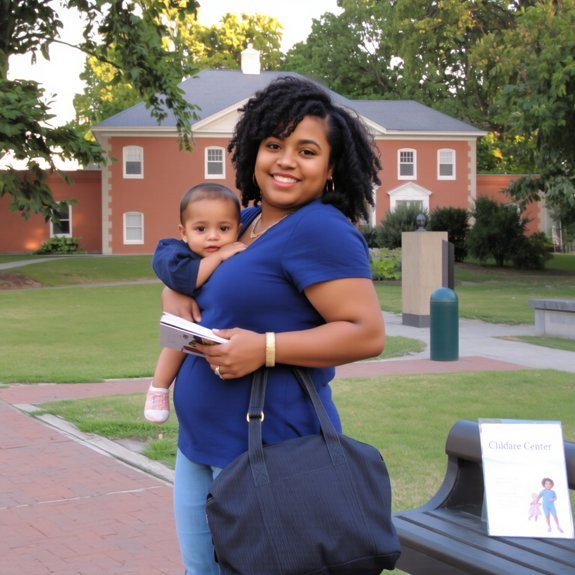
    Like Odysseus bargaining for a safe harbor, you’ll need clever moves and good timing—trust me, I’ve done the paperwork tango. You walk into the family services office, feel the hum of campus life, grab a brochure, and ask the receptionist the exact question that makes her perk up; then you tour a tiny classroom filled with crayons and sticky fingerprints, jot down prices, and trade numbers with another tired parent while laughing about midnight study sessions. Keep going—there’s more.

    Key Takeaways

    • Visit your campus family services or student affairs office to learn about on-campus childcare, priority slots, hours, and required forms.
    • Apply for federal and state supports (TANF, SNAP, WIC) and childcare subsidies, submitting pay stubs and class schedules promptly.
    • Tour nearby community and nonprofit childcare centers, ask about sliding-scale fees, and join waitlists early.
    • Build a student-parent network or co-op to share childcare shifts, backup sitters, and informal babysitting swaps.
    • Communicate proactively with professors to negotiate flexible deadlines or hybrid attendance when childcare conflicts arise.

    Campus-Based Childcare Options and How to Access Them

    campus childcare access tips

    If you’re juggling classes, a course schedule that reads like a Rubik’s cube, and a tiny human who thinks 6 a.m. is party time, campus childcare can feel like finding an oasis in a desert — sweet, welcome, and slightly miraculous. I’ll cut to the chase: scout your campus family services office first, call them, walk in, smell the crayons and coffee. Tour the center, watch nap mats and tiny shoes, ask about hours, fees, and emergency policies. Join waitlists, bring paperwork—enrollment forms, immunization records, proof of student status. Ask about sliding scales, student-priority slots, and drop-in care. Talk to other student parents, swap notes and backup babysitters. Be persistent, you’ll snag a spot if you hustle.

    Federal and State Assistance Programs for Student Parents

    federal aid for student parents

    Because money and time both get eaten alive by diapers and lab reports, you’ll want to know what federal and state aid is actually within reach — not just the headlines. I’ll walk you through the basics, fast. Start with TANF and SNAP, apply online, then call your state office; they taste like bureaucracy but they help. Head to child care subsidy programs, bring pay stubs and your class schedule, expect phone hold music and victory. Don’t miss WIC if you’re pregnant or nursing, it’s free food and formula help. Pell Grants can free cash for school, not childcare directly, but they loosen your budget. File FAFSA early, check state-run childcare waitlists, and bookmark helplines. Try persistence, snacks, and a tiny victory dance.

    Building a Student Parent Support Network and Childcare Co-ops

    student parent support network

    1 quick confession: I’m not a superhero, I’m a tired student parent who learned to trade sleep for smart teamwork. You’ll start by knocking on dorm doors and sliding into group chats, saying, “Who’s in?” Watch faces light up, plans form. Host a picnic by the quad, bring juice boxes, trade funny toddler stories, swap emergency contacts. Set simple rules — rotations, backup days, clear drop-off windows — and write them on a fridge magnet, literally. Try a childcare co-op: you teach art, I watch nap time, we both get class hours. Keep expectations honest, keep snacks labeled, and check in weekly. Celebrate small wins with coffee and goofy memes. Community becomes childcare when you mix trust, calendars, and a little hustle.

    Negotiating Flexible Schedules With Professors and Academic Advisors

    Okay, here’s the plan: you’re going to email your professor, breathe, and ask for a deadline extension when your kiddo’s daycare closes unexpectedly — say when, how long you need, and offer a firm new date. Then, suggest a hybrid attendance option, mention which classes you can join live and which you’ll watch recorded, and promise to keep up with participation so they don’t think you’re ghosting. Say it with confidence, a little charm, and a concrete fallback, and watch how often teachers surprise you by saying yes.

    Requesting Deadline Extensions

    If you’ve ever stared at a syllabus like it was a cryptic treasure map while a toddler hands you a crayon, you’re in the right place—trust me, I’ve been there. When life erupts—sick kid, childcare fall-through—ask for an extension, plain and simple. Email early, not panicked at midnight. Say what you need, how much time, and offer a realistic new due date. Briefly explain the reason, attach proof if asked, and thank them for understanding. In person, speak calmly, make eye contact, and drop a concrete plan: “I can turn this in by Friday if I get two extra days.” Be flexible, accept partial credit options, and follow up. Keep receipts, calendar the new date, and deliver—no excuses.

    Proposing Hybrid Attendance

    When campus chaos collides with nap time, you need a plan that smells like coffee and common sense, so I’ll show you how to pitch hybrid attendance without sounding needy or needy-adjacent. I walk into your professor’s office, hand a short proposal — three bullets, one sentence each — and say, “Can we try a mix of in-person and virtual for three weeks?” They blink, you smile, coffee steam fogs the window. Explain learning goals, tech you’ll use, how you’ll participate and submit work. Offer office hours, recorded evidence, and clear dates. Be flexible, drop a sincere “I appreciate your help,” and listen. If they worry, propose a trial. If they say no, ask for alternatives. You’ve got this.

    Community Resources and Partnerships Near HBCUs

    Since I’m guessing you didn’t sign up for parenting and finals at the same time, let me point you to the village waiting right outside campus — local nonprofits, faith groups, and neighborhood daycares that actually want to help, not just sympathize. I poke around bulletin boards, text a pastor, and overhear a student worker offering toddler care during lab. You can swing by the student affairs office, smell coffee, grab a flyer, and get referred to a partnership that offers sliding-scale spots. Tap alumni networks — yes, those same people who wore your school colors — they host playgroups and tutoring swaps. Knock on community center doors, meet coordinators, trade schedules. I promise, once you start asking, a web of real, practical help unfolds, no cape required.

    Budget-Friendly Childcare Strategies and Emergency Backups

    You’ve sniffed out the village, you’ve got flyers and phone numbers, and now we’re tightening the belt without sacrificing sanity — because tuition, diapers, and late-night ramen don’t pay for themselves. I tell you straight: swap solo childcare for tag-team shifts with another student parent, trade babysitting hours for grocery runs, and barter tutoring for an afternoon off. Scout campus daycare scholarships, sliding-scale centers, and weekday co-ops that smell like crayons, not doom. Keep an emergency backup: a vetted neighbor, a professor who knows your story, and a childcare app with reviews you actually read. Pack a grab-and-go kit — snacks, wipes, a favorite toy — so chaos is portable. You’ll sleep better knowing plan B isn’t a prayer, it’s a checklist.

    Conclusion

    I’ve walked this campus hustle with you, so trust me: start at family services, tour centers, ask about slots and sliding scales, swap sitter numbers with other student parents, and apply for subsidies—do it like you mean it. Picture relief as a warm cup, steaming in your hands. You’ll negotiate deadlines with advisors, build a backup roster, and patch together cheap, reliable care. You’ve got grit, humor, and a plan; now go.

  • How to Get Involved as a Commuter Student at an HBCU

    How to Get Involved as a Commuter Student at an HBCU

    Most campuses have commuter lounges you’ve never noticed, tucked between the cafeteria and the admin building, quiet as a secret. You can swing by after class, drop off a backpack, grab free coffee, and meet someone who actually remembers your name; I promise it beats sprinting to a parking deck alone. Pick one club, show up twice a month, try an evening mixer or Saturday service day, and you’ll start owning campus without changing your whole schedule—but there’s a trick to make it stick.

    Key Takeaways

    • Join one student organization that matches your interests and attend its short, regular meetings consistently.
    • Use the commuter lounge, cubbies, and commuter ID resources to build routine and meet fellow commuters.
    • Volunteer for micro-shifts (tabling, service projects) or weekend events with defined end times to fit your schedule.
    • Participate in virtual club meetings, live chats, and online mixers to connect when on-campus time is limited.
    • Leverage commute downtime for planning, study groups, and following student org pages for event updates.

    Why Campus Involvement Matters for Commuter Students

    campus involvement builds connections

    Because you zip in and out of campus, you might think involvement is optional — but trust me, it’s the secret sauce. You’ll bump into people between classes, smell coffee from the student center, hear a chorus rehearsing, and suddenly you’re not invisible. Join a study group, and you’ll trade notes and laughs; volunteer at an event, and you’ll feel useful, energized. I’ll admit, at first you’ll dodge commitment like it’s a pop quiz, but start small — show up, say hi, help set up chairs — and doors open. You’ll build a support net, snag mentors who push you, and collect stories that beat solo commutes. That’s how campus life stops feeling like background noise and starts feeling like home.

    Time-Smart Ways to Join Student Organizations

    join student orgs smartly

    If you’ve got a packed commute and a calendar that looks like a Tetris game, you can still join student orgs without turning your life into chaos. I’ll show you how to slip in involvement like a smooth subway transfer. Pick one club that sparks joy, scout short commitments — weekly 30-minute huddles beat marathon meetings — and ask about hybrid options. Drop a question in the org chat, swing by a single event, taste the vibe, then decide. Carve micro-shifts: office hours, ride-sharing duty, or tabling for an hour between classes. Use commute time for planning, listen to meeting recaps, and text a teammate when you’ll be late. You’ll be involved, not overwhelmed.

    Weekend and Evening Events That Fit a Commuter Schedule

    commuter friendly weekend events

    Okay, so club meetings during the week are doable, but what about the nights and weekends when you actually have time — or at least you think you do? You’ll want events that respect your commute, so look for late-afternoon mixers, Friday-night concerts near campus, and Saturday service projects that wrap by mid-afternoon. Bring a coffee, wear comfy shoes, and scope the parking situation — nothing kills momentum like circling a lot. Pop-up movie nights, food truck rallies, and open-mic jams are perfect: short, social, memorable. Volunteer shifts with clear end times are commuter-friendly, too. I’ll admit, I once stayed for three hours at a poetry slam because the vibe pulled me in — plan an exit, but also let yourself stay if it feels right.

    Using Virtual Programs and Online Student Networks

    When you can’t be on campus, go where the action is—online, but not in a boring, “watch a recording” way; I’m talking live chats, quick video hangouts, and group threads that actually feel like people, not bots. I’ll show you how to jump in without sounding like a desperate DM. Join live club meetings, drop a funny gif, ask one smart question, and suddenly you’re “that person” who comments first. RSVP to virtual mixers, pop into a study room with headphones, and say hi—your voice matters. Follow student org pages, bookmark event links, and set a two-minute check-in alarm. Try a themed chat night, bring snacks, describe the smell (yes, really), and laugh. It’s small moves, big presence.

    Campus Resources and Strategies Specifically for Commuters

    You can make campus feel like yours even if your feet never touch the quad between classes. Walk the commuter lounge, nab a window seat where sunlight warms your coffee, and claim that corner like it’s yours. Use commuter IDs, lockable cubbies, and the nursing room when you need a five-minute recharge. Check bulletin boards, both physical and digital, for pop-up events, free food, and study groups—snag snacks, network, repeat. Ride-share apps and campus shuttles become your social lifelines, so learn their schedules, trade rides, tell a joke in the car. Talk to the student affairs office; they love planners who show up. Drop into weekend workshops, join a late-night club chat, and keep a tiny emergency kit in your bag. You belong here.

    Conclusion

    Think of campus like a bright porch light, calling you in after the long drive. You can stroll over for one pizza night, hop into a Saturday service project, or click into a Zoom when traffic’s brutal. I’ll be blunt: show up a little, and you’ll feel less like a passerby and more like family. Use the commuter lounge, follow org pages, ask questions—small moves, big returns. You belong here.

  • How to Choose Between On-Campus and Online HBCU Programs

    How to Choose Between On-Campus and Online HBCU Programs

    You’re weighing an HBCU campus vibe against study-in-your-pajamas freedom, and I get it — both promise pride, history, and a future you can brag about. Picture brisk walks past oak-lined quads, choir practice humming, real-time debates — now picture logging on at midnight, coffee cooling, class on your couch. I’ll walk you through the trade-offs, the costs, and the networking tricks, but first—what matters most to you?

    Key Takeaways

    • Compare accreditation, faculty qualifications, and program reputation to ensure academic quality and transferability of credits.
    • Evaluate campus culture, mentoring, and extracurricular opportunities versus the structured social options of online programs.
    • Calculate total cost including tuition, fees, textbooks, proctoring, and living expenses, then explore scholarships and aid.
    • Assess career services, internship pipelines, alumni networks, and how each format supports your professional goals.
    • Ask admissions about refund policies, scholarship renewal rules, student support services, and technical requirements.

    Understanding HBCU Mission and Culture

    community excellence heritage mentorship

    Heritage matters — it’s the beat you feel when you walk across an HBCU quad at sunset, the warm mix of laughter, brass band drums, and old brick that tells you you’ve arrived somewhere with a story. You notice traditions, rituals, the way alumni call you by your major like it’s a badge, and you grin because community happens on purpose here. I’ll be blunt, you won’t just get classes, you’ll inherit mentors who push, a culture that expects excellence, and extracurriculars that double as life training. You’ll taste soul food at midnight, join convos that sharpen your thinking, and find role models who look like you. It’s intentional, rooted, and oddly comforting — like home, but with deadlines.

    Comparing Academic Quality and Accreditation

    accreditation ensures academic quality

    I want you to know, straight up, that accreditation is the fast-pass ticket that proves a program meets real standards, so you should check whether an HBCU’s on-campus and online offerings are accredited by the same regional or specialized agency. Look closely at faculty bios too, compare who’s teaching online versus in person, what degrees they hold, and whether they’re publishing, mentoring, or actually showing up to class—no mystery professors hiding behind a webcam. Ask crisp questions, read the fine print, and trust your gut when credentials and classroom experience line up, because that’s where real quality shows itself.

    Accreditation Status Clarity

    When you’re weighing an on-campus HBCU against an online program, accreditation should snap into focus like a neon sign in a foggy parking lot—blink and you’ll miss the fine print. I tell you straight: check regional versus national accreditation, program-specific vs. institutional. Scan the school’s site, call the registrar, scribble notes—don’t trust a glossy brochure. Look for recognized agencies, federal financial aid eligibility, and state authorization if you’ll cross borders online. I’ve dug through PDFs at midnight, squinting at seals; you will too, but it’s worth it. If credits transfer cleanly, that’s a green light. If accreditation is murky, alarms blink. Trust me, clarity now saves you a headache later, and maybe a tuition refund drama.

    Faculty Qualifications Comparison

    So you’ve checked accreditation till your eyes watered and the seals finally made sense—nice work. Now look at who’s teaching. You want professors with real credentials, not just catchy bios. Smell the campus coffee, read a CV, watch a lecture clip, and ask: do they publish, advise, and actually show up?

    1. Faculty degrees and ranks — PhDs, terminal degrees, tenure track, adjunct mix.
    2. Teaching experience and student feedback — office hours, mentorship, clarity in lectures.
    3. Research, community work, and industry ties — grants, local projects, real-world partnerships.

    I’ll admit, I skimmed syllabi for drama once. You’ll do better. Compare lists, email a professor, sit in on a class online or live, then pick the fit that sparks your brain.

    Social Life and Campus Community Differences

    on campus versus online friendships

    You’re weighing whether to feel the thump of a marching band under your feet or hear laughter through a headset at midnight. I’ll be blunt: on-campus life hands you tailgates, homecoming parades, and hallway jokes you can taste—online gives you scheduled socials, tight-knit chats, and the kind of friendships that bloom in shared screens. Let’s walk those scenes, compare the rituals and peer moments, and see which vibe makes you smile more.

    Campus Traditions & Events

    Even if you swore you’d only come for the degree, campus traditions grab you by the collar and won’t let go—festivals smell like funnel cake and rain-soaked barbecue, step shows boom so loud your chest vibrates, and late-night study breaks morph into impromptu block parties. You’ll learn school chants, wear colors you didn’t own before, and queue for homecoming like it’s a family reunion you actually want to attend. You’ll taste alumni gumbo, join a parade that refuses to be polite, and clap until your hands sting. If you’re weighing online versus on-campus, remember these trade-offs:

    1. Live rituals: immersive, sensory, contagious energy.
    2. Scheduled events: fixed calendars, occasional conflicts.
    3. Serendipity: bump-into moments, friendships born mid-chant.

    Peer Interaction Opportunities

    If homecoming had me drenched in gumbo steam and the bass from step shows rattling my ribs, then peer life is where those smells and sounds turn into people you actually know—friends who borrow your hoodie and return it with mysterious BBQ stains. You’ll get hallway nods, late-night study jam sessions, and that one roommate who makes cereal at 2 a.m., every spoon clink a small rebellion. On campus you touch shoulders in chapel lines, join clubs that meet in cramped rooms, and laugh loudly between classes. Online, you’ll trade dorm chatter for chat threads, scheduled video hangouts, and emoji-filled group texts that try, bless them, to replicate real warmth. Both work, but one feels like home.

    Learning Styles and Instructional Formats

    When I picked my first HBCU course, I thought “learning” meant sitting in a stuffy lecture hall or staring at my laptop until my eyes felt like two tired moons. You learn best when instruction matches your style, and you should pick a format that actually fits your brain and day. Do you thrive on live debate, hands-on labs, or step-by-step videos you can pause while making noodles? On-campus classes give immediate back-and-forth, the hum of bodies, paper rustling, and that awkward, brilliant whiteboard moment. Online formats offer bite-size modules, recorded demos, and forums you can answer at midnight, with captions for when the bus is noisy. Think honestly about focus, schedule, and how you like to practice skills.

    1. Active, discussion-heavy
    2. Hands-on, lab or studio
    3. Self-paced, recorded modules

    Technology Requirements and Access

    Alright, so you’ve figured out whether you need live debates or prerecorded noodle-pausing videos — now let’s talk gear. You’ll need a reliable laptop, a decent webcam, and headphones that don’t make you sound like a tunnel ghost. Check your school’s platform requirements, test your Wi‑Fi speed, and clear browser cache like a tiny, satisfying ritual. If you’re on campus, labs and loaner tech can save you; if you’re online, you’ll want backup chargers and a quiet nook, not a laundry-laden couch. Ask about captioning, screen-reader compatibility, and software licenses before term starts. I’ll say it plainly: tech hiccups can derail learning, so prep, test, and keep a plan B — your GPA will thank you.

    Cost, Financial Aid, and Hidden Expenses

    Because money talks loudest when college schedules your life, I’m going to be blunt: sticker price is just the opening act. You’ll want to compare tuition per credit, fees, and residency rules, because online may hide per-credit savings that vanish with tech or proctored exam fees. I sniff out scholarships like a raccoon at midnight — you should too — and apply early. Ask financial aid officers direct questions; don’t flatter them, grill them politely.

    Sticker price is the teaser — compare per-credit costs, hunt down scholarships, and grill financial aid like a pro.

    1. Tuition, fees, and per-credit differences you can actually see.
    2. Hidden costs: software, proctoring, travel for orientations, textbooks.
    3. Aid timing: grants, loans, work-study, and scholarship deadlines.

    Pack a calculator, a sense of humor, and a spreadsheet.

    Student Support Services and Resources

    If you think student support is just counselors behind a closed door, you haven’t poked enough doors — I have, and some of them even welcome you with coffee and a Wi‑Fi password. You’ll find tutoring hubs that smell like printer ink and hope, labs with patient techs who’ll stay late, and librarians who hunt down sources like bloodhounds. Online? Expect real-time chat, video drop‑ins, and screen shares that feel like someone peeking over your shoulder — in a good way. Disability services, mental‑health check‑ins, and academic coaches coordinate so you don’t fall through cracks. You’ll get orientation that actually orients you, peer mentors who text when assignments loom, and clear steps to ask for help — just say the word, I promise you’ll be noticed.

    Career Outcomes and Networking Opportunities

    When you walk into an on-campus career fair, it smells like polished floors and ambition — I’ll admit I once tried to network with a stack of business cards like they were a buffet. You get face time, handshake practice, immediate feedback, and those hallway chats that turn into internships. Online, you’ll trade smell for screen-time, but you’ll gain flexibility, virtual panels, and alumni from coast to coast who’ll DM you job leads at midnight.

    Walking into a fair smells like ambition; swaps for screen-time bring coast-to-coast mentors, midnight DMs, and flexible opportunities.

    1. On-campus: instant, tactile connections, practice interviews, local employer pipelines.
    2. Online: broader alumni reach, virtual mentorships, recorded workshops you can revisit.
    3. Hybrid: best of both — meet in person sometimes, network online often.

    I guide you to weigh immediacy versus reach, and choose what fits your rhythm.

    Questions to Ask Admissions and Financial Aid Offices

    Curious what to ask admissions and financial aid so you don’t walk out feeling like you just bought a mystery box? I’d ask specifics, plain and simple. What’s the exact tuition, fees, and refund policy if plans change? How much aid is need- versus merit-based, and will scholarships renew? Ask about hidden costs — tech fees, books, practicum travel — and get numbers, not guesses. For online programs, demand details on proctored exams, bandwidth needs, and loan deferment options. Ask admissions how they support career placement, internships, and mentorships, and request timelines. Say it out loud: “If I can’t make this work, what then?” Listen closely, take notes, and don’t sign until answers sound solid, sensible, and human.

    Conclusion

    You’ll feel it when you pick the right fit — campus buzz underfoot, or midnight lectures in your pajamas. I tested the rumor that one beats the other: they don’t, they trade strengths. Trust your study style, budget, and need for real faces or flexible screens. Visit, ask blunt questions, imagine a semester. You’ll know: choose the place that makes you want to get up, show up, and do the work with a grin.