Author: Jordan C

  • How to Prepare for Midterms and Finals at an HBCU

    How to Prepare for Midterms and Finals at an HBCU

    You’ve got exams coming, and you’re not gonna wing this — not this time. Map your calendar, block study slots on your phone, and gather a study crew that actually does the work (yes, that means firing flaky folks). Hit tutoring, nab quiet library corners, pack snacks that don’t melt, and breathe for two minutes when panic hits; I’ll show you how to stack priorities, protect your sleep, and turn cram panic into calm—but first, what’s your worst class?

    Key Takeaways

    • Map the semester on a big calendar, marking exams, projects, and mini-deviews to chunk study tasks weekly.
    • Form diverse study groups, rotate roles, use tutoring centers, and engage librarians for research and citation help.
    • Block focused study slots, prioritize real tests over busywork, and set mini-deadlines two days before each exam.
    • Protect mental health with short breaks, grounding techniques, peer check-ins, and celebrate micro-wins to sustain motivation.
    • Fuel your brain with whole foods, hydrate, move daily, and simulate exam conditions for timed practice.

    Creating a Semester-Wide Study Plan

    semester study plan mapping

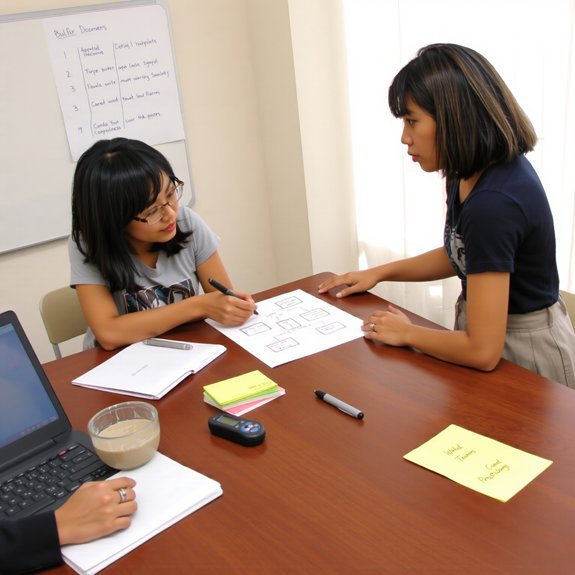
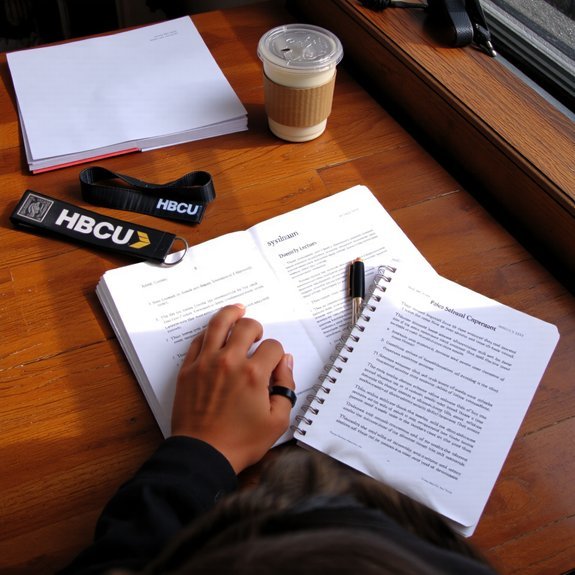
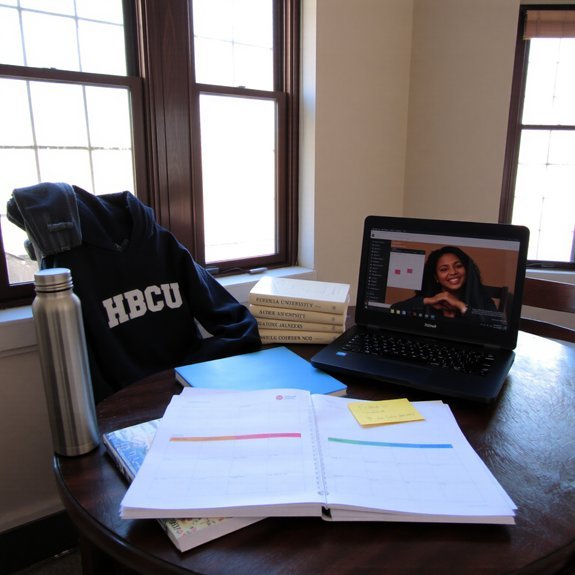
    If you want to stop cramming at 2 a.m., start by mapping the whole semester like it’s a treasure hunt, because honestly, that’s less stressful than pretending you’ll remember every due date. I tell you, grab a big calendar, sticky notes, a highlighter that’s too bright, and lay everything out on your desk so it smells like paper and finals. You’ll label exams, projects, practice quizzes, then chunk them into weekly bites. Say aloud, “I’ll tackle this chapter on Tuesday,” like you mean it. Add buffer days, flag hard classes with red, and celebrate small wins—yes, a mini dance counts. You’ll tweak the map each week, stay flexible, and avoid the panic spiral. Trust the plan, you’ve got this.

    Prioritizing Coursework and Exam Dates

    prioritize deadlines study effectively

    Because your semester won’t magically sort itself, I start by treating every due date like a VIP guest at a chaotic party: you get priority seating. You’ll list exams, papers, quizzes, and demos, then color-code them — red for “don’t mess this up,” yellow for “steady,” green for “easy win.” I tell you to block study slots on your phone, smell coffee, hear the library hum, and sit down like you mean it. Move tasks by impact, not crushable pride; drop busywork when real tests loom. Check syllabi every week, compare dates, and call your professor if something clashes — don’t be shy. Make a mini-deadline two days before each exam, so you review, nap, and walk in crisp, calm, prepared.

    Building Culturally Affirming Study Groups
    culturally inclusive study sessions

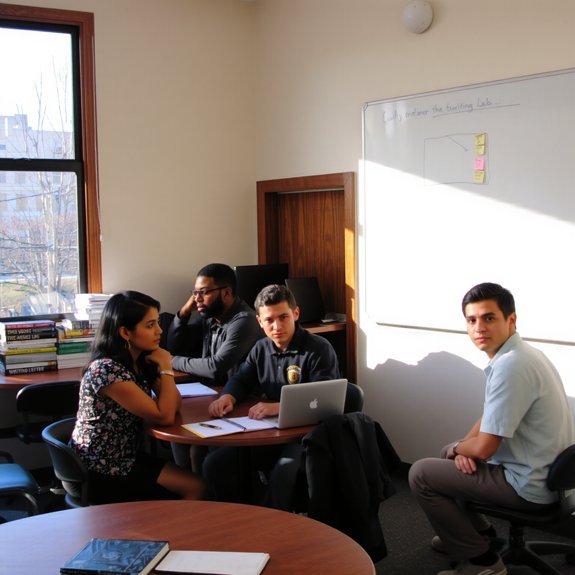
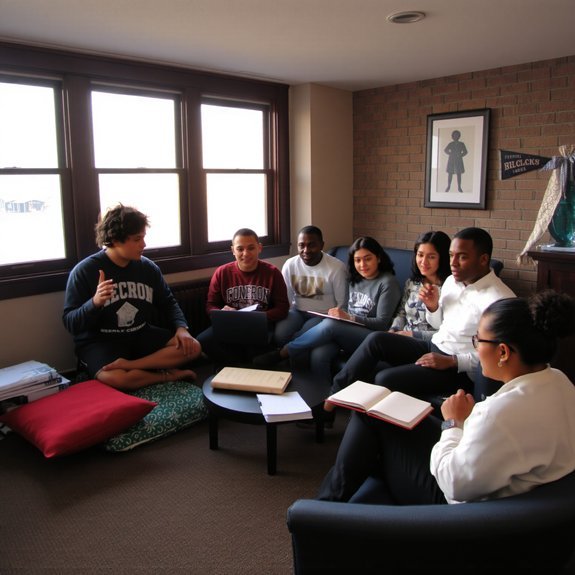
    When you walk into a study session that actually gets things done, you should smell snacks, hear different accents, and see people bring pieces of their culture to the table—this is how a culturally affirming group starts, messy and gorgeous. You invite classmates who share background or perspective, and those who don’t, because contrast sharpens thinking. You set norms: callouts are okay, jokes land gently, and everyone’s pronouns matter. You rotate roles—quiz master, explainer, snacks czar—so no one’s stuck parroting facts alone. You swap study tips tied to heritage, like mnemonic rhymes in dialects, then jump into problems. You celebrate small wins with high-fives or a side-eye, keep feedback honest, and leave feeling seen, smarter, and full.

    Using Campus Academic Support Resources

    You should swing by the tutoring center, it’s usually a bright room with whiteboards and helpful people who’ll untangle that problem set faster than you can groan. I’ll point out the librarians next, they’re secret research ninjas who’ll show you the best databases, cite stuff properly, and even help you find that one article hiding behind paywalls. Go early, ask silly questions, and watch your panic turn into a plan.

    Tutoring Center Access

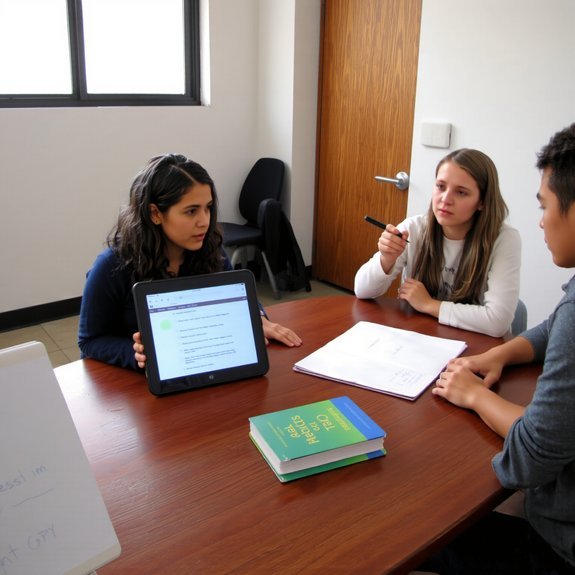
    If you’ve ever stared at a problem set so long your brain felt like overcooked pasta, come with me to the tutoring center — it’s brighter than you expect, smells faintly of coffee and dry-erase markers, and it’s where the panic melts into doable steps. You walk in, sign a sheet, and someone greets you like you’ve already done the brave part. Tell them the exact thing that’s tripping you up. They’ll sketch, ask one sharp question, and suddenly a knot loosens. Use drop-in hours, book a slot, or snag a study group table. Bring notes, old quizzes, and snacks—brain fuel matters. Don’t be shy; asking is faster than guessing, and that’s straight-up smart.

    Library Research Help

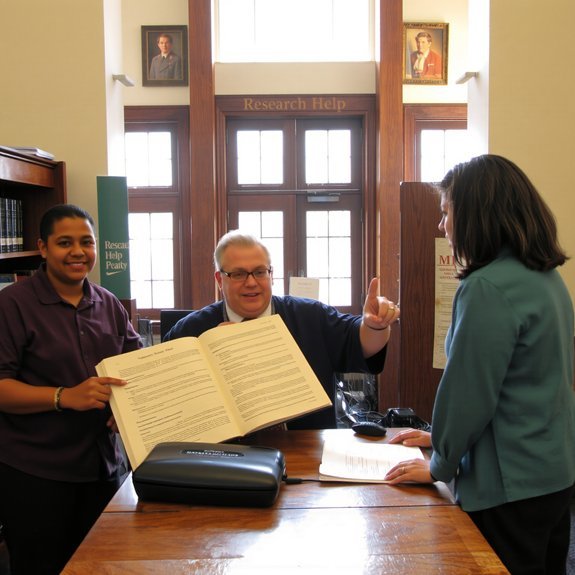
    After a solid session at the tutoring center, I usually wander over to the library like it’s the calm after the storm—soft carpet underfoot, the hum of printers, a faint whiff of old books and peppermint gum. You follow, lugging your backpack and ten tabs open, and we head to the reference desk. Librarians are secret weapon allies; ask them for databases, citation help, or primary sources, and watch them work magic. Reserve a study room, grab a noise-canceling headset, and scan the course reserves. Use interlibrary loan when your topic’s niche, and save screenshots of useful pages. Keep a running doc of search terms, note pile locations, and call numbers. Trust the library; it’s quietly on your side.

    Balancing Work, Organizations, and Study Time

    How on earth do you cram a full-time job, two clubs, and a still-growing social life into the same week as midterms? I’ve been there, palms sweaty, schedule a mess, but you can hack it. Start with these steps, clear and brutal:

    1. Block study sprints: 50 minutes, phone in the drawer, coffee in hand.
    2. Prioritize tasks: paid work, exams, meetings—say “no” to the rest.
    3. Sync calendars: color-code commitments, spot gaps, protect two deep-focus blocks.
    4. Micro-rests: five-minute walks, cold water on your face, text a friend for one laugh.

    You’ll trade a few FOMO nights for calm, sharp focus. I promise, you’ll still have stories, just better ones.

    Active Study Techniques That Stick

    Crank open your notes, toss your phone in a drawer, and let’s make studying feel less like punishment and more like a heist you actually enjoy: you’re not passively re-reading—you’re interrogating the material. You sketch quick mind maps, fingers smudged with highlighter, whispering key terms like they owe you answers. Quiz yourself aloud, pretend the textbook is on trial, call out definitions, wait for silence to answer. Teach a friend, or your roommate, with dramatic flair; if they stare blankly, you know where you messed up. Use flashcards, but spice them: draw tiny cartoons, write one-line mnemonics, shuffle like a deck of winning bets. Sprint through 25-minute Pomodoros, then reward with coffee steam and a grin. Repeat, refine, and lock the facts in.

    Managing Stress and Protecting Mental Health

    If your brain feels like a buzzing phone, I’m with you — let’s quiet it down before it throws up notifications in the middle of an exam. You’ve got a lot on your plate, and stress loves to micromanage your thoughts, so breathe, name one fear, and send it packing for ten minutes. I keep things simple, rough edges and all. Try these quick, sharp moves to protect your focus:

    1. Schedule two short breaks, step outside, feel the sun, count colors.
    2. Use a five-minute grounding routine: touch a textured surface, smell something sharp, name three sounds.
    3. Text a friend one-sentence check-in, get real, laugh if you can.
    4. Set a tiny, do-able goal, then celebrate it.

    Optimizing Sleep, Nutrition, and Exercise for Exam Performance

    Keep your sleep schedule steady, not heroic—same bedtime and wake time most days, so your brain learns when to focus and when to shut off. Eat real food that lasts—oats, eggs, nuts, colorful veggies—and move your body, even a brisk 20-minute walk will clear fog and boost memory (no, caffeine can’t do all the work). I’ll walk you through simple routines and snacks that actually help, and yes, we’ll laugh at my pathetic attempt to meditate for five seconds.

    Sleep Consistency Matters

    Even though you might feel like cramming is a superpower at 2 a.m., I’ve learned the hard way that sleep consistency actually runs the show—the brain files memories and sharpens focus when your body gets the same cue night after night. You’ll notice the difference: words stick, moods settle, and your morning coffee stops feeling like rescue breath. I talk to my roomie, I set a timer, I dim lights, I pretend my phone is a jealous ex. Try this simple routine:

    1. Go to bed within the same hour every night, yes even weekends.
    2. Wake up at a steady time, sunlight first, alarm second.
    3. Wind down 30–60 minutes, no screens, soft music or reading.
    4. Keep your sleep space cool, dark, and sacred.

    Fuel and Move

    Alright, now let’s talk about the stuff you put in and do with your body, because sleeping like a champ only gets you so far — food and movement finish the job. You’ll eat like fuel, not punishment: bright fruit, whole grains, a little protein, and water that actually tastes like victory. Skip the sugar crash pretzel parade before a test. Move daily, even ten minutes counts — jog, stretch, dance in your room like nobody’s grading you. Walk between classes, chew gum to wake your brain, breathe deep when things get spicy. I’ll be blunt: caffeine is a tool, not a life partner. Plan meals, pack snacks, set a mini workout habit, and treat your body like the study partner it is — reliable, loud, and useful.

    Preparing for Different Exam Formats (Essays, Multiple Choice, Labs)

    When exams switch formats, you can’t use the same sleepy study routine and expect different results — that’s not how brains work, or miracles. You’ve got to shift gears fast, tune senses, and practice the actual test vibes. I talk through quick, usable moves you can do in your dorm or library alcove.

    1. For essays, outline aloud, smell coffee, type a thesis, then handwrite a practice in 40 minutes.
    2. For multiple choice, drill question stems, eliminate bad answers, listen for trap words.
    3. For labs, touch equipment, sketch setups, rehearse protocols, say steps out loud.
    4. For timed combos, simulate the clock, pack snacks, wear headphones, stay steady and watch the pulse.

    Celebrating Progress and Staying Motivated During Finals

    You just practiced the heck out of essays, drilled a stack of multiple-choice blunders, and ran the lab steps until your fingers remembered them — now let’s celebrate that mileage. I’m proud of you, honestly. Pause, stretch, brew that terrible dorm coffee, and high-five yourself in the mirror. Count micro-wins: a clean outline, a timed practice score, a lab run without spilling anything — they matter. Reward smartly: twenty minutes of music, a walk under live oaks, a slice of pizza that isn’t cardboard. When motivation dips, call a study buddy, swap silly buzzer sounds, complain for two minutes, then get back at it. Keep rituals, track progress with stickers or notes, and remember: momentum loves small, steady steps.

    Conclusion

    You’ve got this — map your calendar, block study time, and call your squad for a 7 p.m. library huddle. Fun fact: students who study with peers retain about 60% more info, so those group texts actually help. I’ll be your nag and your hype-person: take breaks, eat something green, move your body, sleep like you mean it. Celebrate small wins, keep a steady pace, and show up for finals like the boss you are.

  • How to Use the Library and Academic Resources at an HBCU

    How to Use the Library and Academic Resources at an HBCU

    You’ll think the library is the size of a cathedral — and it kind of is, until you learn the secret back stair. I’ll walk you through the study nooks that actually get quiet, the librarians who’ll save your paper at midnight, and the hidden databases that make professors nod in approval, but first — grab a campus map, your ID, and a stubborn streak, because you’re about to claim every helpful corner.

    Key Takeaways

    • Take a guided tour to learn library layout, study rooms, peak hours, and where services like printing and tech loans are located.
    • Meet your subject librarian for personalized research help, database navigation, citation support, and saved-search setups.
    • Use tutoring centers and writing labs for assignment feedback, test-prep strategies, and time-management workshops.
    • Access special collections by searching the archive catalog, contacting archivists, and requesting materials in advance with proper handling tools.
    • Use the library’s digital resources and off-campus access for remote databases, embedded course support, and hands-on research workshops.

    Getting to Know Your Library: Services, Hours, and Staff

    explore library services confidently

    If you’re like me, you’ll think the library is a quiet maze until you actually walk in and start poking drawers and asking questions — and that’s the fun part. You’ll learn the hours fast, because late-night cram sessions and coffee runs shape your week, and you’ll notice the hum of printers, page rustle, and soft footsteps. Ask the desk about borrowing limits, room bookings, and tech loans, they’ll smile and tell you the hacks. Staff know the shortcuts, but you’ve got to show up, say hello, and admit when you’re lost. Tour the space, test the scanners, peek in study rooms, and note peak times. You’ll leave feeling less intimidated, more equipped, and oddly proud.

    Research Help and Subject Librarians

    research assistance from librarians

    When you’re stuck on a topic and staring at a blinking cursor like it’s judging you, go find a subject librarian — they’re the friendly research ninjas who actually enjoy untangling citation knots. I’ll say it straight: you don’t have to suffer alone. Walk into the quiet hum of the stacks, smell the paper, tap the desk, and ask. They’ll show databases, suggest keywords, pull obscure journals, and demo citation tools, fast and without the lecturing vibe. Here’s what you should expect:

    Stuck with a blinking cursor? Tap a subject librarian — research ninjas who find sources, demo tools, and save your sanity.

    1. Personalized research consultations, scheduled or drop-in, tailored to your assignment.
    2. Database navigation help, with hands-on demos and saved searches.
    3. Source evaluation tips, so you spot strong evidence quickly.
    4. Citation guidance, from APA to Chicago, with export-ready files.

    Tutoring Centers, Writing Labs, and Academic Support Programs

    hands on academic support services

    Alright — you’ve got your subject librarian in your corner, and that’s amazing, but let me show you where the real tag team happens: tutoring centers, writing labs, and academic support programs. You walk in, smell coffee, hear quiet confidence — tutors tapping keys, counselors flipping syllabi. Ask for a math walk-through, and someone’ll sketch a graph on the whiteboard, patient and proud. Bring a draft to the writing lab, they’ll read aloud, point out the clunky sentence, you’ll laugh and fix it. Sign up for workshops on study skills, time management, test anxiety — they hand you templates, timers, tiny victories. Drop-in or appointment, peer or pro, it’s hands-on help that meets you where you are, and nudges you forward.

    Accessing Special Collections and Archives at an HBCU

    You’ll start by scanning the archive catalog, eyes on the screen, fingers ready to bookmark anything that screams “you.” Then you’ll fill out a request form or email the special collections staff, because yes, some boxes need permission and a friendly human to gain entry to them. I’ll stand with you at the reading table, we’ll smell that old-paper tang, and I’ll whisper tips on access rules so you don’t accidentally pet a fragile scrapbook.

    Finding Archival Materials

    Because archives don’t usually leap off a shelf and shout “look at me,” you’ve got to be a little sleuthy — and I’ll admit, I enjoy the hunt. You’ll start by scanning catalogs, special collections guides, and finding aids, eyes skimming for names, dates, and places that make your pulse quicken. I’ll poke around online databases, then wander the stacks, fingers tracing box spines, breathing that paper-and-glue smell like it’s perfume. Talk to archivists, they’re the secret maps. Bring notebooks, gloves, and patience; archival work rewards slow curiosity.

    1. Search online catalogs and finding aids first.
    2. Note collection numbers and scope notes.
    3. Consult archivists for hidden gems.
    4. Prepare proper tools: pencil, gloves, camera (if allowed).

    Requesting Special Access

    Okay, now that you’ve sniffed out boxes and chatted up the archivists, it’s time to actually get in the room where the magic happens. You’ll request special access by filling a form, showing ID, and saying why you need the materials — be specific, not vague. I’ll tell you to book a visit ahead, because archives don’t do walk-ins like coffee shops. Expect gloves, pencil-only tables, dim lamps, a hush that feels holy. I’ll remind you to state handling needs, reproduction permissions, and any deadlines. If a restricted file needs supervisor approval, don’t panic, just follow their steps, politely nag if needed. You’ll leave with photos, notes, and the smug joy of having earned the privilege.

    Digital Tools, Databases, and Remote Research Resources

    If you want to dig up solid sources without trekking across campus in the heat, start here — the library’s digital toolbox is your new best friend, and yes, it talks back (kind of). You’ll log in, click databases, and the screen will hum with options. Don’t panic. I’ll show the quick moves: what to search, how to filter, and where PDFs hide — like finding snacks in a dorm drawer.

    1. Use subject databases first, they’re focused and save hours, trust me.
    2. Enable off-campus access, so you can work from bed, coffee in hand.
    3. Save searches and set alerts, your future self will thank you.
    4. Try citation managers, they stop your bibliography from becoming a train wreck.

    Workshops, Instruction Sessions, and Course-Integrated Support

    I’ll show you how the library’s workshops sharpen your research skills, whether you’re hunting down primary sources or taming citation chaos—come for the handouts, stay for the “aha” moment. You can book me or a librarian to visit your class, or we’ll embed sessions into your course so support shows up right where you work, on your syllabus and in your inbox. Bring questions, bring snacks if you want, and we’ll turn messy assignments into clear steps, one focused session at a time.

    Research Skills Workshops

    When you show up to a library workshop—coffee in hand, laptop half-asleep—you’ll get more than a slideshow; you’ll get hands-on skill training that actually sticks. You’ll learn to trace sources, tame databases, and build search strings that don’t puke results. I talk you through live demos, you riff on class examples, we all laugh when citations misbehave. Expect quick practice, messy drafts, and honest feedback that actually helps.

    1. Learn database tricks, filters, and boolean searches.
    2. Practice evaluating sources, bias, and credibility.
    3. Build annotated bibliographies, step by steady step.
    4. Get citation tools, templates, and time-saving hacks.

    Show up curious, leave armed, and yes, bring more coffee.

    Embedded Course Support

    Because we want you to actually use the library, not just visit it on exam week, I slide myself into your class schedule—literally or virtually—and we build research muscles together. You’ll see me at the front, laptop glowing, or popping into your Zoom like that one friend who brings snacks. We map assignments, break down prompts, and pick sources you can actually explain aloud. I demonstrate quick database tricks, then hand the controls to you, watching fingers fly, pride and mild terror mixed. We run mini-workshops, scaffolded activities, and tailored handouts that smell faintly of copier toner and possibility. You get feedback on drafts in real time, citation help that doesn’t make your eyes glaze, and a partner who won’t ghost you before finals.

    Building Relationships and Using Library Spaces for Collaboration

    If you want people to actually help you, start by showing up like you mean it — I stroll into the library, breathe that paper-and-coffee-smell, and make eye contact with the staff instead of pretending I’m invisible. You’ll learn names, snag tips, and get invited to study nights. Sit in shared rooms, bring snacks (ask first), and claim a whiteboard like it’s your tiny kingdom. Talk to librarians, not just Google. They know the archives, and they’ll laugh at your panicked citation voice.

    1. Introduce yourself, ask one specific question, follow up.
    2. Reserve rooms early, bring chargers, clean up.
    3. Join or start a study group, schedule meets.
    4. Share resources, give credit, say thanks.

    Conclusion

    You’ve got this—use the stacks, the tutors, the tech loans, and the librarians like they’re on speed dial. I’ll be blunt: 90% of students who meet a subject librarian report better grades, so don’t wing it alone. Walk the quiet study rooms, smell the coffee, snag a comfy chair, and ask for that citation help. I’ll cheer you on, I’ll laugh at your late-night notes, and I’ll remind you: ask early, ask often.

  • How to Form Study Groups That Actually Help You Learn

    How to Form Study Groups That Actually Help You Learn

    Funny coincidence: you and three classmates all forgot the same homework, so why not turn that mess into a study group that actually helps? You’ll pick people who show up, mix note-takers with explainers, set a clear goal for each hour, and ban phones like they’re contraband—small rules, big payoff. I’ll walk you through building agendas, swapping roles, and holding each other accountable, so you stop wasting time and start getting smarter—curious how it looks in action?

    Key Takeaways

    • Choose 2–4 reliable members who show commitment, complementary skills, and consistent attendance.
    • Define clear, measurable study goals and visible ground rules everyone agrees to.
    • Use a timed, structured agenda with role assignments and prioritized hard topics first.
    • Practice active techniques: teach-backs, quick summaries, and rotating roles to ensure participation.
    • Track progress publicly, schedule regular check-ins, and set small consequences for missed commitments.

    Choosing the Right Members

    choose reliable study partners

    Want someone who’ll actually show up, or would you rather end up chatting about snacks for two hours? You pick people who mean business, not just vibes. I scan class lists, spot reliable faces, and test-drive commitment with one quick question: “You coming next Tuesday?” Their pause tells me everything, trust me. Look for study-hardened habits — calendars, quick replies, that one friend who brings colored pens and snacks that aren’t excuses. Mix skills: a note-taker, a question-wrangler, someone who explains like coffee for your brain. Say no to chronic flakes, yes to two dependable people over five flaky ones. When you meet, watch body language, listen for specifics, hand them a time-slot, and feel the group click — satisfying, like the right puzzle piece.

    Setting Clear Goals and Ground Rules

    establish goals and rules

    If we don’t get the goals down first, your study group will devolve into a snack-and-scroll party faster than you can say “pop quiz.” I’m serious — start by saying out loud what you want: beat the midterm, master derivations, or just survive the lab practical. Say it, don’t whisper. I’ll jot goals on a whiteboard, you’ll nod, someone will snack anyway — fine, but we’ll agree when snacks are allowed. Set ground rules: punctuality, phones face-down, one speaker at a time, and who brings the snacks. Assign roles—timekeeper, question asker, explainer—so nobody fades into background TV-mode. Revisit goals each week, cross off milestones, tweak expectations. Clear rules keep focus sharp, morale high, and your study hours actually useful.

    Structuring Effective Sessions

    structured session management techniques

    Since you’ve already picked goals and ground rules, let’s turn that good intent into a session that actually runs like clockwork — not like a sitcom where everyone forgets why they showed up. I’ll walk you through a tight agenda: a quick 5-minute check-in, a focused 35-minute work block, a 10-minute break, then a 30-minute review, and a final 10-minute recap. You’ll set a visible timer, spread textbooks like weapons on a table, and call roles aloud — reader, checker, note-taker. I’ll remind you to start on the hardest bit, so momentum’s real, not fake. Keep snacks sensible, phones face-down, and celebrate tiny wins. If it derails, laugh, reset the timer, and get back to business.

    Techniques for Active Collaboration and Learning

    While you’re swapping notes and staring down a mountain of problem sets, I’ll show you the tricks that make group work feel like a team sport instead of a chaotic free-for-all. You’ll rotate roles — explainer, questioner, checker — so nobody hogs the whiteboard, and you’ll use quick drills: two-minute summaries, teach-back pairs, and timed problem sprints that make brains hum. Call out confusion out loud, toss out dumb guesses, and laugh when someone invents a weird mnemonic; mistakes are your raw material. Use visible tools — colored pens, sticky notes, a shared doc — so ideas live where you can touch them. End each chunk with a one-line takeaway. You’ll leave energized, not buried, because learning should feel active, not passive.

    Keeping the Group Accountable and Sustainable

    Because you want this group to outlast midterms and not dissolve into ghosted calendars and sad snacks, you’ve got to treat accountability like a small, lovable appliance — reliable, slightly bossy, and easy to turn on. I tell you this like a friend who’s seen too many napkin schedules vanish. Set clear, tiny rituals: a shared calendar ping, a five-minute check-in, rotating roles — timer, note-taker, hype person. Make consequences light but real: missed turn buys coffee, flaking leads to a private nudge, repeated no-shows trigger a group chat room for honesty. Track wins visibly, a sticker board or a Google Sheet that sparkles. Celebrate, reset, and prune gently. Keep snacks sensible, humor ready, and the plan annoyingly simple.

    Conclusion

    You’ll pick allies, not passengers, and plan like generals, not dreamers. I’ve seen sleepy sofas turn into battlefields of notes, and that’s okay—because structure flips chaos into clarity. You’ll rotate roles, speak up about confusion, and celebrate tiny wins with high-fives and bad coffee. Stick to agendas, enforce rules kindly, and check in honestly. You’ll build a study group that’s equal parts warm team and sharp machine, messy but mighty, and worth showing up for.

  • How to Build a Strong GPA at an HBCU

    How to Build a Strong GPA at an HBCU

    You’re here to protect your GPA, not just survive campus life, and I’m not about to sugarcoat the grind. Set a steady routine—study blocks that line up with class times and meal breaks—use active recall and flashcards until the material sticks, and talk to your professors like real humans (they like snacks and honesty). Sleep, eat, and use tutoring; honestly, you’ll thank me later—now let’s map the plan.

    Key Takeaways

    • Attend classes consistently and engage actively to catch material and participate in graded activities.
    • Use campus tutoring, writing centers, and library consultations early for assignment and exam support.
    • Schedule focused 25-minute study blocks anchored to class times and meals for predictable productivity.
    • Practice active recall and spaced repetition with self-quizzing and study groups before exams.
    • Meet professors and advisors early, bring specific questions, and follow up to strengthen academic relationships.

    Creating Time Management Systems That Stick

    time management that works

    If you’re anything like me, your planner starts the week hopeful and by Tuesday it’s a sad collection of sticky notes and missed alarms — but that doesn’t have to be the norm. You’ll build a time system that actually sticks, not because you’re perfect, but because you’re practical. First, pick two anchors: class times and meals, they’re non-negotiable, use them to carve predictable blocks. Color-code tasks by energy: red for focus, blue for quick wins, green for social. Set a 25-minute timer, work, then treat yourself with a walk to feel air on your face. Say no more often, practice a one-sentence decline. Review Sunday night, adjust, laugh at what failed, and try again, steadily better.

    Mastering Effective Study Techniques for Retention

    active recall and spaced repetition

    You’ll get more from study sessions when you flip the script and quiz yourself, saying answers out loud like you’re on a tiny stage, because active recall forces memory to stick. Mix that with spaced repetition — short, spaced review bursts over days — and you’ll catch facts before they slip away, like grabbing a falling book off a table. Trust me, it feels weird at first, but keep at it and your brain will start handing you answers like it’s done the homework for you.

    Active Recall Practice

    Because cramming feels like karaoke at 3 a.m.—loud, frantic, and regrettable, you’re going to learn to pull answers out of your head before the test even asks the question. I want you to close your notes, look at a blank page, and talk to yourself like a professor just walked in. Say definitions out loud, sketch diagrams with greasy fingertips, recite formulas until they stick like gum under a desk. Quiz yourself, swap roles with a study buddy, pretend the exam is a dare. When you stumble, note the gap, then force retrieval again, harsher this time. Active recall wakes memory by making you search, struggle, and triumph. It’s sweaty, honest work, but it builds confidence you can actually feel.

    Spaced Repetition Methods

    Active recall gets your brain lifting weights; spaced repetition turns those gains into muscle you can show off on test day. I’ll tell you how to hack your memory, step by step, like a coach with a whistle and terrible playlist. Start small: review a flashcard right after class, then the next day, then three days later, then a week. You’ll feel the knowledge settle, like warm syrup soaking into waffles—sticky, sweet, reliable. Use apps or a paper box, label intervals, tweak when things wobble. Say your answers out loud, record a quick voice note, cue up a two-sentence self-quiz before bed. It’s boring sometimes, I admit, but boring works. Trust the schedule, not willpower.

    Building Academic Relationships With Professors and Advisors

    build connections with professors

    You should meet your professors early, shake a hand or drop a quick hello after class so they remember your face, not just your email. I’ll tell you, advisor office-hours are gold — show up with a printed schedule, a question, and maybe a cookie (bribery works, lightly). Do it often, keep it friendly, and you’ll turn strangers into allies who actually read your emails.

    Meet Professors Early

    If you stroll into office hours looking like you just escaped a 9 AM lecture, don’t panic — I’ve been there, hair a mess, coffee gone cold — but do keep walking in. Go early in the semester, before grades pile up and syllabi blur into wallpaper. Introduce yourself, say your name, major, and one honest thing: “I want to do well.” Professors notice faces, not faux enthusiasm. Ask one crisp question, listen, take notes, nod like a person who’s actually paying attention. Share a short goal—this grade, that skill—and ask how to get there. Offer gratitude, a quick handshake if it feels right. You’ll build rapport, get tailored advice, and turn a one-off visit into a dependable academic lifeline.

    Use Advisor Office-hours

    Two quick visits a semester will change your academic life more than a panic-study sprint ever will. Go to advisor office-hours, don’t overthink it. I’ll say it straight: you’ll learn more from a ten-minute chat than from scrolling syllabi at midnight. Bring a specific question, a draft, or a plan, and smell the coffee while you explain what’s tripping you up. Advisors see patterns, they’ll flag program traps, suggest classes, and say who to meet next. Sit, listen, take notes, then repeat the line, “Do I have this right?” They’ll correct you kindly, with exact steps. Leave with deadlines, contact names, and a tiny victory. That routine keeps you steady, earns trust, and makes graduation feel inevitable.

    Leveraging Campus Resources and Academic Support Centers

    Because campus support centers are more like secret weapon rooms than boring offices, I make a beeline for them the minute a syllabus looks scary; the tutoring lab smells like coffee and dry-erase markers, advisors talk like career GPSs, and the writing center hands out red pens like life jackets. You should too. Walk in, say your name, admit you’re stuck. Sit by a tutor, let them map the problem on the board, ask for an example, repeat it aloud, and watch confusion peel off. Use library research consultations, grab mentors at campus workshops, and check academic coaches for time-management hacks. Keep calendars synced, snag feedback early, and save embarrassing panic for later. These places exist to lift your GPA, use them like you mean it.

    Forming and Leading High-Impact Study Groups

    When you want grades that actually stick, I grab a whiteboard marker like it’s a magic wand and pull together a study crew that’s more band of brains than awkward group chat. You call people who actually read, pick a bright spot with a big table, and claim a wall for formulas. Set goals: one concept per hour, one mock quiz each, no phone zombies. Rotate roles—explainer, skeptic, note-taker—so everyone teaches and learns. Use timers, snack breaks, and stupid songs to lock memory; trust me, the goofy chorus helps. Keep it short, repeat hard parts, quiz each other on the walk back. Lead with patience, nudge with honesty, celebrate tiny wins, and leave smarter than you arrived.

    Balancing Campus Life, Work, and Mental Health

    You’ve got your study crew humming and a whiteboard full of victory diagrams, but real life sneaks in — classes, a job, friends, and the nights you need to cry into ramen. I tell you, it’s messy, and that’s okay. Carve a tiny routine: three focused study sprints, a quick walk between classes, and two deep breaths before you open a laptop. Say no like it’s a survival skill. Trade one late-night party for a nap, don’t ghost your boss — communicate shifts — and keep a calendar that actually matches your life. When stress spikes, stagger tasks, text a friend for a five-minute vent, and eat something green. You’ll juggle better when you protect your rest, and laugh at small disasters.

    Planning for Long-Term Academic and Career Success

    If you want a future that actually looks like the one you doodle in the margins of your planner, start treating your time like the scarce, expensive thing it is — not a suggestion. I tell you this because vague goals gather dust; plans get results. Set five-year targets, then break them into semesters, months, weeks. Smell the campus coffee at sunrise, map classes, internships, networking events, and slot focused study blocks. Say yes to mentors, no to shiny distractions. Practice elevator pitches in the mirror, keep a polished resume, and track skill gaps like a detective hunting clues. Celebrate small wins, revise plans when life pivots, and keep a running list of connections. You’ll graduate with momentum, not just a GPA.

    Conclusion

    You’re the captain here, so steer with small routines, loud questions, and regular naps; I promise they’ll add up. Keep flashcards, office-hour chats, and tutoring on speed dial, taste the coffee, feel the pages, mark the wins. Think of your GPA like a rooftop garden—one seed, consistent watering, some compost, and surprisingly, sun. I’ll keep nudging, you keep showing up, and together we’ll turn chaos into A’s, one steady habit at a time.

  • How to Use Office Hours Effectively at an HBCU

    How to Use Office Hours Effectively at an HBCU

    You’ve got five minutes before class ends and a campus breeze zips past the quad — use it. Come with your syllabus, that graded paper, and one clear question; don’t wander in saying “I’m lost,” say “Help me fix this thesis.” Be on time, sip your coffee quietly, listen more than you talk, and try a confident ask like a human, not a homework robot. Do this well, and you’ll build a mentor who notices you — but first, let’s talk about how to actually prepare.

    Key Takeaways

    • Schedule and attend professor office hours regularly, arriving on time with specific questions and relevant materials.
    • Clearly state one goal for the meeting, outline your attempts, and ask for actionable next steps.
    • Build rapport by briefly sharing academic/career interests and following up with progress updates or thank-you notes.
    • Use office hours to ask about scholarships, research, internships, and networking opportunities tied to HBCU resources.
    • Track feedback in a small notebook, set realistic milestones, and request brief check-ins to monitor improvement.

    Why Office Hours Matter at an HBCU

    engage inquire network succeed

    Because I’ve sat in those too-quiet lecture halls and crowded campus corridors, I know office hours aren’t some optional extra — they’re your backstage pass. You walk in, hear the hum of fluorescent lights, feel the cool of a laminate desk, and suddenly you’ve got time with someone who actually knows the script. Use that moment. Ask about class puzzles, career hints, grad school whispers, or how to turn a B into an A without losing sleep. Professors remember faces, voices, jokes — yes, even your terrible coffee breath. They’ll point you to scholarships, research, and alumni who answer texts at midnight. Don’t be shy, don’t wing it; show up curious, bring a question, leave with a plan and a new ally.

    Preparing Before You Go

    prepare for productive meetings

    If you show up empty-handed, you’ll leave empty-handed — and nobody wants that. I mean it: grab your syllabus, pencil that page that freaks you out, and bring the graded work that’s been haunting your dreams. Show up sharp, not frantic.

    You’ll want three things ready, so don’t wing it:

    1. A specific page or problem, crisp and marked, so you both see the mess at once.
    2. Notes that say what you tried, where you stopped, and a quick “I think this” line — saves time, earns respect.
    3. A calendar and realistic timeline, because office hours are a team play, not a magic wand.

    Walk in tidy, speak up, listen close, and leave with a plan.

    How to Ask Clear, Specific Questions

    ask clear specific questions

    Want better answers? Say exactly what you’re stuck on. Walk into office hours with one clear problem, not a vague “I don’t get it.” Point to a line in your notes, show the sentence in the reading, or tap the specific step in your worksheet. I’ll pause, listen, and ask a short follow-up. When you say, “I tried X, but got Y,” you hand me the map and the hiccup. Use concrete words: equation, paragraph, citation, deadline. Give a quick demo—read your sentence aloud, outline the step. If something smells off, say which part feels weird. Don’t apologize for asking; smart questions save time. I’ll reply clearer, faster, and with fewer sad chalk marks.

    Sharing Your Goals and Background

    Good question, and don’t stop at the problem—tell me who you are. You walk in, sit, breathe, and say your name, major, and one honest goal. I’ll listen, I’ll nod, I’ll ask about deadlines. You paint a quick scene: late-night library, coffee gone cold, that stubborn concept. Be vivid, be brief, be human.

    1. Say your goal: career, grade, or curiosity—one sentence, specific, doable.
    2. Share context: class year, workload, other commitments—details make advice hit home.
    3. Mention past attempts: what you tried, what failed, and what helped even a little.

    I keep it real, you get practical steps. That’s how we turn office hours into action.

    Building a Professional, Respectful Rapport

    You’ll start by saying what you need, and I’ll say what I can promise — clear boundaries, timelines, and follow-ups, so nobody leaves confused. Keep your tone polite but direct, show up on time, and I’ll match you with the same professional, respectful energy. Think of it like shaking hands with your brain: firm, warm, and ready to get to work.

    Establish Clear Expectations

    If we’re going to make office hours worth the trip, let’s start with the fine print—clear expectations. You’ll walk in knowing why you’re there, what you’ll bring, and how long we’ll talk. I’ll set a gentle timer, you won’t hog the room, we’ll both leave satisfied. Picture the door click, a stack of notes, the smell of coffee—now use that.

    1. Come prepared: bring questions, drafts, and a calm attitude.
    2. Be punctual: five minutes late eats someone else’s coffee time.
    3. State your goal: say “I need feedback on thesis” or “walk me through problem 4.”

    I keep it straightforward, you get results, we both save time — win.

    Maintain Professional Tone

    Even though we’re on campus and the vibe’s friendly, I expect a respectful tone—because manners make the room work. You walk in, shoulders down, scent of coffee in the air, and you greet me like a human, not a headline. Use please, thank you, and clear words. Sit up, make eye contact, drop the phone, and speak in complete thoughts. I’ll mirror your calm, and we’ll get more done. If you’re nervous, say so — I’ll crack a joke, you’ll laugh, we move on. Don’t interrupt, don’t mansplain, don’t assume. Dress like you mean business, even if it’s casual. Leave with a plan, a follow-up email, and a handshake or nod. That’s how respect turns into results.

    Leveraging Office Hours for Mentorship

    How do you turn a ten-minute check-in into a real, career-changing conversation? You show up with purpose, smell of coffee in your hand, notes folded like armor. Say what you want, then ask what they see. Watch their face, lean in, take a breath, don’t panic if you fumble — I’ve tripped over my own questions plenty.

    1. Prepare one clear goal, one quick story, one ask — concise, bold, honest.
    2. Listen twice as much as you speak, note names, follow cues, mirror enthusiasm.
    3. Schedule a tiny next step, confirm it aloud, send a thank-you with a link or file.

    Leave the office feeling seen, armed with next moves, a joke shared, and momentum.

    Using Office Hours to Find Research and Internship Opportunities

    You showed up for mentorship with a coffee, a goal, and a story — good. You sit down, breathe the warm mug, and say, “I want hands-on work, not just grades.” Ask about professors’ lab slots, ongoing projects, and who needs help this semester. Mention specific skills, offer to audit a meeting, or volunteer for data entry — small tasks lead to big roles. Ask for names, email intros, and timeline expectations. Take a sticky note of deadlines, then follow up within 48 hours with a crisp email: remind, attach a resume, offer availability. Smile, be curious, and admit when you don’t know something — people love honest learners. You’ll turn one chat into a pathway, one internship into momentum.

    Turning Feedback Into Actionable Improvements

    When your professor hands you feedback, read it like a map, underline the specific suggestions and imagine the route you’ll take. Pick the few actionable items that’ll actually move the needle, prioritize them, and tell yourself out loud which one you’ll tackle first. Then track your progress—calendar check-ins, quick notes, small wins logged—so you can see the change, celebrate it, and tweak what’s not working.

    Understand Specific Suggestions

    Ever wonder what to do when a professor gives you a note that sounds helpful but a little vague? I tell you to slow down, breathe, and zoom in on words that matter. Touch the paper, read aloud, hear the rhythm — it helps. Ask one clarifying question in office hours, don’t flood them; make it crisp, curious, human.

    1. Ask for an example, say, “Can you show me this in my draft?”
    2. Request a next step, like, “What’s one change I can make tonight?”
    3. Confirm how you’ll measure improvement, ask, “How will I know it’s better?”

    You’ll leave with a small plan, clear language, and less academic anxiety — victory, quietly earned.

    Prioritize Actionable Items

    All right, you’ve got that cryptic professor note in hand — parchment crinkling, pen smudge at the corner — now let’s turn it into a to-do list that actually gets results. First, scan for verbs: revise, cite, explain. Those are your action items. Circle them, loudly, like you mean it. Next, assign priority: what’s urgent for the next assignment, what’s helpful for long-term mastery. I’d call the urgent ones A-grade, the rest B. Break each into tiny steps — read one article, rewrite one paragraph, ask one clarifying question in office hours — and estimate time, realistically, not dream-big. Keep one actionable item per session, so you leave with accomplishment, not bruised ambition. Celebrate small wins, then do the next thing.

    Track Progress Regularly

    Pick one measurable thing to watch—your thesis clarity, citation accuracy, or how many pages you actually edit—and check it like you’d check your phone: regularly, without shame. I tell you, I keep a tiny notebook, coffee-smudged, and mark wins. You’ll want quick checkpoints after office hours, a short email confirming next steps, and a five-minute read-through that reveals whether feedback stuck. Track with simple tags, time stamps, and a progress bar you draw with a pen. It feels silly, it works.

    1. Note one feedback point, the exact change, and a deadline.
    2. Revisit within 48 hours, mark done or tweak, add a tiny comment.
    3. Share a short update with your professor—courteous, concise, grateful.

    Maintaining and Growing the Relationship

    Once you’ve made that first connection, don’t let it sit like a forgotten leftover in the back of the fridge — check in. I drop a quick email after a meeting, mention one detail we laughed about, and schedule the next touchpoint. You show progress, they see investment. Bring drafts, voice memos, or a screenshot — tangible things that smell of effort, not excuses. Say thanks, mean it, and invite feedback: “What should I try next?” Keep visits brief sometimes, deep other times. Share wins and small failures, celebrate both with a quick text or a handwritten note — yes, people notice real paper. Over time, this becomes a mentorship loop: reliable, warm, useful. You’ve built something that lasts.

    You’re going to build trust by showing up steady, speaking plain, and remembering names — I’ll admit I fumble the first week, but that honesty wins people. Set clear time boundaries, tell students when you’re available, and stick to it so expectations don’t turn into ghost stories. Picture a warm office, a clock ticking, and a handshake that says, “We got this,” — that’s how small habits change the whole vibe.

    Building Trust and Rapport

    Trust is sticky, and building it in office hours at an HBCU means rolling up your sleeves and getting a little messy—I’m talking real conversations, not polite nodding. You walk in, smell of old coffee and marker dust, and you say something honest. I’ll listen, you’ll test the waters, we’ll trade small confessions. That back-and-forth breaks ice faster than scripted advice.

    1. Show up human: admit limits, laugh at mistakes, share a quick story that proves you’re real.
    2. Mirror language: match tone and pace, use names, notice cultural references—small signals that say, “I get you.”
    3. Follow through: send that text, keep that promise, open the door again—consistency cements trust.

    Managing Time and Expectations

    If we want office hours to actually help, then we’ve got to be blunt about time and expectations—no mystical scheduling vibes. You’ll set clear slots, post them where students actually look, and stick to them like a promise. Say how long each visit lasts, what to bring, and what you can’t fix in ten minutes. I’ll remind you: students juggle jobs, classes, family, pride. Be flexible with brief drop-ins, firm with long consultations. Use a sign-up sheet, a timer, a quick checklist, and a kindly “let’s schedule more” line for deep issues. Call out cultural habits gently, listen, and mirror needs. When everyone knows the rules, office hours stop being scary, they become useful—practical, warm, efficient.

    Conclusion

    Think of office hours as a porch swing you push yourself onto, I say—come ready, don’t just dangle. You bring your syllabus, your questions, the homework that stung, and we lean into the talk, smell of coffee, soft light through blinds. Ask sharp questions, share goals, listen like you mean it. Leave with a plan, say thanks, update later. Do that, and that porch becomes a bridge, not just a seat.

  • How to Change Your Major at an HBCU Without Losing Time

    How to Change Your Major at an HBCU Without Losing Time

    You’re ready to switch majors, and yes, you can do it without wasting a semester — if you plan like you mean it. I’ll walk you through checking degree maps, counting which credits actually transfer, hatching a semester-by-semester plan, and leaning on advisors and summer classes so you don’t get stuck. It won’t be painless, but with a clear checklist and a little hustle, you’ll stay on track—so let’s map out the first smart move.

    Key Takeaways

    • Audit your transcript and degree requirements to identify transferable credits and remaining core courses before meeting an advisor.
    • Meet your academic and departmental advisors early, bring a concise packet, and get a written degree audit and course sequence.
    • Map a semester-by-semester plan prioritizing prerequisites and overlapping electives to avoid extra semesters.
    • Use summer/winter sessions and light course blocks to complete bottleneck or prerequisite classes quickly.
    • Check financial aid and scholarship rules, document conversations, and appeal or adjust to maintain funding.

    Assess Your Reasons and Academic Goals

    change course for happiness

    If you’re waking up in class and your notes look like ancient hieroglyphics, or if your stomach does that slow, relentless flip every time a professor says “midterm,” it’s time to get honest with yourself. I’ll say it straight: you’re allowed to change course. Sit down, breathe, listen to the small, persistent voice that likes certain subjects, and note the ones that make your eyes light up. Touch a textbook, smell the paper, try a lab or a club meeting, feel the fit. List reasons—joy, job prospects, sanity—rank them. Picture graduation day, your paycheck, your happiness; which feels real? Be blunt with advisors, but first be blunt with yourself. Decision-making’s cleaner when you know what you want.

    Review Degree Requirements and Course Overlaps

    scan transcript for overlaps

    Grab your transcript and let’s scan it together—you’re looking for what credits you already own, which core classes overlap with the new major, and which electives can hop over like well-trained squirrels. I’ll point out the must-haves, you’ll mark what counts, and we’ll flag the gaps that mean extra semesters (ugh). Trust me, it’s faster than guessing, and we’ll make a neat roadmap so you can actually enjoy advising day.

    Audit Your Current Credits

    Even though you’re standing at the registration counter juggling a coffee and a transcript, don’t panic — we’re going to make sense of those rows of grades. I want you to scan every course, like a detective sniffing for clues — credits, grades, prefixes, semesters. Circle what’s already counted toward graduation, note what’s elective, flag repeats, and highlight any transfer credit with a sticky note you can read without squinting. Talk to your advisor, yes, but bring your annotated sheet, and ask for official equivalency or substitution forms if something smells useful. Take photos of pages, back up your notes, and calendar a follow-up. You’ll leave knowing exactly what moves with you, and what you’ll still need.

    Map Core Requirement Overlaps

    Start by laying your degree audits side-by-side like rival yearbooks, and let’s play matchmaker for the classes that can double-dip. You flip through rows of course titles, feel the paper or scroll, squint at codes, and I point out likely twins: English Comp that counts for both gen ed and major writing, intro science labs that fulfill lab requirements, or stats that both majors love. Circle overlaps in bright ink, make arrows, whisper dramatic commentary like a conspiracy theorist of curricula. Then you check prerequisites, semester offerings, and credit limits, so nothing backfires. Call your advisor, read the fine print, and lock it in. You’ll save time, keep momentum, and still have room for the fun stuff.

    Identify Transferable Electives

    Okay, you’ve circled the twins on the audits and made that conspiracy board look official — nice work. Now, scan your transcript like a detective. Look for electives that already match required course descriptions in the new major, smaller boxes you can tick without extra semesters. Ask advisors, quick and direct: “Does X count toward Y?” Bring syllabi, crisp and highlighted, like evidence. Consider language, stats, humanities, or general labs — they often cross majors. If a class won’t transfer, swap it next term for something that will. Keep a running list, spreadsheet or sticky notes with deadlines and petition forms. Talk to faculty, don’t be shy. A friendly nod and a well-timed email can save you credits, money, and a whole lot of sighing.

    Meet With Your Academic Advisor Early

    engage early with advisor

    If you want this switch to go smoothly, get to know your academic advisor early — like, before the registration panic sets in and everyone’s emailing at 2 a.m. I call, I drop by, I bring a printed plan — you should too. Sit down, breathe, say what you want, and listen when they map requirements on paper; the chalky smell of the office and the click of a pen make it real.

    1. Ask for a degree audit, compare it to your transcripts, point at gaps.
    2. Request recommended course sequences, note semesters and prereqs.
    3. Confirm how electives transfer, get it in writing, save screenshots.
    4. Set follow-up meetings, calendar invites, and a simple checklist to track progress.

    Consult the Target Department and Faculty Advisors

    Go find the department chair and introduce yourself—shake hands, say your name, and don’t be that student who only emails at midnight. Ask faculty advisors how your past credits fit, map out the courses you’ll need, and get their buy-in so your plan actually works. I’ll keep it blunt: a quick face-to-face beats paperwork any day, and it shows you mean business.

    Meet Department Chair

    Before you panic and start imagining a panel of stern professors, stroll down the hallway like you own the place — or at least like you belong there — and knock on the department chair’s door. I’ll tell you: breathe, smile, and say your name. Chairs are people, not gates. You want clarity, not permission theater. Bring a concise packet — transcript, interest statement, questions — and watch expressions shift from wary to helpful.

    1. Introduce yourself briefly, state intent, hand over documents.
    2. Ask about program fit, research or internship chances, and workload.
    3. Request a quick evaluation of transferable credits and obstacles.
    4. Set a follow-up: advisor meeting, email recap, or timeline check.

    Align Course Plans

    While you’re still riding the adrenaline from that chair meeting, march—or saunter, whatever feels right—over to the department office and start mapping your courses like you’re plotting a playlist that actually flows. I’ll sit with you, flip through the catalog, and point at prerequisites like they’re secret tracks you don’t want to skip. Ask faculty what counts, what’s waived, and which professors give mercy on deadlines. Take notes, sketch a semester grid, smell the coffee, hear the copier whir—details matter. Push for a roadmap that avoids extra semesters, but be ready to compromise on cool electives. Say, “Can I graduate in four?” and don’t flinch at bureaucratic language. Leave with a signed plan, a calendar, and a smug sense you didn’t lose time, just upgraded your playlist.

    Audit Your Transferable and Elective Credits

    One quick audit can save you months of guessing and a few tuition headaches, trust me — I learned that the slow way. You’ll pull up your transcript, squint at course codes, and taste old cafeteria coffee. Don’t panic. Call the registrar, snap photos of syllabi, and map what counts.

    1. List transfer credits that match core requirements, note course codes and credits.
    2. Flag electives that could slide into your new major, save the descriptions.
    3. Mark non-transferable classes, accept the sunk cost, don’t cry in public.
    4. Identify gaps you’ll still need, so you can plan smart, not frantic.

    I’ll poke holes in assumptions, point out loopholes, and help you keep semesters lean.

    Create a Semester-by-Semester Graduation Plan

    You’re going to audit your current credits first, I’ll sit beside you like a nervous study buddy as you check what actually transfers and what’s missing. Then we’ll map the remaining degree requirements on a calendar, laying out required courses, electives, and any stubborn prerequisites like puzzle pieces that almost fit. Finally, we’ll build semester course blocks—balanced workloads, easy wins, and one beast course per term—so you can see graduation week, taste the sunlight, and stop worrying about surprises.

    Audit Your Current Credits

    Think of your transcript as a treasure map — a messy one, with coffee stains and crossed-out X’s — that tells you exactly where you’re starting from. I say, grab it, sit by a window, and spread it out like a conspiracy board. Don’t panic. You’ll audit what counts, what’s repeatable, and what’s stubbornly useless.

    1. List courses with credits and grades, highlight anything above a C you can reuse.
    2. Note electives, Gen Eds, and department-specific classes that might overlap.
    3. Flag repeats, withdrawals, and transfer credits for advisor verification.
    4. Tally total earned credits versus credits required, then mark gaps.

    I’ll coach you through the confusing bits, but you’ll do the digging. It’s satisfying, like finding coins in couch cushions.

    Map Remaining Degree Requirements

    Picture a road trip playlist and a paper map spread across your dorm bed — that’s your semester-by-semester graduation plan, and we’re about to DJ it. I want you to list required courses left, note prerequisites, and slot them into semesters like arranging tracks for peak vibes. Say the tough classes early, spread labs and writing-heavy courses, and leave room for internships or electives that boost your resume. Circle bottlenecks, flag repeating offerings, and mark advisor check-ins on the calendar. I’ll joke about my overcaffeinated spreadsheet, you’ll laugh, then follow it. Update the map each semester, adjust for grades, and keep a clear credit-count column. This plan gets you to commencement on time, no detours.

    Build Semester Course Blocks

    Start with one semester, not the whole mountain — I’ll help you stack it like a solid playlist. You’ll pick courses that fit together, like beats that make a hook. I look at your remaining requirements, then we group classes by workload, prerequisites, and when professors actually teach them. You’ll smell coffee at 8am and still win that lab. You’ll avoid schedule clashes and dents to your GPA.

    1. Prioritize prerequisites first, then core major classes.
    2. Mix heavy classes with one lighter, enjoyable elective.
    3. Reserve time for labs, studio, or fieldwork blocks.
    4. Plan backup sections and summer courses for flexibility.

    We’ll tweak, check with an advisor, and keep your rhythm — semester by semester.

    Use Summer and Winter Sessions Strategically

    If you want to speed up switching majors, summer and winter sessions are your secret weapons, and I’m not being dramatic. Picture hot July sidewalks, campus quiet, you with a cold drink and one intense eight-week class—boom, prerequisite done. Short terms let you tack on required courses without overloading fall or spring. You’ll cram focus, fewer distractions, faster feedback from professors who actually remember your name. Use winter sessions for a tough lab or a gen-ed, weekends feel long, you feel productive. Plan like a tactician: map needed classes, check schedules, register early, pack snacks. Talk to advisors, they’ll nod and help sequence classes. Yes, it’s intense, yes, you’ll earn bragging rights, and yes, it saves semesters.

    Understand Financial Aid and Scholarship Implications

    Because money makes the world go round, you’re going to want to get real about how changing your major shakes up financial aid and scholarships. I’m telling you straight: stop guessing. Check your FAFSA, talk to financial aid, and read award letters like they’re plot twists. Some grants follow your program, others don’t. Scholarships may require specific majors or credit loads. If you drop below full-time, you could owe money back — awkward. Document conversations, get emails, and keep receipts; you’ll thank me later.

    1. Confirm eligibility changes before you switch.
    2. Ask about loan deferment or repayment triggers.
    3. Track credit hours to keep scholarships intact.
    4. Appeal or reapply if your new major disqualifies you.

    Leverage Campus Resources and Student Support Services

    Alright, you’ve handled the money talk, now let me drag you down the hall to the real-life help squad on campus — the people and places that make changing your major less scary and more doable. You’ll meet advisors who know curriculum maps like the back of their hand, tutors who’ll sit with you over a sweaty problem set, and career counselors who’ll ask blunt questions that actually help. Drop into the registrar’s office, swipe a form, and breathe — they’ll explain deadlines. Pop into the counseling center if doubt creeps in; therapy isn’t just for crises. Join study groups, visit the lab, talk to professors after class—say, “Can I audit a lecture?”—and watch doors open. Use these resources, don’t wait; they speed you along.

    Stay Engaged: Monitor Progress and Adjust as Needed

    Once you switch majors, don’t treat it like a magic spell that worked and now you can nap; stay glued to your progress instead. I check my audit like a hawk, you should too — feel the relief when credits click green, cringe when requirements linger. Walk campus, grab coffee, meet your advisor, say “help me map this”—they’ll sketch a plan. Track deadlines in a calendar, set alarms that annoy you into action. Get into labs, join study groups, taste that focused buzz.

    1. Review degree audit monthly, flag missing courses.
    2. Meet advisor each semester, bring questions.
    3. Prioritize sequencing, register early for key classes.
    4. Adjust plan when transfer credits or barriers pop up.

    Conclusion

    You’ve weighed reasons and checked the map, so don’t drift—act. I’ll say it plain: change is loud and calm at once—like a campus drumline at dawn. Talk to advisors, peek at syllabi, stash summer classes like snacks, and watch credits click. You’ll trade comfort for clarity, not time. I’ll cheer, you’ll plan, and together we’ll keep graduation in sight, shoes dusty, smile steady, stride purposeful.

  • How to Choose the Right Major at an HBCU

    How to Choose the Right Major at an HBCU

    No, you don’t have to pick your life’s path in one anxious afternoon — breathe, grab your planner, and let’s map this out together. Picture yourself at a sunny quad, syllabus in one hand, campus club flyer in the other; you try a class, talk to a prof, then switch gears without drama. I’ll show you how to match what you love, what you’re good at, and what gets you hired — and keep options open.

    Key Takeaways

    • Reflect on interests, strengths, and activities that make time fly to identify majors that energize you.
    • Research career outcomes, job demand, and starting salaries for majors through job postings and alumni insights.
    • Visit classes, review syllabi, and meet faculty to assess program fit, teaching style, and mentorship availability.
    • Use campus advisors and alumni networks to plan courses, internships, and practical steps toward career goals.
    • Build flexibility with backup electives, minors, or certificates and schedule regular check-ins to adjust your path.

    Assess Your Interests and Strengths

    explore interests embrace learning

    How do you even start picking a major? You sit down, tap a pencil, and admit you like a lot of things — messy, but honest. I tell you to list what thrills you, what bores you, what makes time vanish; smell the campus coffee, feel the lecture hall seat, notice which tasks make you grin. Try quick experiments: join a club, shadow a class, doodle a project. Ask friends, professors, your future self (that’s not creepy). Be blunt about strengths: math muscle, people skills, steady focus. Say yes to curiosity, but no to panic. You’ll refine choices by doing, not guessing. Keep notes, trust small wins, and laugh when plans detour — that’s learning.

    career exploration and analysis

    Okay, now that you’ve poked at what lights you up and tried a few things, let’s look at what actually pays the bills. You’ll scan job postings, note required skills, and picture the daily grind—emails, meetings, hands-on work. I want you to track starting salaries, growth projections, and where demand is climbing, like healthcare, tech, and green jobs. Listen to alumni on LinkedIn, ask about real tasks, not just titles. Visit career fairs, shake hands, smell paper name tags, gather business cards. Compare roles side-by-side, weigh passion against paycheck, and be honest about lifestyle needs. You’ll map skills to openings, spot transferable abilities, and leave with clearer direction, not just wishful thinking.

    Research HBCU Programs and Faculty Expertise

    explore hbcu faculty engagement

    If you want to pick a major that actually fits, start by peeking under the hood of HBCU programs and the people who run them—sit in on a class, skim a syllabus, and listen for the professor’s voice in those required readings. You’ll smell chalk or coffee, hear real questions, and notice whether labs hum or lectures drone. Check faculty bios, publications, grant work — do they do research you care about, or just collect credentials? Watch how professors interact, give feedback, and mentor students in real time. Attend a seminar, ask a pointed question, then watch reactions. If faculty energy excites you, that program will too. If not, don’t force it; your future deserves a team that sparks you, not one that snores.

    Use Campus Advising and Mentorship Resources

    You should make an appointment with an academic advisor this week, bring your transcript, a list of interests, and be ready to ask blunt questions — I promise they’ve heard it all. Find a faculty mentor who teaches the classes you’re curious about, stop by their office hours, smell the coffee, and listen for advice that actually fits you. It’s okay to be nervous, I was too, but these people steer you away from dead ends and toward classes that light you up.

    Meet With Academic Advisors

    When I wandered into my first advising appointment—nervous, backpack slung over one shoulder, coffee gone cold—I didn’t know that an advisor could feel like a secret superpower; they map out classes, warn you about hidden requirements, and laugh when you admit you’ve been avoiding that one brutal gen-ed. You sit, they pull up your transcript, and suddenly the maze has signs. Ask, be blunt. Say, “I like four things, can I try them?” They’ll sketch a semester plan, flag pre-reqs, and suggest workshops. Take notes, grab syllabi, snap a photo of the advising plan. If a course won’t fit, they’ll suggest alternatives. Schedule early, show up on time, and treat them like co-conspirators in your degree.

    Seek Faculty Mentors

    Advisors hand you the map, but faculty mentors hand you the compass — I remember knocking on a professor’s office door, the room smelling like coffee and old books, and saying, “Got a minute?” They invited me in, asked about my weird mix of interests, and pressed a pen into my hand while sketching out research ideas on a napkin. You should do the same. Walk into offices, bring awkward questions, and admit when you don’t know stuff. Watch their hands, listen to campus stories, steal their book recommendations. Ask for feedback, lab time, or a letter that actually says something. Mentors open doors, not just for internships, but for confidence. Be persistent, respectful, and curious — the relationship will surprise you, in the best possible way.

    Try Classes, Clubs, and Hands-On Experiences

    Try a sample course in a subject that sparks your curiosity, sit in the back row for a week and then raise your hand like you mean it. Join a hands-on club — robotics, theater tech, or the campus garden — so you can smell solder, feel soil, or hear a cue called in real time. I’ll bet a single lab or weekend project will tell you more about a major than a semester of brochures.

    Sample Courses Early

    Curious what a major actually feels like before you sign your name? Walk into a sample class, sit in the third row, breathe the chalk dust or smell of coffee, and watch your future either glow or fizzle. I tell you, don’t ghost the syllabus—flip it open, read the first assignment, imagine doing it at midnight. Ask the professor one blunt question, they’ll smile or wince; both answers tell you something. Take notes, not for grades, but for vibes. Try a lab, lift a paintbrush, decode one line of code, taste the chemistry of real work. If your heart skips, that’s a hint. If you snooze, that’s a clue. Test-drive the major before you buy the degree.

    Join Practical Clubs

    If sitting in a sample class gave you a twinge—either “oh yes” or “thanks, next”—then clubs are where you can actually mess around without the grade police watching. I say, join one that scares you a little. Walk into a robotics lab, smell solder and burnt coffee, touch a tiny motor, and grin when it spins. Try the campus paper, type loud, feel the deadline sweat, laugh at your typo. Biomedical club? Wear gloves, squint under a microscope, stop pretending you’ll hate microscopes. You’ll learn by doing, fail fast, fix faster. Clubs let you meet seniors who’ll tell the truth, not the catalog. Jump in, get messy, and let your hands do the choosing for once.

    Evaluate Internship and Alumni Network Opportunities

    Because your future job usually starts long before graduation, you should size up internship and alumni networks the minute you pick a major. I tell you, sniff them out like they’re coffee at dawn. Walk campus halls, ask professors, slide into alumni panels—listen for real stories, not corporate fluff. Touch base with career services, feel the vibe.

    1. Ask how many majors land paid internships each year, and where.
    2. Find alumni mentors who reply within a week, not six months.
    3. Check if employers recruit on campus, or send distant emails.
    4. Watch for warm handoffs—people introducing you by name, not by resume number.

    You want connections that tug you forward, honest feedback, and doors that open with a smile.

    Consider Financial, Time, and Lifestyle Factors

    Okay, you scoped out the internships and alumni who’ll pick up the phone—nice work. Now look at money, time, and life. Will your major tack on extra semesters, stack tuition, or force summer classes? Can you handle late labs, fieldwork weekends, or internships that pay in experience, not rent? Picture your weekdays: early labs, crowded buses, noisy dorms, or calm studio afternoons. Say it out loud—do you want grind or balance? Crunch numbers: scholarships, meal plans, housing, a car, and that emergency pizza fund. Talk to advisors, roommates, and people who’ve lived it. I admit, I once chose a chic major that chewed my sleep—learn from my snore-filled mistake. Choose what fits your wallet and your life.

    Make a Flexible Plan and Reassess Regularly

    While you’re still excited (and slightly terrified), I want you to build a plan that bends, not breaks—think of it like a flexible yoga pose for your degree. I’ll be blunt: nothing goes exactly as expected. You’ll change your mind, meet a professor who lights a fire, or discover a lab that smells like burnt coffee and genius. Check in with yourself every semester, listen to advisors, and keep a simple map you can tweak.

    1. List core courses, back-up electives, and a timeline.
    2. Mark checkpoints: financial review, mental health, credits earned.
    3. Have two exit ramps: minor, certificate, or internship.
    4. Reassess, adjust, celebrate small wins, then repeat.

    Conclusion

    You’ve got this. Walk campus paths, sit in on a class, chat up a professor like you mean it, and try a club — feel the buzz, the coffee, the late-night brainstorming. I’ll say the obvious: pick what fits now, not what everyone expects. Track jobs, internships, and alumni wins, but leave wiggle room — you won’t be stuck forever. Change is normal, call it a minor miracle if you want, and keep moving forward.

  • How to Talk to Professors and Build Relationships at an HBCU

    How to Talk to Professors and Build Relationships at an HBCU

    Think of it as networking with a gentle nudge, not a formal audition — you’ll be fine. I’ll show you quick ways to catch a professor’s ear: pop by after class with a sharp question, drop into office hours clutching notes, or linger at campus events and actually say hello, not “what’s up.” Be curious, specific, and a little human; thank them, follow up with one tidy email, and watch doors open — but first, try this…

    Key Takeaways

    • Greet professors after class or at campus events with a brief, specific question to start a friendly conversation.
    • Use office hours with a clear agenda and one-page notes to show preparation and respect for their time.
    • Email concisely with a descriptive subject, class/context, and one actionable request or update.
    • Follow up meetings with a short thank-you and one concrete next step to maintain momentum.
    • Volunteer at department events, share relevant resources, and celebrate faculty milestones to offer value.

    Why Building Professor Relationships Matters at an HBCU

    build relationships for success

    Even if you’re nervous, start small — say hi after class, grab a minute before the lecture, or slide into their office hours with a notebook in hand; you’ll be surprised how quickly professors become real people and not just names on a syllabus. You’ll get mentorship, plain and simple. They point you toward scholarships, research gigs, and internships, and they’ll nudge you when you’re drifting. They remember your name, your story, your awkward joke — that’s currency here. You’ll gain references that open doors, honest feedback that sharpens your work, and a network that feels like family. You’ll also soak up history and context, lectures that sing with lived experience, and quiet wisdom you can’t Google. Trust me, it pays off.

    When and Where to Reach Out: Timing, Office Hours, and Campus Events

    optimal timing for engagement

    You’ll get the best results if you choose your moments—swing by after class when the hallway still smells like chalk and warm coffee, or hit office hours when professors aren’t juggling ten students at once. Use office hours like a secret weapon: bring specific questions, your notes, and a goal, and don’t be shy about saying, “Can we walk through this together?” And if you want something more casual, show up at campus events, introduce yourself with a quick, confident line, and let conversations grow between handshakes and hallway banter.

    Best Times to Visit

    When I went looking for the right moment to knock on a professor’s door, I learned fast that timing matters more than courage; rolling up unannounced between classes feels like barging into a movie mid-scene, coffee sloshing and apologies tumbling out. You’ll do better planning. Catch them after class when they’re packing up, but wait a beat—don’t rush their stride. Office hours are gold, yes, but so are office-hour-adjacent moments: before a lecture starts, after a guest talk, or during relaxed campus mixers where professors linger by the punch bowl. Aim for midweek afternoons, avoid Friday afternoons and first-week chaos. Look for faculty event emails, club panels, or study sessions. Say hello, mention a recent comment they made, then ask for two minutes. Short, sincere, memorable.

    Making Office Hours Count

    If you’d like real answers, don’t treat office hours like a laundry list to be dropped off at a mailbox; march in with a plan and a polite rhythm. I tell you, show up when the door’s open, breathe, and say, “Got ten minutes?” You’ll sit, the room smells faintly of coffee and paper, sunlight hits the books. Bring specific questions, a draft, page numbers, and a goal: clarification, feedback, or next steps. Don’t wing it. Be punctual, sincere, and short—professors juggle a universe. Take notes, repeat back one sentence, ask for one resource. If they suggest readings, schedule a quick follow-up. Leave with a handshake, gratitude, and a tiny victory. You’ll build trust, fast.

    Using Campus Events

    Office hours are great, but don’t stop there — campus events are the louder, more colorful cousin who actually introduces you. I’ll say it straight: show up. Walk into panels, gallery openings, club fairs, even that noisy Homecoming mixer. Catch a professor after their talk, compliment one exact point, ask a sharp question, offer your name. Bring a notebook, listen with your eyes, smell the coffee, feel the buzz. Say, “I loved your point about X,” not, “Great talk.” Swap emails, follow up next day with one sentence and a link. Volunteer to help set up the next event, arrive early, stay late, be useful. You’ll be memorable, not creepy. Campus events make rapport effortless, if you actually participate.

    What to Say: Conversation Starters and Professional Language

    requesting academic guidance effectively

    I’ll say a quick “How’s the class going?” as you drop by, glance at your syllabus, and mention one thing that confused you so it’s concrete and real. Then ask for guidance—“Can you point me to readings or office hours that’ll help?”—and promise a follow-up, like an email summary, so they know you’re serious. Keep it polite, crisp, and human, show you respect their time, and don’t be afraid to be a little funny about needing help.

    Quick Class Check-In

    Ever wondered how to pop into a professor’s day without sounding like you swallowed a textbook? You tap their office door, smile, and say, “Quick check-in — class is going okay, I wanted to confirm today’s key point.” You name the concept, briefly share one thing you tried, and ask if that sounds right. Keep it under two minutes, use specific language, and offer a quick example: “I tried solving problem three by isolating x, but hit a snag at step two.” That’s concise, human, and shows you tried. End with a clear close: “Thanks — is there a quick resource you recommend?” You leave feeling competent, they get a focused interaction, and nobody’s calendar explodes.

    Ask for Guidance

    If you want solid guidance without sounding like you wandered in off the quad, come in ready and speak plainly — I’ll say it: professors like signals, not mysteries. Walk in with a notebook, sit, and say, “I’m working on X, here’s what I’ve tried,” then point to a line, a graph, or your cramped notes. Ask, “What’s the next step?” or “Which source should I trust?” Say, “Can you show me how you’d approach this?” Watch their pen move, mirror the pace, don’t interrupt. Use short, specific questions, name deadlines, admit confusion without drama. Thank them for a minute, ask if office hours fit, and leave with one clear task. You’ll look prepared, respectful, and human.

    Follow-Up Professionalism

    Think of follow-up like the polite tap on the shoulder after a good conversation — not needy, just useful. I want you to picture your phone buzz, a small grin, then a quick note: “Thanks for today, Professor Lee — I appreciated your tip about primary sources.” Keep it short, specific, and timely, within 24–48 hours. Use professional language, but sound human: “I’ll try your method and share results next week.” Offer a concrete next step, ask one focused question, and sign with your full name and class time. If they reply, reply again. If they don’t, wait a week, then send one gentle reminder. Polite persistence beats awkward silence, every time.

    Email and Messaging Etiquette for Reliable Communication

    When you fire off an email to a professor, treat it like knocking on their office door — polite, purposeful, and not at three in the morning unless your roof is actually leaking; I’ve learned the hard way that “plz help” doesn’t inspire confidence. I write short, clear subject lines, breathe, then pretend the subject will appear on a professor’s fridge. Start with their title, say who you are, name the class, state the issue, and ask one specific thing. Don’t ramble, don’t attach 12 files without a note. I keep a friendly, professional tone, add a thank-you, and sign with my full name.

    Treat emailing a professor like knocking: be polite, concise, state who you are, the class, the issue, and one clear request.

    1. Use a clear subject and one request.
    2. Provide context, dates, and concise attachments.
    3. Reply promptly, say thanks, and close politely.

    Turning Class Interactions Into Mentorship and Research Opportunities

    Even though class feels like a sprint from slide one to the final, you can slip into the slower lane and turn a five-minute office visit into a long-term connection — I do it by showing up curious, prepared, and a little human. Sit down, breathe the coffee-scented air, and mention one insight from lecture that genuinely puzzled you. Ask a specific question, then pause — silence is your friend. Offer a quick nod to their research: “I read your paper on X, loved the method, can I try something similar?” Bring a one-page idea or a rough question. Professors notice that effort. They’ll test you with a mini-task, invite you to a lab meeting, or suggest reading. Follow up the same week, smart and grateful.

    Maintaining Genuine, Long-Term Professional Relationships

    You’ve turned a five-minute office chat into a follow-up email, and now you’re not just a face in class — you’re someone they recognize at faculty meetings, over department coffee, and in the hallway with a stack of books. Keep that momentum, but don’t co-opt their time — cultivate it. Show up with updates, bring questions, and share small wins; they remember details, and so will you. Be reliable, return drafts, meet deadlines, and laugh at your own awkward jokes.

    1. Check in quarterly: short email, one concrete update, one ask.
    2. Offer value: share relevant articles, recommend students, or volunteer at events.
    3. Celebrate milestones: send a note, bring cookies, or drop a thoughtful link.

    Conclusion

    You’ll knock on an office door and feel nervous, then leave buzzing like you just scored front-row tickets. Talk, listen, bring a question, bring a paper, bring coffee if you want to be dramatic — small moves add up. I promise professors appreciate curious, prepared students more than grand gestures. Keep showing up, follow up with a crisp email, say thanks, and watch casual chats turn into mentorship, research, and real opportunity.

  • How to Stay Organized in College at an HBCU

    How to Stay Organized in College at an HBCU

    You’ve got classes, homecoming plans, and a part-time job tugging at you, so let’s make your life less chaotic and more intentional—fast. I’ll walk you through a color-coded planner hack that actually works, the campus people who’ll save your GPA, smart ways to keep syllabi and notes under control, and how to protect your sleep and sanity without ghosting your friends. Stick with me, and you’ll stop reacting and start running your semester like it’s yours.

    Key Takeaways

    • Use a cheap color-coded planner to block study, work, and recovery times with two daily nonnegotiable tasks.
    • Scan and organize syllabi and handouts into named folders, then maintain a master checklist with due dates.
    • Schedule short, focused study sessions aligned with your energy peaks and celebrate small wins to stay motivated.
    • Tap campus resources: student success, cultural centers, tutoring, advising, and counseling for academic and cultural support.
    • Build a simple budget, track scholarship deadlines, and protect weekly social and self-care blocks to prevent burnout.

    Building a Personalized Time Management System

    personalized time management strategy

    When you’re juggling classes, work shifts, family time, and that one friend who texts at 2 a.m., you need a time system that actually fits your life—so we’re going to build one that listens to you. I’ll walk you through a beat-by-beat plan: grab a cheap planner, color-code like you mean it, and stick a sticky note on your mirror that mocks your past chaos. Split days into chunks: study, hustle, breathe. Say no to “maybe” plans with a friendly, “Not today.” Track real energy, not ideals — mornings for heavy math, evenings for emails. Set two nonnegotiables daily, celebrate tiny wins with actual snacks, and tweak weekly. You’ll feel control creep back in, quietly, like a friend who shows up with coffee.

    Using Campus Resources and Cultural Support Networks

    campus resources for support

    Because your schedule already looks like a confetti tornado, you don’t have to reinvent the wheel to get help — you just have to know where the wheel lives. I’ll point you to the places on campus that actually move stuff forward. Visit the student success center, smell the coffee, grab a tutor, and walk out with a plan. Drop by cultural centers, hear familiar songs, meet mentors who get your story. Join affinity groups, pass the peanut butter cups at meetings, swap tips. Use advising, career services, counseling—these offices keep your life from wobbling. Ask peers for syllabi snapshots, trade study spots, and keep a mental map of buildings. You won’t do it alone, and that’s the point.

    Organizing Academics: Notes, Syllabi, and Study Plans

    organize prioritize study effectively

    You grabbed the tutor, hugged the cultural center, and left with a folder of resources — now let’s get your actual schoolwork in order. I tell you, clear your desk, feel the paper under your fingers, and sort syllabi by due date — color-code them, sticky-note the surprises. Take neat notes, not doodle marathons; try Cornell, or bullet points that actually make sense at 2 a.m. Scan handouts with your phone, name files like tiny vows: Course_Date_Topic.pdf. Block study sessions on your calendar, short bursts, focused playlists, snacks within reach. Review weekly, don’t cram; quiz yourself, teach an imaginary roommate, and laugh when you mess up. Keep one master checklist, check things off, celebrate small wins. You got this.

    Managing Finances, Work, and Scholarship Deadlines

    Even if your bank app still looks like a foreign country, I’ve got a few tricks that’ll make your money behave — and stop scholarship deadlines from sneaking up like a pop quiz. You’ll open a simple budget spreadsheet, color-code rent, food, and fun, then set alerts on your phone that buzz like a tiny, polite drill sergeant. Work-study shifts get a calendar block, paydays get a direct-deposit rule: split 50/30/20 automatically, so you don’t have to be heroic. For scholarships, create a tracker with due dates, required essays, and contact names — copy-paste prompts save time. When stress bubbles, breathe, then email your advisor fast, say exactly what you need. You’ll sleep better, spend smarter, and actually enjoy campus life.

    Balancing Social Life, Traditions, and Self-Care

    You’ll carve out weekly time blocks for parties, chapter events, and study sprints, so you actually show up energized, not exhausted. I’ll remind you to honor campus traditions — feel the drumline in your chest, clap on cue, and keep one weekend sacred for step shows and family dinners. And when your brain starts frying, pause, breathe, text a friend, or hit the counseling center — mental health gets top billing, no apologies.

    Time-Block Social Events

    When the weekend rolls around and the quad smells like fried fish and fresh-cut grass, I carve out a solid block in my calendar just for social life — no sneaky study creep allowed. You’ll treat that block like a VIP pass: set an alarm, pick a meetup spot, and text your crew, “Meet me at the flagpole, 7.” Say yes to the homecoming cookout, but not every last invite. Protect two recovery hours after big nights, schedule laundry and meals, and stick to them. If a club meeting clashes, negotiate: swap shifts, or attend half, then bounce. Your calendar becomes your bouncer, your therapist, your hype coach. You’ll enjoy more, stress less, and still hand in work on time.

    Honor Campus Traditions

    You can guard your weekend like a VIP and still show up for the stuff that makes campus feel like home — the march past the bell tower, the late-night step show that smells like Sweet Tea and hot pepper, the one-off chapel singalong where everybody knows the chorus. You pick the can’t-miss moments, you mark them on your planner, and you RSVP to your own joy. Say yes to traditions that refill your tank, skip the ones that drain it, and tell friends in advance when you need an early night — they’ll tease you, then save you a seat. Be present: clap loud, wear the colors, learn the lyrics. Traditions stick to you, and you’ll stick right back.

    Prioritize Mental Health

    If you’re going to show up for every step show and singalong, make sure your brain gets a seat too. I tell you, you can love the drumline and still schedule a quiet hour. Protect sleep like it’s VIP access, dim the lights, breathe slow, notice the campus night air. Say no without guilt, practice a three-word decline: “Not tonight, thanks.” Carve out time for therapy, journaling, or a walk where you count streetlights. When traditions pull you two ways, pick one, enjoy it fully, then recharge. I’ll admit, I’ve overcommitted—face red, voice hoarse—but I learned to pause, text a friend, sip tea, and breathe. You’ll find your balance, and keep your joy, too.

    Creating an Organized Living and Study Space

    Because clutter has a loud voice, I like to talk back—softly, with labels and a trusty trash bag. You clear surfaces first, feel the cool desk, toss old receipts, recycle that coffee cup. Spray a citrus cleaner, hear the wipe, smell the lemon—instant calm. Position your desk by natural light if you can, angle the chair, set a lamp for late nights. Use bins, color-code folders, stick a small corkboard for deadlines you actually check. Create a mini ritual: five-minute tidy before study, headphones on, playlist queued. Keep plants or a photo for warmth, but don’t overstuff. When things pile, you’ll notice sooner, fix faster, and actually enjoy the space you live and learn in.

    Building Accountability and Long-Term Goal Tracking

    When I wanted to stop treating goals like hopes scribbled on a napkin, I made accountability feel less like a lecture and more like a ritual you actually want to keep—so let’s do the same for you. You’ll pick one big goal, smell the coffee, write it in bold, then slice it into weekly bites. Get a buddy, roommate, or club mate, set a check-in—five minutes, no excuses—and report wins like you’re a morning anchor. Use a visible tracker, sticky notes, a habit app, whatever you’ll actually touch. Celebrate tiny wins, trash small failures, recalibrate fast. Visualize the end: tassel, handshake, that campus breeze. Keep it playful, strict, and real. Accountability becomes momentum, not shame.

    Conclusion

    You’ve got this — I’ve watched you juggle late-night study sprints and homecoming madness, so I know you can build a system that actually sticks. Color-code, calendar, ask for help, sleep sometimes, and treat your planner like a friend. Remember, “measure twice, cut once,” so plan before panic. Stay curious, call your mentor, and dance at the next step show — small habits win big, and I’ll cheer you on every messy, marvelous step.

  • Study Tips That Actually Work for HBCU Students

    Study Tips That Actually Work for HBCU Students

    You’re juggling class, orgs, and a social life that’s louder than the quad on step night, so let’s build a study plan that respects your vibe. I’ll show you how to turn campus spots into focus zones, use your crew as accountability fuel, and steal five-minute rituals that reset your brain — think bass-heavy timers and celebratory snack breaks. Stick around, I’ve got tactics that actually fit your schedule and your culture.

    Key Takeaways

    • Study in communal campus spaces with focused friends to blend accountability and Black cultural energy.
    • Use 50–90 minute focused blocks, with short breaks and music or spoken-word timers.
    • Form study squads with clear objectives, no-phone rules, and peer teaching to deepen understanding.
    • Meet regularly with campus mentors, tutors, and professors for targeted feedback and set deadlines.
    • Prioritize sleep, meals, and brief self-care breaks; say no to overcommitment to protect mental health.

    Building a Study Routine That Honors Culture and Community

    community focused study routine

    If you want a study routine that actually fits your life, start where your people are — literally. You walk into the quad, smell fried food and coffee, hear laughter; claim a bench, spread your notes, and tell yourself this is study time. Invite friends who respect focus, not party volume; trade flashcards, quiz each other, laugh at silly mnemonics. Use cultural touchstones — music, spoken word, church choir rhythms — as timers, not distractions. Celebrate small wins with fist bumps or a five-minute dance break, then get back to it. Rotate spots: library carrel, porch swing, student center nook. Keep snacks handy, phone on Do Not Disturb, pens lined up like soldiers. This routine honors both your mind and your community.

    Using Campus Resources and Mentorship Effectively

    utilize campus resources effectively

    When you know where to look, campus resources stop being posters on a bulletin board and start feeling like your personal hype team — I found that out the hard way, by wandering into the counseling center for directions and leaving with a study coach and two free semester planners. You walk in skeptical, you leave with a plan, and a human who actually remembers your name. Use mentors like GPS: ask for short, specific routes, not long lectures. Show up, bring questions, follow up.

    1. Meet a counselor, say one thing you’ll change, pick a deadline.
    2. Find a tutor, bring the hard page, work it aloud.
    3. Visit career services, try a mock interview now.
    4. Email professors, ask for feedback, then act on it.

    Making Group Study and Peer Networks Work for You

    study squads boost learning

    You just left the counseling center with a planner in one hand and a tutor’s number in the other, and now it’s time to multiply that energy — study squads are where plans meet people. You pick a cozy corner in the student center, the table still warm from coffee, and invite two classmates. Say what you need: quizzes, formulas, proofread eyes. Trade roles — you teach for ten, they quiz for five — because teaching sticks, and ego gets humbled in the best way. Set one rule: phones away, unless it’s a timer or a joke breaker. Rotate snacks like tiny peace offerings. Keep notes shared, Google Doc open, highlight like you mean it. If chemistry drags, switch to walking problems aloud. Laugh when you mess up; that’s progress too.

    Managing Time, Work, and Leadership Responsibilities

    Since campus life never hits pause, you’ve got to choreograph your days like a DJ mixing tracks—sharp hands, better timing, and an eye on the crowd. I’ll walk with you, scene by scene: classes, meetings, shifts, events. You’ll stack blocks of time, smell coffee, hear clicks, and move like you own the schedule. Try this:

    When campus never pauses, mix your days like a DJ—stack focused blocks, sync calendars, and move like you own time.

    1. Block studio-style: reserve 50–90 minute focus sessions, label them, protect them.
    2. Sync calendars: color-code classes, shifts, leadership slots, and set two reminders.
    3. Trim meetings: ask for agendas, sit with a timer, leave with clear tasks.
    4. Recharge mini-breaks: five-minute walks, water, deep breaths, reset.

    You’ll juggle less, lead better, and sleep with fewer worries — promise, even if I’m the tired one cheering you on.

    Protecting Mental Health While Pursuing Academic Success

    If you’re hustling for grades and leadership roles, don’t let your mental health be the thing you tack onto a to-do list like extra credit—treat it like class you actually show up for. I tell you, schedule the small stuff first: sleep, walks, meals that aren’t instant noodles. Say no sometimes, out loud, like you mean it. Find one friend who gets you, text them when your head loud, let laughter cut the tension. Practice breathing—four counts in, four out—feel your shoulders unclench, like a curtain dropping. Go to counseling, even if it’s awkward, it’s less awkward than burnout. Put study blocks and chill blocks on the same calendar, honor both. Protect your mind, defend your joy, keep winning without losing yourself.

    Conclusion

    You’ve built a routine that respects your roots and your grind, so keep showing up—bring snacks, crank a playlist, switch spots when focus fades. Lean on mentors and your study squad, ask for help before you need a miracle, and guard your peace like it’s prime time. I’ve tripped over my own overconfidence, so trust me: small wins add up, and when push comes to shove, you’ve got this down to a science.