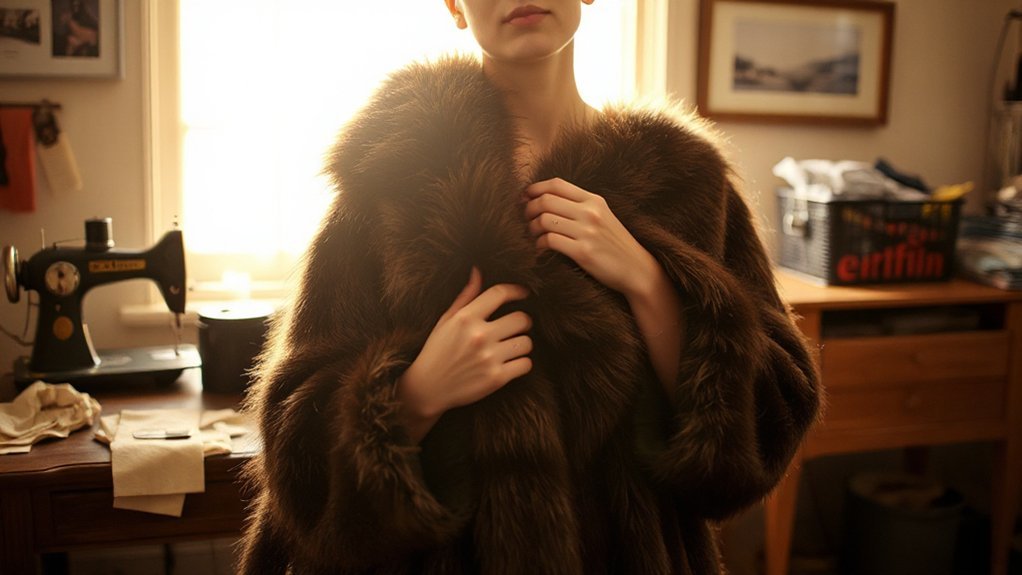
Funny coincidence: you and a plush faux-fur coat both showed up at the thrift shop, same week—what are the odds? You’re going to wear it like you mean it, but you’ll also ask questions: who made it, what’s the fiber, did anyone get shortchanged? Touch the nap, sniff for damp, check seams, and imagine it lasting years, not seasons. Keep it neutral underneath, repair loose lining, and if it still sparks joy, keep it—ethically.
Key Takeaways
- Choose faux fur from transparent brands with third‑party certifications (GRS, OEKO‑TEX, bluesign) and published supply‑chain audits.
- Prefer recycled or low‑impact fibers and avoid cheap, microfiber blends that shed microplastics excessively.
- Buy high‑quality or secondhand pieces that are durable, repairable, and avoid fast‑fashion disposables.
- Care gently: spot‑clean, steam or brush, mend seams, and store properly to extend the garment’s life.
- Ask questions, demand proof of fair labor and clean factories, and reward brands that publish materials and factory lists.
Understanding What “Ethical Faux Fur” Really Means
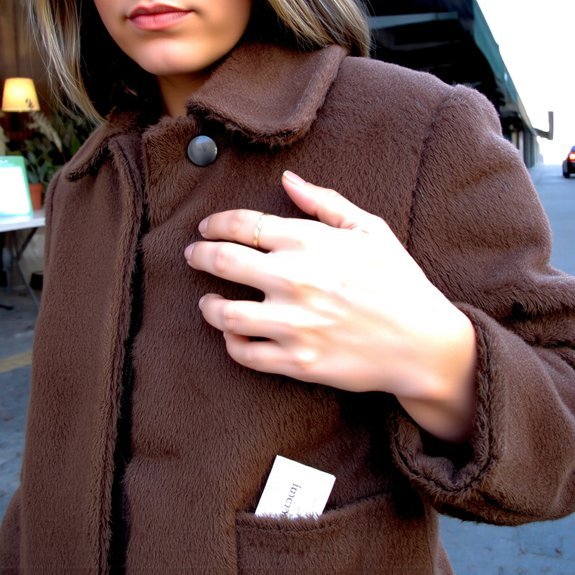
What does “ethical faux fur” even mean, and should you feel guilty about that fluffy coat you crave? You don’t, not if you look past the label and into how it’s made. Picture rubbing a soft cuff, smelling warm polyester, seeing neat stitches—ethical production means workers treated fairly, factories clean, waste handled right. You’ll want materials chosen with care, sustainable practices guiding each step, not greenwash. I’ll admit, I’ve bought shiny knockoffs before, awkwardly proud, then cringed when I learned more. Now you ask questions, press brands, demand proof. Hold the coat, test the seam, read small print. It’s fashion and conscience, hand in hand; you can feel good, stylish, and a bit smug too.
Choosing Materials and Certifications to Trust
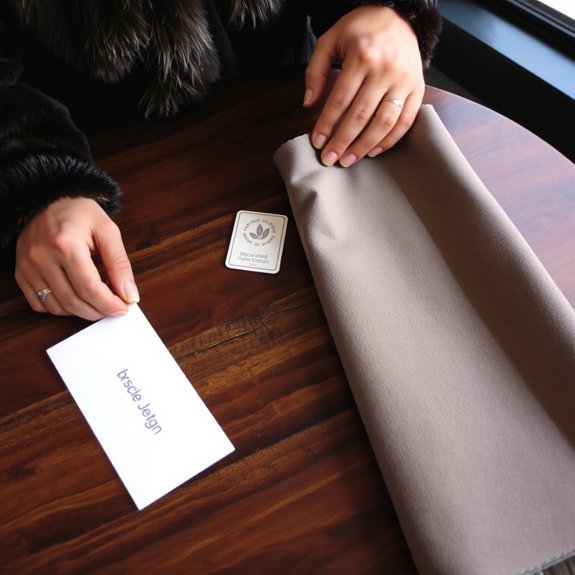
You’ll want to feel the fibers, literally—run your fingers along a swatch and note whether it’s soft polyester, recycled nylon, or something mystery-brand that sheds like confetti. I’ll point out which fiber types carry big environmental costs and which ones actually cut waste, and we’ll sift through labels together so you don’t get hoodwinked by green-sounding nonsense. Trust only recognized ecolabels, I’ll show you the trustworthy seals, and we’ll laugh at the fakery along the way.
Fiber Types and Impacts
Sometimes a label sounds fancier than it is, and you end up cuddling a coat that’s more petrochemical than plush. I’ll walk you through fiber sustainability, what different yarns feel like, and why your choice matters. Polyester is soft, cheap, sheds microplastics in the wash, and smells like industry after a rainy day. Acrylic can mimic wool, pills fast, and heats up like a small radiator. Recycled fibers cut waste, but check processing energy. Plant-based alternatives, like Tencel blends, breathe better, yet may still use chemicals. Touch the pile, lift the lining, scuff a cuff—notice weight, sheen, and odor. Ask brands where fibers come from, how they’re made, and what ends up in your sink.
Trusted Ecolabels Only
Even if a shiny logo looks trustworthy, don’t let it lull you into a warm, false sense of eco-safety — I’ll walk you through the labels that actually mean something. You’ll learn to spot real certifications: GRS for recycled content, OEKO-TEX for low toxins, and bluesign for factory-level checks. Hold the tag, squint like a detective, smell the fabric (yes, do it), and read the tiny print. Favor eco friendly brands that show chain-of-custody, third-party audits, clear percentages. Ask questions, demand proof. Sustainable practices aren’t slogans, they’re documented processes. If a label squeals greenwashing, walk away, or ask for receipts. I’ll nag a bit, because integrity matters, and faux should still feel morally cozy.
Evaluating Brand Transparency and Supply Chains
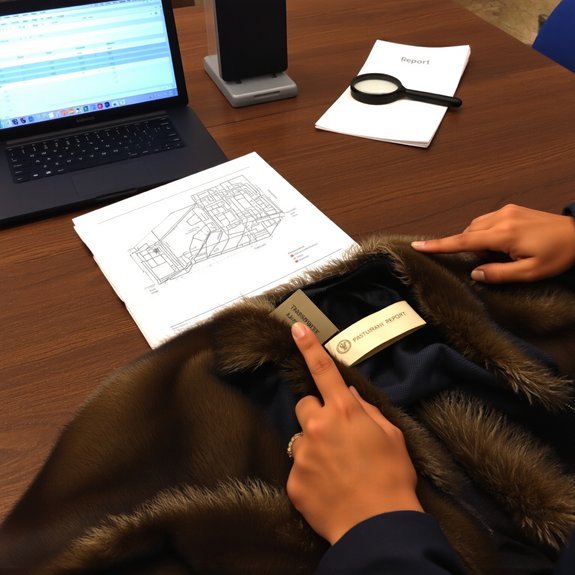
How transparent is that brand, really — and how do their faux-fur coats go from sketch to storefront? You should ask about brand ethics and demand supply chain transparency, because vague promises smell like perfume over sweat. Peek at factory lists, materials origin, and audit reports. If they hide names, walk away, politely.
- You imagine a dye vat steaming, a worker’s hands rinsing soft fibers.
- You picture a checklist, stamped, dated, signed, proof of care.
- You see a truck route map, pins tracing yarn to mill to shop.
- You hear a customer service rep pause, then give a real name and timeline.
I nudge you to question, compare labels, and reward honesty with your wallet.
Caring for and Repairing Faux-Fur Pieces to Extend Their Life
If you want that faux-fur coat to outlast trends and roommate apocalypses, you’ve got to treat it like the divaesque creature it is — gentle, fussed over, and never shoved into a damp heap. I’ll show you tidy repair techniques, the cleaning methods that actually work, and little rituals that keep pile plush. Brush with a soft bristle, steam from a distance, spot-clean spills with mild soap, never tumble-heat. Sew split seams by hand, reattach loose lining, clip pills with scissors — slow, steady, prideful fixes. Store in breathable bags, air it after rain, and say no to harsh solvents. You’ll save money, waste less, and look smugly stylish. Trust me, your coat will thank you.
Shopping Secondhand, Vintage, and Upcycled Faux Fur
You’ll want to start at trusted vintage shops and vetted online sellers, where you can actually ask questions and smell the fabric—yes, I encourage the sniff test. Inspect seams, lining, and backing closely, fingers tugging at fur and zipper, because small repairs beat landfill every time. If something’s loved but tired, upcycle it into a collar, trim, or plush cushion and give the piece a new life you’ll brag about.
Seek Trusted Vintage Sources
While I love the thrill of a treasure hunt, I also know your time—and closet space—are precious, so let’s get smart about sourcing vintage faux fur. You’ll want clear vintage sourcing cues: seller history, fabric tags, and good photos. Stick with trusted retailers who describe fibers, offer returns, and show close-ups; you’ll save headaches, and drama. Picture yourself running a soft paw across a 1970s collar, spotting neat stitching, smelling faint cedar—yep, joy.
- dimly lit shop, racks humming, labels whispering “rare”
- sunlight on a glass case, faux fur folded like a secret
- a handwritten tag, price circled, date annotated
- courier knocking, parcel warm with thrift-store perfume
Trust your instincts, and buy with purpose.
Inspect Condition Carefully
A few careful minutes here will save you from a closet full of sad, flattened fluff and buyer’s remorse. I want you to touch it, really touch it—run your fingers through the pile, feel for bald patches, sticky spots, or that weird plastic sheen that screams cheap. Smell it, yes, awkwardly—mildew and smoke don’t hide. Check seams, linings, zippers; tug gently, listen for strain. Look for matting, clumps, loose fibers, or weird stains that won’t come out. Ask the seller about cleaning history, and don’t flinch if they shrug. You’re shopping faux fur for ethical fashion reasons, so prioritize quality, longevity, and repairability. If it passes your jury, you’ve scored style without the guilt. If not, walk away.
Upcycle for New Life
If you want to wear something with history, skip the glossy fast-fashion racks and hunt the secondhand shelves instead—I swear it’s where the good stories hide. You’ll find vintage faux fur that’s worn-in, soft, patched by hands you’ll never meet, begging for upcycled fashion love. You can patch, trim, dye, or stitch it into a new life. I’ll show you how to rescue texture and memories, with tools, patience, and a selfish grin.
- A faded collar you brush back into satin softness
- A cuff you cut and reattach, smelling faintly of attic dust
- A torn seam you repair with bright thread, proud and visible
- A hood you transform into a plush tote
Creative repurposing wins, always.
Exploring Lower-Impact Alternatives and Responsible Styling
Since you care about style and you don’t want a guilty conscience with your coat, let’s talk lower-impact options that actually look good and feel like a hug, not a lecture. I’ll be blunt: sustainable fashion isn’t a sacrifice, it’s smart shopping. Look for recycled faux fur, plant-based pile, or blends that shed less and wash kinder, run your fingers through the nap, notice the weight, the warmth. Embrace vintage finds, swap with friends, mend seams—yes, you can wield a needle like a tiny superhero. Practice ethical consumerism by checking labels, supporting transparent brands, and avoiding impulse buys that scream “regret.” Style responsibly: pair a statement collar with simple jeans, keep care gentle, and enjoy the cozy without the conscience.
Conclusion
Think of your faux fur as a loud friend you want to keep out of trouble. Choose brands that show their receipts, hunt thrift shops for hidden gems, and mend what frays—your closet will thank you. I’ll admit, I love a dramatic collar, but I’ll pair it with simple jeans and soft cashmere-adjacent sweaters, so the look sings without wrecking the planet. You’ll feel cozy, clever, and a little bit smug—in a good way.