
You’re standing at the threshold of a new year, coffee cooling, calendar blank, and you want one word to steer the ship—smart. Start by scanning last year’s highs and flops, feel the sting and the glow, then name what mattered most; maybe it’s “clarity,” “courage,” or “margin.” Say each aloud, see which one sits heavy and honest in your chest, then keep it close—on your mirror, your phone, your wallet—because if it doesn’t make you act, it’s just pretty wallpaper.
Key Takeaways
- Reflect on last year’s highs, lows, and lessons to identify themes that need attention or celebration.
- Clarify your core values and priorities, then choose words that directly embody those anchors.
- Brainstorm freely, test candidate words aloud in daily scenarios, and keep ones that feel resilient under stress.
- Create simple rituals and visible reminders (wallpaper, tokens, morning/evening cues) to integrate the word into daily life.
- Review weekly wins and setbacks, adjust small tactics, and reassess the word periodically to keep it alive and useful.
Reflect on the Past Year
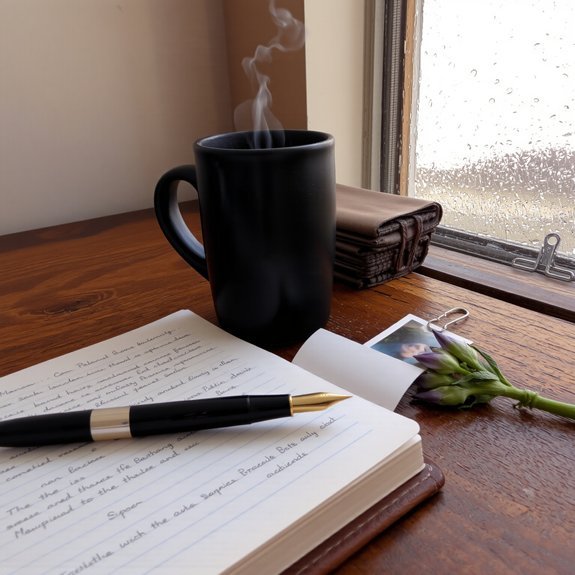
Picture your year as a messy suitcase on the floor—socks, tickets, one mystery receipt you can’t explain. You kneel, unzip memories, pull out past experiences like crumpled maps and sticky notes. I nudge you: name the big, awkward moments, the quiet wins, the nights you learned to breathe. Feel textures — the grit of disappointment, the soft velvet of a kindness you didn’t expect. Jot scenes, dialogue crumbs, the smells that dragged you back. Say aloud what worked, what didn’t, what shocked you into growth. Those lessons learned aren’t lectures, they’re breadcrumbs to your next step. You’ll sort, toss, fold differently now. We laugh, you sigh, and a clearer path peeks from the pile.
Identify Core Values and Priorities
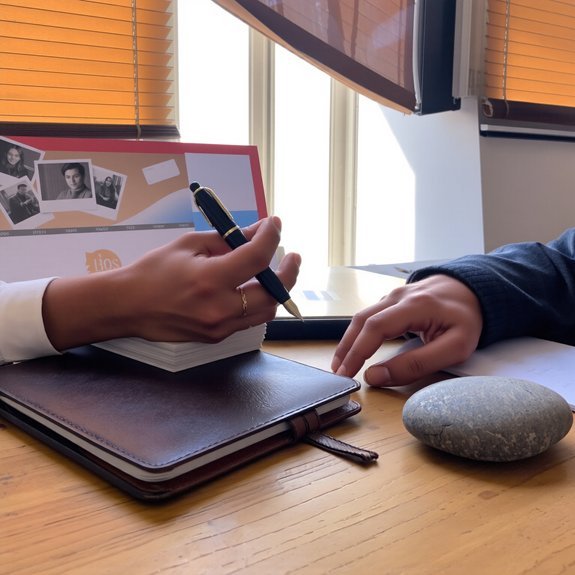
Okay, now that you’ve emptied the suitcase and patted down the lining for loose receipts, let’s name what really matters. Look around the room of your life — the smell of coffee, the stack of unread mail, sunlight on your desk — and ask, what do I defend no matter what? Say them out loud: kindness, courage, play, stability. Those are your core beliefs, the anchors when storms hit. Now rank them, not with guilt, but with honest appetite. Which personal values make your mornings lighter, your choices clearer? Touch each value, feel its weight, imagine saying no without regret. I’ll be blunt: pick the ones you’ll actually live by, not the ones that sound impressive at dinner parties.
Brainstorm Candidate Words
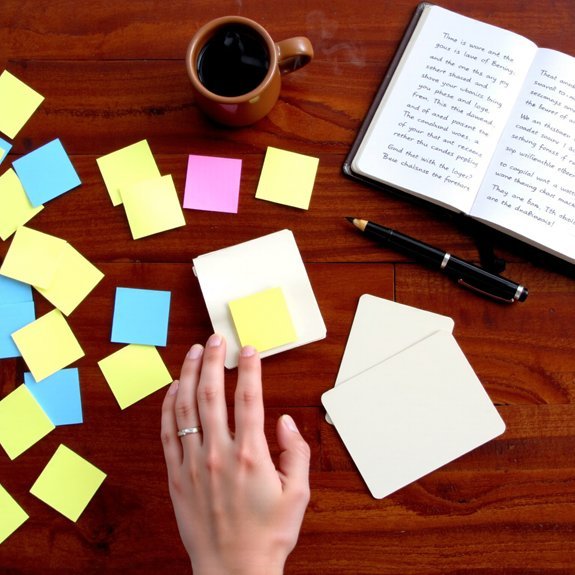
Alright, let’s raid the word pantry and see what sticks: I want you to grab a pen, a napkin, anything—scratch down everything that buzzes when you think of your values, even the half-formed ones that sound a little weird out loud; don’t censor, just spill. I pace, you scribble. Say a word, then chase it with word associations — images, smells, small memories. Toss verbs, nouns, even goofy fragments. Use thematic brainstorming: pick themes like courage, calm, curiosity, then riff ten words under each. Say them aloud, feel the mouth-shape, notice which ones sit heavy or light. Circle favorites, cross out the show-offs. Snack break optional. Keep it messy, fast, playful. Later we’ll sharpen, but for now, collect the glitter.
Test Words for Fit and Longevity
You’re going to test each candidate word like it’s auditioning for a tiny, dramatic role in your daily life — say it out loud while making coffee, text it to a friend, scribble it on a sticky note and see if it still feels right by lunch. Notice how it lands in your chest, whether it sparks a smile or feels flat, and imagine using it a year from now when things change, seasons shift, and you’re tired but stubbornly hopeful. I’ll be blunt and a bit ridiculous: if the word survives morning chaos, emotional honesty, and future curveballs, it’s probably a keeper.
Everyday Usability
Let’s do a quick kitchen-test for your Word of the Year: say it out loud while you’re making coffee, stuck in traffic, or texting your stubborn aunt, and notice how it feels in your mouth—does it sit right, or does it trip over your tongue like an overstuffed sandwich. Say it again, use it in a sentence, imagine it on a sticky note by your keys. You’re evaluating everyday applications, imagining daily implementations. Try these quick scenes and notice the fit:
- Whisper it while rinsing dishes, listen for honesty.
- Text it to a friend, see if it survives autocorrect.
- Say it in your head during a boring meeting, check stamina.
- Write it on a grocery list, watch if it gets used.
If it survives, you’ve got a keeper.
Emotional Resonance
Emotion matters more than you think, and I’m picky about it—so should you. You hold a word up to the light, feel its weight, listen to how it sits in your mouth. Say it aloud, whisper it at dawn, curse it at noon. Notice the emotional impact, the quick warm tug or the flat shrug. Does it spark a memory, a smell of rain on pavement, your grandmother’s laugh? That personal significance tells you if the word will live with you. Test it for weeks, slip it into a sentence, see if it comforts or nags. If it makes you grin and steady your steps, keep it. If it feels like wearing last year’s shoes, thank it and move on.
Future-Proof Adaptability
If a word can survive a surprise plot twist, it’s probably worth keeping—because life will surprise you. You want a word that bends, not breaks, when plans shift, so test it for fit and longevity. I toss words into scenes, feel their texture, hear their snap. If they sit well in chaos, they pass.
- Say it aloud during a crisis, listen for steady breath, not panic.
- Use it in a tiny victory, taste the sweetness, note the spark.
- Imagine it in five years, watch how it wears, see if it still fits.
- Pair it with adaptable strategies, ask if it nudges a future ready mindset.
Pick the word that stays useful, even when the script flips.
Narrow to a Shortlist
Now that you’ve gathered a pile of contenders, it’s time to play matchmaker—only with words, not awkward small talk. You spread them on the table, fingers tapping, coffee steam fogging your glasses. Use practical word selection strategies: test sound, image, and ease of saying it aloud. Ask, does it spark motion in you, or just look pretty on a sticky note?
Set shortlist criteria, three to five max. Pick words that feel vivid, usable in sentences, and that won’t wilt by March. Whisper each candidate, walk around the room, see which one echoes back. Cross out the flops, keep the ones that make your chest tighten a little—yes, that’s scientific, I promise. Trim until the pile hums.
Decide on Your Word With Intention
Decision time. You’re here to pick one word, not a manifesto, so breathe, feel the weight of ink, and choose with intention setting. I’ll be blunt: this is where mindful choices matter. Say the words aloud, taste them—do they sit light or heavy? Picture a Tuesday morning, coffee steam, a quick win: does the word help?
Decision time: pick one word that feels like a steady yes—simple, breathable, and built to last.
- Does it nudge you, gently, toward what’s missing?
- Can you say it when tired, still feel steady?
- Is it broad enough to grow, specific enough to guide?
- Will it survive a bad day, a surprise detour?
You’ll know, because it’ll make you smile, or steel you up. Trust your gut, and pick the one that feels like a yes.
Create Practical Reminders and Rituals
You’ll want to slap your word where you’ll actually see it—on your bathroom mirror, phone lock screen, or coffee mug—so the sight and the silly reminder hit you before you’ve had caffeine. Start and end your day with a tiny ritual, like saying the word aloud while stretching, or scribbling it once on a sticky note and folding it into your pocket; it’s awkward at first, trust me, that’s part of the fun. These little cues and rituals turn a tidy intention into habit, and habits, unlike good ideas, actually stick.
Daily Visual Cues
How will you actually remember your Word of the Year when life zips by like a caffeinated squirrel? I’ll bet you need visual inspiration that sticks, not a lecture. Put the word where you see it, touch it, and trip over it in the nicest way.
- Stick the word on your mirror, in bold, so morning coffee meets intention.
- Set a tiny card by your keys; graze it when you leave, get a mindful reminder.
- Use a phone wallpaper with a simple image and the word, bright and cheeky.
- Place a textured token in your pocket; rubbing it nudges attention, like a gentle elbow.
These cues become tiny rituals, sensory anchors that whisper, “Remember,” throughout a busy day.
Simple Start/End Ritual
If you want your Word of the Year to actually stick, start and end your day with tiny, repeatable rituals that don’t need motivation, only muscle memory—I do morning and evening ones, and they’ve saved me from forgetting my own name on deadline days. Each morning, rinse your face, breathe, and whisper the word into your palm like a secret. It smells like coffee and possibility. At night, place a hand on your chest, read one sentence of personal reflection, and exhale the day away. These simple start/end ritual moves are low drama, high signal. They cue the brain, anchor intention, and make the word part of real life. Do it for a week, then call me, triumphant or delirious.
Review and Adjust Throughout the Year
Once every few weeks, I like to stop, make a cup of something strong, and actually look at my word — not like it’s a poster, but like it’s a small, opinionated friend who’s either cheering me on or quietly judging my choices. You do the same, you sip, you ask gentle questions: Is this helping? Where did I stumble? Keep a tiny progress tracking note, honest and messy. Then tweak.
- Check one concrete win from the week, no bragging, just facts.
- Name one stubborn habit that resisted change, be blunt.
- Adjust one small tactic for the coming week, try it fast.
- Jot a line toward your year end evaluation, don’t wait.
Repeat, laugh, course-correct, keep it alive.
Conclusion
You’ll pick a word that feels like a worn key, small but heavy, that fits the lock of your year. I’ll nudge you, tease you, then shut up so you can try it on at breakfast, in meetings, on bad days. If it sparks, keep it; if it drags, swap it. Tape the word to your mirror, whisper it when you worry, wear it like a lucky coin. Come December, we’ll compare notes — win or learn.
Leave a Reply