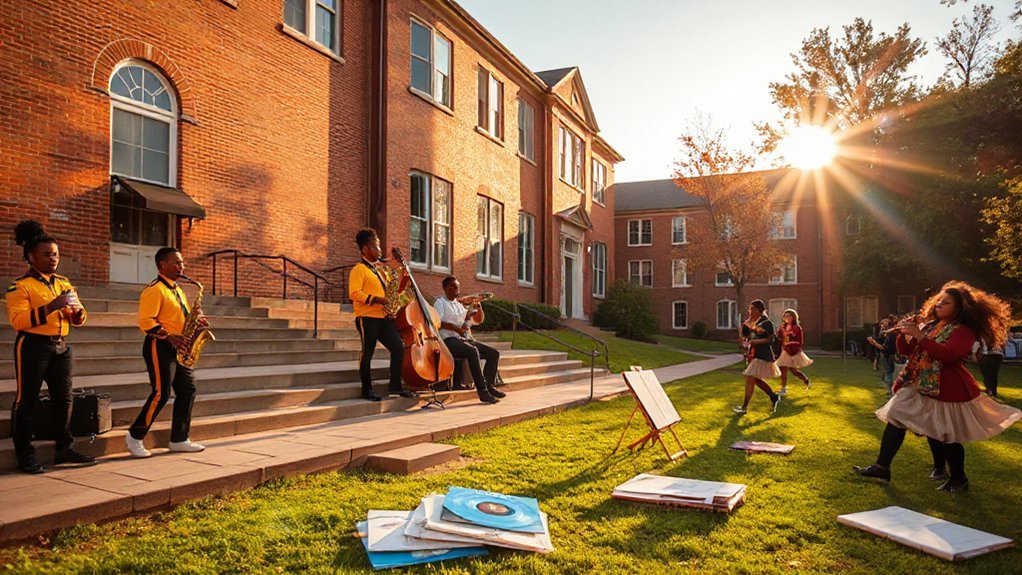
About 70% of major Black music movements trace roots back to HBCU campuses, and you’ll feel that in the stomp of a band and the hush before a gospel solo — it’s visceral, loud, and oddly intimate. I’ll walk you through brass so bright it stings, choirs that fold time, and theater that punches history in the ribs, but first imagine stepping onto a quad where tambourines clack and paint still smells like home — you’ll want to stick around.
Key Takeaways
- HBCUs cultivated gospel, jazz, hip-hop, and call-and-response traditions that shaped national Black musical styles and performance practices.
- Marching bands transformed halftime into theatrical, genre-blending spectacles that influenced popular music choreography and showmanship.
- Campus theater, dance, and spoken-word programs nurtured storytelling that connected historical memory with contemporary social critique.
- Visual arts and design curricula promoted creative entrepreneurship, preparing artists to lead cultural industries and community projects.
- HBCUs preserved Black heritage through archives, community workshops, and street theater, sustaining cultural activism across generations.
The Rise of Black Musical Traditions on Campus
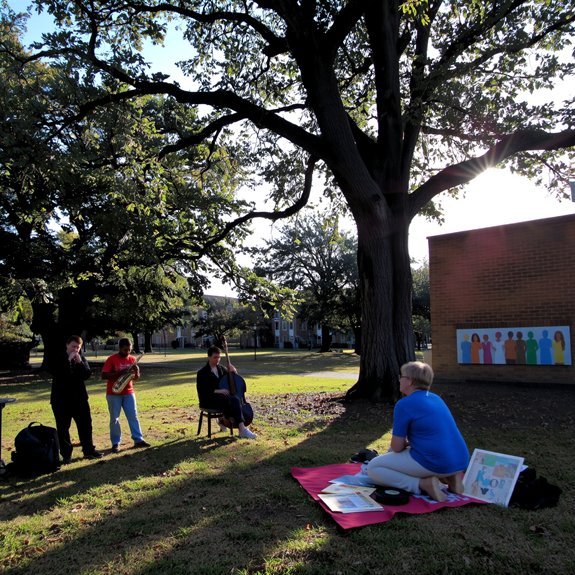
When you walk onto an HBCU quad in spring, the air practically vibrates — brass and snare tapping out a heartbeat, voices threading gospel runs like bright ribbons, and someone somewhere always starts a call-and-response that spirals into laughter. You feel it in your chest, in the way feet find rhythm on cracked pavement, in the scent of stage makeup and cooked greens mingling. I’ll tell you, you can’t help but join; you sway, you clap, you hum the chorus under your breath like it’s yours. Choirs, jam sessions, spoken-word circles teach history by ear and muscle, they pass down spirit and protest, they make tradition lively, immediate, insistently present. You leave humming, changed.
Marching Bands and Performance Innovation
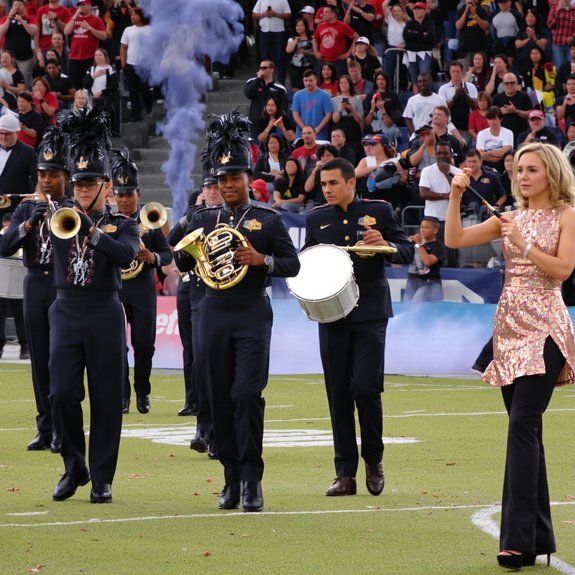
If you think music on an HBCU campus is just background, think again — I promise the marching band will make you reconsider your life choices. You’ll feel the bass in your chest, see sequined uniforms flash, hear a drumline talk back like it’s daring you to clap, and I’ll grin because you’ll try and fail to stay seated. Bands invent choreography on the fly, stitch jazz and hip-hop into fanfares, and turn halftime into theater without a script. You’ll watch snap turns, crisp cymbal crashes, and a trumpet solo that steals your breath, then you’ll applaud like you’ve found religion. Trust me, once you’ve witnessed that precision chaos, campus life will never sound the same.
Theater, Dance, and Literary Movements Emerging From HBCUS
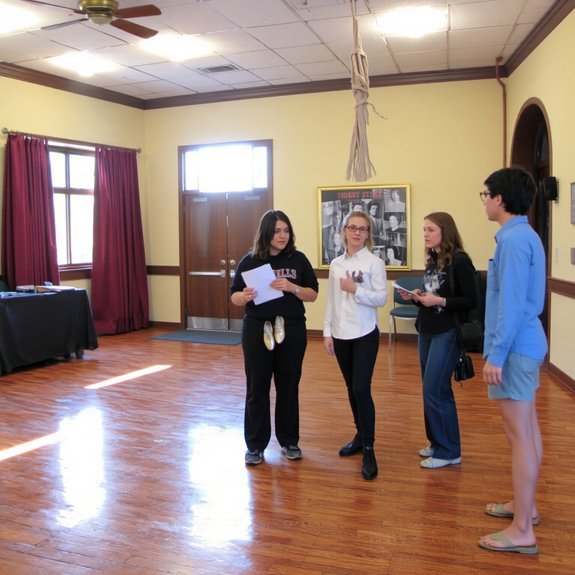
You think the band stole the show? I’ll argue otherwise, because when you step into an HBCU theater, you smell dust, paint, and applause, and you feel stories land like warm thunder. You watch dancers snap the air, feet carving history, while a chorus of student-writers reads lines that sting and soothe. I’ve seen workshops where scripts became movements, scenes turned into protests, and choreography translated speech into muscle. You hear rhythms in spoken-word slams, taste irony in comic timing, and notice legacy plays resurrecting elders’ laughter. You’ll meet mentors who demand truth, classmates who riff on classics, and productions that train you to think, feel, and act. Trust me, the stage here teaches everything.
Visual Arts, Design, and Creative Entrepreneurship
Studio light hums like a promise, and you’ll feel it hit canvases, screens, and sketchbooks the moment you step into an HBCU art room—paint fumes sweet, paper crisp, sneakers scuffing concrete. You learn technique here, but you also learn hustle. Professors push you, critique you, nudge you toward bold choices, and you answer with color and curiosity. You draft logos, build portfolios, pitch to real clients in classes that double as incubators. You launch zines, pop-up shops, and small studios from dorm-room ideas. Your peers become collaborators, collectors, cheerful saboteurs of bad taste. You graduate with a toolbox: craft, strategy, and grit. You walk out ready to sell a vision, because HBCUs teach you to make and market brilliance, fast.
HBCUs as Hubs of Cultural Activism and Preservation
While the chapel bells fade and the mural’s paint is still tacky, HBCUs are where culture gets both saved and sharpened; I’ll show you how. You walk campus paths, smell fresh paint and gumbo, hear chants turned into protest songs. I watch students archive quilts, rehearse protest dances, and record elders’ stories, all urgent, all tender.
- Archival nights: you handle brittle photos, you hear grandmama’s laugh on tape, you catalog memory with gloves on.
- Street theater: you join a march, shout a rehearsed line, perform history that won’t be ignored.
- Community workshops: you teach kids drum beats, they teach you stubborn joy.
- Preservation labs: you stabilize murals, mix pigments, touch history without breaking it.
Conclusion
You’ve seen how HBCUs turned campus halls into drumlines of history, how choirs filled air like warm syrup, and how artists sketched rebellion into bright murals. I’ve watched students rehearse until dawn, smelled brass and paint, felt the crowd roar—honest to heaven, it’s louder than a thunderclap. You carry that legacy now, a torch and a playlist. So go, make noise, create, preserve—don’t just admire it, add your own verse.
Leave a Reply