
Most people don’t know HBCUs still graduate Black women at higher rates than many peers, and that shapes everything you feel on campus. You’ll notice it in the way professors call you by name, the auntie-energy in advising sessions, the late-night study groups that smell like coffee and candle wax, and the alumnae who’ll slide into your DMs with job leads—yes, really. I’ll show you how that translates into mentorship, leadership, and a real sense of home, so keep going.
Key Takeaways
- Provide culturally responsive curricula and faculty mentorship that center Black women’s histories, voices, and lived experiences.
- Offer women-centered leadership programs, hands-on roles, and celebratory spaces that build confidence and practical skills.
- Maintain strong mentorship networks and alumnae support for career guidance, networking, and personal development.
- Deliver culturally competent mental health services, peer support groups, and wellness resources tailored to Black women.
- Create research, internship, and community-engagement opportunities with funding and faculty mentorship for professional growth.
Historical Role of HBCUs in Advancing Black Women’s Education

If you step onto a HBCU quad at dawn, you can almost hear history clearing its throat—so let me tell you why that matters. You’ll smell dew on grass, chalk dust from old steps, warm coffee in a mason jar, and the steady click of heels on brick. I’ve walked those paths with women who refused “no” like it was polite suggestion. You watch sisters teach, organize, and found clubs at midnight, then lead convocation at nine, tired but fierce. They built nursing programs, teacher colleges, and legal pipelines when doors were bolted shut. You feel the lineage in embroidered banners and graduation caps, a practical legacy: access, mentorship, leadership training. It’s stubborn hope, turned into institutions that work.
Culturally Responsive Curricula and Teaching Practices

Those worn banners and midnight club meetings aren’t just pretty backdrops; they set the stage for what professors teach and how they teach it. You’ll notice syllabi that name Black women thinkers, writers, scientists—real people, not footnotes. Faculty bring stories, recipes, speeches into class, you’ll smell spices, hear gospel, see old photos projected beside theory. Discussions center your experience, instructors ask hard questions, then pause—really listen. Assignments let you connect research to community, practice to purpose. Professors adapt language, examples, pacing so you don’t get lost, they laugh when a joke lands, groan when I over-explain, we all learn. That cultural threading keeps content relevant, builds confidence, and makes learning feel like home, not homework.
Women-Centered Student Organizations and Leadership Development
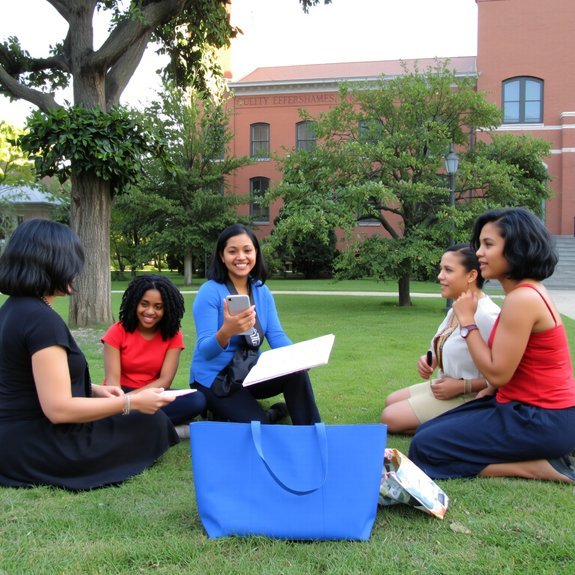
When I walked into my first women’s circle on campus, I could smell coffee and citrus cleaner, hear a playlist that mixed Nina Simone with Cardi B, and feel the kind of buzz that makes you sit up straighter—so yeah, these groups grab you before anyone even says a name. You join, you listen, you speak, and you learn to lead without a script. These organizations build your confidence, teach meeting rituals, and let you fail in public, which is oddly freeing. You get hands-on roles: plan events, run campaigns, chair panels. It’s practice, with real stakes and real applause.
- Run a budget, own a room, feel the win.
- Lead a workshop, adjust on the fly.
- Debate policy, sharpen your voice.
- Stage an event, celebrate loudly.
Mentorship Networks: Faculty, Staff, and Alumnae Relationships
You learn a lot by messing up in front of your sisters, but you learn even more when an older woman who’s been there hands you a map. I point you toward faculty who actually listen, staff who open doors, alumnae who show up with casseroles and résumés. You meet in cramped offices, at homecoming tents, over lukewarm coffee — voices low, laughter loud, advice sharp. You get tough love, blind recommendations, internship leads, and a call after a bad grade. You practice asking for help, you rehearse elevator talks, you steal notes, you borrow confidence. Mentors nudge you into rooms you didn’t know you belonged in, they celebrate the small wins, they call you on your excuses, and they stay.
Mental Health and Wellness Support Tailored to Black Women
If you’re carrying grief, stress, and the constant “prove-it” hum in your bones, HBCUs try to meet you where you are — not with blank syllabi but with people who actually get the mess. I see you pacing between classes, tapping your pen, breathing through a lecture that feels loud and small. You’ll find counseling that centers Black women’s stories, peer groups that smell like mint tea and honest tears, and wellness fairs where laughter bubbles up next to serious talk. You get practical tools, culturally attuned therapists, and spaces to rest without explanation. Consider these lifelines:
- Culturally competent counseling that names your stress.
- Peer-led support circles with real talk.
- Restorative practices: yoga, breathwork, art.
- Outreach that knocks on dorm doors, not inboxes.
Financial Aid, Scholarships, and Economic Mobility Programs
Because money talks and silence costs, HBCUs don’t just hand you a brochure and hope for the best — they hustle to make school affordable, and yes, sometimes they’ll sweet-talk a scholarship committee on your behalf. I’m telling you, you’ll meet financial aid counselors who smell like coffee and confidence, who comb through FAFSA like detectives. They’ll stitch together grants, work-study, emergency funds, and targeted scholarships aimed at Black women, so you don’t have to choose between books and groceries. You’ll sit in offices, sign forms, celebrate award letters with a tiny happy dance. Campus programs teach budgeting, credit repair, and entrepreneurship, turning tiny stipends into real momentum. It’s practical help, prideful support, and money-forward policy, all wrapped in community.
Career Preparation and Internship Pipelines for Black Women
When I tell you HBCUs treat career prep like craft, I mean they build pipelines with the same care someone uses to bead a necklace—delicate, deliberate, and with plenty of shine. I watch you walk into career fairs that smell like fresh name tags and hope, and I nudge you toward counselors who know your strengths before you do. You get internships tailored to your goals, mentors who call you by your nickname, and mock interviews that sting a little, in a good way. You’ll leave with a portfolio that clicks, references who root for you, and a network that shows up.
- Targeted employer partnerships
- Paid internships with mentorship
- Resume labs and mock interviews
- Alumni pipelines and referrals
Campus Culture: Community, Identity, and Belonging
You’ll feel the rhythm of campus in meals shared under porch lights, homecoming chants vibrating your ribs, and the steady hand of a sister who knows your name. I’ll point out how mentorship circles, bustling student orgs, and leadership spots meant for you build confidence, open doors, and sometimes hand you a mic when you least expect it. It’s honest, warm, and a little cheeky—HBCU life crafts identity and belonging, and you’ll laugh, learn, and lead along the way.
Shared Cultural Traditions
If you’ve ever walked across an HBCU quad at sunset, you know the air tastes different — a mix of fried plantain, fresh-cut grass, and someone’s open notebook speckled with poetry. You feel the pulse of tradition under your shoes, hear elders calling names at chapel, and grin when a familiar chant starts—like joining a secret you actually can talk about. Shared rituals stitch you in. They teach you rhythms, give you language, and hand you recipes that double as history. You learn to move with pride, to respond to call-and-answer, to hold both joy and protest.
- Homecoming parades that smell like collard greens and victory
- Step shows banging, rhythms syncing your heartbeat
- Sunday potlucks, recipes spoken in stories
- Commencement caps tossed to ancestors smiled at
Sisterhood and Mentorship
Because sisterhood here smells like powder coffee at dawn and sounds like a late-night group chat that never quits, I learned fast that mentorship isn’t a handshake and a business card — it’s someone sliding you a plate of mac and cheese after a bad test, it’s a professor who remembers your grandma’s name, it’s a senior who shows you the shortcut across campus and the courage to speak up in class. You get pep talks between classes, study playlists in your DM, and hands that steady when anxiety hits. You watch older women balance work and joy, take notes, then steal their confidence like a needed pen. You also get blunt truth wrapped in care, and sometimes a roast that lands just right. You belong, you grow, you laugh hard.
Inclusive Leadership Opportunities
When I say leadership here, I don’t mean a stiff podium and a nameplate — I mean late-night planning sessions over soggy pizza, a student government suit jacket borrowed for an interview, and the nervous thrill of calling a meeting that actually shows up. I talk to you like a friend who’s been handed the megaphone, you know the jitters, the caffeine buzz, the tiny victories. On HBCU campuses, leadership looks scrappy and joyful, and it’s built to include you, not gatekeep you. You’ll find roles that fit your vibe, and folks who coach you, nudge you, and celebrate loud.
- Peer-led committees that welcome new voices
- Paid internships with real responsibility
- Affinity councils that craft policy input
- Micro-grants for student projects
Research, Scholarship, and Opportunities for Academic Advancement
Although you might not think of a library as a place that smells like possibility, step inside an HBCU research hub and you’ll catch that ink-and-coffee tang straight away, along with the low hum of people plotting the next big idea. You find faculty mentoring you over grant proposals, hands sketching methods on napkins, laughter breaking the tension. You’ll get funded labs that prioritize your questions, travel support to conferences, and publishers who finally read your voice. You can join research cohorts, present boldly at symposia, and snag teaching fellowships that boost your CV. I’ll tell you, it’s practical magic — resources meet respect, and your scholarship can grow, stretch, and lead to tenure without losing your sense of self.
Community Engagement and Civic Leadership Initiatives
You’re standing on a HBCU quad, coffee steam in the cold air, watching students march off to a neighborhood meeting where your campus runs a local civic leadership program that trains Black women to lead with confidence. I’ll tell you straight—you’ll see them pairing classroom theory with hands-on community service partnerships, painting murals, organizing town halls, and checking voter rolls like pros. It’s practical, loud, and a little messy, and that’s exactly how change smells and sounds.
Local Civic Leadership Programs
Community matters, plain and simple — and I’ll bet you’ve seen how a single neighborhood meeting can smell like burnt coffee, buzz like a beehive, and actually change lives. I watch you step up, lead workshops, and learn to speak so neighbors listen. You practice town hall tones, craft flyers that don’t scream, and build policy briefs that actually fit in a tote bag.
You get mentorship from professors, real-world simulations, and networking over potluck plates. These programs teach you to run for boards, chair meetings, and steward resources.
- Build public-speaking chops, fast and honest
- Translate community needs into clear policy
- Forge cross-sector relationships that stick
- Lead with cultural insight, not just checklist
Community Service Partnerships
You’ve already learned how to run a meeting that smells faintly of burnt coffee and possibility; now imagine that energy multiplied by neighborhood clean-ups, voter-registration drives, and tutoring sessions that leave chalk dust in your hair. You jump in, you recruit classmates, you argue with city folks, you laugh when the banner rips. HBCUs pair you with schools, clinics, and grassroots groups, they hand you resources and say, “Go.” You teach algebra under oaks, register voters in church basements, deliver meals that steam in winter air. You build resume lines that matter, friendships that stick, confidence that won’t quit. It’s community work with curriculum muscle, civic training with heart, and yes, you’ll get dirty — and proud.
Conclusion
You’ve seen how HBCUs hold history, heart, and hustle for Black women — and you belong here. I’ve watched mentors meet you in dorm kitchens, felt classrooms crackle with bold Black brilliance, and heard alumnae cheer you on at midnight study sessions. Lean in, lead on, laugh loud. With community, care, and curated chances, you’ll claim career climbs and civic crowns. Stay steady, stay sassy, stay seen.
Leave a Reply