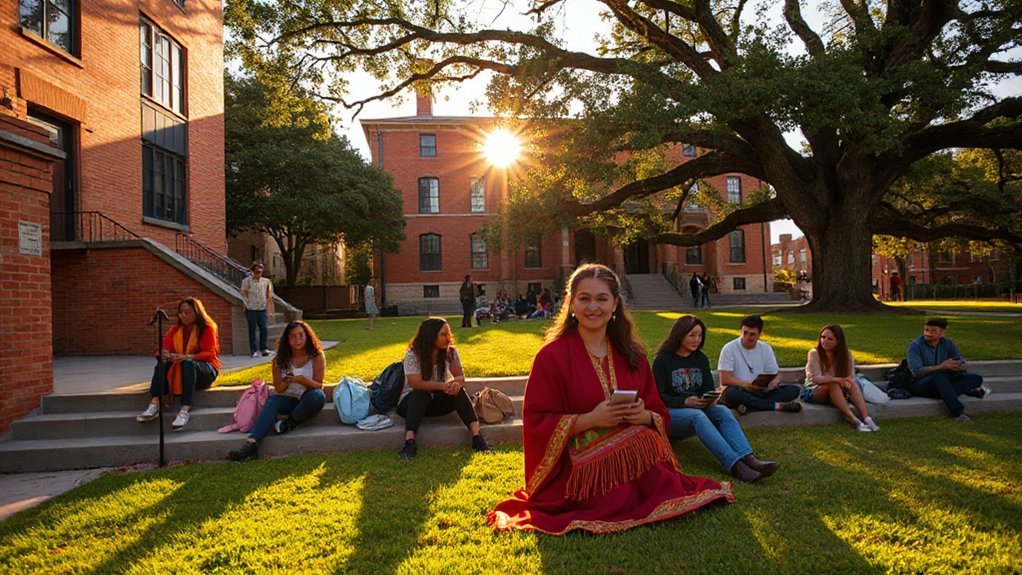
The campus felt like a potluck—one student brought cassava, another a casserole, and you could smell both before class even started—so you learn fast that HBCUs serve way more than one recipe. I’ll tell you straight: they recruit first-gen kids, welcome refugees, build global partnerships, and teach courses that actually reflect the lives in the room, while student groups throw cross-cultural events you don’t want to miss; stay with me — there’s a clever reason they’re so good at it.
Key Takeaways
- HBCUs recruit and support first-generation students with targeted outreach, wraparound advising, and peer study networks to boost retention.
- Admissions and services for immigrant and refugee learners include bilingual advising, translation resources, and flexible, holistic application processes.
- International student recruitment uses virtual fairs, consular partnerships, and scholarships to promote global campus diversity and exchange.
- Culturally responsive curricula integrate diverse texts, local histories, and community-based assignments that validate varied student experiences.
- Campus organizations and community partnerships host fusion events, shared cultural projects, and internships to foster cross-cultural engagement.
Historical Context and Expansion of HBCU Missions

When you walk onto an HBCU campus, you can almost hear history folding into the present—boots on gravel, chapel bells, the low hum of a student radio station—that telling sound reminds you these schools began as urgent answers to a broken promise. You feel that urgency in brick, in dorm hallways, in professors who teach like they’re repairing a rift. You see missions expand from basic literacy to law, science, art, tech; you watch labs light up at dusk. I’ll admit, I get giddy hearing a march past the quad, like time traveling with sneakers. Conversations mix accents, languages, the clack of keyboards; you taste campus food and debate policy at midnight. HBCUs kept adapting, and you benefit from that relentless, hopeful hustle.
Recruiting and Supporting First-Generation College Students
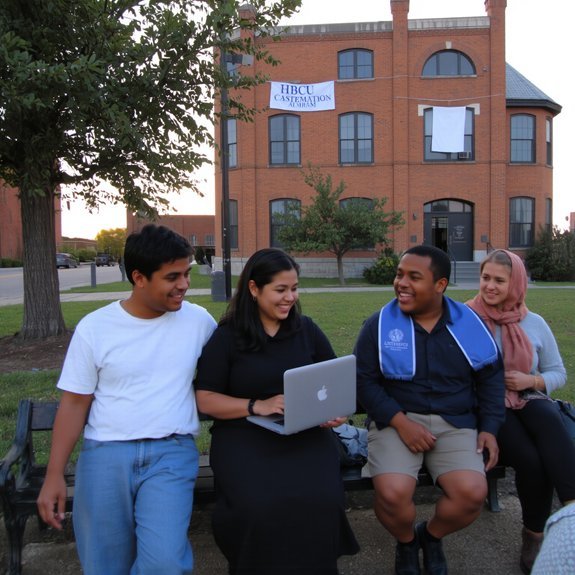
You’re standing at a high school gym after a recruiting visit, sweaty palms, brochures in hand, and I’m nudging you to think bigger — targeted outreach programs should meet first-gen students where they are, in classrooms, kitchens, and group chats. We’ll build wraparound academic support, tutoring that feels like a friend and advising that actually schedules your next step, not a lecture on responsibility. Trust me, it’s messy, it’s human, and it works — so let’s make the phone calls, set the study groups, and keep them coming back.
Targeted Outreach Programs
Because first-generation students often navigate college like hikers without a map, I make targeted outreach feel less like a cold phone call and more like handing them a flashlight and a fellow hiker’s hand. You’ll hear us at community centers, in high school cafeterias, on Saturdays at church bazaars, we’ll show up with pamphlets that actually explain money, deadlines, and jargon without yawning. I call, text, slide into DMs — politely — and invite you to campus tours that smell like fresh coffee and nervous excitement. We host info nights with real students, not robots, and set up mentors who’ll answer dumb questions at midnight. You get clear steps, deadlines circled, and someone to high-five when you beat the first obstacle.
Wraparound Academic Support
If we want first-gen students to stick around and thrive, we can’t just hand them a syllabus and wish them luck; we’ve got to wrap support around them like a good blanket on a cold dorm night. You’re the person who notices the nervous freshman in the library, offers a hot coffee, and says, “Okay, let’s map this out.” You set up tutoring, mentoring, financial counseling, late-night study sessions with pizza, and check-ins that actually listen. You teach them how to email professors, fill out forms, and file taxes without crying. You celebrate small wins loudly, correct mistakes gently, and keep a calendar that looks like a war plan. It’s hands-on, human, and relentless — exactly what first-gen students need to finish strong.
Serving Immigrant and Refugee Learners
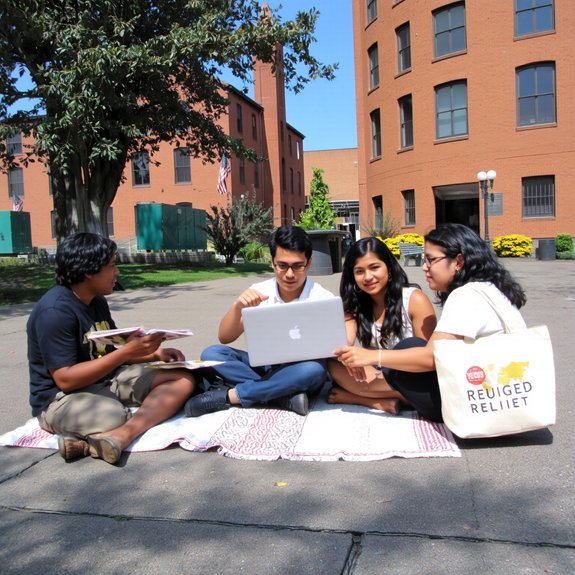
You’ve got students who came here carrying suitcases, recipes, and stories in different languages, and you can make admissions recognize that cultural wealth, not just test scores. Offer clear language access — bilingual advising, translation apps, flexible placement — so they hear instructions, not noise, and can join classes without feeling lost. Pair that with on-campus legal clinics or community legal partners, and you’ll turn paperwork panic into empowered progress, trust me, it’s worth the small chaos.
Culturally Responsive Admissions
Three small things changed my mind about admissions: a battered backpack, a trembling translator app, and a student who said “I want to be seen” in three different accents. I tell you this because you’ll need to see people, not papers. You make space by asking different questions, by valuing interrupted careers, by accepting unconventional transcripts with curiosity, not suspicion. You train readers to notice resilience, not just GPAs. You offer flexible deadlines, holistic essays that let lived experience sing, and admissions interviews that feel like conversations, not auditions. You partner with community groups, let recommendations come from mentors who know the whole story, and celebrate multilingual resumes. Do this, and you’ll enroll learners who change your campus for the better.
Language Access Programs
I watched a student wrestle with a translator app, then read her file like it was a mystery novel with missing chapters, and suddenly I cared more about the language she used than the grade she got. You see these programs on campus, they look simple: tutoring, bilingual staff, workshops. But they’re alive. You’ll hear laughter in a hallway, Spanish, Arabic, Kreyòl, English braided together, textbooks swapped like mixtapes. You’ll run a conversation lab, correct pronunciation, and learn to pronounce a name properly, which matters more than you think. You’ll pair mentors who’ve been there, build bridge courses that don’t insult intelligence, and create quiet spaces for oral exams. It’s practical, human work, and yes, it’s kind of glorious.
Community Legal Support
Count on messy paperwork and the sound of someone whispering “what does this mean?” at least once a week. You’ll see us at a folding table, coffee cooling, stamps clacking, guiding an Afghan mother through asylum forms, a teenager translating with shaky pride. We hand you pens, maps, phone chargers, patience. You’ll hear quick Spanish, warm Arabic, nervous English, laughter when a typo turns “baker” into “breaker” — we fix it together. We run clinics, partner with law schools, bring pro bono attorneys to campus, teach rights in plain language. You’ll leave with copies, a checklist, and a plan. I brag a little, because this work changes lives, one clarified sentence, one steady hand, at a time.
International Student Recruitment and Global Partnerships
Because HBCUs have long been hubs of resilience and creativity, we’ve got a real shot at turning international recruitment into something bold and unmistakably ours. You’ll host visitors who smell campus coffee and hear brass bands, you’ll trade stories over late-night food truck runs, and you’ll sell a vibe — warm, vibrant, and genuine. Reach out to consulates, alumni abroad, and student groups, set up virtual fairs with crisp slides and smiling faces, and offer clear, helpful admissions guidance. Build partnerships with foreign colleges for exchange semesters and joint research, negotiate scholarships that actually cover living costs, and create buddy programs so newcomers find friends fast. Be bold, be precise, and don’t forget to brag a little — modesty’s overrated.
Culturally Responsive Curricula for Diverse Populations
If you want students to feel seen, heard, and fired-up in the same classroom, start with curriculum that talks like real people and smells faintly of cafeteria spice and late-night library coffee; I’m talking readings that reflect students’ lives, assignments that let them bring their neighborhoods into theory, and assessments that don’t require a decoder ring. You’ll pick texts from varied traditions, toss in films, podcasts, and local oral histories. You’ll design projects where a map, a recipe, or a mixtape counts as research. I’ll coach you to scaffold clearly, give rubrics that don’t mystify, and invite community voices into lectures. Expect messy, brilliant discussions, occasional sparks, and students leaving class energized, not exhausted — learning that their experience is valid, useful, and rich.
Campus Organizations and Cross-Cultural Student Life
When I walk past the student center on a Thursday evening, you get the whole campus in miniature — scent of popcorn, a drum circle thumping from the quad, a table for the Afro-Latinx alliance next to a robotics club flyer taped crooked, and me, trying to decide which meeting will keep me up and which will wake me up. You’ll find student orgs that bridge cultures, swapping recipes, playlists, slang, and study tips. You’ll sit in a discussion where someone jokes, “Teach me your aunt’s sauce,” and suddenly everyone’s family history is dinner. You’ll dance at a fusion event, step miscounts and all, and learn that belonging isn’t uniform, it’s shared practice. These groups teach you to listen, laugh, and grow together.
Community Partnerships and Outreach Initiatives
So you leave the student center humming, popcorn grease on your fingers, and suddenly the campus feels bigger than its quad. You cross the lawn and I point out a mural we helped fund, bright as a playlist on repeat. You meet neighbors at a farmers’ market where students sell honey, professors run taste tests, and kids chase bubbles—literal outreach. You hear our choir at a community center, piano keys echoing down Main Street, and you think, wow, that’s us. We host joint internships, health fairs with free screenings, and summer camps that turn curiosity into college applications. We trade classroom time for city council meetings, swap ideas with nonprofits, and show up—sometimes with coffee, always with commitment—bridging campus and community.
Supporting Religious, LGBTQ+, and Other Identity Communities
Because campus identity isn’t one-size-fits-all, I make space for Sunday prayers, Pride flags, and everything in between—yes, even the weird little rituals you didn’t know mattered until you missed them. You’ll find a quiet chapel where sunlight slices the pews, a halal kitchen steam-scented at dinner, and a rainbow banner flapping by the student center. I hire chaplains, fund affinity groups, and clear rooms for midnight vigils or drag rehearsals. You can drop into a study circle, grab soup at a faith potluck, or join a conversation circle that gets real, fast. I celebrate holidays, teach respect, and intervene when bias shows its face. It’s messy, human work, and yes, sometimes I screw up—but then I fix it.
Lessons for Predominantly White Institutions
If you want to do diversity right, don’t copy-paste a cultural center and call it a day; you’ll end up with a pretty room and empty doors. You’ve got to listen, really listen — not that polite nodding, real listening that smells like coffee and late-night conversations. Walk campus paths, sit in classes, ask awkward questions, take notes, and act. Hire staff from communities you want to serve, give them power, and stop treating inclusion as a checkbox. Fund programs, not just publicity. Train faculty in histories they skipped, reward collaboration, and make policies that bend toward equity. Expect mistakes, apologize fast, learn faster. I’ll hold you to it — polite reform won’t cut it, genuine change will.
Conclusion
You’ll walk past a row of oak trees—roots twisted, branches wide—and you’ll feel the campus breathe stories not just of Black triumph, but of first-gen nerves, refugee courage, and passports tucked into dorm drawers. I’ll nudge you on, hand on your shoulder, saying: notice the classes humming with new accents, the prayer meetings, the Pride flag snapping in the wind. It’s a living quilt, stitched messy and proud, inviting you to sit, learn, and add your patch.
Leave a Reply