
You’re stepping onto a campus that knows your name before you learn the quad’s shortcuts, and I’ll bet you’ll smell coffee and hear laughter before midnight study sessions start; mentors lean over your shoulder, advisors text like they care, and professors make room after class, honest-to-goodness. You’ll get help filling out forms, finding scholarships, and calming your parents on the phone — and that’s just the start, so stick around to see how it all clicks.
Key Takeaways
- Peer mentoring cohorts and senior-student guides provide emotional support, orientation, and campus navigation for first-generation students.
- Culturally responsive curricula and classroom practices connect learning to students’ backgrounds and community experiences.
- Financial aid counselors offer personalized help with forms, scholarships, deadlines, and simplified funding guidance.
- Academic advisors, tutors, and study circles deliver course planning, hands-on tutoring, and strategies for academic success.
- Institutional retention policies use early alerts, predictive advising, and emergency funding to keep students enrolled and progressing.
The Role of Mentoring and Peer Support Networks

When you walk onto an HBCU campus for the first time, your chest tightens a little and your palms sweat—don’t worry, that’s normal; I felt it too. You’ll meet a senior who tucks a pizza slice into your hand and says, “You good?” That’s mentoring, up close. Peer groups form in dorm rooms, in buzzing student centers, on steps warmed by sun. You’re handed maps, tips, a parking spot of insider knowledge, and maybe a sarcastic pep talk. Faculty mentors pull you into office light, offer career leads, and push you past fear. You’ll join study circles, text threads, late-night cram sessions that end in laughter. These nets catch you, teach you to climb, and make campus feel like home.
Culturally Responsive Curriculum and Teaching Practices
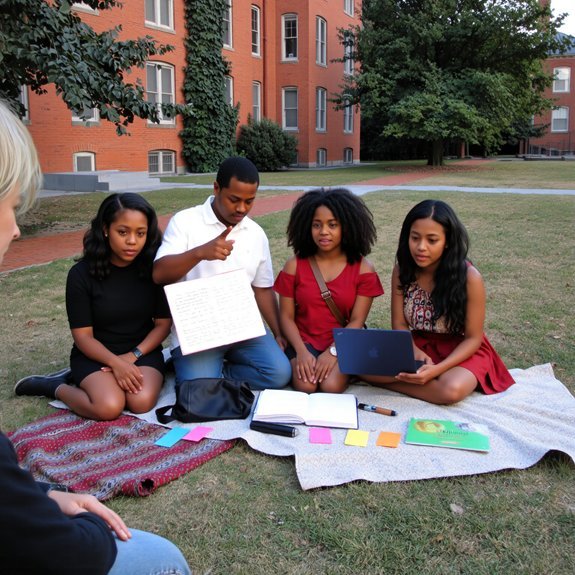
You’ll notice your classes change when the syllabus starts mirroring your neighborhood stories, your family rhythms, and the music you heard on the ride to campus. I’m talking professors who swap lectures for conversations, use examples that smell like Sunday dinner, and let you bring your voice into the work — it’s smart teaching, not a gimmick. Stick around, you’ll see how culturally relevant pedagogy makes learning click, and yes, it’s as satisfying as finding a seat at the cool table.
Curriculum Reflecting Student Experiences
Because students bring whole lives into the classroom, I insist curriculum should feel like home—not a dusty museum exhibit pretending to be relevant. You should see yourself in the readings, hear your neighborhood in the lectures, taste recipes in lab demos. I pull examples from family stories, street markets, church choirs, and old mixtapes, so concepts land fast, and stick.
- Use local case studies, oral histories, and familiar metaphors, so abstract ideas smell like Saturday cooking.
- Offer flexible assignments, let students pick topics tied to their lives, and watch confidence bloom.
- Build projects that invite family, invite community, invite laughter—learning that echoes beyond campus.
I joke, I stumble, I adjust—always aiming for curriculum that comforts and propels you forward.
Faculty Employing Culturally Relevant Pedagogy
So we’ve made the curriculum smell like Saturday cooking and sing like a neighborhood choir — now let’s make sure the people teaching it know the songs. You’ll meet faculty who swap lecture slides for stories, who bring cooking aromas into class with metaphors you can taste. I’ll watch you notice the way they nod, adjust examples, call on students by nicknames, and laugh when a point lands. You’ll get hands-on projects, neighborhood field trips, and texts that mirror your life, not some distant footnote. They’ll bend deadlines when family crises hit, they’ll push gently when you can take more. It’s deliberate, lived, and practiced. You’ll leave class full, not just informed — someone cared enough to teach you right.
Financial Aid Counseling and Scholarship Access
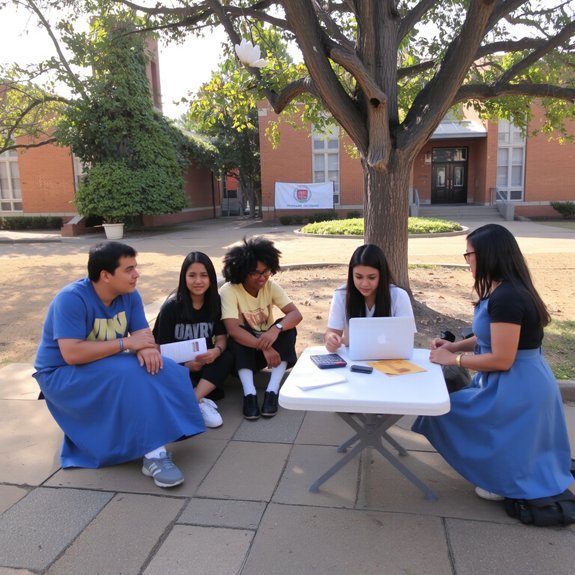
When I first walked into the financial aid office—papers in one hand, nerves in the other—I felt like I’d wandered onto a quiz show without studying; the staff smiled, handed me a clipboard, and talked like translators for a weird language called “college money.” I’ll be blunt: filling out forms and hunting scholarships can feel like digging for buried treasure with a fork, but at HBCUs you’re not digging alone—counselors sit down with you, pull up FAFSA screens, read fine print out loud, and point to scholarships that match your story, not some robotic checklist.
Walking into financial aid felt like stepping onto a game show—except counselors handed clipboards, translated “college money,” and dug with you.
- They map deadlines, check eligibility, and call relatives when you freeze.
- They edit essays, celebrate small wins, and nudge you toward campus funds.
- They track renewals, warn about pitfalls, and turn jargon into plain talk.
Orientation and First-Year Experience Programs
You’ll get a map, but not the boring kind — we’ll walk the quad with you, point out the best coffee spot, and show where to sprint when it’s raining cats and finals. You’ll join a small peer mentoring cohort, meet your guide who once survived their first semester by eating instant noodles and asking too many questions, and trade tips in real time. I promise you won’t be left guessing, we’ll pair you up, walk you through the ropes, and laugh when things go sideways.
Guided Campus Navigation
Even if campus maps look like hieroglyphics at first glance, I promise we’ll turn them into treasure maps you actually want to follow. You’ll stroll with me past brick arches, feel the warm sun on your neck, hear footsteps echo in the science hall, and know exactly where to go when nerves spike. We’ll practice the walk to class, the cafeteria, the advising office, so routes become muscle memory.
- We’ll do timed walks, quick check-ins, and photo cues you can pin to your phone.
- We’ll rehearse bus stops, study spots, and quiet corners that smell like coffee and focus.
- We’ll map emergency exits, office hours, and the best late-night pizza run.
Peer Mentoring Cohorts
If you’re nervous about your first week, good—that means I care enough to fuss over you, and these mentoring cohorts were built for exactly that: to make campus feel less like a maze and more like a small, slightly quirky home. You meet your cohort on the quad, sunlight on backpacks, voices trading nervous jokes. I pair you with an upperclass guide who texts like a friend and shows you where the best late-night study snacks hide. We do icebreakers that don’t suck, mock registration drills, and walk-and-talks to the cafeteria so you learn to order without panicking. You’ll get weekly check-ins, messy whiteboard plans, and someone who’ll say, “Yep, I bombed that test too,” which somehow helps everything.
Academic Advising and Tutoring Services
Who do you call when your schedule looks like a puzzle gone rogue? You call advising, plain and simple. I’ll meet you in a tiny office, smell of coffee and paper, we’ll laugh, map out classes, and I’ll pull up degree audits like a magician revealing cards. Tutors wait nearby, ready to turn confusion into “aha” moments. You get clear steps, calm voices, and hands-on help.
- quick course planning, we line up prereqs and deadlines
- tutoring labs, you work problems aloud, feel the numbers click
- study strategies, we build routines that actually stick
You leave with a plan, a printed checklist, and a little swagger. You’re not lost, you’re steering.
Career Development and Internship Pathways
When you’re staring at job boards like they’re a foreign language, I’ll be the one who translates — coffee in hand, laptop humming, LinkedIn open like a neon sign. You’ll get resume clinics that strip the jargon, mock interviews with real blunt feedback, and networking nights where you actually meet people who hire. I’ll nudge you toward internships that match your skillset, not just any checkbox on a form. We’ll role-play elevator pitches until they sound like you, not a robot. Career fairs here feel human — tables, handshake pressure tested, recruiters who remember your name. You’ll land paid internships, get credit where it counts, and build a portfolio that tells employers you belong. You won’t go it alone.
Mental Health and Wellness Resources
Because college can feel like a loud room where everyone’s talking at you and nobody handed you a chair, I’m here to help you find the quiet corner and a counselor who actually listens. You’ll discover campus wellness centers that smell like coffee and calm, peer support groups that meet in sunlit rooms, and counselors who text back faster than your group chat. I’ll walk you through accessing services, scheduling low-cost therapy, and using stress-busting workshops that teach breathing, sleep hacks, and panic-plan moves.
- Book an intake, show up, tell one honest sentence.
- Try a peer group, sip tea, share one thing.
- Use emergency resources, keep numbers, breathe.
You’re not alone, and asking is brave, even awkward.
Family Engagement and Community Outreach
You’ll notice we start by inviting families to orientation, where smells of coffee and hallway chatter make campus feel like home and you meet parents who ask the exact same nervous questions you did. I’ll show you how HBCUs build community pipelines with local schools and churches, stitch together intergenerational support networks, and keep grandparents, cousins, and mentors in the loop so students don’t carry it all alone. Trust me, it’s less ceremonial ribbon-cutting and more neighborhood potluck—messy, warm, and exactly what first-gen students need.
Family-Focused Orientation Programs
If families feel welcome, students relax—simple as that, and HBCUs know it. You walk into orientation, scents of coffee and citrus, banners bright, and someone hands your family a schedule and a smile. I nudge you: this is for everyone. Staff lead panels, parents clap, siblings snack, you breathe easier.
- Guided tours: you touch campus brick, hear marching band drums, map your routes aloud.
- Family workshops: you learn FAFSA basics, campus safety tips, meal plan hacks, and ask dumb questions—no shame.
- Social mixers: you mingle, trade phone numbers, laugh at shared worries, feel like you belong.
You leave the day lighter, confident, ready—because your people were seen, and that changes everything.
Community Partnership Pipelines
When I tell you community partnerships start long before campus tours roll in, I mean it — they begin at church potlucks, barber shops, and neighborhood barbecues where someone’s aunt hands out flyers like they’re golden tickets. I walk those streets with you in mind, knocking on doors, setting up resource tables, and listening—really listening—to parents who worry about tuition, schedules, and fitting in. You see workshops at the rec center, FAFSA help in the library, Saturday campus visits with free lunch and bus rides. You watch students’ cousins beam when they get admitted, because someone from the neighborhood believed first. We build trust, recruit mentors from local businesses, and keep communication flowing, so families feel invited, informed, and ready to cheer every step.
Intergenerational Support Networks
Because family is the first classroom, I start by knocking on doors and sitting at kitchen tables, listening to grandparents riff about scholarships like they’re gospel and kids scroll through apps with one eyebrow raised. You get pulled into stories, you taste sweet tea, you hear laughter that doubles as advice. I show up, you watch, and together we build trust that carries students across thresholds. Here’s how we do it:
- Host family dinners, where elders share tips, you ask blunt questions, and students practice answers out loud.
- Run neighborhood workshops, with hands-on FAFSA help, paper forms, and phone chargers passed like confetti.
- Set up mentorship chains, linking grads to cousins, neighbors to advisors, creating a living, breathing support map.
Small Class Sizes and Faculty Accessibility
Step into a classroom at an HBCU and you’ll feel it right away — chairs close enough to touch, sunlight sliding across the chalkboard, a professor who knows your name and your grandmother’s favorite recipe. You sit, they call on you, and you don’t flinch because the room’s small, the stakes human-sized. You get feedback that’s immediate, blunt, kind. Office hours aren’t a formality, they’re coffee chats where faculty push you, laugh with you, and hand you a roadmap when you’re lost. You ask a dumb question, they make it smart. Labs feel like workshops, seminars like heart-to-hearts. You leave class with practical tips, an ally in your advisor, and the weird confidence that someone genuinely expects you to succeed — and will help you do it.
Institutional Policies That Promote Student Retention and Success
If an institution wants you to stay, it won’t leave that up to chance — it builds systems that catch you before you fall. I watch advisors text, professors flag concerns, and financial aid officers open doors you didn’t know existed; you feel that net. Policies matter. They shape the small, steady acts that keep you enrolled.
- Mandatory early-alerts — someone notices the missing assignment, calls, and actually listens.
- Predictive advising — data spots patterns, advisors intervene, you get a plan that fits your life.
- Flexible funding — emergency grants, meal support, small loans that stop a crisis fast.
You laugh with me when bureaucracy works. You breathe easier, you stay, and you graduate.
Conclusion
You’ve got this — I’ve seen HBCUs roll out the welcome mat like it’s 1965, with mentors waiting, tutors ready, and advisors who actually call you back. You’ll feel dinners, late-night study sessions, and handshakes that turn into internships. Families get looped in, counselors cut through financial fog, and professors keep office doors open. Trust the roadmap, lean on the people, and don’t be shy — they’ll help you finish strong.
Leave a Reply