You want a tree that fits your room and your chaos, not a floppy mess in the corner or an operatic showstopper you can’t navigate around; measure your ceiling, picture the skirt, and imagine the lights warming the room, smell the pine or note the faux-needles’ plasticky sheen, then decide how much upkeep you’ll tolerate—I’ll help you pick shape, size, species, or fake, show you how to test freshness and water it right, and warn you about the things nobody tells you until it’s too late.
Key Takeaways
- Measure ceiling height and room space, then subtract about 12 inches for the topper and stand before choosing tree height.
- Pick a shape and fullness (slim for tight spaces, full for lots of ornaments) that fits your room flow and style.
- Choose real for fresh scent and authenticity or PE/artificial for reusable convenience and lifelike appearance.
- For real trees, make a fresh trunk cut, keep the stand filled daily, and place away from heat sources for safety.
- Set a budget including stand, lights, and storage, and prefer durable materials and sustainable options when possible.
Measuring Your Space and Ceiling Height
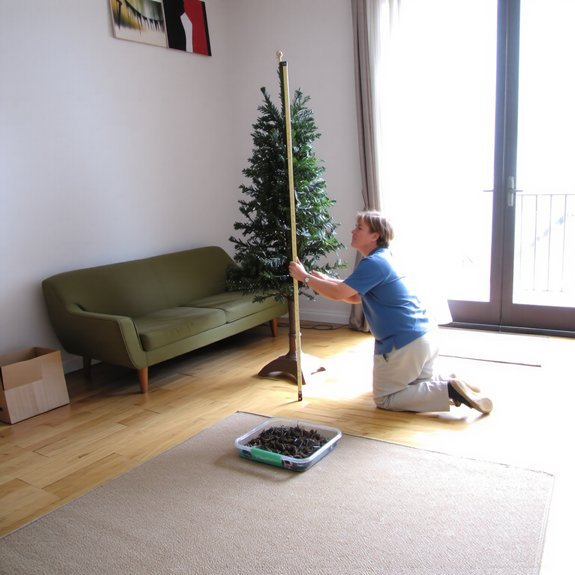
If your ceiling’s under eight feet, don’t bring home a sapling that needs ladder lessons—measure first. I tell you this like a friend who once wedged a tree into a doorway, sap and shame everywhere. You grab a tape measure, press it to the ceiling, and note the height; compare that to the tree height the seller lists, subtract a couple inches for the star and stand, and you’ll avoid awkward trimming sessions. Walk the room, feel the floorboards creak, and mark where the tree will breathe; account for space limitations near sofas, doors, and your cat’s favorite napping spot. Say aloud where lights will run, visualize ornaments sparkling, then buy confidently—no regret, just perfect fit and guilty glitter-free pride.
Real vs. Artificial: Pros and Cons
You’ll want to weigh real versus fake on price, upkeep, and what happens to it after the holidays. I’ll admit I love the pine smell of a fresh tree, even if it means sweeping needles and watering every few days; artificial trees save you that chore, but they can sit in a garage for decades and still cost more upfront. Picture yourself flossing needles from carpet or hauling a boxed tree to the curb — which trade-offs are worth it to you?
Real vs. Artificial Cost
Because money matters more than holiday vibes to me some years, let’s talk turkey—well, fir versus plastic. You’ll pay less up front for a real tree, the smell hits you like a pine-y punch, and you get the ritual of hauling it in; that’s worth something, right? An artificial tree costs more initially, you wrestle a box out of the garage, but you’ll reuse it for years, save time, and dodge sap. Crunch the numbers: if you keep an artificial tree five to seven seasons it often beats yearly real-tree purchases. Don’t forget storage space, assembly grumbles, and how much you value authenticity versus convenience. I side with what fits your life, and your wallet.
Maintenance and Waste
Money talk’s over for now—let’s look at what actually happens after you bring the tree home. You’ll water a real tree, needles pricking your palms, sap tacky on your fingers, and vacuum more than you expected; upkeep’s honest work, but it smells like pine and nostalgia. An artificial tree saves needles and daily watering, though it can trap dust and plastic sheen that never warms your hands.
When it’s time to part ways, check local tree disposal options, they might chip it for mulch or run a holiday collection—feel like eco-hero for a day. If you keep a fake, stow it clean, or donate. Either way, choose eco friendly decorations, reuse lights, and keep the planet on your guest list.
Picking the Right Tree Shape and Size
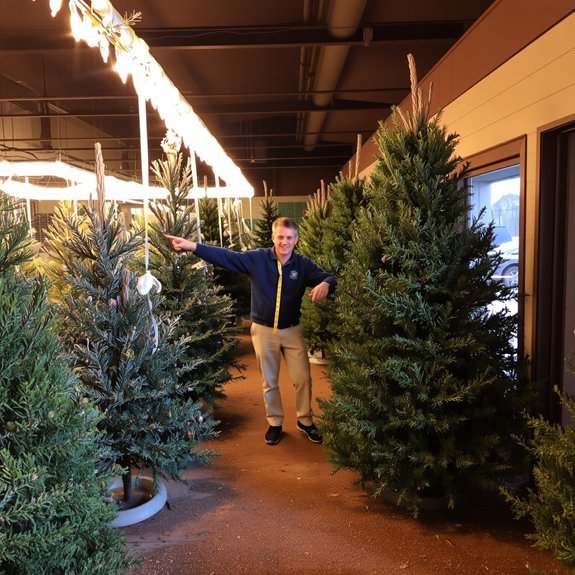
How tall should your tree be—grand enough to impress Aunt Linda, but not so huge you’ll need a ladder and a waiver? I tell you, measure ceiling height first, then subtract about a foot for a topper and stand. Think about tree size in relation to room traffic, furniture, and that yoga mat you never use. For tree shape, pick one that fits your vibe: slim for tight corners, full and symmetrical if you love ornament avalanche control. Picture hauling it in, the pine scent hitting you, needles pricking your palms, and imagine lights weaving through branches without wrestling. I’ll nudge you toward practical choices, while you decide whether drama or cozy fits your living room. Trust me, you’ll know when it feels right.
Common Christmas Tree Species and Their Traits
You’ll notice fir trees hold their needles like a secret, smell amazing when you brush past them, and make your living room smell like a cozy forest. Pine feels classic and soft under your hands, perfect if you hate pokes but love that resinous, familiar scent. Spruce gives you sturdy branches for heavy ornaments, but watch your fingers—those needles are sharp, and they’ll remind you who’s boss.
Fir: Needle Retention, Scent
Curious which fir will still be poking you in the ribs by New Year’s? I’ll say it straight: firs are the low-maintenance divas of trees. You want needle retention? They’ve got it, they hold needles like a secret and drop them reluctantly. You want an aromatic scent? Breathe deep, you’ll get piney, resinous notes that make your living room smell like a cozy cabin, minus the snow. I’ll point out Fraser and balsam — compact branches, sturdy for heavy ornaments, no sap tantrums. I’ll nudge you to feel the needles, squeeze the trunk, sniff close, yes, it’s that simple. I’m biased, sure, but pick a fir and you’ll relax, not tiptoe, through December.
Pine: Classic, Softer Needles
Fir’s needle-holding talents are lovely, but let’s wander over to the pines — they’re the Christmas tree equivalent of the comfy old sweater you keep reaching for. You’ll notice pine varieties tend to have longer, softer needles, they feel gentle against your wrist when you hug the trunk, and they catch ornaments in a forgiving way. I like them for that casual, lived-in look.
- Look for flexible branches, they bend without snapping, great for chunky glass baubles.
- Smell the tree, pine scent is bright, resinous, like a walk in damp woods.
- Check needle softness, not brittle; softer needles mean fewer pokes, less sweeping later.
You’ll leave with a tree that invites you to linger.
Spruce: Sturdy Branches, Sharp
Think of spruce as the practical cousin who always shows up with a toolbox and a glare. You’ll feel those sharp needles if you hug it, but that’s the point: spruce characteristics include firm, upward-facing branches that hold heavy ornaments without sagging, and a citrus-wood scent when you brush past. I’ll admit, it’s less cuddly than pine, but it looks crisp, sculpted, like a living green chandelier. Check spruce varieties—Norway, Colorado, Serbian—each gives you a slightly different needle stiffness, color, and aroma. You’ll want gloves for trimming, a strong stand, and a careful hand when stringing lights. If you like structure, durability, and a no-nonsense silhouette, spruce will make your tree game sharp, literally.
How to Check Freshness and Longevity for Real Trees
One quick test will tell you more than a dozen pretty Pinterest photos: give a branch a firm tug and watch what happens, I promise you’ll learn the truth right then. I check freshness indicators with my hands, nose, and eyes — needles that bend, not break, and a citrusy pine scent mean the tree’s alive. Longevity tips? Pick a trunk that’s sticky with sap, not brittle, and look for uniform color, no bald patches.
- Rub a few needles between fingers; fragrant oils mean freshness.
- Bounce the trunk end on the ground; a little sap and flexible needles signal life.
- Inspect cut ends for pale wood, not dark or dry, that’s a red flag.
You’ll leave smiling, tree intact, you clever holiday detective.
Caring for a Real Tree: Watering and Safety Tips
Three simple rules will keep your tree happy, and me less likely to receive frantic midnight texts about a drooping spruce. You’ll water it daily, check the stand, and keep it cool, got it? Use basic tree hydration techniques: fresh cut, big reservoir, measured top-ups. If needles drink fast, you’ll pour; if they stay plump, you’ll pause. Smell the sap, feel the weight — that’s your meter.
Now for fire safety precautions: keep lights inspected, unplug overnight, don’t block exits, and keep heaters away. Use LED bulbs, replace frayed cords, and anchor the tree so it won’t tip during decor theatrics. I’ll nag gently, you’ll laugh, and together we’ll keep your holidays safe, scented, and sparkling.
Choosing an Artificial Tree: Materials and Realism
You’re about to pick a fake tree, and yes, I’ll judge your taste gently — but only after I’ve sniffed it (they don’t smell like pine, surprise). You’ll handle boxes, unzip branches, and compare needles, while I point out what matters: material types and realism factors. Choose wisely, you’ll thank me.
- PVC vs PE: PVC needles are cheap, shiny, cheap-looking; PE is molded, textured, more lifelike.
- Tip density: More tips means fuller silhouette, fewer gaps, better shadow play when lights hit.
- Branch construction: Hinged branches fold fast, wired tips let you shape, layered branch scales add depth.
I’ll poke the branches, sass the catalogue, and say save up for PE if you want passable forest vibes.
Decorating Considerations: Weight, Lights, and Theme
If you’ve ever hung an ornament and felt the branch sag like a tired selfie arm, congratulations — you’ve met the gravity problem. You’ll want sturdy limbs, or you’ll spend the evening rescuing baubles. Test branch weight before you buy, feel the needles, give a gentle tug. Plan light placement next, weave lights inward toward the trunk for depth, wrap evenly, step back, squint, adjust. Pick a decorating theme early — rustic, minimalist, or disco inferno — and let it guide ornament size and ribbon heft. Balance heavy pieces near the trunk, keep fragile ones outward. I’ll admit I’ve overdecorated, then cried into tinsel. Learn from me: map your plan, gather tools, go slow, enjoy the sparkle without a cleanup crisis.
Budgeting, Storage, and Sustainability Choices
Because money matters — and so does Mother Nature, your closet space, and the odd ornament you swore you’d never buy but did — let’s get practical about the cash, the cupboard, and the conscience of your tree choice. You’ll want budgeting tips up front: set a cap, factor in stand and lights, and skip impulse upgrades. Smell the sap, count the needles on the carpet, breathe, then decide.
Money matters — set a budget, factor lights and stand, think closet space and the planet before you buy.
- Choose storage solutions like collapsible bags, labeled bins, and wall hooks to reclaim your hall.
- Consider sustainability practices: rent-a-tree, live potted trees, or certified-cut options for lower impact.
- Pick eco friendly options for lights and decorations, repair old bits, and donate the tree when done.
Conclusion
You’ve got this. Measure like you mean it, smell the sap, test a branch with playful brutality, and pick the tree that makes your living room sing. Go real for romance, fake for ease, slim for tight spaces, giant for showing off (I won’t judge). Water it, light it, don’t overload it, and stash the artificial in a labeled box like a responsible adult. Your perfect tree is waiting — grab it, decorate wildly, enjoy.
Leave a Reply