
A blank board is a promise you can touch, like a map that smells faintly of glue and possibility. You’ll pick goals—health, work, joy—then cut photos, pin affirmations, and color-code tiny habits into doable bites; I’ll coach you through layout tricks and weekly rituals so it actually sticks. Ready to make something you’ll want to wake up to every morning—and not hide in a drawer?
Key Takeaways
- Choose three clear 2026 goals (health, work, joy) and break each into tiny, testable weekly habits.
- Pick a reachable medium—physical for tactile presence, digital for easy edits, or both combined.
- Collect emotionally resonant images, colors, words, and short sensory affirmations; cut ruthlessly to keep only what moves you.
- Place bold images where the eye lands, arrange with intention, and pin index-card habits for daily visibility and touch.
- Build simple accountability rituals: five-minute morning scans, weekly reviews with a tally, and small rewards for wins.
Clarify Your Intentions for 2026
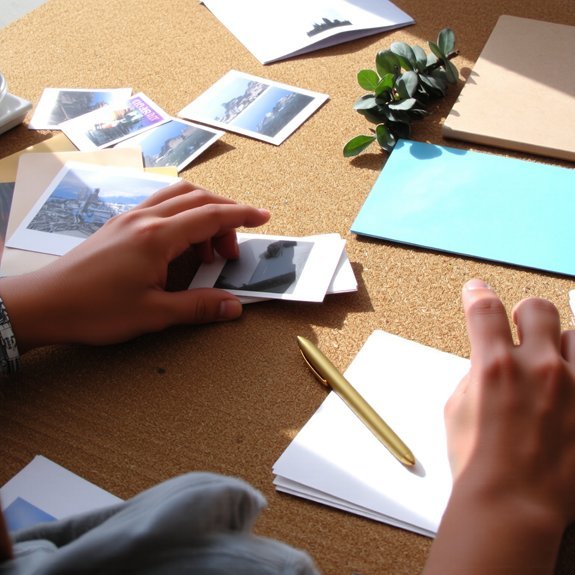
If you’re anything like me, you’ve scribbled “be better” on a sticky note and called it a plan—cute, but vague. You’re going to do better by practicing intention setting, not wishful thinking. Sit down with a mug that smells like burnt coffee, close your eyes, and name three concrete future goals: one for health, one for work, one for joy. Say them aloud, like you mean it. Break each into weekly habits, tiny and testable. Write the habits on index cards, pin them where you’ll see them, and give yourself a tiny reward when you follow through — a five-minute dance, applause, whatever. I’ll admit, you’ll fumble. That’s the point. Keep it tactile, visible, and honest.
Choose Between a Physical or Digital Vision Board

Because you’re about to make something that’ll live on your wall or your phone, decide whether you want glue under your fingernails or paper cuts—or neither. I’ll say it straight: pick the medium you’ll actually use. If you like tactile stuff, feel the paper, the scissors, the glossy magazine smell, choose physical—those physical advantages include touch, presence, and a real-life anchor you can hang and see every day. If you’re always on a screen, opt for digital; the digital benefits are searchability, easy edits, and portability, no tape required. Combine them if you must — print a favorite collage, keep a polished version on your phone. Trust me, whatever you pick, make it reachable, visible, and slightly irresistible.
Gather Images, Words, and Symbols That Resonate
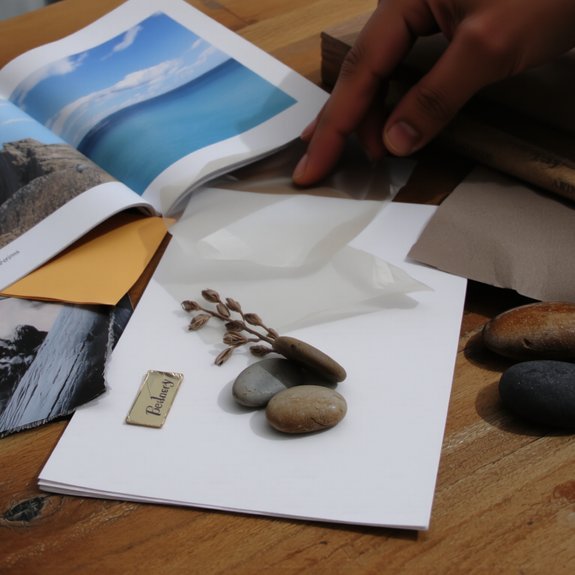
You’re going to hunt for images that make your pulse quicken, colors you can almost feel, photos that smell like summer or coffee. I’ll challenge you to pick words that crackle—single verbs, tiny mantras—and toss in symbols that mean something only to you, even if I have to wink and pretend I understand. Gather, pair, and rearrange them on your board until the whole thing feels honest, funny, and undeniably yours.
Choose Meaningful Imagery
Alright—grab a stack of magazines, your phone’s photo roll, or that box of travel flyers you’ve been hiding under the bed; I’m about to make you ruthless about picking images. You’ll look for imagery significance, little moments that hit your gut, the kind of visual inspiration that sparks a grin. Trust your eyes, trust the tug.
- A sunlit kitchen you actually want to cook in, warm light, chipped mug.
- A city street you imagine walking, sneakers, breeze, coffee aroma.
- A quiet desk corner, plant, pen, paper ready.
- A laughing face that feels like “yes,” candid, imperfect, alive.
- A destination scene that smells like salt or pine, vivid color.
Cut ruthlessly, arrange boldly, test the emotion — if it doesn’t move you, toss it.
Curate Powerful Words
You’ve torn up the pictures that didn’t sing, now let’s give those keepers words that actually pull. You scan magazines, sticky notes, your phone, and your own stubborn heart, picking phrases that make your spine straighten. Paste an inspirational quote in bold, smell the glue, feel the paper edge. Add empowering phrases — “I show up,” “I choose joy,” “More play, less panic” — handwritten in colors that make you grin. Whisper them aloud, test the rhythm, swap fonts like socks until one fits. Toss in a single raw word — “root,” “launch,” “breathe” — as an anchor. I nudge you to mix script and block letters, symbols and doodles, and step back to see the story, not a list.
Select Affirmations and Short-Term Milestones
If you want your vision board to actually work, pick words that feel like tiny promises and milestones that make you grin when you say them out loud. You’ll do affirmation selection with gusto, choose short lines you can whisper in the shower, and pair each with a reachable checkpoint. Think sensory — crisp paper, a scribble of blue ink, the small thrill of checking a box.
- Say it: “I’m calm during chaos” — practice breathing for two minutes daily.
- Claim it: “I finish projects” — set a 3-day mini-deadline.
- Feel it: “I move joyfully” — try three 20-minute walks this week.
- Notice it: “I save $200” — automate a weekly transfer.
- Share it: “I connect more” — text one friend each Monday.
Affirmation selection and milestone setting, nailed.
Decide on Size, Layout, and Materials
You’ll want to pick a board size that fits your space and your ambition — poster board for a quick boost, cork or foam core if you want to rearrange like a nervous interior decorator. Grab materials that feel good to your hands and eyes: glossy magazine clippings, textured paper, a crinkly ribbon, a sharpie that glides, and lay them out in a grid, a spiral, or a happy mess until it sings. I’ll guide you through choices and tricks, and we’ll laugh at my terrible glue-smudges as you build something that actually makes you want to get up in the morning.
Choose Board Size
Pick a size that feels like a promise, not a chore — something you’ll actually look at every morning without sighing. You’ll pick board dimensions that fit your wall, your energy, and your snacks-on-the-sofa habits. Think about visibility, where light hits, and whether you want daily peeks or weekly rituals. I’ll be blunt: don’t pick something huge just to impress your future self.
- Small poster (11×17): intimate, portable, easy to hide
- Medium foam core (18×24): statement without overwhelming
- Large cork board (24×36): room to grow, pins that click
- Gallery frame size (16×20): classy, tidy, dust-free
- Collage folder: portable, private, tucked-away
Trust your personal preferences, measure once, smile, then commit.
Pick Materials & Layout
Nice choice — size decided, now we get to the fun part: the stuff that makes your vision board feel like you and not a Pinterest shrine to other people’s lives. Pick a board type — cork, foam, poster, or framed canvas — touch each, feel the texture, imagine pins or glue, hear the soft thud of photos landing. Lay out sections: goals, daily habits, joy. Try a grid, a freeform collage, or a radial sunburst. Mix artistic styles, bold minimalism with doodles, vintage clippings with neon stickers. Gather scissors, glue stick, washi tape, markers, thumbtacks. Play, step back, squint — if it makes you smile, it’s right. I promise, you’ll adjust as you live with it.
Arrange Elements With Emotion and Focus in Mind
Even if it feels a little silly, treat your vision board like a movie set — I’m the director, you’re the lead, and every picture, color, and quote gets placed for a reason. You’ll use emotion driven design to pull feelings forward, and focused energy to guide where your eye lands. Think texture, scent memories, bright focal images, quiet corners for reflection. Move pieces around until your chest tightens with yes, or relaxes with calm.
- Put the boldest, happiest image where your gaze first lands.
- Anchor goals with tactile items, like fabric swatches.
- Group related images, make tiny story clusters.
- Use emptiness as a breath, don’t clutter.
- Add one whimsical item to make you smile.
I joke, I prod, but you’ll know when it sings.
Place Your Vision Board Where You’ll See It Daily
You’ve got the board, you’ve arranged the feels, now don’t hide it like a guilty snack—put it where you’ll actually see it every day. I’ll say it bluntly: daily visibility is the secret sauce. Pick spots you pass without thinking—above your desk, next to the bathroom mirror, or by the kitchen coffee station. Mount it at eye level, not tucked behind books or in a drawer. Touch it, smell the paper, lean in and read a headline. Board placement should force small, repeat encounters, not big, rare ceremonies. I love a door-hang for rude awakenings; you might prefer a bedside peg. Test it for a week, move it if you dodge it, and keep what makes you smile—no guilt, just results.
Use Rituals and Review Sessions to Stay Accountable
If you want this board to actually do anything, treat it like a living thing — check in with it on purpose. You’ll build simple rituals for accountability, little cues that pull you back, and honest review techniques that keep you honest. I peek, I touch, I say one line aloud — “What’s one tiny move today?” — because ritual beats willpower, every time. Set a short ritual, then a focused review session weekly, clear-eyed, coffee in hand. Track wins, tweak actions, celebrate small shocks of progress.
- Morning five-minute scan, fingers on images, breathe deep
- Weekly sit-down, notebook open, rate each goal
- Monthly tally, mark wins with a sticker
- Text a buddy, share one checkpoint
- Quick visual tidy, remove anything stale
Refresh and Adjust Your Board as Priorities Evolve
I still check my little ritual spot every morning, breathe in the paper-and-ink smell, press a finger to a photo and ask, “What’s one tiny move today?” — but plans shift, people change jobs, and desires sneak sideways, so your board should too. You’ll glance at images, notice a faded want, and get honest. Rip, rotate, rewrite. Evolving priorities mean some goals age out, others shout louder. Schedule regular updates — monthly quick-touches, quarterly deep-cuts — and treat it like pruning, not punishment. Swap a photo, add a receipt from a class, tape in a new postcard. Say aloud, “This no longer fits,” then laugh and move on. Your board stays truthful, tactile, and oddly forgiving, just like you when you mess up.
Conclusion
Think of your vision board as a garden you tend—I’m the awkward gardener nudging seeds into neat rows. You’ll plant small habits, water them with daily glances, prune expectations when stuff wilts. Place images where sunlight hits your eyes, whisper your affirmations like fertilizer, and celebrate tiny sprouts with ridiculous victory dances (I don’t judge). Keep it visible, tweak plots each season, and remember: growth is messy, fragrant, and stubbornly worth it.
Leave a Reply