
Did you know many local HBCU scholarships go unclaimed each year—sometimes hundreds of dollars, sometimes full tuition? You’ll want to stop scrolling and start knocking on doors: I mean literal doors, counselors’ emails, church halls, and company HR offices, where quiet pots of money sit like lost keys under welcome mats. Follow me—I’ll show you where donors hide them and how to grab the keys before someone else does.
Key Takeaways
- Search local community groups (churches, rotary, NAACP chapters) for small, low‑competition scholarships often overlooked by students.
- Contact your high school counselor and college financial aid office regularly for tailored lists and hidden, deadline‑sensitive awards.
- Network with local businesses, unions, and alumni associations to uncover employer and discretionary scholarships not widely advertised.
- Join fraternal, civic, and student organizations to access exclusive scholarships and mentorship from previous winners.
- Batch applications, reuse a strong core essay, and set calendar reminders to avoid losing easy‑to‑win opportunities to procrastination.
Why Many HBCU Scholarships Go Unclaimed
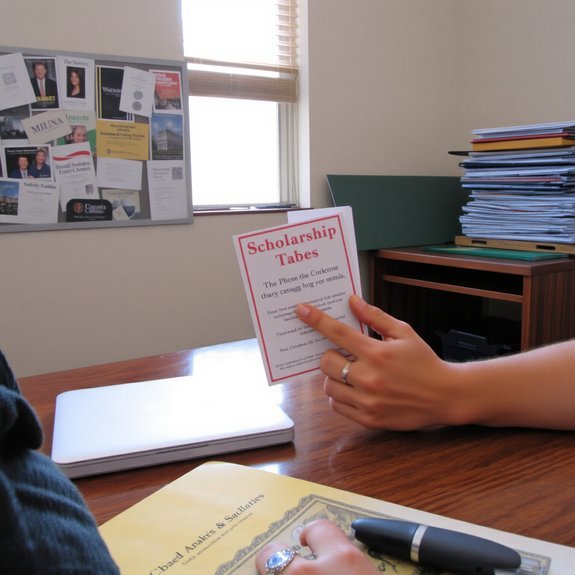
Even though you’d think money would be the first thing students chase, a lot of HBCU scholarships sit untouched like attic boxes labeled “treasures” that nobody opens; I’ve watched bright kids skip cash because the forms looked like legal contracts. You sigh, you procrastinate, you tell yourself tomorrow. Application portals glare like tax sites, essays demand soul-baring, and deadlines sneak up like gym teachers. I poke fun, I admit I did the same, clicked away from a promising grant because the deadline hid under three menus. You don’t always know where to look, or who to ask. Counselors juggle a dozen students, parents worry about costs, and pride whispers don’t beg. Still, with a little persistence, you can pry open those dusty boxes.
Hidden Local and Community-Based Scholarships

When you peel back the campus map and stop staring at national foundations like they’re the only fruit on the table, you’ll find scores of small, local scholarships hiding in plain sight—church basements, rotary clubs, neighborhood associations—like cash wrapped in duct tape. I’m telling you, knock on doors. Put on shoes, carry a folder, ask the pastor, the barber, the city clerk. Smell coffee, hear bingo cards, get handed a paper application with a pen that barely writes. Jot down deadlines, requirements, tiny essay prompts about community service you already did. Talk to former winners, copy their format, don’t be shy about saying, “I’ll help with the bake sale.” These pots are small, but they stack, and they add up fast.
Leveraging High School Counselors and College Aid Offices

Okay, you’ve knocked on church doors and collected sticky-note deadlines from the barber’s chair — nice work. Now, go talk to your high school counselor like you mean it. Ask for scholarship lists, transcript reviews, and quick edits to that essay you’ve been avoiding. Visit college aid offices on campus tours, peek into their pamphlet drawers, and taste the coffee while you chat — they remember faces.
- You’ll feel seen when someone pulls a file and says, “This could work.”
- You’ll breathe easier with a deadline calendar pinned to your wall.
- You’ll chuckle at your typo that suddenly mattered, fixed in five minutes.
- You’ll leave with a plan, not a pamphlet.
I push you to ask, persist, and collect every small advantage.
Tapping Church, Fraternal, and Civic Organizations
You’d be surprised how many HBCU scholarships start in your own neighborhood church, with a pastor who knows your name and a bulletin that hides grant forms. Go to a meeting, shake hands at a fraternal lodge, smell the coffee, and ask—those civic clubs actually keep small scholarships for local kids. I’ll bet you’ll pick up an application, and maybe a funny story to tell at graduation.
Local Church Scholarships
Even if you haven’t knocked on a pastor’s office door or shaken a worship leader’s hand, local church scholarships are the kind of quiet gold you’ll kick yourself for missing later; I say that because I’ve buried my face in too many bulletin boards and coffee-hour sign-up sheets to pretend otherwise. You can stroll into Sunday service, ask about youth funds, or slip a note into the office — simple moves, big payoff. Churches often know you, they’ve seen you stack chairs, sing off-key, babysit VBS. That history matters. Ask for deadlines, character references, and application quirks. Bring a polished thank-you, not just charm. Think hospitality, nostalgia, small-town pride — and yes, bake-sale bravery.
- Warm smiles that remember your name
- Handwritten notes that tip the scales
- Quiet fundraising rituals, old and earnest
- A pastor’s nod that feels like sunlight
Fraternal and Civic Grants
If your church bulletin felt like a treasure map, the lodge hall and the rotary meetings are the X that nobody points out. You stroll into a pancake breakfast, smell coffee and syrup, overhear a grant chat, and suddenly you’ve found opportunity. I tell you to talk to the person at the sign-in table, because they know who funds scholarships, who prefers local kids, who wants a singer or a math nerd. Fraternal orders, veterans groups, rotary and sororities give small, steady awards, often with low competition. They ask for essays, service hours, or a short interview — doable stuff. Get on newsletters, attend one meeting, shake hands, offer to help a charity drive, and watch doors open.
Searching Corporate, Union, and Employer Awards
You’ll want to check corporate scholarship programs first, because big companies hide neat awards in plain sight, like candy bars on a grocery shelf. I’ll point you to union and employer funds next, where modest pockets of cash sit waiting for employees, kids, and community members — it’s less glam, more reliable. Trust me, your inbox and a quick phone call can turn those small prizes into real tuition help, so grab a pen and start calling.
Corporate Scholarship Programs
When you wander past the company bulletin board or scroll a recruiter’s LinkedIn post, don’t shrug off those corporate scholarships like they’re just HR fluff — they’re often small pots of cash with big strings of easy-to-follow instructions, and I’ve scored a few myself by being nosy. You’ll hunt down CSR pages, press releases, and community outreach tabs, click like a detective, and feel that little thrill when an application fits. Companies want stories, not perfect GPAs. Tell yours plain, show impact, and follow directions to the letter. I’ll nudge you to network, politely stalk alumni, and laugh if you mess up an essay — you’ll learn fast, and that check will feel delicious.
- Pride when you win, like spotting your name in lights
- Relief when bills shrink, deep breath, exhale
- Joy telling family, their eyes glisten, loud hugs
- Quiet confidence, you did that, you earned it
Union and Employer Funds
Because unions and employers fund scholarships that most students never even hear about, you should treat their bulletin boards and HR pages like treasure maps, trust me — I’ve dug up cash from places you’d never think to look. Walk the shop floor, peek at the break room corkboard, screenshot that faded flyer. Call HR, ask about tuition assistance, get a name, and say, “I’m interested.” Bring a resume, a short pitch, and gratitude—people remember vibes. Check union newsletters, attend a meeting, introduce yourself, chew the coffee, listen for keywords: “dependent,” “renewable,” “trade-specific.” Employers often hide funds in weird forms: apprenticeships, diversity stipends, emergency grants. Apply fast, follow up politely, and send a thank-you email. You’ll surprise yourself. I did.
Using Niche Databases and Scholarship Platforms Effectively
If you treat niche scholarship databases like secret menus, you’ll get the good stuff others miss; I’m talking hidden grants that smell like victory and sometimes old coffee—perfect for late-night application sessions. I want you to lean in, scan tags, set filters, and treat alerts like tiny beepers that yell “apply now.” I poke through categories, read backstory blurbs, and picture envelopes arriving. You’ll save searches, track deadlines, and customize essays so they sing.
- Feel the small thrill when an obscure award matches your weird hobby.
- Taste victory when an email says “congrats.”
- Savor relief as deadlines shrink away.
- Laugh at your past scattershot attempts, wiser now.
Targeting Departmental and Program-Specific Funding at HBCUs
Lean into the department office like you own the place, because that’s where the quiet money hides—I do it with a confident smile, a notepad, and sneakers that squeak in hallways; you’ll want to slide past the scholarship board and ask the program coordinator what secret awards exist for your major, what projects need help, and which faculty have discretionary funds they can tap. I poke around labs, sniff out grant posters, and pretend I’m on a scavenger hunt. Ask aloud, then listen—professors love fixer students. Volunteer on small projects, haul equipment, take meeting notes, you’ll earn trust and cash. Keep a folder, record names, follow up with a thank-you email that’s short, specific, slightly charming, and impossible to ignore.
Timing Strategies and Application Shortcuts That Win Awards
When you learn the calendar like it’s a secret menu, you start showing up with the right order, on time, every time—I do this by keeping three color-coded reminders, a cheap alarm that hates snoozers, and a sticky note on my laptop that says “SEND NOW,” so I never let a deadline slip. You’ll fight last-minute panic by batching applications, polishing one essay, then cloning it smartly for similar forms. Hit early windows, they reward starters. Use autofill, saved PDFs, and a clear checklist, so your hands don’t tremble at midnight. Be kind to proofreaders; they catch your soul and commas.
- Feel the relief when a form submits, that tiny victory buzz.
- Taste the coffee of focus, hot and honest.
- Hear the ding of acceptance.
- Smell fresh paper, organized and ready.
Crafting Applications That Stand Out to Donors
Ever wonder what makes a donor stop, smile, and actually read your whole application? Picture me, you, a coffee stain on my resume—oops—but the story lands. You open with a vivid scene: late-night study lamp, a tired smile, the moment you decided to help your family. Donors want feeling, not fluff. Show concrete wins: led a club, tutored five kids, raised $300 for uniforms. Use short lines, a dash of humor, and honest voice. Address the donor, thank them by name if known, tie your goals to their mission, and say exactly how their gift changes things. End with a clear, confident ask. Be human, be specific, and let your personality breathe.
Conclusion
You’ve got the map now, so go grab the treasure—quiet local awards, church funds, department pockets—stuff other students miss by the dozen. I’ll bet my faded college hoodie you’ll find money if you knock on doors, ask counselors, and email program directors. Be bold, be kind, and proofread like your aunt’s reading your essay aloud. Start small, stack wins, and watch tuition shrink; do this, and you’ll actually enjoy being brilliant on paper.
Leave a Reply