
Funny coincidence: you and three classmates all forgot the same homework, so why not turn that mess into a study group that actually helps? You’ll pick people who show up, mix note-takers with explainers, set a clear goal for each hour, and ban phones like they’re contraband—small rules, big payoff. I’ll walk you through building agendas, swapping roles, and holding each other accountable, so you stop wasting time and start getting smarter—curious how it looks in action?
Key Takeaways
- Choose 2–4 reliable members who show commitment, complementary skills, and consistent attendance.
- Define clear, measurable study goals and visible ground rules everyone agrees to.
- Use a timed, structured agenda with role assignments and prioritized hard topics first.
- Practice active techniques: teach-backs, quick summaries, and rotating roles to ensure participation.
- Track progress publicly, schedule regular check-ins, and set small consequences for missed commitments.
Choosing the Right Members

Want someone who’ll actually show up, or would you rather end up chatting about snacks for two hours? You pick people who mean business, not just vibes. I scan class lists, spot reliable faces, and test-drive commitment with one quick question: “You coming next Tuesday?” Their pause tells me everything, trust me. Look for study-hardened habits — calendars, quick replies, that one friend who brings colored pens and snacks that aren’t excuses. Mix skills: a note-taker, a question-wrangler, someone who explains like coffee for your brain. Say no to chronic flakes, yes to two dependable people over five flaky ones. When you meet, watch body language, listen for specifics, hand them a time-slot, and feel the group click — satisfying, like the right puzzle piece.
Setting Clear Goals and Ground Rules
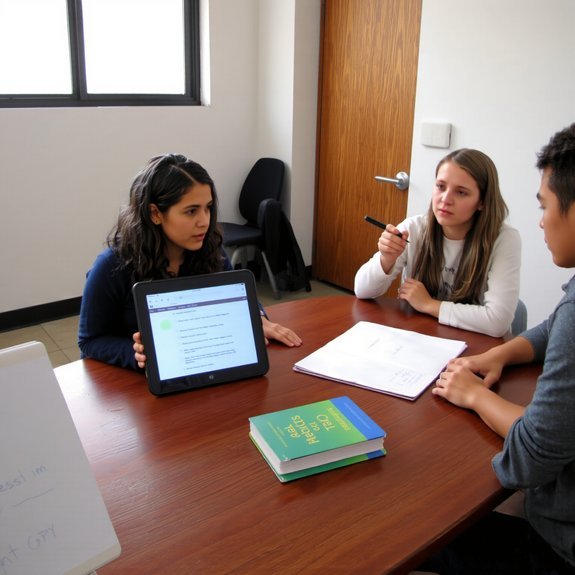
If we don’t get the goals down first, your study group will devolve into a snack-and-scroll party faster than you can say “pop quiz.” I’m serious — start by saying out loud what you want: beat the midterm, master derivations, or just survive the lab practical. Say it, don’t whisper. I’ll jot goals on a whiteboard, you’ll nod, someone will snack anyway — fine, but we’ll agree when snacks are allowed. Set ground rules: punctuality, phones face-down, one speaker at a time, and who brings the snacks. Assign roles—timekeeper, question asker, explainer—so nobody fades into background TV-mode. Revisit goals each week, cross off milestones, tweak expectations. Clear rules keep focus sharp, morale high, and your study hours actually useful.
Structuring Effective Sessions
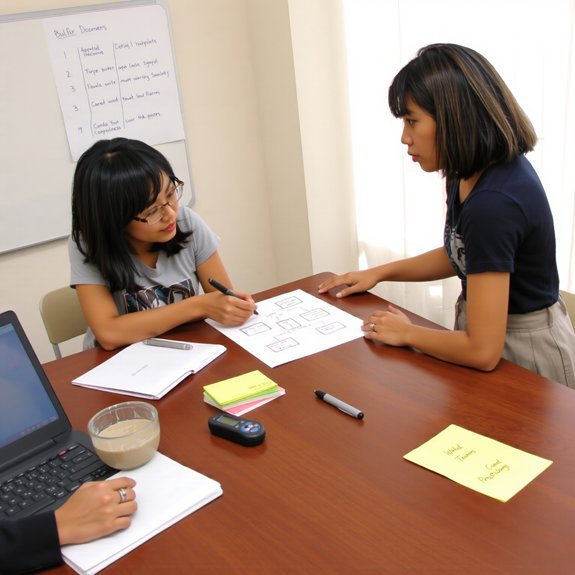
Since you’ve already picked goals and ground rules, let’s turn that good intent into a session that actually runs like clockwork — not like a sitcom where everyone forgets why they showed up. I’ll walk you through a tight agenda: a quick 5-minute check-in, a focused 35-minute work block, a 10-minute break, then a 30-minute review, and a final 10-minute recap. You’ll set a visible timer, spread textbooks like weapons on a table, and call roles aloud — reader, checker, note-taker. I’ll remind you to start on the hardest bit, so momentum’s real, not fake. Keep snacks sensible, phones face-down, and celebrate tiny wins. If it derails, laugh, reset the timer, and get back to business.
Techniques for Active Collaboration and Learning
While you’re swapping notes and staring down a mountain of problem sets, I’ll show you the tricks that make group work feel like a team sport instead of a chaotic free-for-all. You’ll rotate roles — explainer, questioner, checker — so nobody hogs the whiteboard, and you’ll use quick drills: two-minute summaries, teach-back pairs, and timed problem sprints that make brains hum. Call out confusion out loud, toss out dumb guesses, and laugh when someone invents a weird mnemonic; mistakes are your raw material. Use visible tools — colored pens, sticky notes, a shared doc — so ideas live where you can touch them. End each chunk with a one-line takeaway. You’ll leave energized, not buried, because learning should feel active, not passive.
Keeping the Group Accountable and Sustainable
Because you want this group to outlast midterms and not dissolve into ghosted calendars and sad snacks, you’ve got to treat accountability like a small, lovable appliance — reliable, slightly bossy, and easy to turn on. I tell you this like a friend who’s seen too many napkin schedules vanish. Set clear, tiny rituals: a shared calendar ping, a five-minute check-in, rotating roles — timer, note-taker, hype person. Make consequences light but real: missed turn buys coffee, flaking leads to a private nudge, repeated no-shows trigger a group chat room for honesty. Track wins visibly, a sticker board or a Google Sheet that sparkles. Celebrate, reset, and prune gently. Keep snacks sensible, humor ready, and the plan annoyingly simple.
Conclusion
You’ll pick allies, not passengers, and plan like generals, not dreamers. I’ve seen sleepy sofas turn into battlefields of notes, and that’s okay—because structure flips chaos into clarity. You’ll rotate roles, speak up about confusion, and celebrate tiny wins with high-fives and bad coffee. Stick to agendas, enforce rules kindly, and check in honestly. You’ll build a study group that’s equal parts warm team and sharp machine, messy but mighty, and worth showing up for.
Leave a Reply