
Like spotting a secret handshake at a comic-con, snagging HBCU application fee waivers is all about knowing the move. You’ll want to talk to your counselor, hunt down reps at college fairs, and keep a small stack of polite scripts ready—“Hi, I’m interested in X, do you offer waivers?”—so you can pivot fast, collect codes, and email follow-ups; I’ll show you where to go, what to say, and how to snag those codes without sounding needy, so stay with me.
Key Takeaways
- Check eligibility for federal fee waivers (low family income, SNAP/TANF, foster care) and gather supporting documentation.
- Ask your high school counselor for school or district fee-waiver forms and a counselor signature for HBCU applications.
- Attend college fairs or HBCU info sessions and request on-the-spot waiver codes from admissions representatives.
- Use Common App or Coalition prompts to request waivers and upload proof when prompted by the application platform.
- Contact local nonprofits, military support offices, or scholarship programs that provide application fee assistance or codes.
Understanding Who Qualifies for Fee Waivers

Who gets the golden ticket—your ticket to skipping an application fee? You do, sometimes, if you meet clear rules. If your family income falls under federal thresholds, you’ll likely qualify, so grab that tax form and breathe. If you get SNAP, TANF, or you’re in foster care, that counts, too; you’ll wave documentation like a VIP pass. Some colleges waive fees for active-duty military or their dependents, so don’t assume you’re out. You’ll usually apply through the college portal or request a counselor’s signature; keep receipts, screenshots, and phone notes—paper trails save headaches. I’ll admit, I once forgot an upload and learned the hard way, so double-check everything, be polite on calls, and follow up fast.
School and District Programs That Provide Waivers

If your counselor looks like they’ve seen one too many college forms, don’t panic—you’re not on your own. I tell you straight: many schools and districts run fee-waiver programs, and you should tap them. Ask your counselor, raise a hand in class, or stroll into the office smelling like cafeteria pizza — it’s okay, I’ve been there. They keep lists, income guidelines, and district memos that wave a magic wand over application costs. Some programs bundle waivers for seniors, others for AP or first-gen students; some require a quick form, others a brief meeting. Get the form signed, scan or snap a photo, submit with your application. Keep copies, follow up, and celebrate with imaginary confetti.
Events and College Fairs That Waive Application Fees
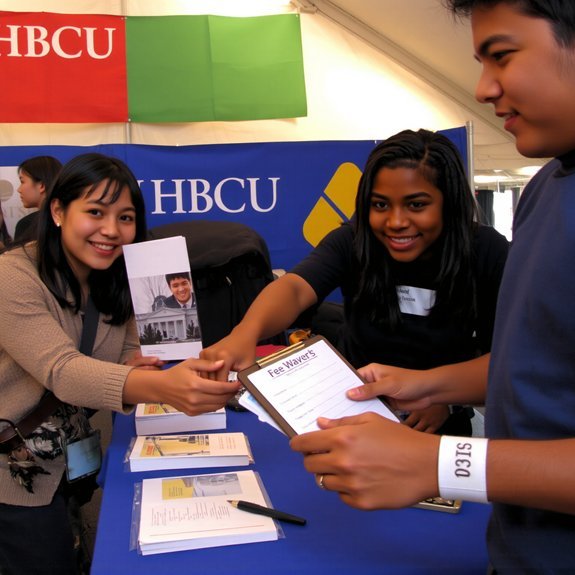
Ever been to a college fair and felt like you wandered into a carnival for grown-ups—brochures fluttering, reps calling your name, free pens rolling under tables? I’ve been there, clutching a tote, scanning banners like a radar. At HBCU tables, reps often offer on‑the‑spot fee waivers if you show interest, fill a quick form, or attend a mini info session. Listen for announcements: sometimes booths announce “fee waiver today!” louder than the DJ. Bring a short script—name, intended major, why you’re curious—and ask directly. Take photos of waiver codes, get a rep’s card, jot deadlines. If a campus hosts an admissions workshop or open house at the fair, stick around; they love handing out waivers to people who stay engaged.
Standardized Test or Application Platforms With Built‑In Waivers
You’re probably wondering if the apps and tests themselves can cut you a break — they can. I’ll walk you through the Common App and Coalition’s built‑in waiver buttons, and point out how ACT and SAT fee waivers work, so you won’t be left guessing while you click and sigh. It’s simple, I’ll show the exact places to look, you’ll save time, and yes, maybe even a few dollars for pizza.
Common Application Waiver Options
Wondering how those built‑in waivers actually work? I’ll walk you through the Common App’s waiver choices — quick, practical, and mostly painless. You’ll click through the fee waiver section, answer a few income or program questions, and upload proof if asked, like a free lunch letter or FAFSA screenshot. I’ll admit, the form feels bureaucratic, but it’s fast, and schools trust it. If you qualify, the app flags your account, you don’t pay, and breath out — victory. Counselors can also certify waivers, so tug one into your day, ask them, and watch paperwork shrink. Tip: save screenshots, follow prompts exactly, and don’t let perfectionism block a free pass.
Coalition Application Waivers
If you’re filling out the Coalition Application, don’t panic — it actually makes fee waivers pretty straightforward once you click into the right spot. I’ll walk you through it, step by step, like we’re sneaking past a velvet rope. Click “Profile,” scroll to “Fee Waiver,” and breathe — there’s a series of simple yes/no prompts. Say yes where it applies: low income, school counselor sign-off, or SNAP participation. Upload any supporting doc if asked, snap a photo with your phone, and hit submit. You’ll see a digital waiver flag on schools that accept Coalition waivers. Tell your counselor to confirm it, if needed. It’s fast, honest, and saves you cash — my kind of small victory.
ACT/SAT Fee Waivers
Let’s cut to the chase: test fee waivers are baked right into the ACT and SAT systems, so you don’t need to wrestle with extra paperwork or hunt down some mysterious form. I’ll say it plain: sign up, check the waiver box, and breathe. You qualify if you meet income guidelines, get free or reduced lunch, or your counselor flags hardship. The site walks you through, chrome clicking, form-filling, and that tiny victory ding when it accepts the waiver. You’ll get free score reports, waived test fees, even help registering for subject tests when offered. Talk to your school counselor, print confirmation, screenshot it, stash it in your phone. I’m biased, but I love a process that actually works.
How to Request a Waiver From an HBCU Admissions Office
When you walk into the admissions office—metaphorically or with your shoes on—you’re not begging, you’re negotiating for common sense; I’ll show you how to ask for a waiver without sounding needy or like you’re reading from a script. Speak plainly, smile, and state the need: “I’d like an application fee waiver, here’s why.” Hand over clear documents, don’t ramble, let them nod. If you call, sound calm, not auditioning for a drama; on email, be brief, polite, include name, program, and a quick reason. If someone hesitates, ask what they’d need to approve it — they’ll usually tell you.
- Bring ID and any proof of income or eligibility.
- Use a short, confident script.
- Ask for a decision timeline.
Community Organizations and Scholarships That Cover Fees
You’ve done the polite ask with admissions, handed over your ID, and heard the polite maybe — now let me show you other doors. I’ll walk you through community groups, local foundations, and scholarships that actually cover application fees. Knock on your neighborhood nonprofit’s door, or DM a youth program coordinator; I promise they’ve seen this before. Bring a printed form, your ID, and a quick script—“Can you help with college app fees?”—and watch people nod. Search scholarship databases for “application fee” grants, skim church bulletins, call your high school counselor with energy, not anxiety. I’ll admit, it feels like begging, but it’s not — it’s resourcefulness. Collect confirmations, save receipts, and breathe: you’re assembling a paper trail that wins.
Tips to Maximize Your Chances of Receiving a Waiver
Because people respond to preparation more than pleas, you’ll boost your odds of getting a waiver by showing up organized, confident, and a little charming — like a friendly storm of paperwork. I tell you, it works: tidy folders, neat copies, a calm voice. Call admissions, ask specific questions, and name-drop a counselor if you have one. Send polite follow-ups, add a brief personal note about your fit, and smile into the phone — they can hear it.
- Gather proof: free lunch letters, tax docs, scholarship award notices.
- Practice a one-minute script: who you are, why the waiver matters, what you’ll submit.
- Show gratitude: thank-you emails, a quick update after acceptance.
Do this, and you’ll feel ready, sharp, slightly smug, and more likely to get that waiver.
Conclusion
You’ve got this — hunt down fairs, ask counselors, snag codes, and email reps with a quick script; do the small, steady stuff that moves mountains. I’ll be honest, I once begged a rep for a waiver like it was the last cookie, and it worked — humor helps. Keep records, follow up, and don’t be shy. If one door stays shut, knock on ten more, because HBCU doors open for the persistent.
Leave a Reply