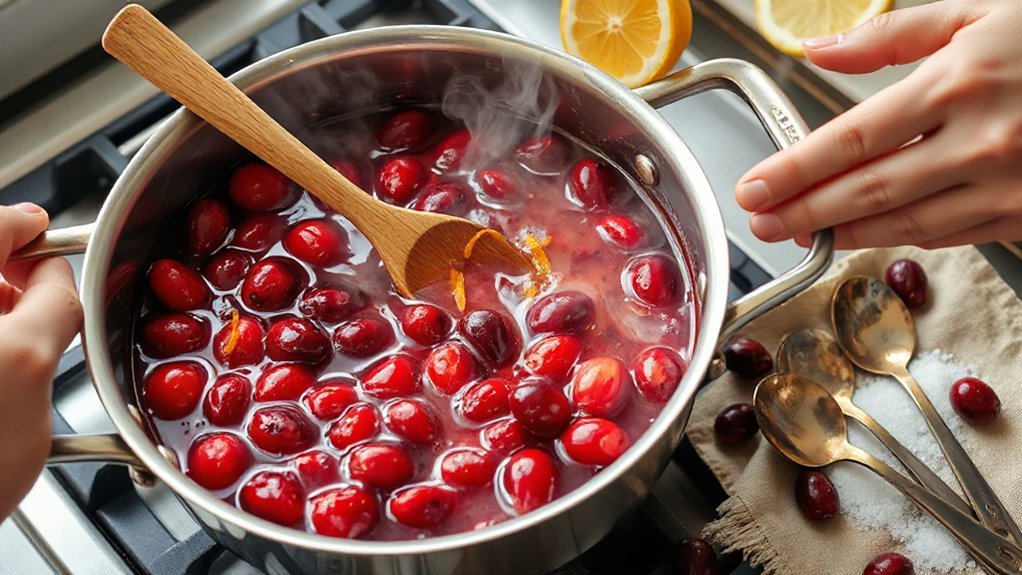
Cranberries are tiny flavor grenades, and you’re about to disarm them—careful, they pop. I’ll walk you through rinsing the berries, zesting an orange, and simmering everything until the kitchen smells like bright, tangy candy; you’ll hear pops, see the sauce thicken, and taste-test like a pro (or a very picky uncle). Stick around — there’s a trick for perfect sweetness and a make-ahead move that’ll save your holiday.
Key Takeaways
- Simmer cranberries with water (or orange juice) and your chosen sweetener until berries pop and mixture thickens, about 10–15 minutes.
- Start with less sugar, taste as it cooks, and adjust sweetness plus a pinch of salt to balance tartness.
- Add orange zest/juice and optional warm spices (cinnamon stick or vanilla) for brighter, layered flavor.
- Mash some berries with a spoon for texture while leaving others whole for visual and textural contrast.
- Cool completely before transferring to jars; refrigerate for up to 2 weeks or freeze for longer storage.
Ingredients You’ll Need
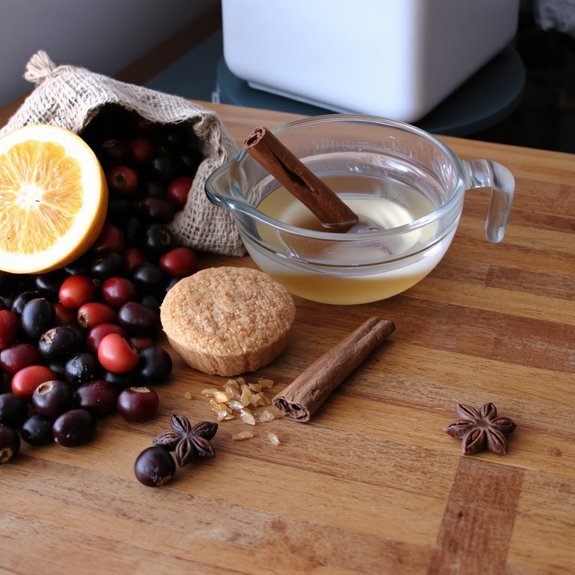
If you’re anything like me, you’ll want to see everything laid out before you start—so let’s do that. You’ll need a bag of fresh cranberries, bright and poppy, they smell like tart candy when you rinse them. Pick a sweetener: granulated, brown, maple syrup, even honey—think of sugar options as mood choices, each one changes the vibe. Salt? A pinch, yes. Citrus zest and juice wake the berries up, orange is classic. A cinnamon stick or a split vanilla bean add warmth, if you’re feeling fancy. Water or a splash of orange juice for simmering. Measuring cups, a sturdy saucepan, and a wooden spoon that’s seen better casseroles. That’s your lineup, nothing dramatic, just honest ingredients ready to sing.
Step-by-Step Basic Recipe

You’ll start with bright, glossy cranberries and a few simple fresh ingredients that make the sauce sing, I promise—no mystery jars here. Then you’ll cook and stir them until they pop and thicken, that bubbling scent filling the kitchen and making you grin. Finally, you’ll let it cool, scrape it into a jar, and tuck it in the fridge so it’s ready to impress.
Fresh Ingredients First
One bowl, a handful of bright cranberries, and me trying not to overcomplicate things—let’s start where every good sauce does: with fresh ingredients first. You want berries that smell tart and look glossy, not wrinkled; that snap is nonnegotiable. Knowing fresh cranberries benefits helps—more fragrance, firmer texture, cleaner flavor, less need for fixes. I pick through them, toss soft ones, and imagine the zing. Consider organic ingredient options for sugar and citrus if you care about pesticides or flavor purity; it’s a small splurge that sings. Chop zest, measure sugar, and line up water and a pinch of salt like soldiers. You’re prepping a tiny orchestra; do it with intention, a grin, and maybe one quick taste-test.
Cooking and Stirring
Okay — stove on, pot ready, and no solemn vows about “perfect texture” yet; we’re here to cook, stir, and pay attention. You’ll heat sugar and water, listen for the first simmer, then toss in cranberries; they’ll pop like tiny fireworks, smell bright, tart, and gloriously alive. Use basic cooking techniques, don’t panic, and keep your eyes on the pot.
- Start low heat, then raise to gentle boil, you want bubbling but not chaos.
- Stir with a wooden spoon, scrape the bottom, learn simple stirring methods that keep sauce smooth.
- Taste early, adjust sugar, wink at your inner critic.
- Mash some berries for texture, leave a few whole for charm.
I narrate, you cook, we both eat soon.
Cool and Store
Let the pot sit off the heat for a minute, breathe in that tart-sweet steam, and don’t be tempted to plunge in with a spoon like it’s the last slice of pie—hot sauce burns. I watch the bubbles calm, I nudge the pan to loosen any jammy bits, then I choose a cooling methods plan: shallow pan transfer for quick chill, or jar funneling for slow-set texture. Spoon into clean, warm storage containers, leave a little headspace, wipe rims—no crusty lids, thanks. Let jars cool on a rack until just warm, then cap. For fridge use, they’re good two weeks; for freezer, three months. Label, date, and try not to taste-test every hour. You’ll thank me later.
Texture and Flavor Variations
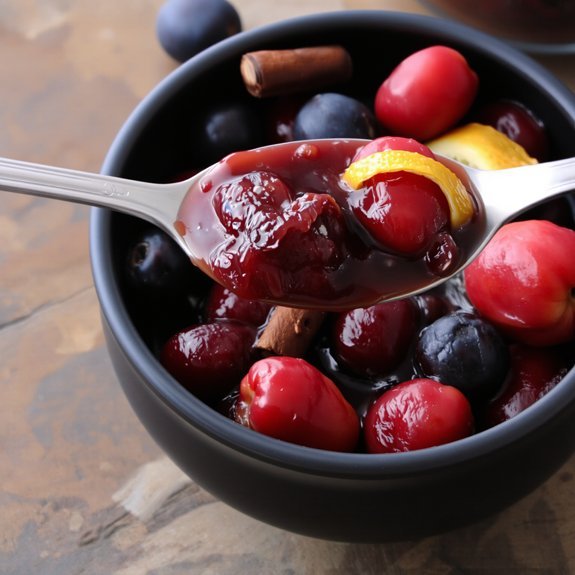
If you like your cranberry sauce singing with texture, you can coax it into everything from jammy spread to bristling bead-studded relish—I do it depending on mood and what I’m hiding in the fridge. You’ll play with sweetness levels and honor your texture preferences, tweaking sugar and cooking time. I like a glossy, spoonable jam; you might want jewel-like berries that pop. Stir in orange zest for perfume, ginger for a bite, or chopped nuts for crack. Chill to firm up, or serve warm to slurp with gravy.
- Cook longer for thick, spreadable jam, stir often, resist the urge to wander.
- Smash half the berries for rustic body, leave the rest whole.
- Fold in citrus or spice at the end.
- Add seeds or nuts for crunch.
Tips for Balancing Sweetness and Tartness
You’ve got your texture sorted—jammy gloss or jewel-bright berries—and now it’s time to tame the flavor so the sauce actually sings at the table. I’ll be blunt: you want sweetness balance, not saccharine glue. Start with less sugar than the recipe says, simmer, taste hot and cold. If it’s too tart, stir in a spoonful of sugar, maple, or honey, then wait—sweetness softens as it cools. For tartness adjustment, add a squeeze of orange or lemon, or a splash of cranberry juice, which brightens without dumping sugar. Salt is magic, a pinch brings everything forward. Keep a tasting spoon handy, and adjust in small steps. Trust your palate, not panicking measures.
Make-Ahead and Storage Advice
You can cool the sauce until it’s glossy and chilled, pop the lid on, and relax—flavors settle and textures firm up best after a good nap in the fridge. If you want to stash extras, freeze in single-serving tubs or a loaf pan, label them, and thaw slowly in the fridge so the berries don’t turn into sad mush. Trust me, I’ve thawed a tray too fast and learned the hard way; chill first, reheat gently, and you’ll get that bright, spoon-ready shine every time.
Chill Before Serving
Three hours in the fridge works wonders, trust me—I’ve learned the hard way that warm cranberry sauce is a fork-sinking, table-ruining tragedy. You want apple-bright snap, glossy sheen, and the right serving temperature so flavors pop, not flop. Chill time firms the jammy texture, and cooling calms the sweet-tart fight into harmony.
- Put the pot in a shallow bowl, cover loosely, slide it into the center shelf, and set a timer.
- Taste after the minimum chilling time, nudge longer if it’s still too soft, and remember cold dulls sweetness slightly.
- For prettier slices, chill overnight, then bring out 20 minutes before plating to lift the aroma.
- Store in a sealed container on the shelf’s coldest spot, label, and you’re golden.
Freezing and Thawing
Cold-stored sauce is great, but sometimes life (and guests) demand planning ahead, so let’s talk freezing and thawing—my freezer and I have a complicated relationship. You can freeze cranberry sauce in airtight containers or heavy-duty freezer bags, leaving a little headroom because it swells, and label with date. Those freezing techniques keep bright color and zing, if you don’t overcook first. Thawing methods matter: move the jar to the fridge overnight for gentle thawing, or sit a sealed bag in cold water for an hour if you’re sprinting. Reheat gently on low, stir to revive texture, add a squeeze of orange if it’s flat. Taste, adjust sugar, and serve; it’ll forgive you, eventually—usually.
Serving Ideas and Pairings
When the cranberry pot cools and the whole house smells like bright citrus and late-autumn sugar, I like to get a little dramatic with how it shows up at the table. You’ll use it for festive gatherings, sure, but also for weekday rescue missions — it’s a tiny jar of joy and flavor enhancements. Spoon it beside roast turkey, dollop on warm biscuits, or slide it under creamy goat cheese on crostini; it sings every time.
- Spread on leftover turkey sandwiches, with crunchy apple slices.
- Swirl into Greek yogurt, top with toasted walnuts.
- Serve as a glaze for roasted carrots or Brussels sprouts.
- Pair with sharp cheddar on a charcuterie board, olives optional.
Conclusion
You’ve got this—homemade cranberry sauce is simple, bright, and way better than the canned stuff, I promise. Grab fresh berries, sweeten to taste, simmer till they pop, and let the tang mellow; I always sneak a spoonful warm, because patience is for saints. Store it chilled, it keeps beautifully, and it’ll steal the show at your table. Make a batch, stash it, and watch guests come running like bees to honey.
Leave a Reply