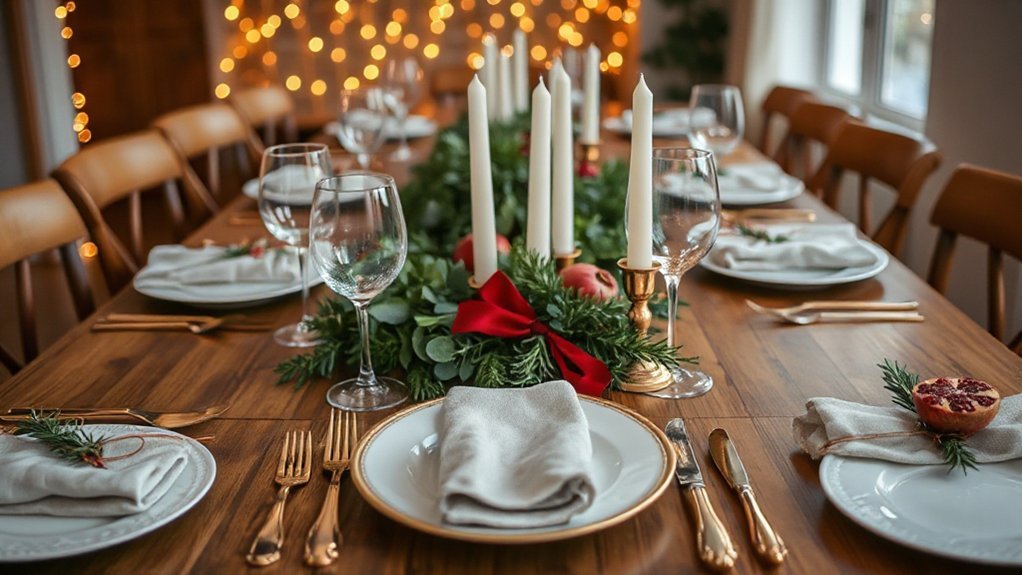
You can make guests gasp with one clever table tweak: pick two main colors and an accent, then let everything else fall into place. You’ll layer a textured cloth, stack contrasting placemats, and build a centerpiece with varied heights—evergreens, citrus, maybe a candle or two—so the table feels rich but not cluttered. I’ll walk you through lighting, place settings, and tiny keepsakes that make people linger, but first—what mood do you want?
Key Takeaways
- Choose two main colors and one accent, then distribute them in thirds across the table for a cohesive holiday palette.
- Layer a base linen with woven placemats, contrasting chargers, and folded napkins for depth and texture.
- Build a centerpiece with a single focal piece, varied heights (candles, low greenery), and seasonal accents for balance.
- Mix dinnerware and glassware intentionally—plain chargers, vintage plates, and varied glass heights to create curated charm.
- Place small keepsake favor cards with short personalized messages to reinforce the theme and delight each guest.
Choosing a Cohesive Color Palette
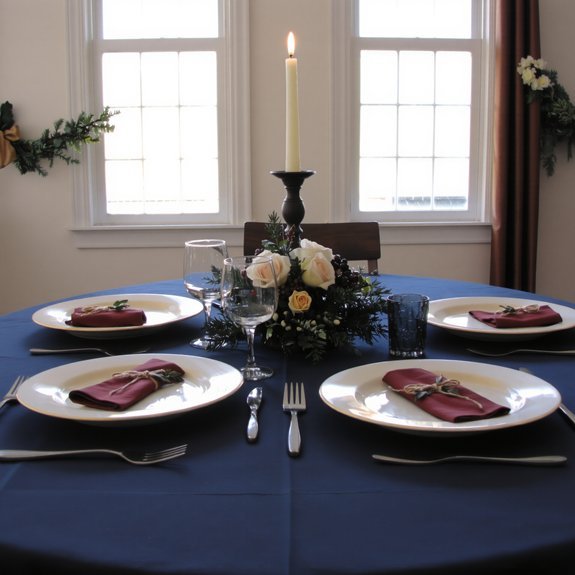
If you want your table to look like it planned the party, start by picking a color palette and commit—hesitation is just visual clutter. I’ll tell you to pick two main hues and one accent, then stick to them like glue. Think about color psychology, how greens calm, reds excite, golds feel festive; use that to set mood. Let seasonal themes steer choices: icy blues for winter, warm oranges for fall, crisp whites for spring. Lay colors in thirds—table, center, accents—so eyes move, not panic. Touch fabrics, feel weight, see how light bounces. Don’t overthink trends, trust instinct, and yes, mix metal tones if you must. You’ll end up with a table that winks, not yawns.
Layering Linens and Placemats
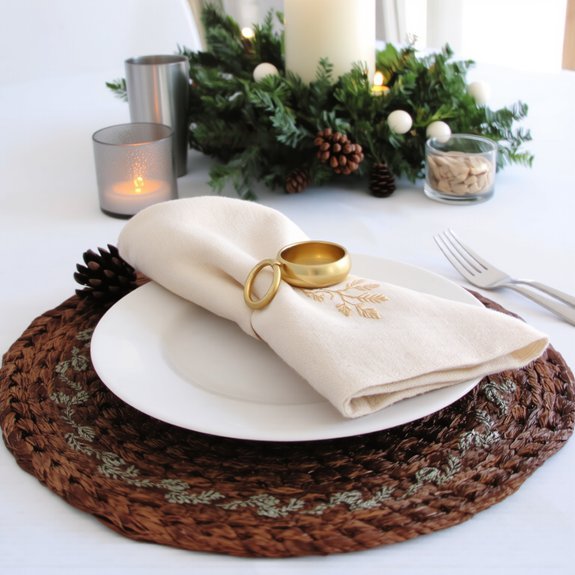
When you think of linens as the foundation, you stop treating placemats like an afterthought and start building a table that actually feels intentional. You’ll layer a linen cloth, then add woven placemats, mixing layering textures so each place looks rich, tactile, and ready to eat off of. Pick contrasting colors to make chargers and napkins pop, don’t be shy—color is your friend, not a committee. Run your hand over a napkin fold, feel the soft cotton against the coarse jute placemat, imagine the clink of glasses. I’ll confess, I once ruined a scheme with too many patterns, lesson learned—simple beats chaotic. Repeat the rhythm down the table, keep spacing even, and let texture do the talking.
Designing a Centerpiece That Fits Your Table
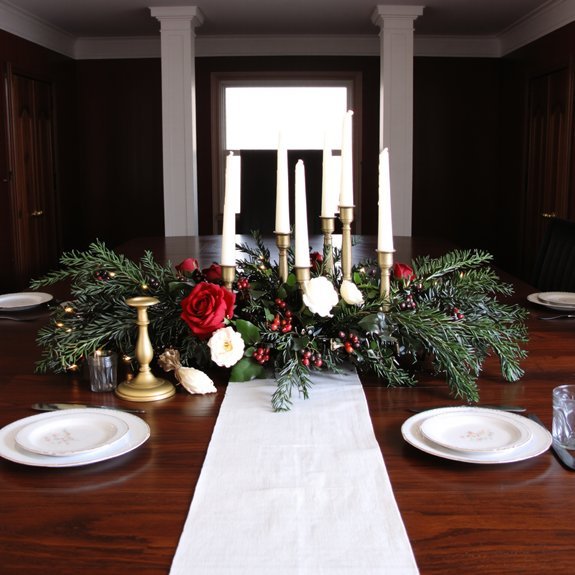
Think of your centerpiece as the room’s opening line—bold enough to grab attention, quiet enough to let conversation breathe. I want you to pick a focal piece, then build around it, like a tiny stage. Use color contrast, mix greenery with one bright bloom so eyes have a place to land. Think in tiers: low candles for reaches, a taller vase for drama—height variation keeps sightlines clear and guests chatting. Scatter texture—pinecones, citrus, metallics—for smell and sparkle; I promise it smells like winter, not a Christmas tree exploded. Don’t cram the whole mantel onto the table; leave elbow room. Step back, squint, adjust. If it still feels off, remove one thing. You’ll know, because the table will finally breathe.
Mixing and Matching Place Settings and Dinnerware
Okay, you’ve given the table a invigorating change with that centerpiece—now let’s outfit the cast. You’ll mix patterns, textures, and eras like a tiny, polite rebellion. Layer a plain charger, then stack a plate from your vintage dinnerware, top with a modern salad plate, and watch magic happen. Don’t match everything; let contrasts sing. Use napkins in colors that echo cultural influences you love, fold them casually, tuck a sprig or card for personality. Glassware should vary in height, not clash. Flatware can be mismatched metal, if balanced. I’ll confess, I once paired china with plastic — it worked, shockingly. You’ll set each place with intention, so guests feel welcomed, curious, and ready to eat.
Incorporating Seasonal Accents and Greenery
You’ll want a fresh-cut centerpiece that smells like a forest, not a florist’s freezer, so I usually grab evergreens, pinecones, and a handful of citrus for zing. Lay sprigs and eucalyptus down the center as a natural table runner, scatter candles and tiny ornaments, and watch the table go from “nice” to “wow, did you make this?” I’ll show you how to keep it simple, sturdy, and spill-proof—because beauty shouldn’t require a PhD in floral engineering.
Fresh-Cut Centerpiece Ideas
A centerpiece’s your holiday handshake—bold, fragrant, and impossible to ignore—so let’s make it sing. You’ll start by thinking like a florist, using flower arrangement techniques to build height, texture, and rhythm; pinch stems, angle cuts, and layer foliage so each bloom gets its moment. For seasonal blooms selection, choose hardy dahlias, ranunculus, or sprigs of holly, mix in pine and eucalyptus for scent, and tuck in bittersweet or berries for color pops. Keep scale right, don’t block faces, and use low vessels for conversation. I’ll tell you: trim stems in cold water, change it often, and skewer stubborn stems into floral foam if needed. It smells amazing, looks effortless, and guests will ask, “Who did this?”
Natural Table Runner Accents
When you lay greenery down the center of the table, think of it like dressing a person for a party—you want layers, texture, and one thing that makes heads turn, so I start with a loose, slightly messy backbone of evergreens, eucalyptus, and fir boughs that crackle when you tuck them in; then I add pops—clusters of cranberries, sprigs of holly, little pinecones, maybe a strand of dried oranges—for color and smell. You’ll weave in natural fibers, like burlap ribbons or linen strips, they soften the greenery, and they hide sad gaps. Try eco friendly options: foraged twigs, beeswax candles, compostable twine. Tuck in bells, or a sprig for each guest. It smells like winter, looks like effort, costs less than you brag about.
Lighting Tips for Ambiance
If you want the table to feel like a cozy story, start with lighting—it’s the quickest trick in my hosting book, and yes, I confess I yank dimmer switches like a magician reveals rabbits. You’ll set mood fast, so layer soft glow, balance warmth, and don’t blind your guests. I love string lights draped low, they wink like fireflies, and candle arrangements scent the air, not scorch the napkins.
- Use a dimmer, drop overhead glare, let candles and string lights sing, you’ll get that flattering, photographable glow.
- Cluster candles in varied heights, mix votives and pillars, snip wicks, keep flame low and steady.
- Add a few battery candles for safety, tuck them among greens, test from seat level.
Personalizing Place Cards and Small Touches
You’re going to make everyone feel seen before the first course arrives, so grab a pen and flex that shaky calligraphy hand for handwritten tags that sparkle under candlelight. Maybe write names on gingerbread, or tuck edible mint leaves with tiny sugar letters—your guests will smile, nibble, and ask nervous questions about your baking skills. I’ll toss in keepsake favor cards with a short, cheeky note, so they leave with a snack, a laugh, and something to remember the night.
Handwritten Calligraphy Tags
Because handwriting still feels like a small, rebellious act, I insist on calligraphy tags at my holiday table — they make people pause, grin, and actually read their name before diving into cranberry chaos. You’ll love how handwritten calligraphy, paired with elegant designs, turns a napkin into a tiny stage. You touch smooth cardstock, breathe ink, and smile at a swooping capital that somehow flatters you. I write slowly, deliberately, humming off-key carols, and you’ll feel honored, not labeled.
- Use thick paper, a pointed nib, and practice flourishes; keep names short, confident, readable.
- Try metallic ink on dark tags for sparkle without fuss.
- Add a tiny sprig or wax seal to finish, press gently, snap a pic.
Edible Name Markers
A little edible name marker can turn a place setting into a tiny, delicious surprise, and I swear guests notice it before the turkey does. You’ll love the instant smile when someone bites a sugared mint with their name brushed in chocolate, or lifts a sprig of rosemary tied with a cinnamon stick and a tiny tag. Use edible markers on fondant discs, white chocolate squares, or ginger cookies, write tidy names, let ink dry, then nestle them on napkins. For creative ideas, try mini macarons, marzipan leaves, or candied citrus slices with hand-painted names; they smell amazing, taste even better, and double as a nibble. I test everything, so trust me, it’s foolproof and festive.
Keepsake Favor Cards
Sometimes a little thing makes the whole table feel owned, marked, and remembered; I swear a tiny keepsake favor card does that trick every time. I tell you, they’re small, tactile, and they make people smile—paper that smells faintly of pine, a ribbon that twinkles when you snatch it up. You’ll pick favor card designs that echo your theme, add a short, sentimental messages line, and tuck a tiny token inside.
- Match mood: rustic kraft, glossy jewel tones, or minimalist white—pick one, stick with it.
- Write two lines: name, then a single warm, witty note—no essays.
- Add a touch: cinnamon stick, seed packet, or a tiny ornament—simple, useful, memorable.
Conclusion
You’ll nail this. Pick two main colors and an accent, layer linens for texture, trim with evergreens or citrus, and mix plates and glasses like you mean it. I once heard the “perfect table” is myth — turns out it’s not; it’s practice, mood lighting, and a centerpiece that doesn’t topple. Light candles, tuck a keepsake card at each napkin, breathe, and watch guests smile. That’s the whole magic, really.
Leave a Reply