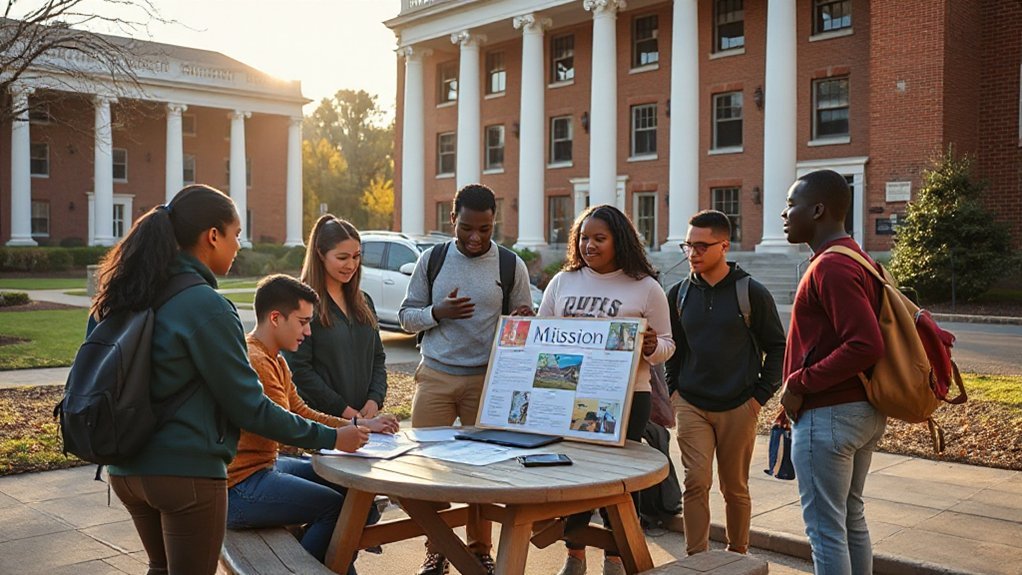
You feel the campus breeze tug at your flyers as you stand under the oak, plotting something bigger than a club—something useful, loud, and real. You’ll pick a purpose, draft a tight constitution, and recruit a few die-hards who actually show up, not just RSVP; you’ll find a faculty ally, sketch a budget, and plan one unforgettable kickoff that has people talking. Stick with me, and I’ll show you how to make it last.
Key Takeaways
- Craft a two-sentence mission statement, three concrete goals, and values to guide decisions and recruitment.
- Research campus needs and map existing groups to find cultural gaps and avoid mission overlap.
- Draft a clear constitution with membership rules, officer roles, meeting cadence, voting, and financial guidelines.
- Secure a faculty/staff advisor, recruit a small committed founding team, and assign specific roles to each member.
- Track attendance and growth, build a leadership pipeline with mentorship, and use campus media for promotion.
Define Your Purpose and Mission

Purpose matters. You’ll start by naming why this group exists, and you’ll do it out loud, crisp and clear. I tell you: say it like you mean it—mission statement, two sentences, no fluff. Picture a poster, bold letters, your voice echoing in a student center; that’s your north star. List three core goals, tangible actions—events, mentorship, service—then imagine the smell of coffee at planning meetings, the clack of laptops, hands sketching flyers. You’ll pick values that guide decisions, the kind you’d tattoo on a planner. Test the mission on friends, get honest feedback, adjust. When it’s tight, you recruit better, plan smarter, and you’ll sleep easier knowing this club’s purpose won’t wobble.
Research Campus Needs and Existing Organizations

You’ll walk the quad, eavesdrop on club fairs, and scribble notes, because the first step is spotting the gaps in student life that nobody’s filling. Take a campus map and mark every group you find, compare their missions, and ask, “Who’s missing from this picture?” I’ll warn you—this part feels like detective work, but it’s mostly coffee, curiosity, and asking the right person one blunt question.
Identify Campus Gaps
Now that you’ve got the spark, let’s poke at the map of campus and see where the voids are—literally walk the quad, slide into the student center, and eavesdrop (politely) on club tables; you’ll hear what’s missing faster than any survey. I stroll, I listen, I smell coffee and sweaty flags, and I jot notes on my phone. Look for quiet corners, repeated complaints, or activities that never happen. Ask two students, then one more, and watch patterns form.
- Student need: spot recurring frustration, like no late-night study groups.
- Resource gap: missing equipment, space, or advisor expertise.
- Cultural niche: traditions or identities not celebrated, yet whispered about.
Map Existing Groups
Think of the campus like a giant Venn diagram, and you’re trying to find where the circles don’t touch. Walk the quad, eavesdrop at club fairs, scan flyers, and stalk org pages — I mean, responsibly browse them. List names, missions, meeting times, and who actually shows up. Talk to officers, grab coffee, ask blunt questions: “Who aren’t you reaching?” Take photos of posters, catalogue socials, map overlaps and empty spaces on a sheet. You’ll spot clusters — music, service, faith — and the thin air between them. That gap is your opening. Sketch a one-line mission that fills it, test it with two students, tweak, then invite a dozen people to a trial meeting. Data, not ego, should guide you.
Draft a Clear Constitution and Bylaws

Because a solid constitution is like the spine of your group — bend it wrong and everything droops — you’re going to want one that’s lean, readable, and actually useful, not a dusty legal novel no one will open. I’ll walk you through what matters, fast. Think clear purpose, who does what, how you make decisions, and how you end things without drama. Use plain sentences, short headers, and examples — imagine someone reading it in a noisy café.
- Define purpose, membership rules, officer roles, terms, and removal — concrete, brief, no fluff.
- Set meeting cadence, voting procedures, quorum numbers, and amendment steps — specific triggers, simple math.
- Include finances, budget approval, recordkeeping, and dissolution clauses — protect people and money.
Find Faculty or Staff Advisors and Allies
Advisors are your secret superpower — I promise, they make club life less chaotic and more credible, and yes, they actually like being asked (when you ask right). Think office-door light, warm coffee steam, expert calm. Go to faculty who teach related subjects, staff who run student life, or that Prof. who laughs at your emails. Knock, introduce yourself, say your purpose, and bring a one-page plan. Offer clear roles, meeting cadence, and small perks — snacks, honorarium, or help with travel forms. Listen when they share campus rules, and take notes. If someone says no, thank them, ask for referrals, keep smiling. Build allies across departments; their signatures open doors, their advice keeps you legit, and yes, they’ll save you on deadline days.
Recruit Founding Members and Build Leadership
Grab five people who actually show up, not just hit “interested.” I’ve learned the hard way that enthusiasm looks great on paper and flakes in real life, so you’re aiming for a small crew who’ll text back, bring snacks, and survive a three-hour planning binge without mutiny. I’ll joke, I’ll bribe with pizza, and I’ll be honest: you want reliability over crowds. Call classmates, tap that club fair list, whisper to the student who always wears headphones — persistence pays. Assign clear roles fast, even silly ones like “snack procurer,” so folks feel useful. Practice a quick pitch, rehearse one meeting, and rotate leadership to keep burnout low.
- Define roles clearly.
- Recruit via targeted asks.
- Rotate duties monthly.
Navigate Recognition and Registration Policies
When you’re ready to make your club official, don’t treat the recognition process like a scavenger hunt — treat it like paperwork with attitude. You’ll walk to the student affairs office, hand over your constitution, and feel the paper’s chill against your palm, like evidence of intent. Ask for the recognition packet, skim the checklist out loud, and laugh at the bureaucracy — then follow it. Get a faculty sponsor’s signature, file officer rosters, and upload proof to the portal. Note deadlines, stamp dates, keep emailed receipts, and set calendar reminders. Expect a meeting, answer questions confidently, and bring snacks — bribery works better as charm. Once approved, display the certificate, take a photo, and breathe: you’re official.
Develop a Budget and Secure Funding Sources
Alright, you’ve got the certificate, you’ve celebrated with pizza and a slightly awkward group selfie, and now we deal with money — the thing that actually keeps lights on and events happening. You’ll sketch a simple budget, line by line: venue fees, supplies, food, promotion, a tiny emergency fund — pretend it’s your club’s first-aid kit, but for cash. Hunt campus funding: student government grants, departmental microgrants, and activity fees. Learn the paperwork, deadlines, and who signs checks, because nothing kills momentum like missing a form. Be prepared to pitch: make a one-minute ask, bring numbers, and show impact. Keep receipts, track spending in a shared sheet, and don’t be afraid to ask for help.
You got certified — now budget for venue, food, promotion, emergency cash; apply for campus grants and track every receipt.
- Create a detailed line-item budget.
- Apply for campus grants and student org funds.
- Track expenses and save receipts.
Plan Events, Programs, and Community Engagement
Because campus life is a stage and you’re the director, you’ve got to plan stuff people actually want to show up for — not just free pizza and a table with flyers (though I’ll never say no to pizza). You’ll map the vibe first: study lounge calm, loud dance-off, or service day with gloves and good coffee. Pick clear goals, then design one headline event and smaller, repeatable programs. Delegate roles—MC, logistics, photographer—so you’re not juggling mics and budget spreadsheets like a circus act. Partner with campus offices and local groups for resources and credibility. Track attendance, feedback, photos, and smells (yes, smells matter). Iterate fast, drop what flops, amplify what thrills, and make every event feel like an invite you’d RSVP “yes” to.
Promote Your Organization and Use Campus Media
If you want people to actually know you exist, you’ve got to shout smart, not just loud—so let me show you how to work campus media like a backstage pass. I’ll be blunt: campus paper, radio, and social feeds are your loudspeakers, so use them with rhythm. Snap bright photos, write a two-line hook, and pitch a story that feels urgent. Call the station, sound excited, not robotic. Don’t forget flyers with texture—gloss catches light, hand them where students linger.
- Pitch the campus paper: short hook, clear ask, quote from a real person.
- Host a radio spot: bring snacks, banter, and one memorable line.
- Own social: post daily stories, tag partners, repost student reactions.
Evaluate Progress and Plan for Long-Term Sustainability
You’ll track membership like a scoreboard, counting names, attendance, and the ones who show up soaked in campus energy, because growth isn’t guesses. I’ll help you build a leadership pipeline—train backups, hand off roles with a clear checklist, and make mentorship part of every meeting so people stick around. Keep measuring, keep promoting leaders, and you’ll turn a weekend club into a campus legacy.
Measure Membership Growth
Three simple numbers will tell you more about your club’s future than a hundred hopeful selfies: sign-ups, active attendees, and repeat volunteers. I want you to track those, jot them down after every meeting, and smell the coffee while you do it — morning spreadsheets, sticky notes on the door, friendly nudges in chat. You’ll spot trends, celebrate small wins, and stop guessing.
- Count sign-ups: record source, date, and what hooked them — flyer, friend, or free pizza.
- Log attendees: note time in, time out, engagement level, and one takeaway they mention.
- Track repeat volunteers: mark who comes back, who leads, and who needs encouragement.
Use simple charts, monthly check-ins, and honest conversations.
Build Leadership Pipeline
Because leaders don’t drop from the sky like free pizza, I start by spotting the ones who actually show up and sweat for the club — the folks who stay after the meeting, volunteer to haul chairs, or send that midnight “I can help” text. You pull them aside, thank them, then offer a tiny job — social posts, snack runs, guest check-ins — something they can win at. Train in public, let mistakes be teachable and funny, give clear scripts for awkward moments. Rotate duties, pair newbies with veterans, and schedule short shadow shifts. Track progress with quick check-ins, hand off tasks before graduation looms, and make leadership aspirational, visible, and normal. Build rituals, badges, and a talent map.
Conclusion
You’ve got the blueprint, now make it yours. I’ll say it straight: start small, hustle hard, and recruit folks who’ll show up—like planting seeds in spring, you’ll watch things pop overnight and steady like roots. Talk to a professor, draft that constitution, throw one great kickoff, then build on it. Keep records, celebrate wins, learn from flops, and pass the torch. Do this, and you’ll change campus for the better.
Leave a Reply