
You’re at the quad, sunlight glinting off the band uniforms, and you feel that push — or the yawning slump — depending on the week. I’ll tell you how to turn campus energy into study fuel: plug into traditions, build a loud study crew, use tutoring, block your time, and celebrate tiny wins — yes, even a snack counts. I’ll also show how to stay sane when work piles up and the vibe dips, but first, let me prove something important…
Key Takeaways
- Connect with campus traditions and alumni to draw inspiration and reinforce your academic purpose.
- Build a small, reliable study cohort with shared deadlines and rotating teaching roles for accountability.
- Use tutors, libraries, and academic centers for personalized support and structured study resources.
- Set weekly, realistic goals and track progress to celebrate small victories and maintain momentum.
- Prioritize mental health with boundaries, mindfulness breaks, consistent routines, and campus counseling when needed.
Connect With Campus Traditions and Cultural Energy

If you haven’t yet stepped into a Homecoming yard show or felt the bass from the band make your chest rattle, you’re missing a key source of fuel — and trust me, I used to be that person, hiding in the library like a reluctant monk. You should go feel that energy; it’ll slap sleepiness right off your syllabus. Walk the quad during step practice, taste the sweet heat of carnival food, let the chants roll over you. Those rituals stitch you to purpose, remind you why you grind. Talk to alumni at events, snag stories between sets, catch that wink of shared struggle. You’ll leave buzzing, notebooks lighter, focus sharper. Don’t deny culture its pull — it’s study fuel, disguised as joy.
Build a Reliable Study Network and Peer Accountability
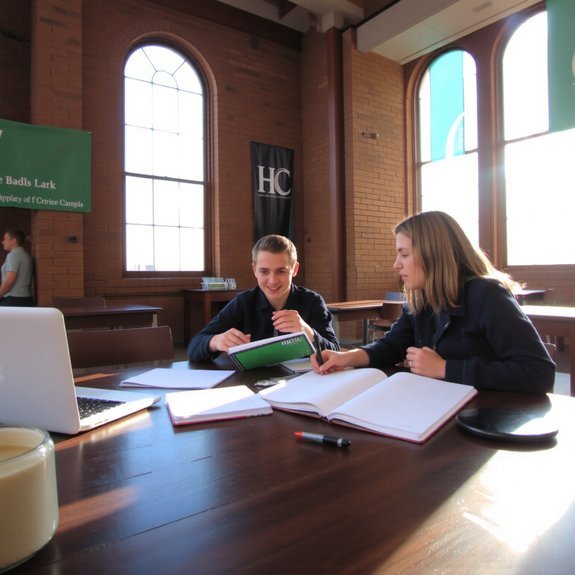
You should rope in a small study cohort, people who show up on time and actually bring snacks, because group energy beats solo slog every time. Agree on shared deadlines and whisper sweet threats when someone dodges them, then swap teaching roles so everyone explains a chunk — it sticks better when you have to say it out loud. I’ll admit I’m bossy about this, but you’ll thank me when exam week feels like a team sport, not a solo marathon.
Form a Study Cohort
A few good people will change your semester—seriously. Pull together classmates who show up, bring snacks, and actually read the syllabus. You’ll meet in a dorm lounge or library corner, feel the hum of fluorescent lights, pass a highlighter, trade jokes, and get to work. I like starting with a 20-minute lightning round: everyone states one goal, one problem, one resource. That tiny ritual sharpens focus, makes procrastination awkward, and yes, it’s oddly satisfying. Rotate roles—scribe, questioner, cheerleader—so no one leads every time. Keep it flexible: sometimes you solve a proof, other times you quiz each other aloud until answers stick. You build trust, cut isolation, and leave energized, because learning’s better with people who care.
Set Shared Deadlines
Three simple deadlines can change the whole vibe of your semester—seriously. Pick three shared checkpoints: skim notes, draft answers, and final polish. You’ll meet in a café, hear the espresso hiss, pass phones into the “no doom-scrolling” basket, and aim for those checkpoints like it’s game day. I’ll text reminders, you’ll roast my punctuality if I’m late, we’ll laugh and get to work. Assign small, clear tasks, set timestamps, and rotate who nudges the group. When someone lags, call it out kindly, toss them a snack, and reset expectations. Those shared deadlines build pressure that’s gentle, predictable, and oddly comforting. You’ll finish more, panic less, and actually enjoy the momentum.
Rotate Teaching Roles
Okay, so after you’ve set those café checkpoints and perfected the art of collective panic mitigation, rotate teaching roles to keep the squad sharp and sane. You take turns teaching a concept, I quiz you like a grumpy pop quiz, someone else narrates a problem step-by-step, and the room smells like burnt coffee and confidence. Teaching forces you to explain, which reveals gaps fast. Stand up, grab the whiteboard, draw ugly diagrams, talk through examples, and let teammates interrupt with “wait, why?” It’s honest feedback, and it stings in the best way. Swap roles weekly, keep sessions short, and celebrate tiny wins with loud snacks. You’ll learn the material, build trust, and prank-proof your study group at the same time.
Use Campus Resources: Tutors, Libraries, and Academic Centers
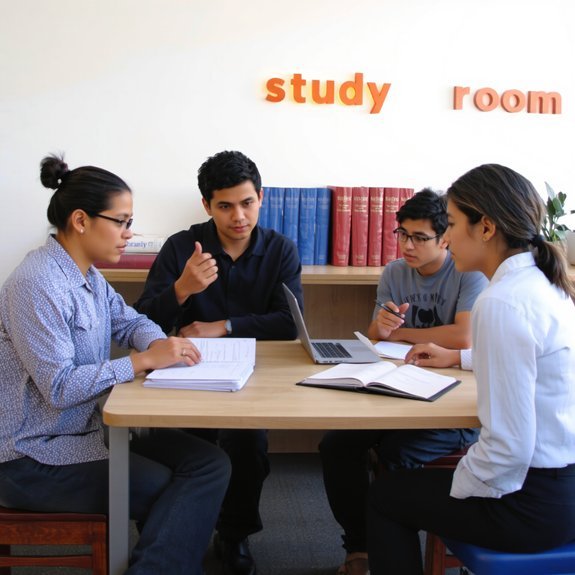
Even when your brain feels like a soggy notebook, you’ve got allies right on campus—tutors, libraries, and academic centers—that’ll pull you out and hand you a fresh pen. I’ll say it straight: walk into that tutoring room, sit down, and ask the dumb question. Tutors listen, sketch problems on whiteboards, and cheer when your lightbulb flicks on. Head to the library, breathe the paper-and-coffee air, snag a window seat, and let sunlight chase drowsiness away. Academic centers offer workshops, quiet labs, and counselors who plot study maps with you, like low-key GPS for classes. Use their tools—practice tests, citation guides, study groups—so you stop guessing and start owning your term, one steady step at a time.
Set Realistic Short-Term Goals and Track Progress
If you want motivation that actually sticks, start by carving your semester into bite-sized victories you can taste—like finishing one problem set while the kettle whistles, or earning a solid quiz score before your favorite show drops. I tell you, map out weekly targets, but keep them tiny. Say: two pages read, one lecture summarized, one flashcard stack mastered. Check them off with a satisfying click, track progress on a sticky note or an app, watch the colors fill in. Celebrate small wins — a fist pump, a snack, a five-minute dance. When you miss one, note why, adjust the next goal, don’t scold yourself. These little proofs build momentum, you’ll see your streak grow, confidence follows, grades do, too.
Balance Student Life, Work, and Mental Health
When you’re juggling classes, a part-time job, and that stubborn need to actually sleep, don’t pretend you’re auditioning for a circus act — that’s how burnout sneaks in. I tell you straight: set firm boundaries, say no without guilt, and protect a mini sanctuary — a cozy corner with soft light, earbuds, and a mug that smells like home. Lean on campus resources, talk to your advisor before stress swallows you, and text a friend when tears bubble up. Pack snacks, hydrate, and notice your mood like it’s weather — cloudy days don’t mean permanent storms. Cut toxic “shoulds,” celebrate small wins with a goofy victory dance, and make sleep nonnegotiable. You’ll feel steadier, sharper, and actually human again.
Develop Effective Study Routines and Time-Blocking
Since college won’t hand you a study manual, you’ve got to build one that actually fits your life — not some Pinterest-perfect routine that collapses after two late nights and an overdue pizza. You’ll carve out blocks that actually work, wake up to the smell of coffee, and treat focus like a muscle you warm up. Try short sprints, then reward yourself with a five-minute dance break — yes, dance.
- Pick a peak focus window, protect it like an exam.
- Time-block classes, work, naps, and snack rituals.
- Use a timer, log wins, tweak stubborn slots ruthlessly.
- Create a simple ritual: clear desk, open book, breathe.
You’ll feel calmer, get more done, and laugh at your past chaos.
Seek Mentors, Faculty Allies, and Professional Guidance
You’ve got a study groove now — timers ticking, coffee steaming, victory dance mid-sprint — but books and playlists aren’t the whole story; real academic horsepower comes from people who’ve been there, graded those exams, and will hand you the short-cuts they learned the hard way. Find a faculty ally who notices you in class, say hello after lecture, ask one smart question. Drop into office hours, bring specific problems, watch their face light up — professors love fixing puzzles. Tap alumni and career services, schedule mock interviews, get resume notes that don’t sound like your mom wrote them. Join a research lab or a student org, follow up, say thanks with a quick email. Mentors open doors, and you push through them, one confident step at a time.
Celebrate Milestones and Practice Self-Recognition
A tiny victory deserves a little fanfare — say it out loud, clap twice, pour a small victory snack (chocolate, chips, whatever fuels your brain) and savor that warm, guilty-grin glow. You’re doing this for you, so mark it. Celebrate projects turned in, study streaks kept, even mornings you rolled out of bed on time. I’ll cheer, you cheer, heck, the room cheers.
- Take a photo of your notes, tag it, stash it in a “wins” folder.
- Buy a cheap treat after a tough class, savor the salt and sugar.
- Tell one friend, get real applause, laugh about the drama.
- Pause five deep breaths, feel the shoulders drop, taste the relief.
Recognize progress, own it, repeat.
Conclusion
I’ve seen you light up at midnight study sessions and cheer through halftime—so keep leaning into that HBCU buzz, it’s your secret fuel. Build your crew, hit the tutoring center, block your time like a pro, and breathe when you need to, okay? Celebrate tiny wins, they stack up faster than you think. You’ll wobble sometimes, that’s fine—think of it as seasoning; it makes the victory taste better. Keep going, I’ve got your back.
Leave a Reply