
You’ve got classes, homecoming plans, and a part-time job tugging at you, so let’s make your life less chaotic and more intentional—fast. I’ll walk you through a color-coded planner hack that actually works, the campus people who’ll save your GPA, smart ways to keep syllabi and notes under control, and how to protect your sleep and sanity without ghosting your friends. Stick with me, and you’ll stop reacting and start running your semester like it’s yours.
Key Takeaways
- Use a cheap color-coded planner to block study, work, and recovery times with two daily nonnegotiable tasks.
- Scan and organize syllabi and handouts into named folders, then maintain a master checklist with due dates.
- Schedule short, focused study sessions aligned with your energy peaks and celebrate small wins to stay motivated.
- Tap campus resources: student success, cultural centers, tutoring, advising, and counseling for academic and cultural support.
- Build a simple budget, track scholarship deadlines, and protect weekly social and self-care blocks to prevent burnout.
Building a Personalized Time Management System
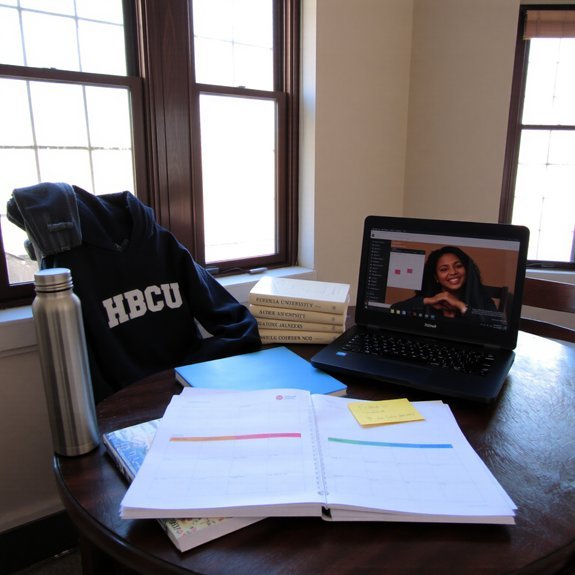
When you’re juggling classes, work shifts, family time, and that one friend who texts at 2 a.m., you need a time system that actually fits your life—so we’re going to build one that listens to you. I’ll walk you through a beat-by-beat plan: grab a cheap planner, color-code like you mean it, and stick a sticky note on your mirror that mocks your past chaos. Split days into chunks: study, hustle, breathe. Say no to “maybe” plans with a friendly, “Not today.” Track real energy, not ideals — mornings for heavy math, evenings for emails. Set two nonnegotiables daily, celebrate tiny wins with actual snacks, and tweak weekly. You’ll feel control creep back in, quietly, like a friend who shows up with coffee.
Using Campus Resources and Cultural Support Networks

Because your schedule already looks like a confetti tornado, you don’t have to reinvent the wheel to get help — you just have to know where the wheel lives. I’ll point you to the places on campus that actually move stuff forward. Visit the student success center, smell the coffee, grab a tutor, and walk out with a plan. Drop by cultural centers, hear familiar songs, meet mentors who get your story. Join affinity groups, pass the peanut butter cups at meetings, swap tips. Use advising, career services, counseling—these offices keep your life from wobbling. Ask peers for syllabi snapshots, trade study spots, and keep a mental map of buildings. You won’t do it alone, and that’s the point.
Organizing Academics: Notes, Syllabi, and Study Plans

You grabbed the tutor, hugged the cultural center, and left with a folder of resources — now let’s get your actual schoolwork in order. I tell you, clear your desk, feel the paper under your fingers, and sort syllabi by due date — color-code them, sticky-note the surprises. Take neat notes, not doodle marathons; try Cornell, or bullet points that actually make sense at 2 a.m. Scan handouts with your phone, name files like tiny vows: Course_Date_Topic.pdf. Block study sessions on your calendar, short bursts, focused playlists, snacks within reach. Review weekly, don’t cram; quiz yourself, teach an imaginary roommate, and laugh when you mess up. Keep one master checklist, check things off, celebrate small wins. You got this.
Managing Finances, Work, and Scholarship Deadlines
Even if your bank app still looks like a foreign country, I’ve got a few tricks that’ll make your money behave — and stop scholarship deadlines from sneaking up like a pop quiz. You’ll open a simple budget spreadsheet, color-code rent, food, and fun, then set alerts on your phone that buzz like a tiny, polite drill sergeant. Work-study shifts get a calendar block, paydays get a direct-deposit rule: split 50/30/20 automatically, so you don’t have to be heroic. For scholarships, create a tracker with due dates, required essays, and contact names — copy-paste prompts save time. When stress bubbles, breathe, then email your advisor fast, say exactly what you need. You’ll sleep better, spend smarter, and actually enjoy campus life.
Balancing Social Life, Traditions, and Self-Care
You’ll carve out weekly time blocks for parties, chapter events, and study sprints, so you actually show up energized, not exhausted. I’ll remind you to honor campus traditions — feel the drumline in your chest, clap on cue, and keep one weekend sacred for step shows and family dinners. And when your brain starts frying, pause, breathe, text a friend, or hit the counseling center — mental health gets top billing, no apologies.
Time-Block Social Events
When the weekend rolls around and the quad smells like fried fish and fresh-cut grass, I carve out a solid block in my calendar just for social life — no sneaky study creep allowed. You’ll treat that block like a VIP pass: set an alarm, pick a meetup spot, and text your crew, “Meet me at the flagpole, 7.” Say yes to the homecoming cookout, but not every last invite. Protect two recovery hours after big nights, schedule laundry and meals, and stick to them. If a club meeting clashes, negotiate: swap shifts, or attend half, then bounce. Your calendar becomes your bouncer, your therapist, your hype coach. You’ll enjoy more, stress less, and still hand in work on time.
Honor Campus Traditions
You can guard your weekend like a VIP and still show up for the stuff that makes campus feel like home — the march past the bell tower, the late-night step show that smells like Sweet Tea and hot pepper, the one-off chapel singalong where everybody knows the chorus. You pick the can’t-miss moments, you mark them on your planner, and you RSVP to your own joy. Say yes to traditions that refill your tank, skip the ones that drain it, and tell friends in advance when you need an early night — they’ll tease you, then save you a seat. Be present: clap loud, wear the colors, learn the lyrics. Traditions stick to you, and you’ll stick right back.
Prioritize Mental Health
If you’re going to show up for every step show and singalong, make sure your brain gets a seat too. I tell you, you can love the drumline and still schedule a quiet hour. Protect sleep like it’s VIP access, dim the lights, breathe slow, notice the campus night air. Say no without guilt, practice a three-word decline: “Not tonight, thanks.” Carve out time for therapy, journaling, or a walk where you count streetlights. When traditions pull you two ways, pick one, enjoy it fully, then recharge. I’ll admit, I’ve overcommitted—face red, voice hoarse—but I learned to pause, text a friend, sip tea, and breathe. You’ll find your balance, and keep your joy, too.
Creating an Organized Living and Study Space
Because clutter has a loud voice, I like to talk back—softly, with labels and a trusty trash bag. You clear surfaces first, feel the cool desk, toss old receipts, recycle that coffee cup. Spray a citrus cleaner, hear the wipe, smell the lemon—instant calm. Position your desk by natural light if you can, angle the chair, set a lamp for late nights. Use bins, color-code folders, stick a small corkboard for deadlines you actually check. Create a mini ritual: five-minute tidy before study, headphones on, playlist queued. Keep plants or a photo for warmth, but don’t overstuff. When things pile, you’ll notice sooner, fix faster, and actually enjoy the space you live and learn in.
Building Accountability and Long-Term Goal Tracking
When I wanted to stop treating goals like hopes scribbled on a napkin, I made accountability feel less like a lecture and more like a ritual you actually want to keep—so let’s do the same for you. You’ll pick one big goal, smell the coffee, write it in bold, then slice it into weekly bites. Get a buddy, roommate, or club mate, set a check-in—five minutes, no excuses—and report wins like you’re a morning anchor. Use a visible tracker, sticky notes, a habit app, whatever you’ll actually touch. Celebrate tiny wins, trash small failures, recalibrate fast. Visualize the end: tassel, handshake, that campus breeze. Keep it playful, strict, and real. Accountability becomes momentum, not shame.
Conclusion
You’ve got this — I’ve watched you juggle late-night study sprints and homecoming madness, so I know you can build a system that actually sticks. Color-code, calendar, ask for help, sleep sometimes, and treat your planner like a friend. Remember, “measure twice, cut once,” so plan before panic. Stay curious, call your mentor, and dance at the next step show — small habits win big, and I’ll cheer you on every messy, marvelous step.
Leave a Reply