
You’ve got five minutes before class ends and a campus breeze zips past the quad — use it. Come with your syllabus, that graded paper, and one clear question; don’t wander in saying “I’m lost,” say “Help me fix this thesis.” Be on time, sip your coffee quietly, listen more than you talk, and try a confident ask like a human, not a homework robot. Do this well, and you’ll build a mentor who notices you — but first, let’s talk about how to actually prepare.
Key Takeaways
- Schedule and attend professor office hours regularly, arriving on time with specific questions and relevant materials.
- Clearly state one goal for the meeting, outline your attempts, and ask for actionable next steps.
- Build rapport by briefly sharing academic/career interests and following up with progress updates or thank-you notes.
- Use office hours to ask about scholarships, research, internships, and networking opportunities tied to HBCU resources.
- Track feedback in a small notebook, set realistic milestones, and request brief check-ins to monitor improvement.
Why Office Hours Matter at an HBCU
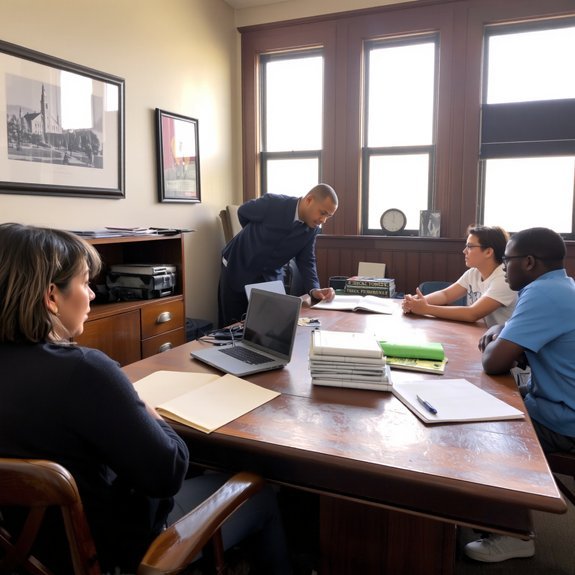
Because I’ve sat in those too-quiet lecture halls and crowded campus corridors, I know office hours aren’t some optional extra — they’re your backstage pass. You walk in, hear the hum of fluorescent lights, feel the cool of a laminate desk, and suddenly you’ve got time with someone who actually knows the script. Use that moment. Ask about class puzzles, career hints, grad school whispers, or how to turn a B into an A without losing sleep. Professors remember faces, voices, jokes — yes, even your terrible coffee breath. They’ll point you to scholarships, research, and alumni who answer texts at midnight. Don’t be shy, don’t wing it; show up curious, bring a question, leave with a plan and a new ally.
Preparing Before You Go
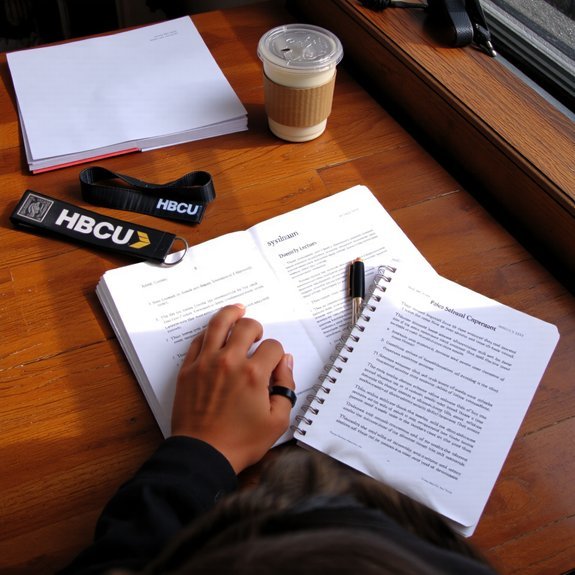
If you show up empty-handed, you’ll leave empty-handed — and nobody wants that. I mean it: grab your syllabus, pencil that page that freaks you out, and bring the graded work that’s been haunting your dreams. Show up sharp, not frantic.
You’ll want three things ready, so don’t wing it:
- A specific page or problem, crisp and marked, so you both see the mess at once.
- Notes that say what you tried, where you stopped, and a quick “I think this” line — saves time, earns respect.
- A calendar and realistic timeline, because office hours are a team play, not a magic wand.
Walk in tidy, speak up, listen close, and leave with a plan.
How to Ask Clear, Specific Questions

Want better answers? Say exactly what you’re stuck on. Walk into office hours with one clear problem, not a vague “I don’t get it.” Point to a line in your notes, show the sentence in the reading, or tap the specific step in your worksheet. I’ll pause, listen, and ask a short follow-up. When you say, “I tried X, but got Y,” you hand me the map and the hiccup. Use concrete words: equation, paragraph, citation, deadline. Give a quick demo—read your sentence aloud, outline the step. If something smells off, say which part feels weird. Don’t apologize for asking; smart questions save time. I’ll reply clearer, faster, and with fewer sad chalk marks.
Sharing Your Goals and Background
Good question, and don’t stop at the problem—tell me who you are. You walk in, sit, breathe, and say your name, major, and one honest goal. I’ll listen, I’ll nod, I’ll ask about deadlines. You paint a quick scene: late-night library, coffee gone cold, that stubborn concept. Be vivid, be brief, be human.
- Say your goal: career, grade, or curiosity—one sentence, specific, doable.
- Share context: class year, workload, other commitments—details make advice hit home.
- Mention past attempts: what you tried, what failed, and what helped even a little.
I keep it real, you get practical steps. That’s how we turn office hours into action.
Building a Professional, Respectful Rapport
You’ll start by saying what you need, and I’ll say what I can promise — clear boundaries, timelines, and follow-ups, so nobody leaves confused. Keep your tone polite but direct, show up on time, and I’ll match you with the same professional, respectful energy. Think of it like shaking hands with your brain: firm, warm, and ready to get to work.
Establish Clear Expectations
If we’re going to make office hours worth the trip, let’s start with the fine print—clear expectations. You’ll walk in knowing why you’re there, what you’ll bring, and how long we’ll talk. I’ll set a gentle timer, you won’t hog the room, we’ll both leave satisfied. Picture the door click, a stack of notes, the smell of coffee—now use that.
- Come prepared: bring questions, drafts, and a calm attitude.
- Be punctual: five minutes late eats someone else’s coffee time.
- State your goal: say “I need feedback on thesis” or “walk me through problem 4.”
I keep it straightforward, you get results, we both save time — win.
Maintain Professional Tone
Even though we’re on campus and the vibe’s friendly, I expect a respectful tone—because manners make the room work. You walk in, shoulders down, scent of coffee in the air, and you greet me like a human, not a headline. Use please, thank you, and clear words. Sit up, make eye contact, drop the phone, and speak in complete thoughts. I’ll mirror your calm, and we’ll get more done. If you’re nervous, say so — I’ll crack a joke, you’ll laugh, we move on. Don’t interrupt, don’t mansplain, don’t assume. Dress like you mean business, even if it’s casual. Leave with a plan, a follow-up email, and a handshake or nod. That’s how respect turns into results.
Leveraging Office Hours for Mentorship
How do you turn a ten-minute check-in into a real, career-changing conversation? You show up with purpose, smell of coffee in your hand, notes folded like armor. Say what you want, then ask what they see. Watch their face, lean in, take a breath, don’t panic if you fumble — I’ve tripped over my own questions plenty.
- Prepare one clear goal, one quick story, one ask — concise, bold, honest.
- Listen twice as much as you speak, note names, follow cues, mirror enthusiasm.
- Schedule a tiny next step, confirm it aloud, send a thank-you with a link or file.
Leave the office feeling seen, armed with next moves, a joke shared, and momentum.
Using Office Hours to Find Research and Internship Opportunities
You showed up for mentorship with a coffee, a goal, and a story — good. You sit down, breathe the warm mug, and say, “I want hands-on work, not just grades.” Ask about professors’ lab slots, ongoing projects, and who needs help this semester. Mention specific skills, offer to audit a meeting, or volunteer for data entry — small tasks lead to big roles. Ask for names, email intros, and timeline expectations. Take a sticky note of deadlines, then follow up within 48 hours with a crisp email: remind, attach a resume, offer availability. Smile, be curious, and admit when you don’t know something — people love honest learners. You’ll turn one chat into a pathway, one internship into momentum.
Turning Feedback Into Actionable Improvements
When your professor hands you feedback, read it like a map, underline the specific suggestions and imagine the route you’ll take. Pick the few actionable items that’ll actually move the needle, prioritize them, and tell yourself out loud which one you’ll tackle first. Then track your progress—calendar check-ins, quick notes, small wins logged—so you can see the change, celebrate it, and tweak what’s not working.
Understand Specific Suggestions
Ever wonder what to do when a professor gives you a note that sounds helpful but a little vague? I tell you to slow down, breathe, and zoom in on words that matter. Touch the paper, read aloud, hear the rhythm — it helps. Ask one clarifying question in office hours, don’t flood them; make it crisp, curious, human.
- Ask for an example, say, “Can you show me this in my draft?”
- Request a next step, like, “What’s one change I can make tonight?”
- Confirm how you’ll measure improvement, ask, “How will I know it’s better?”
You’ll leave with a small plan, clear language, and less academic anxiety — victory, quietly earned.
Prioritize Actionable Items
All right, you’ve got that cryptic professor note in hand — parchment crinkling, pen smudge at the corner — now let’s turn it into a to-do list that actually gets results. First, scan for verbs: revise, cite, explain. Those are your action items. Circle them, loudly, like you mean it. Next, assign priority: what’s urgent for the next assignment, what’s helpful for long-term mastery. I’d call the urgent ones A-grade, the rest B. Break each into tiny steps — read one article, rewrite one paragraph, ask one clarifying question in office hours — and estimate time, realistically, not dream-big. Keep one actionable item per session, so you leave with accomplishment, not bruised ambition. Celebrate small wins, then do the next thing.
Track Progress Regularly
Pick one measurable thing to watch—your thesis clarity, citation accuracy, or how many pages you actually edit—and check it like you’d check your phone: regularly, without shame. I tell you, I keep a tiny notebook, coffee-smudged, and mark wins. You’ll want quick checkpoints after office hours, a short email confirming next steps, and a five-minute read-through that reveals whether feedback stuck. Track with simple tags, time stamps, and a progress bar you draw with a pen. It feels silly, it works.
- Note one feedback point, the exact change, and a deadline.
- Revisit within 48 hours, mark done or tweak, add a tiny comment.
- Share a short update with your professor—courteous, concise, grateful.
Maintaining and Growing the Relationship
Once you’ve made that first connection, don’t let it sit like a forgotten leftover in the back of the fridge — check in. I drop a quick email after a meeting, mention one detail we laughed about, and schedule the next touchpoint. You show progress, they see investment. Bring drafts, voice memos, or a screenshot — tangible things that smell of effort, not excuses. Say thanks, mean it, and invite feedback: “What should I try next?” Keep visits brief sometimes, deep other times. Share wins and small failures, celebrate both with a quick text or a handwritten note — yes, people notice real paper. Over time, this becomes a mentorship loop: reliable, warm, useful. You’ve built something that lasts.
Navigating Common Barriers and Cultural Nuances
You’re going to build trust by showing up steady, speaking plain, and remembering names — I’ll admit I fumble the first week, but that honesty wins people. Set clear time boundaries, tell students when you’re available, and stick to it so expectations don’t turn into ghost stories. Picture a warm office, a clock ticking, and a handshake that says, “We got this,” — that’s how small habits change the whole vibe.
Building Trust and Rapport
Trust is sticky, and building it in office hours at an HBCU means rolling up your sleeves and getting a little messy—I’m talking real conversations, not polite nodding. You walk in, smell of old coffee and marker dust, and you say something honest. I’ll listen, you’ll test the waters, we’ll trade small confessions. That back-and-forth breaks ice faster than scripted advice.
- Show up human: admit limits, laugh at mistakes, share a quick story that proves you’re real.
- Mirror language: match tone and pace, use names, notice cultural references—small signals that say, “I get you.”
- Follow through: send that text, keep that promise, open the door again—consistency cements trust.
Managing Time and Expectations
If we want office hours to actually help, then we’ve got to be blunt about time and expectations—no mystical scheduling vibes. You’ll set clear slots, post them where students actually look, and stick to them like a promise. Say how long each visit lasts, what to bring, and what you can’t fix in ten minutes. I’ll remind you: students juggle jobs, classes, family, pride. Be flexible with brief drop-ins, firm with long consultations. Use a sign-up sheet, a timer, a quick checklist, and a kindly “let’s schedule more” line for deep issues. Call out cultural habits gently, listen, and mirror needs. When everyone knows the rules, office hours stop being scary, they become useful—practical, warm, efficient.
Conclusion
Think of office hours as a porch swing you push yourself onto, I say—come ready, don’t just dangle. You bring your syllabus, your questions, the homework that stung, and we lean into the talk, smell of coffee, soft light through blinds. Ask sharp questions, share goals, listen like you mean it. Leave with a plan, say thanks, update later. Do that, and that porch becomes a bridge, not just a seat.
Leave a Reply