You’ll turn heads fast if you lean into campus life—say hi in the dining hall, clap loud at step shows, and ask someone about their favorite campus food like it’s urgent. I’ll nudge you: join one org, show up twice in a row, volunteer for a task no one wants, and you’ll stop being “that new person.” Use quick jokes, honest compliments, and a study snack trade, and you’ll have people to text—now go snag that spot at the fountain and don’t be shy.
Key Takeaways
- Attend campus traditions, panels, and events to meet many students in shared, culturally relevant settings.
- Join clubs, Greek life, or Living-Learning Communities that match your interests and show up consistently.
- Sit near classmates, start brief study-group invites, and exchange contact info after class.
- Introduce yourself to RAs and volunteer at dorm or campus events to build quick rapport.
- Follow up with specific plans (coffee Friday, study session) and text to maintain momentum.
First-Day Conversation Starters That Break the Ice
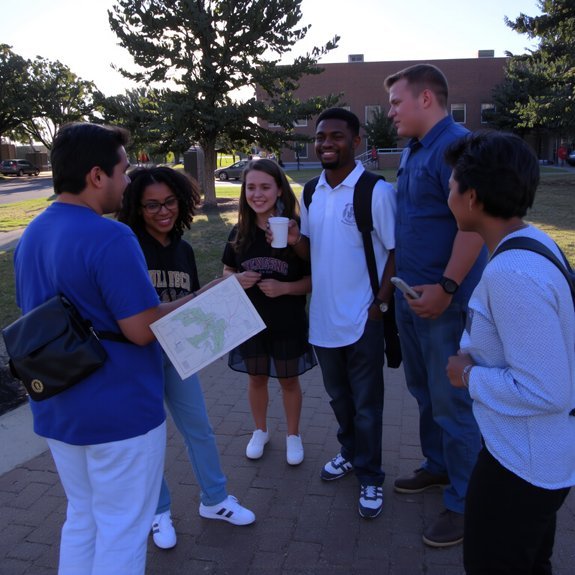
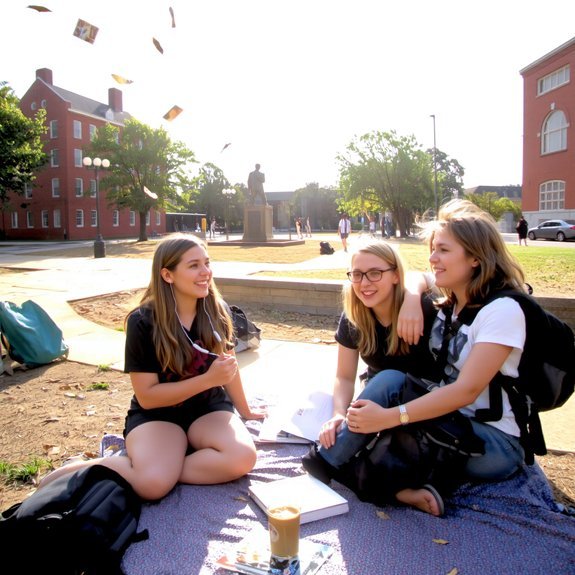
Want an icebreaker that actually works? Picture the quad, morning sun, backpacks and nervous smiles. You stroll up, say, “Quick test: what’s your go-to study snack?” Watch faces light, laugh, debate, you score instant common ground. Ask, “Where are you from?” then follow with, “What’s the one thing I should know about your hometown?” It draws stories, accents, food images — vivid, immediate. Toss a playful dare: “Bet you can’t name three campus spots you love,” and offer a coffee if they win. Use short, specific compliments — “That T-shirt’s fire,” — then ask why. Keep your voice curious, relaxed, slightly goofy. You’re inviting conversation, not interviewing; you’re human, present, and ready to collect campus stories together.
Join Student Organizations That Match Your Interests
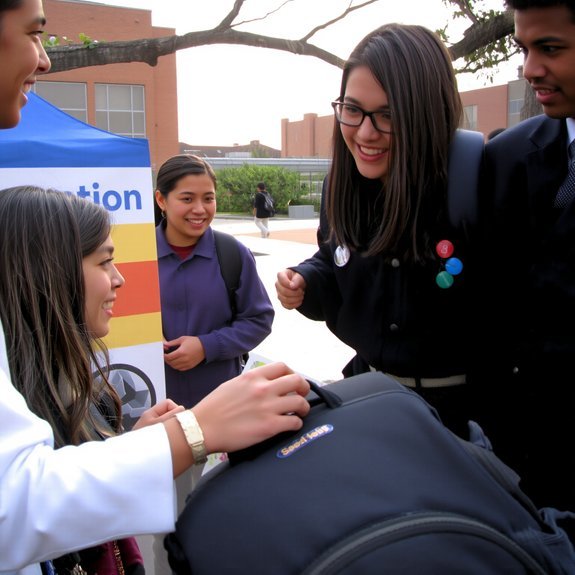
If you wander through the student fair and feel your pulse quicken, that’s a good sign — you’ve stumbled into opportunity. You scan booths, smell popcorn and campus sunscreen, and hear laughter like a welcome song. Join groups that actually fit you, not just look good on a résumé. Try these moves:
- Go to a meeting, sit in the back, then introduce yourself — “I’m here for the snacks, mostly.”
- Volunteer for one task, show up early, do it with a grin — people notice effort.
- Exchange numbers, follow up within 48 hours, suggest coffee or practice.
You’ll meet people who share your hobbies, your jokes, your late-night study playlist. Be curious, be bold, be yourself.
Use Campus Events and Traditions to Connect Quickly
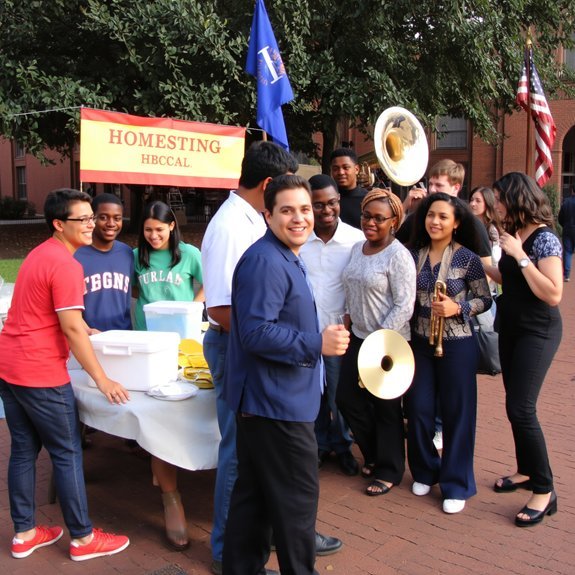
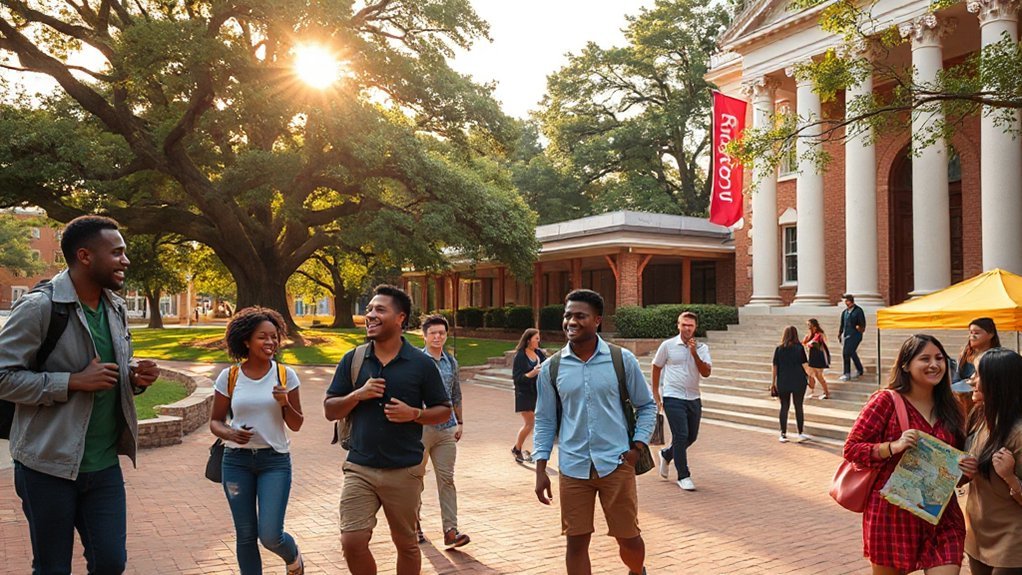
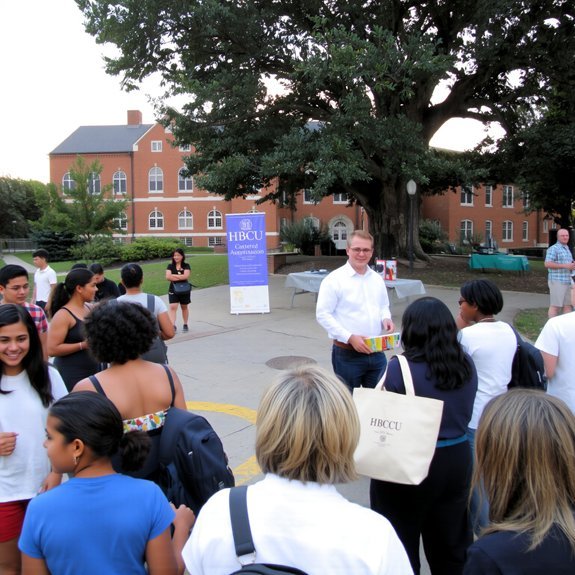
Some nights on campus feel electric, like someone’s plugged the quad into a joy machine, and you should walk right into that buzz. You’ll hear brass, laughter, and the snap of steps before you see faces. Go to homecoming, step shows, and candlelight ceremonies, even if you feel shy—traditions hand you context, and context makes talking easy. Stand where people swarm, offer to hold a sign, clap loud, learn the chant, and someone will nod at you like you belong. Taste the funnel cake, catch confetti, trade high-fives, and ask, “Where’d you learn that move?” Use rituals as openings, not tests. You’ll come off enthusiastic, not needy, you’ll make friends who remember the night, and you’ll have stories.
Build Study Groups and Classroom Friendships
You’re not just here for lectures, you’re here to trade snacks and A’s, so join or start a study group and watch strangers turn into teammates. Sit near classmates, say hi, swap notes, and maybe whisper a joke when the professor drones on—small moves, big returns. Share resources, send a quick photo of your notes, and yes, offer to bring chips next time; friendship’s often built over coffee and copied pages.
Join or Start Study Groups
Anybody who’s ever sat in a lecture hall chewing on a pencil knows the magic of a good study group — I sure do. You can start one after class, text a few people, or toss an invite in the group chat, and suddenly you’ve got a mini brain trust with snacks. I’ll say it: study groups are excuse and lifeline.
- Pick a spot, time, and agenda — no wandering, bring coffee, bring questions.
- Rotate roles — timer, note-taker, explain-er — that keeps everyone honest, and saves your brain.
- Keep it short and focused — 50 minutes, five-minute break, quick recap, you’ve accomplished things and made friends.
You’ll leave smarter, less stressed, and with someone who knows your essay quirks.
Sit Near Classmates
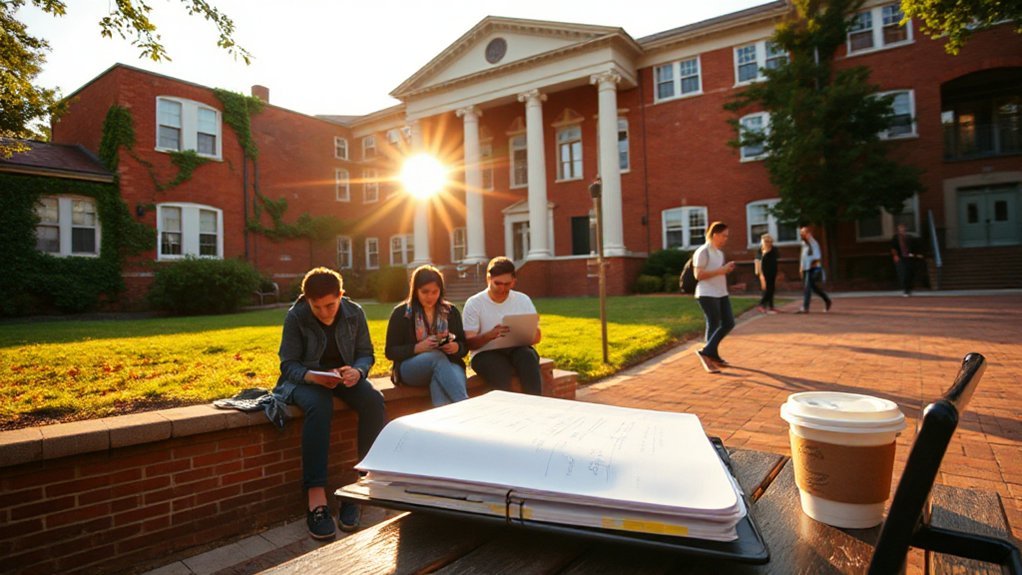
Sit in the third row, not because I’m a rules person, but because that’s where the action happens — you see faces, hear whispers, and can actually read the whiteboard without turning your neck into a question mark. Sit beside someone who looks awake, smile like you mean it, and drop a quick, “You get that last bit?” Seed a tiny conversation. Pass a pencil, joke about caffeine levels, comment on the professor’s tie. Those small moves build rapport faster than forced group projects. Trade quick study plans, offer to compare schedules, invite them to grab a coffee after class. Notice body language, mirror a laugh, remember a detail. Before you know it, classroom neighbors become reliable allies — and campus life gets a lot less lonely.
Share Notes and Resources
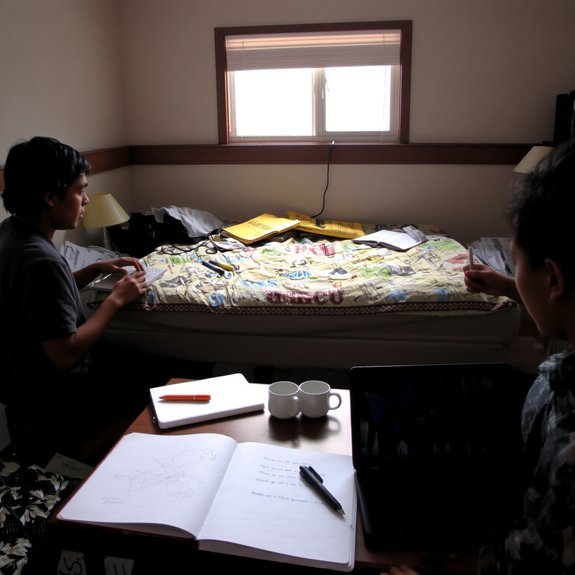
Once you’ve swapped smiles and a coffee plan with your row-mate, go one step bolder: share notes. I’ll say it plain — offering your notes feels generous, not weak. You’ll sit together, spread laptops, the paper smell of campus, and trade highlights like trading secrets. Try this:
- Offer a clean, organized set after class, ask for theirs, laugh about messy handwriting.
- Start a small study group, pick a cozy spot, bring snacks, set one quick goal.
- Share online folders and flashcards, ping before tests, celebrate small wins with a fist bump.
You’ll bond over margin doodles and corrected answers, you’ll help each other, and friendships will form, fast and real.
Volunteer and Serve to Meet Like-Minded Peers
If you want to meet people who care about the same stuff you do, volunteering is your cheat code — and yes, I say that as someone who once showed up to a beach clean-up in flip-flops. You’ll find students planting trees, tutoring kids, running food drives, and yes, arguing over where to stack boxes. Walk in, grab gloves, introduce yourself: “Hey, I’m… can I help?” That line works every time. You’ll sweat, laugh, mess up, learn a new skill, and share a pizza later. Say yes to campus service fairs, org volunteer shifts, and community nights. I promise you’ll make friends faster than you can say “sign-up sheet,” because people bond over doing stuff that matters, not small talk.
Leverage Residence Life and Living-Learning Communities
You’ve got options right where you sleep, so snag a spot in a themed living community and wake up next to people who already like what you like. Go to hall events, eat the questionable free pizza with a grin, and actually talk to your RA — they’re your secret map to campus life. I’ll be blunt: put yourself in their orbit, say hi first, and friendships will start showing up like text bubbles.
Join Themed Living Communities
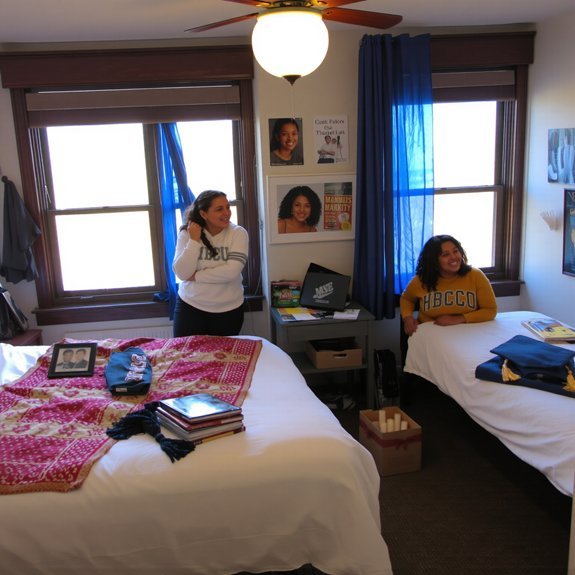
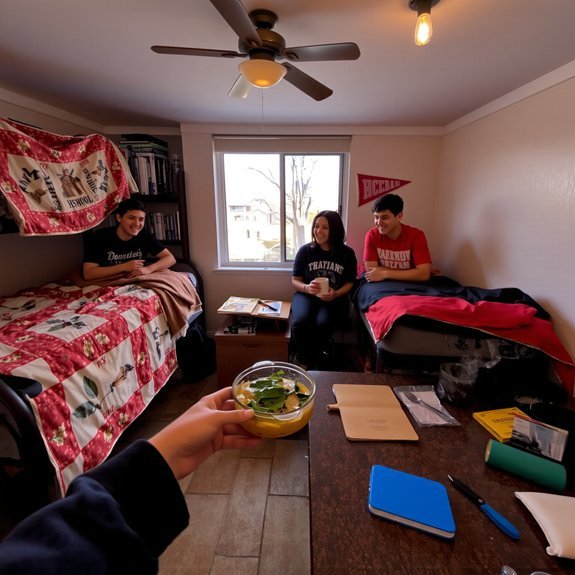
When I moved into my first dorm—boxy mattress, fluorescent light, and a suspicious carpet stain—I told myself I’d keep my door closed and my headphones on, like a responsible hermit; then I found the Black Culture Living-Learning Community and my plans evaporated. You’ll want to join themed housing because it puts you with people who already care about something, so you don’t have to invent common ground. You’ll smell cooking, hear late-night debate, and borrow notes from the person who becomes your study buddy.
- Shared focus — you wake up near peers who get your vibe, easy icebreakers included.
- Built routines — dinners, projects, and rituals that glue friendships.
- Fast trust — small group intensity shortens the awkward phase.
Attend Hall Events
Something about a packed hall with string lights and the smell of garlic butter makes people talk. You should show up early, claim a seat near the snacks, and pretend you meant to be social all along. I’ll nudge you: wander the room, introduce yourself between beats of the playlist, ask about majors, favorite professors, or the best late-night food. Laugh loud enough to be friendly, not obnoxious. Volunteer for setup or the playlist, that’s instant cred. Play games, join a conversation circle, bring a simple icebreaker. When someone mentions a club you like, say, “I’m in.” Swap numbers, follow up next day with a meme, not a novel. Hall events are low-stakes stages; perform a little, listen a lot, and people will notice.
Build Resident Advisor Connections
If you want a fast-track into dorm life without looking like a desperate social climber, start by cozying up to your RAs and the folks who run Living-Learning Communities—I’ve seen it turn strangers into weekend brunch crew in under a month. You’ll knock on an RA door, smell cinnamon coffee, trade a grin, and suddenly you’ve RSVP’d to a game night. Be helpful, not needy. Share snacks, offer to set up chairs, bring a playlist.
- Ask for event tips, volunteer once, show up early.
- Compliment their posters, suggest a theme, laugh at their jokes.
- Invite an RA to coffee, follow up, let connections grow naturally.
I’ll nudge you through awkwardness, you bring the charm.
Maintain and Grow New Friendships With Intentional Habits
You’re not a friendship garden that sprouted overnight and can be left to its own devices, so let’s water this thing on purpose—no guilt, just simple habits that actually work. You text first, not every day, but enough so people know you exist, “coffee Friday?” works wonders. Show up: study table, club meeting, game night—smell of pizza, buzz of conversations, that’s where memories form. Ask specifics, don’t ask “we good?” ask “remember that jacket you lost?” Bring snacks sometimes, admit when you messed up, laugh at yourself, that humility is magnetic. Schedule a monthly hang, rotate hosts, keep it low-drama. Celebrate small wins, send voice notes, share playlists. Friendships grow when you tend them, intentionally and a little playfully.
Conclusion
You’ll immerse yourself in events, join clubs, and chat like it’s your job, because 68% of students say they made a close friend in their first month — imagine high-fives in the quad. I’ll nudge you to knock on doors, snag study snacks, and laugh at awkward silences. Be curious, show up, and trade numbers after a joke. Do that, and campus will feel like home fast, warm, loud, and honestly kind of perfect.