Cold nights, bright mornings — they shouldn’t fight, but they do, and you’re the referee. I’m going to walk you through simple fixes: get sunlight early, tweak your thermostat, pick the right blankets, and calm your mind before bed — small changes that actually work. Picture sipping warm, caffeine-free tea, sunlight on your face, and a bedroom that feels like a hug; stick with me and you’ll sleep better this season.
Key Takeaways
- Get bright morning light or use a 20–30 minute light therapy lamp to reset your circadian rhythm.
- Keep bedroom temperature between 60–67°F and seal drafts while balancing humidity for comfortable sleep.
- Establish a calming evening routine: dim lights, limit screens, sip noncaffeinated tea, and do gentle stretching.
- Time meals and stimulants: finish light dinner 2–3 hours before bed and avoid caffeine after mid-afternoon.
- Manage seasonal mood and stress with daily outdoor daylight, social connection, gratitude journaling, and deep-breathing exercises.
Understand How Winter Affects Your Sleep

Because cold nights nudge your body’s clock and shorter days steal sunlight, winter can hijack your sleep without you even noticing. You’ll feel it in the slow mornings, the extra yawns, the urge to burrow under blankets like a hibernating raccoon. I’ll tell you straight: your sleep patterns shift, hormones wobble, and the winter blues sneak in with a gray sky and softer light. You might blame coffee, but it’s the season, not your willpower. Smell the crisp air, notice the early dusk, and admit you move slower—good. That awareness is power. Start journaling a few nights, track bedtimes and wake times, note mood dips, tweak one habit, then watch sleep rally. Small experiments win.
Optimize Light Exposure to Support Your Circadian Rhythm

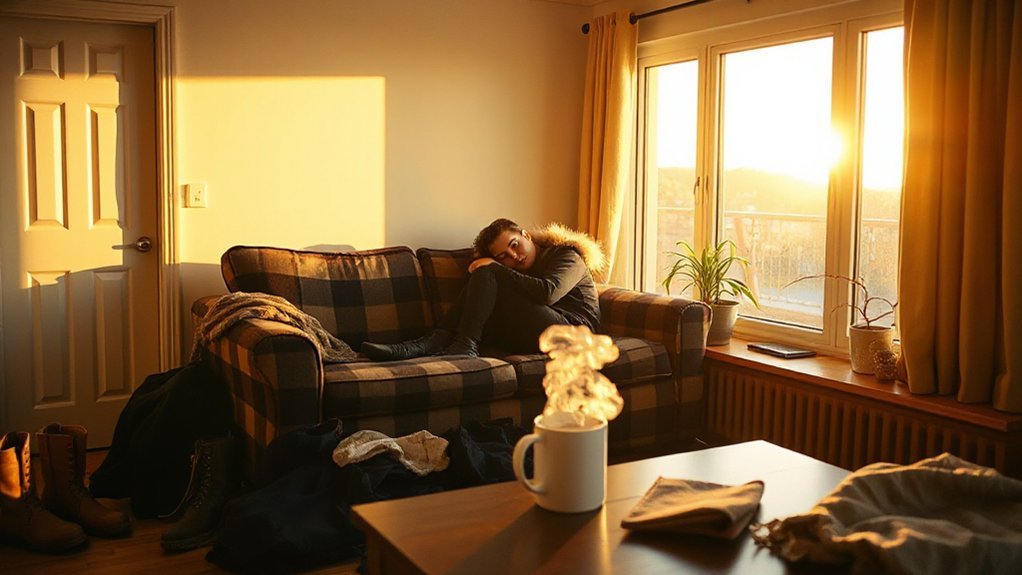
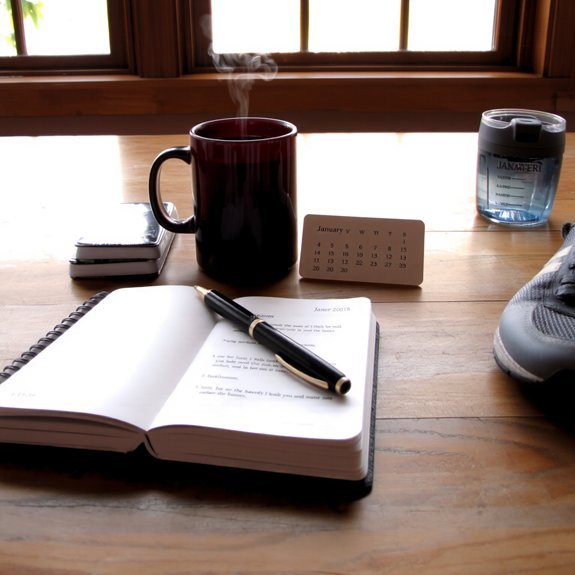
When daylight shrinks and your living room turns into a soft gray cave, you’ve got to trick your brain into thinking it’s still daytime — yes, actively trick it, like a good little schemer. I tell you, start mornings by chasing natural sunlight, even if it’s pale; sit by the brightest window with coffee, feel the cool glass under your palm, soak up that weak warmth. Use a light therapy lamp for 20–30 minutes if clouds win the day, aim it slightly off-center so it feels natural, not interrogation. Dim lights after sunset, put away screens, create a gentle wind-down. You’ll retrain your circadian rhythm, boost mood, sleep deeper. It’s simple, stubborn, and oddly satisfying.
Keep Your Bedroom at the Right Temperature and Humidity
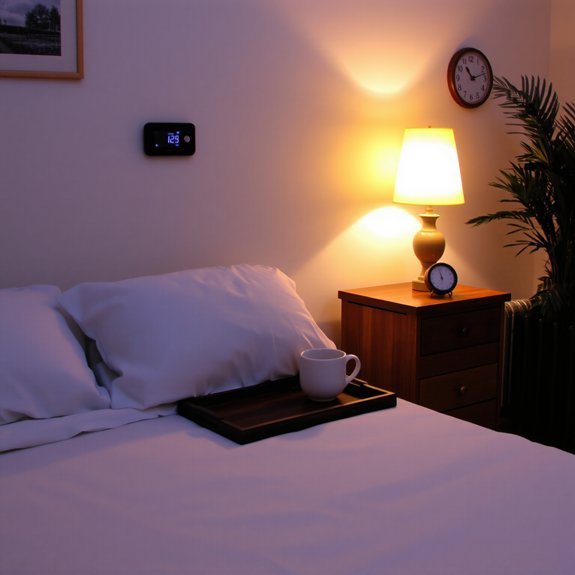
One clear rule: your bedroom should feel like a cool hug, not a sauna or an Arctic cave. I tell you this because chill matters; too warm and you toss, too cold and you shiver. Check bedroom insulation first, seal drafts, tuck rugs by cold floors, and you’ll lock heat where you want it. Aim for about 60–67°F, use a fan or low heat for temperature control, and let blankets do the cozy work. Humidity needs balance — too dry and your throat protests, too damp and mold crashes the party. A small humidifier or dehumidifier, placed away from bedding, fixes that fast. You’ll sleep deeper, wake fresher, and stop blaming your sheets like they’re conspiring against you.
Establish a Soothing Evening Routine for Colder Nights
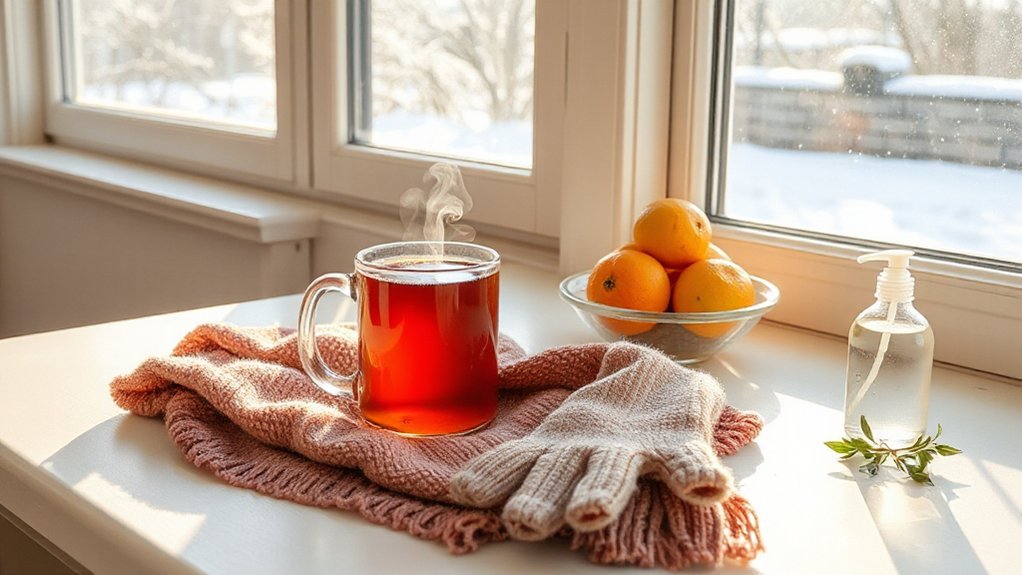
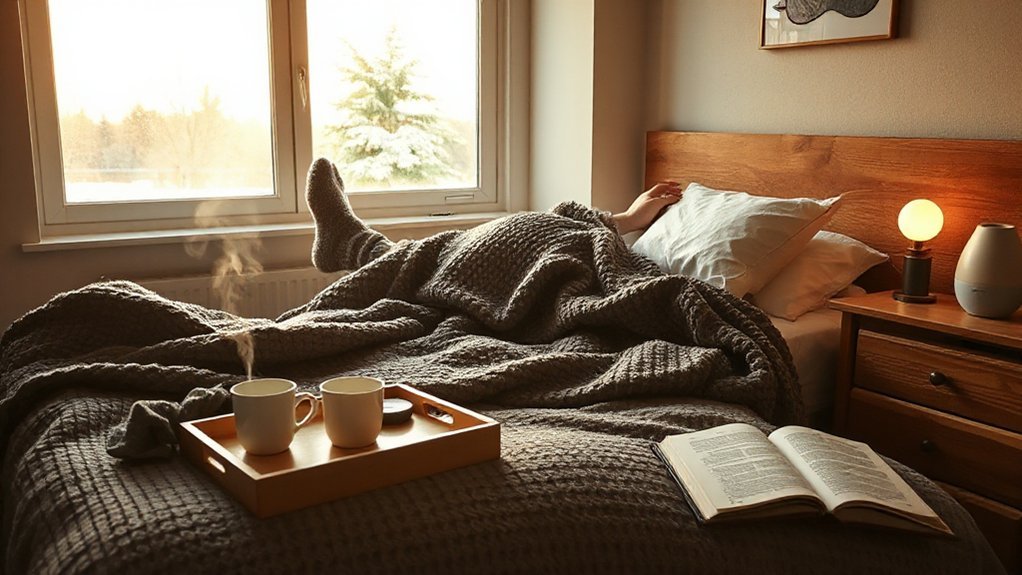
You’ve got the temp and humidity locked down, so now let’s cozy up your whole evening like it’s a little bedtime ritual you actually look forward to. Light a low lamp, stir a mug of calming teas—chamomile or lemon balm—inhale the steam, and let the kitchen smells feel like a hug. I dim screens, stretch slowly, and whisper nonsense to my cat because rituals should be weird. Try a five-minute journaling sprint: list three wins, one worry, trash it mentally. Add a dab of lavender or eucalyptus, note aromatherapy benefits as real mood helpers, not magic. Walk barefoot to bed, slo-mo. No caffeine after midafternoon, soft socks optional, phone off. You’ll drift easier, promise.
Choose Bedding and Sleepwear That Balance Warmth and Breathability
You want to stay toasty without turning into a sweaty mess, so pick layers that trap heat but still let air move. Think breathable fabrics like cotton, bamboo, or merino, they feel soft, wick moisture, and won’t cling when you toss and turn. I’ll show you how to mix sheets, duvets, and pajamas so you sleep warm, comfy, and scandal-free.
Warmth Without Overheating
If you pile on blankets like they owe you money, you’ll roast by 3 a.m. and regret every snore, so let’s talk smart warmth that actually helps you sleep. I like to layer, not lava-torch myself. Start with a light duvet, add a thin thermal blanket at the foot, and ditch the heavy duvet if you wake sweating. Think of sleeping bags for indoor naps — they trap heat where you want it, without turning your bed into a sauna. Wear fitted sleepwear, not a onesie that acts like an oven. Keep a cool pillowcase ready, and unzip or fold layers as needed. You’ll wake cozy, not clammy, and that’s the whole point, honestly.
Breathable Fabric Choices
Layering blankets is great, but what you wear and lie on matters just as much — fabrics decide whether you wake snug or sweaty. I’ll be blunt: pick breathable materials, not traps. Feel cotton sheets wick light moisture, cool to the touch, then hug warmth when needed. Try linen for its airy weave, it breathes like a polite roommate. Wool blends pull heat without making you steam, merino sleep shirts feel like tiny, nonjudgmental clouds. Avoid heavy synthetics that lock sweat; know your fabric types, read labels like you mean it. Swap pajamas mid-night if you overheat, unzip a duvet, fan a wrist. You’ll sleep cleaner, comfier, smarter. Also, admit it — you’ll look surprisingly dapper in soft, sensible sleepwear.
Time Meals, Caffeine, and Alcohol to Protect Sleep Quality
Because late-night pizza and a double espresso don’t exactly whisper “restful slumber,” think of timing your meals, caffeine, and booze like setting the stage for a good night’s show. I tell you, meal timing matters: eat a lighter dinner two to three hours before bed, savor warm soup or roasted veggies, let digestion settle. For caffeine reduction, cut coffee by mid-afternoon, switch to herbal tea, or try decaf—I know, sacrilege, but your sleep will thank you. Alcohol may knock you out, but it fragments sleep later, so limit drinks and stop at least three hours before lights-out. Scene: you, cozy blanket, calm stomach, clear head. Small swaps, firm rules, better nights. Simple, doable, hardly heroic.
Adjust Exercise and Daytime Activity for Better Nighttime Rest
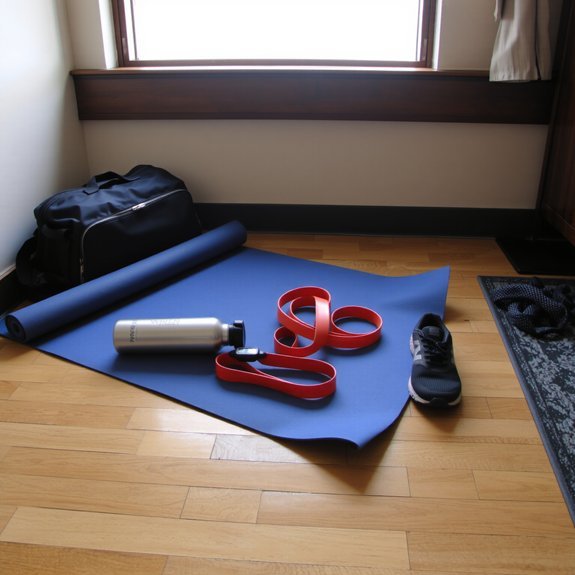
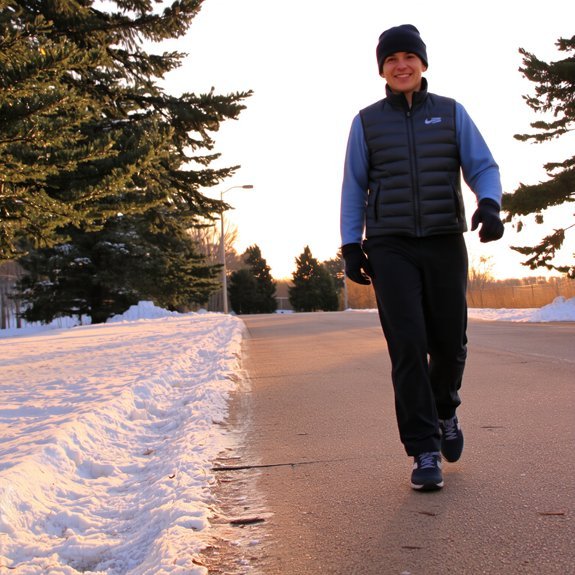
Okay, first thing: get outside in the morning, even if it’s cold, let that pale winter sun hit your face for a minute and tell your brain it’s daytime. Try shifting your main workout earlier, move your body when you’re warm and energized so you’re not buzzing at bedtime. And keep evenings short and gentle — a slow walk, light stretching, soft breathing — so your body knows it’s time to downshift, not rev up.
Morning Light Exposure
Ever notice how a half-hour outside with your face tilted to the weak winter sun can flip your whole day? I’ll say it: sunrise benefits are real, they tug your circadian clock upright like an alarm you actually want. Step outside, breathe cold air, feel light hit your eyes, don’t squint — it’s gentle, grounding. Think of this as low-key light therapy, outdoors and free. I stand on my stoop, cup of something warm, and let the glow do its job. You’ll feel mood lift, alertness rise, sleep pressure rebuild by evening. Don’t stay glued to screens, move your morning routine into that light, even ten minutes helps. It’s simple, silly, and science-backed — try it, you’ll thank me at bedtime.
Move Earlier in Day
If you shift most of your moving — walks, weights, that half-hearted HIIT session — into the earlier hours, your nights will thank you. I mean it: morning walks under pale winter sun, lungs cold and sharp, set your clock better than caffeine. Move briskly after breakfast, lift before work, squeeze errands into daylight savings-friendly slots, and your body won’t be primed for adrenaline at bedtime. Your winter routines should nudge activity toward noon, not twilight. That way, core temperature drops naturally as evening arrives, and sleep pressure builds like a polite bouncer. Don’t worry, you can still have gentle evening stretching, but make the heavy stuff happen earlier — you’ll sleep deeper, wake clearer, and feel smug about beating the dark.
Short, Gentle Evening Wind-Down
When evening rolls in and the house cools to that cozy, dim-blue kind of cold, slow down like your body just whispered “not tonight” — don’t turn your living room into a late-night gym. I tell you, swap big workouts for short, gentle moves that ease tension; five to fifteen minutes of stretching, a slow walk around the block, or seated twists calm you down. Build simple nighttime rituals, light a low lamp, sip warm tea, and breathe like you mean it. Calming activities like reading a paper book, journaling two lines, or dimming screens signal sleep is coming. You’ll feel softer, quieter, ready. It’s not boring, it’s tactical. Try it — you’ll hate the idea, then love the sleep.
Address Mood, Stress, and Seasonal Changes That Impact Sleep
Because the dark creeps in earlier and your brain gets weird about it, you might feel sleep slipping away like a sock in a dryer; I’ve been there, muttering at the ceiling while the house smells like tea and wet wool. I tell you this because seasonal sadness hits quick, and it’s sneaky. Call a friend, book a daylight lamp, or go outside at noon for ten minutes — the cold on your face helps. Practice stress management: breathe, name the worry, set a tiny action, then shelve the rest until tomorrow. Try warming socks and a weighted blanket, write one page of gratitude, whisper a dumb joke to yourself. You’ll feel steadier, less frantic, and yes, sleep will come back, eventually, like a polite neighbor.
Conclusion
You can do this. I’ve tried the “sleep like a hibernating bear” theory — cute, wrong. Morning light, a cool room, and a calm bedtime routine actually win. Keep screens dim, sip chamomile, stretch briefly, and let your sheets hug—not smother—you. When stress spikes, breathe and jot it out. Tweak caffeine, meals, and workouts, and add a lamp on grey mornings. Small, consistent moves beat grand winter hacks every time.