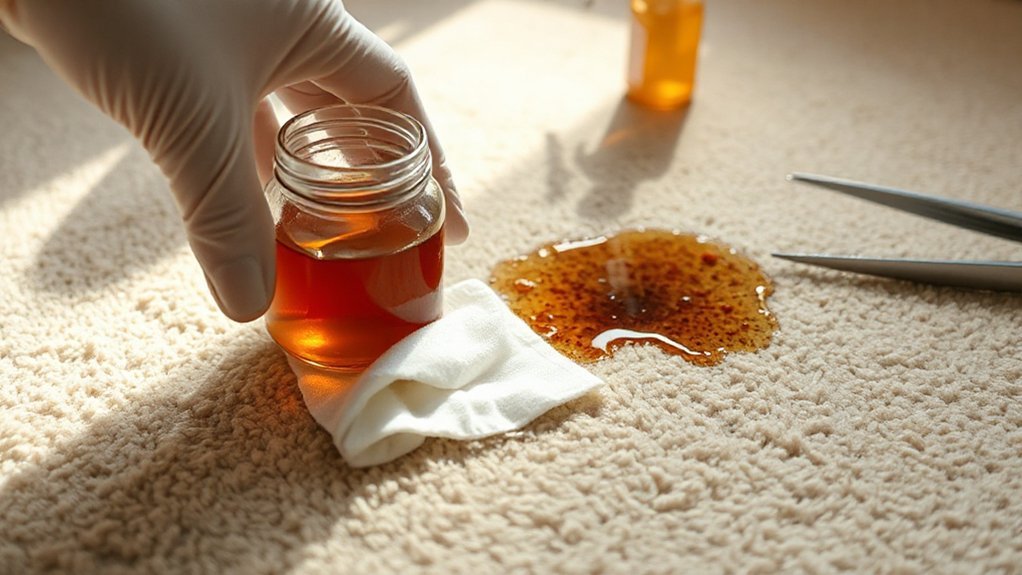
Most people don’t know that sap actually dissolves in alcohol, not just soap and water, so you’ve got a secret weapon in the kitchen or medicine cabinet. I’ll show you how to freeze, scrape, and dissolve that sticky mess without ruining your carpet—think ice cubes, a dull butter knife, and a careful dab of rubbing alcohol—so you can act fast, avoid spreading it, and still feel a little smug about the rescue.
Key Takeaways
- Blot fresh sap with a dry cloth, avoid rubbing, and contain the area with paper towels to prevent spreading.
- Harden fresh sap with ice in a sealed bag, then gently lift with a dull plastic scraper or spoon.
- Soften old or stubborn sap with warm cloth or hair dryer, test a hidden spot first to avoid damage.
- Dab a solvent (rubbing alcohol, citrus cleaner, or vegetable oil) sparingly, work from edges inward, and lift softened sap.
- Clean the spot with mild detergent and water, blot dry, sprinkle baking soda if needed, then brush the nap.
Quick First-Aid Steps to Prevent Sap From Spreading
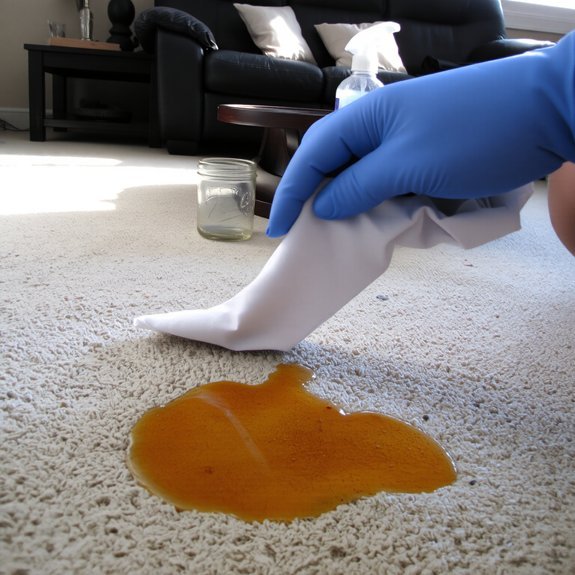
Alright—first things first, don’t panic. You see the goo, you act fast. I’ll walk you through a quick response that’ll keep the mess from spreading, and yes, you’ll look capable while doing it. First, blot gently with a dry cloth, don’t rub — rubbing invites a bigger fight. Fold the cloth, tap, lift. Next, create a perimeter with paper towels so it won’t creep outward; think tiny barricade, dramatic but useful. Scoop any thick globs with a dull edge, careful not to grind it in. Stay calm, keep your breath steady; sap smells faintly piney, stick-to-your-fingers sticky, and obnoxiously stubborn. Your steady moves will prevent damage, save carpet fibers, and earn you a small, private victory dance.
Tools and Household Ingredients That Safely Dissolve Sap
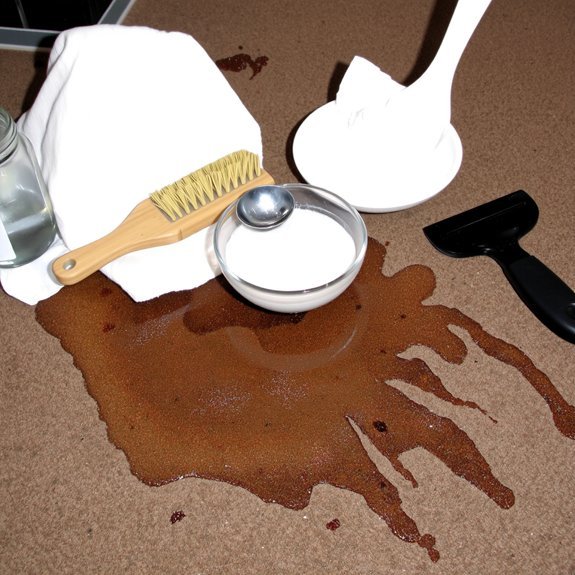
If you want sap gone without nuking the carpet, you’ll need the right tools and a few household heroes, and yes, I’ve learned most of them the sticky way. I keep a small kit: soft-bristled brush, blunt knife, microfiber cloths, and a plastic scraper — cleaning tools that won’t shred fibers. For solvents, reach for rubbing alcohol, citrus-based cleaners, or a dab of vegetable oil; these natural solvents soften sap without harsh fumes. Test a hidden spot first, don’t guess. Warmth helps, so a warm (not hot) cloth loosens residue. Work from edges inward, lift, don’t rub. I talk you through choices like a grumpy chemist who loves carpets; practical, tidy, and slightly apologetic for my past sticky fingers.
Step-By-Step Removal Methods for Fresh Sap
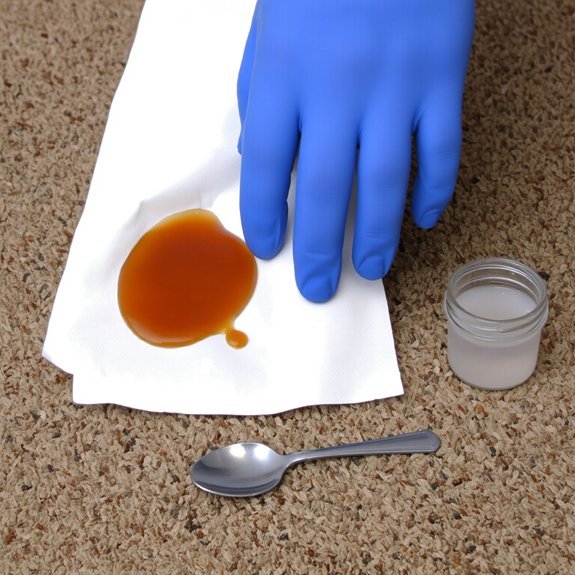
You’ll want to act fast when sap lands on your carpet, so first blot what you can and freeze the rest to snap it off like a stubborn sticker. Then, I’ll walk you through a careful solvent spot-treat—just a dab, a blot, and patience—so you don’t spread the mess or scorch the fibers. Trust me, we’ll make the stain disappear without turning your living room into a chemistry lab.
Blotting and Freezing
Once sap lands on your carpet, it acts like a sticky little criminal scene—tacky, shiny, and oddly stubborn—so I’m going to walk you through two of the fastest fixes: blotting and freezing. First, blotting techniques: grab a paper towel, press down, don’t rub — you’ll smear evidence. Peel up layers, switch to a clean square, and lift until no more transfers. You’ll feel the tack lessen, like peeling gum off a shoe. Next, freezing methods: tuck ice cubes in a sealed bag, press onto the sap until it hardens, then chip gently with a spoon. It snaps and flakes away, satisfying as cracking a tiny fossil. If bits remain, repeat; be patient, and don’t panic — it comes off.
Solvent Spot-Treat
While blotting and freezing grab the low-speed wins, solvent spot-treats are your power move, the fast-acting chemists that actually dissolve fresh sap instead of just smacking it around. I walk you through solvent types, from rubbing alcohol to commercial adhesive removers, even nail polish remover when you’re desperate, and I swear they work like tiny scalpels. Test a hidden patch first, dab, don’t drench. Use a cotton swab or a clean cloth, apply in small circles, lift softened sap with a plastic scraper, then blot. Rotate tools when they’re gunky. Ventilate, wear gloves, and don’t mix chemicals—this isn’t a chemistry set. Finish with mild detergent and water, rinse, pat dry. You’ll feel smug, and a little like a sap assassin.
Techniques for Older or Hardened Sap Stains
Okay, so that sap’s been baking in your carpet like a stubborn little fossil, and we’re not pretending a sniff and a scowl will fix it. First, you’ll soften it with gentle heat so it loosens, then carefully scrape and lift the softened bits, and finally treat what’s left with a solvent, using gloves and good ventilation so you don’t turn the living room into a chemistry lab. I’ll walk you through each step, with exact motions, timing, and safety notes, and yes—I’ll try not to singe your socks.
Soften With Heat
Heat is your friend here, so don a pair of gloves and get ready to loosen that rock-hard sap like you’re ungluing a stubborn sticker; I’ve burned a shirt trying other methods, so trust me when I say gentle warmth beats brute force. You’ll use heat application to soften sap, not melt your carpet, so test a hidden patch first. Grab heat tools — a hair dryer on medium, or a handheld steamer if you’re fancy — hold them a few inches away, feel the resin become tacky, watch it glisten, don’t scorch. Stay mobile, move heat in small circles, pause, press a clean cloth to lift softened goo, repeat until it yields. It’s patient work, like coaxing a cat off the couch.
Scrape and Lift
Grab a dull knife or a plastic scraper and get ready to play surgeon on that stubborn, rock-hard sap — I’ll be honest, it’s not glamorous, but it works. You’ll lean in, squint, and pretend you’ve got steady hands. Use small, controlled scraping techniques, angle low, and chip away in thin layers so you don’t shred fibers. You’ll feel the scrape, hear the tiny clicks, and smell old pine—nostalgic, oddly guilty.
- Thin shavings, like sanding lotion.
- Crusty edges lifted, like peeling paint.
- Tiny granules, picked clean.
When the bulk’s gone, switch to gentle lifting methods with a soft brush and vacuum, coaxing residue free. Don’t rush; patience saves carpet and dignity.
Use Solvent Safely
If you’re staring at an old, gummy sap ring and your scraping game left a sticky halo, it’s time to bring in a solvent — but do it like a careful chemist, not a reckless pyromaniac. I’ll walk you through solvent types, what to try first, and the safety precautions you can’t skip. Pick rubbing alcohol or citrus-based remover for polyester blends, or isopropyl for tougher spots, test an out-of-the-way square, dab don’t pour, watch the color change like a tiny drama. Vent the room, glove up, keep kids and pets out; that’s basic common sense, not fanfare. Blot with white cloth, repeat, then rinse with warm soapy water. If it smells like regret, stop and call a pro.
Post-Removal Carpet Care and Deodorizing Tips
Once you’ve wrestled the sap out of the pile, don’t just walk away—your carpet still needs a little TLC, and I’ll show you how to give it that homecoming glow. You’ve done the hard part, now protect fibers with smart carpet maintenance, and tackle odor elimination so the room smells like victory, not sticky trees. I’d do this next:
Don’t stop after the sap — give your carpet TLC: deodorize, fluff fibers, and let the room breathe.
- Blot with mild detergent and water, then press a dry towel to lift moisture and fluff fibers.
- Sprinkle baking soda, wait an hour, vacuum thoroughly — it eats smells and looks like magic.
- Brush the nap with a soft brush, restore direction, air the room with a fan or open window.
You’ll end up with fresh texture, no ghost stains, and a carpet that forgives your outdoor ambitions.
When to Call a Professional Cleaner
You’ve fluffed, deodorized, and probably bragged to a friend about your amateur sap-extraction skills, but there are times you should wave the white flag and call in pros. If the stain’s old, dark, or sticky like glue, that’s a clear when to consult moment. If your DIY solvents leave rings, smell harsh, or fade fibers, stop, breathe, and phone someone who knows carpets. Signs for professional help include residue that won’t lift, spread into padding, or reappears after drying. Also call if you’ve got delicate wool, antique rugs, or expensive padding—don’t gamble. Tell the cleaner what you used, show the exact spot, and ask for a quote. They’ll test, extract, and rescue your carpet without drama.
Conclusion
Alright, you’ve got this. I’ll freeze or blot, scrape the big globs, then dab rubbing alcohol until the sap gives up the ghost, and finish with mild soap and water so the carpet smells like normal again. I’ll keep a paper towel perimeter, speak softly to the stain, and call a pro if it looks hopeless — sometimes you gotta know when to fold ’em. It’s messy, but doable, and oddly satisfying.
Leave a Reply