
You’re juggling class, orgs, and a social life that’s louder than the quad on step night, so let’s build a study plan that respects your vibe. I’ll show you how to turn campus spots into focus zones, use your crew as accountability fuel, and steal five-minute rituals that reset your brain — think bass-heavy timers and celebratory snack breaks. Stick around, I’ve got tactics that actually fit your schedule and your culture.
Key Takeaways
- Study in communal campus spaces with focused friends to blend accountability and Black cultural energy.
- Use 50–90 minute focused blocks, with short breaks and music or spoken-word timers.
- Form study squads with clear objectives, no-phone rules, and peer teaching to deepen understanding.
- Meet regularly with campus mentors, tutors, and professors for targeted feedback and set deadlines.
- Prioritize sleep, meals, and brief self-care breaks; say no to overcommitment to protect mental health.
Building a Study Routine That Honors Culture and Community
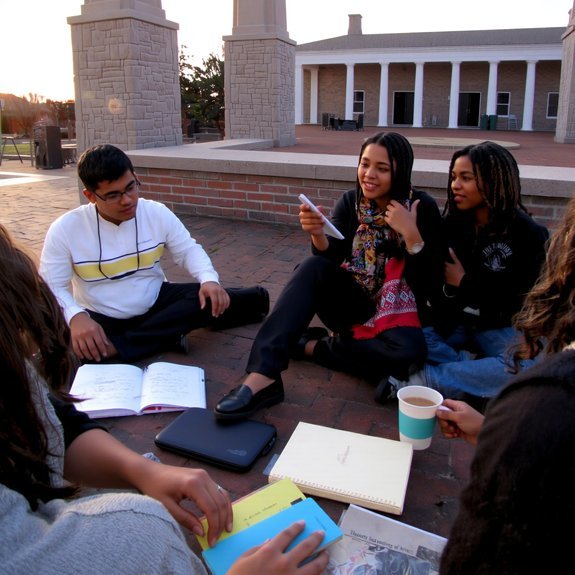
If you want a study routine that actually fits your life, start where your people are — literally. You walk into the quad, smell fried food and coffee, hear laughter; claim a bench, spread your notes, and tell yourself this is study time. Invite friends who respect focus, not party volume; trade flashcards, quiz each other, laugh at silly mnemonics. Use cultural touchstones — music, spoken word, church choir rhythms — as timers, not distractions. Celebrate small wins with fist bumps or a five-minute dance break, then get back to it. Rotate spots: library carrel, porch swing, student center nook. Keep snacks handy, phone on Do Not Disturb, pens lined up like soldiers. This routine honors both your mind and your community.
Using Campus Resources and Mentorship Effectively

When you know where to look, campus resources stop being posters on a bulletin board and start feeling like your personal hype team — I found that out the hard way, by wandering into the counseling center for directions and leaving with a study coach and two free semester planners. You walk in skeptical, you leave with a plan, and a human who actually remembers your name. Use mentors like GPS: ask for short, specific routes, not long lectures. Show up, bring questions, follow up.
- Meet a counselor, say one thing you’ll change, pick a deadline.
- Find a tutor, bring the hard page, work it aloud.
- Visit career services, try a mock interview now.
- Email professors, ask for feedback, then act on it.
Making Group Study and Peer Networks Work for You

You just left the counseling center with a planner in one hand and a tutor’s number in the other, and now it’s time to multiply that energy — study squads are where plans meet people. You pick a cozy corner in the student center, the table still warm from coffee, and invite two classmates. Say what you need: quizzes, formulas, proofread eyes. Trade roles — you teach for ten, they quiz for five — because teaching sticks, and ego gets humbled in the best way. Set one rule: phones away, unless it’s a timer or a joke breaker. Rotate snacks like tiny peace offerings. Keep notes shared, Google Doc open, highlight like you mean it. If chemistry drags, switch to walking problems aloud. Laugh when you mess up; that’s progress too.
Managing Time, Work, and Leadership Responsibilities
Since campus life never hits pause, you’ve got to choreograph your days like a DJ mixing tracks—sharp hands, better timing, and an eye on the crowd. I’ll walk with you, scene by scene: classes, meetings, shifts, events. You’ll stack blocks of time, smell coffee, hear clicks, and move like you own the schedule. Try this:
When campus never pauses, mix your days like a DJ—stack focused blocks, sync calendars, and move like you own time.
- Block studio-style: reserve 50–90 minute focus sessions, label them, protect them.
- Sync calendars: color-code classes, shifts, leadership slots, and set two reminders.
- Trim meetings: ask for agendas, sit with a timer, leave with clear tasks.
- Recharge mini-breaks: five-minute walks, water, deep breaths, reset.
You’ll juggle less, lead better, and sleep with fewer worries — promise, even if I’m the tired one cheering you on.
Protecting Mental Health While Pursuing Academic Success
If you’re hustling for grades and leadership roles, don’t let your mental health be the thing you tack onto a to-do list like extra credit—treat it like class you actually show up for. I tell you, schedule the small stuff first: sleep, walks, meals that aren’t instant noodles. Say no sometimes, out loud, like you mean it. Find one friend who gets you, text them when your head loud, let laughter cut the tension. Practice breathing—four counts in, four out—feel your shoulders unclench, like a curtain dropping. Go to counseling, even if it’s awkward, it’s less awkward than burnout. Put study blocks and chill blocks on the same calendar, honor both. Protect your mind, defend your joy, keep winning without losing yourself.
Conclusion
You’ve built a routine that respects your roots and your grind, so keep showing up—bring snacks, crank a playlist, switch spots when focus fades. Lean on mentors and your study squad, ask for help before you need a miracle, and guard your peace like it’s prime time. I’ve tripped over my own overconfidence, so trust me: small wins add up, and when push comes to shove, you’ve got this down to a science.
Leave a Reply