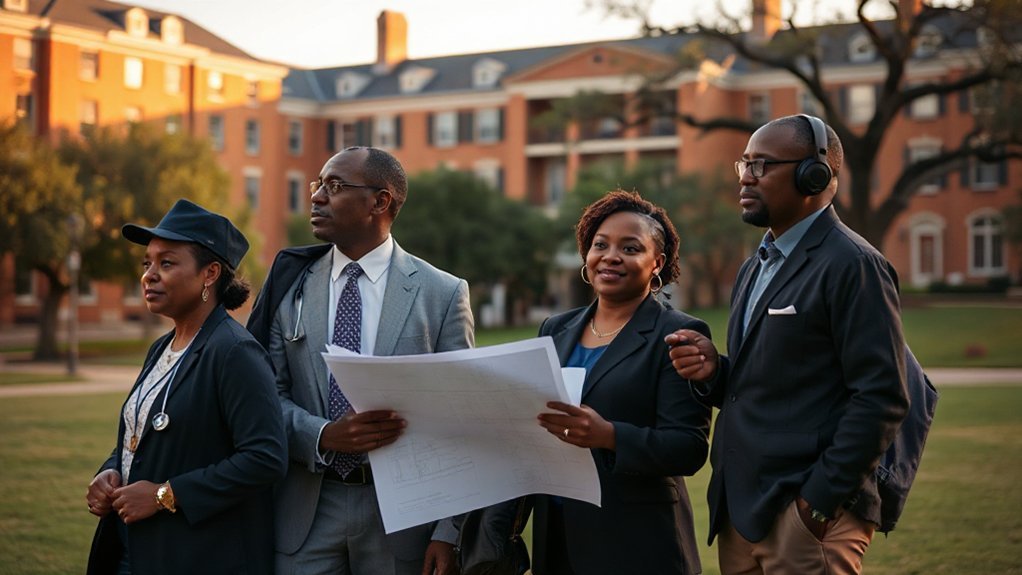
When you see a worn trumpet case and a law book side by side on a dorm bed, you glimpse how HBCU majors mix like a surprise recipe—one student becomes a senator, another a jazz legend. You’ll notice details: the cotton-candy light in the music hall, the quiet scrape of notes, the whisper of statutes, and I’ll point out who studied what and why it mattered. Keep going—there’s more to unpack.
Key Takeaways
- Many prominent political leaders studied political science, economics, education, or history at HBCUs.
- Civil rights activists combined coursework in history, theology, and political science with grassroots organizing.
- Renowned lawyers and judges honed rhetoric and legal reasoning through rigorous law programs and clinics.
- Influential scientists, engineers, and medical alumni emerged from STEM majors and hands-on laboratory training.
- Artists, musicians, and entrepreneurs developed craft, improvisation, and business skills in performing arts and business programs.
Notable Political Leaders and Their Fields of Study
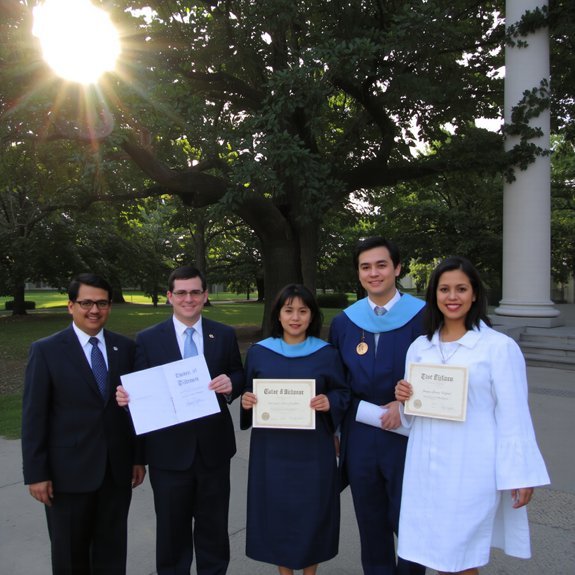
If you’ve ever wondered how a campus quad can turn into a launchpad for national leadership, you’re in the right place — and yes, I say that with a little proud chest-thump. You’ll meet senators who studied political science under live oaks, governors who dug into economics while juggling student rallies, and ambassadors who polished debate skills in tiny dorm rooms. Picture a campaign poster tacked to a bulletin board, coffee-stained notes, midnight strategy sessions — that’s where theory met hustle. I’ll point out who majored in history, who favored public policy, who surprised everyone by studying English before pivoting to politics. You’ll see patterns, odd pivots, and grit. Read on, and you’ll spot how study choices shaped bold careers.
Trailblazers in Law and Justice Education
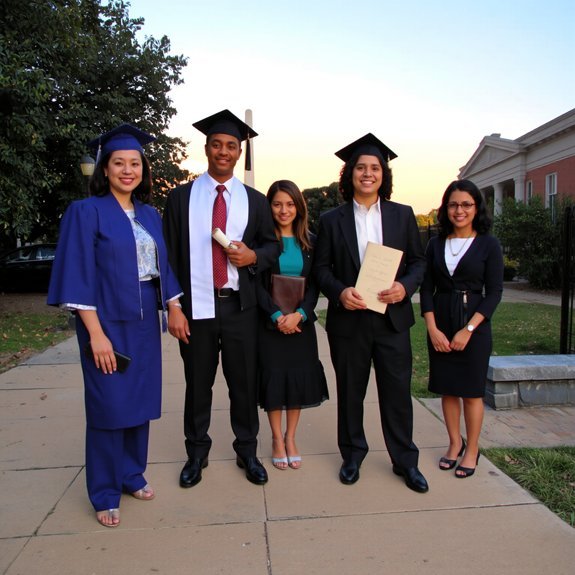
You’ve seen how politics majors staged rallies under oak trees; now picture a different kind of hothouse: a cramped law library at midnight, the smell of coffee and toner, notebooks stacked like small city skylines. You poke through casebooks, you whisper to a study partner, you dream of courtrooms. These HBCU grads turned precedent-makers, defense champions, civil-rights warriors. I’ll point out traits, not biographies — you’ll want the headlines, not my gossip.
Cramped law libraries at midnight — coffee, casebooks, whispered study sessions — HBCU grads forging precedent, justice, and relentless grit.
- Tenacity — they argue through exhaustion, they file briefs at dawn.
- Community — they mentor younger students, they build clinics that serve neighbors.
- Rigor — they master logic, they practice rhetoric until it sounds effortless.
You smile, you feel inspired, you might even open a law book tonight.
Pioneering Scientists, Engineers, and Medical Graduates
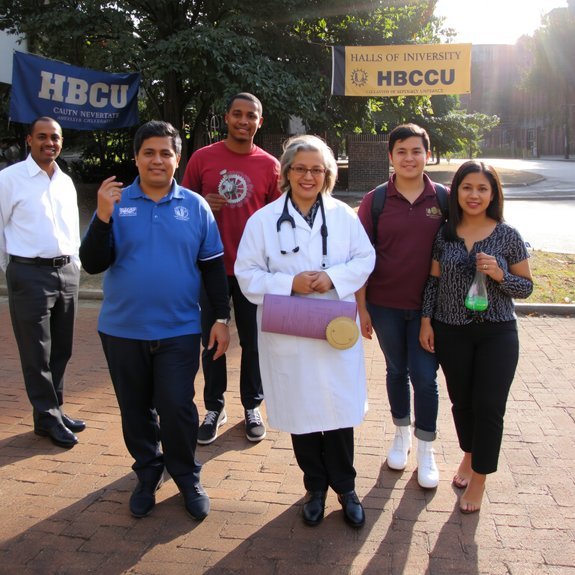
Laboratory smells like victory and burnt popcorn—seriously, soldering irons and Bunsen burners have a weird marriage—and I can still picture the dim hall where we stayed late, the fluorescent hum, the frantic scribble of calculus on napkins. You meet alumni who turned stubborn curiosity into careers: a biomedical researcher who pipetted at 3 a.m., an electrical engineer who fixed campus lights and later satellites, a surgeon who steadied trembling hands with nerve, a chemical engineer who smelled trouble before detectors did. You’ll hear lab jokes, a burned circuit story, the proud silence after a successful trial. They learned grit, protocols, and patience, and they built tools that save lives, map stars, and sharpen industry. You nod, inspired, thinking maybe you could do this too.
Influential Artists, Musicians, and Performing Arts Majors
When I walk into a rehearsal hall from an HBCU, the air smells like fresh chalk, stage flour, and someone’s too-strong coffee — comforting chaos. You watch dancers rehearse counts, painters seal canvases, singers warm vowels until the rafters agree. I nudge you toward alumni who turned practice rooms into professions, who learned craft with grit, humor, and late-night critiques.
Walking into an HBCU rehearsal hall: chalk, stage flour, strong coffee — practice rooms where grit becomes artistry.
- You meet the actor who studied theater, who learned breath control and biting honesty, then stole scenes on Broadway.
- You hear the jazz alum, trumpet polished, who studied music theory and improvisation, and made neighborhoods hum.
- You see the visual artist, studio stained, who studied fine arts and turned memory into murals.
Business, Entrepreneurship, and Economics Backgrounds
You’re about to meet HBCU founders who picked majors like accounting, management, and finance, and yes, some of them scribbled business plans in the margins during class. I’ll show how common business degree paths — BBA, MBA, and entrepreneurship programs — gave them tools, connections, and that stubborn confidence you can practically taste. Then we’ll trace how economics courses turned curious students into scrappy entrepreneurs, the kind who launch startups from dorm rooms and neighborhood barbershops.
HBCU Founders’ Majors
Because founders from HBCUs often learned to hustle in classrooms and on sidewalks, their majors in business, entrepreneurship, and economics feel less like theory and more like tools you can pocket, shake, and use when opportunity knocks. I’ll tell you straight: you study ledgers, you study markets, you study grit, and then you’re expected to sell ice to someone in summer. You smell coffee, you tap a calculator, you pitch between classes. Those majors teach you to spot a gap, draft a plan, and pivot fast.
- They teach practical frameworks you can use right away.
- They train negotiation, risk-reading, and persuasive storytelling.
- They build a mindset that converts ideas into money-making moves.
Business Degree Paths
Picture a dorm-room desk scattered with sticky notes, a half-drunk coffee, and a laptop glowing with three tabs open to spreadsheets, pitch decks, and internship listings—I lived there, and so will you, if you chase business, entrepreneurship, or economics at an HBCU. You’ll take accounting nights, marketing mornings, and ethics in between, hands stained with highlighter ink and confidence bruises. I’ll tell you straight: stats and Excel become your rhythm section, networking your secret sauce. You’ll pitch in classrooms, revise at midnight, and win small bets that turn into internships. Professors call you out, alumni slide into DMs, and group projects teach diplomacy the hard way. It’s practical, sweaty, thrilling work—mindset over flash, persistence over luck.
Economics to Entrepreneurship
If you learn to read a balance sheet like a gossip column, you’ll start spotting opportunities everywhere—old dorm furniture becomes a pop-up’s first inventory, a group chat gripe turns into a side hustle, and that weird econ prof’s obsession with marginal cost actually saves your launch. You’ll trade lecture notes for pitch decks, smell coffee at 3 a.m., and turn campus walks into customer discovery missions. I poke, I prod, I fail fast, then laugh about it.
- Study demand, price it right, sell something people actually want.
- Network loud, ask awkward questions, collect favors like business cards.
- Pivot quick, track margins, protect cash like it’s bedtime.
You’ll build with grit, charm, and spreadsheets.
Educators, Activists, and Social Science Scholars
You’re about to meet trailblazing Black educators who shook up classrooms and communities, and yes, I’ll brag a little about their bold moves. Imagine porch meetings, chalk dust in the air, and activists who turned study into strategy—we’ll look at how civil rights leaders’ studies shaped policy and protest. Then I’ll map real social science career paths, from classroom to think tank, so you can see how ideas turn into action.
Trailblazing Black Educators
When I teach this chapter, I tell students up front: these trailblazers didn’t just stand at podiums and give speeches — they built schools, changed curricula, marched in the streets, and sat at kitchen tables to argue about democracy until dawn. You’ll meet teachers who mapped futures, who chalked lessons with trembling hands and fierce resolve. You smell hot coffee, old books, fresh paint. You hear marching feet, whispered strategy, a bell for class. I nudge you, yes you, to notice how study choices shaped tactics. Quick list, so you don’t doze:
- Curriculum designers — made knowledge matter.
- Community organizers — turned classrooms into hubs.
- Social scientists — used data to demand change.
I wink, because history’s stubbornly human, and you’re invited.
Civil Rights Leaders’ Studies
We’ve been talking about chalk dust and late-night strategy sessions, now let’s walk into the rooms where lesson plans met protest signs. You’ll see alumni who studied education, theology, history, and political science, then turned classrooms into organizing hubs. You smell coffee, chalk, and urgency. You hear quick whispers—“Sit here, keep watch”—then boom, a register walkout. I point out how studying rhetoric sharpened speeches, how sociology revealed systems, how philosophy taught moral clarity. You notice notebooks stuffed with sermon notes and leaflets. These folks taught, counseled, preached, then marched. They used curricula as cover and knowledge as ammunition. It’s messy, brave work, and yes, they made mistakes, learned, and kept going—like you would, if the cause kept calling.
Social Science Career Paths
If you walked into those old lecture halls expecting dusty theories, you’d be happily wrong—because for many HBCU grads, social science was a toolkit, not a textbook. You’ll meet teachers who smelled of chalk and coffee, organizers shouting into megaphones, researchers hunched over notebooks. I watch you lean in, curious, and I’ll tell you straight: these paths taught you to listen, map power, and act.
- Educators — you shape classrooms, you spark curiosity, you hand out hope like homework.
- Activists — you mobilize neighbors, you chant in the rain, you turn outrage into strategy.
- Scholars — you dig archives, you question assumptions, you make theory useful.
You’ll leave energized, sleeves rolled, ready to do the work.
Conclusion
You hold a map, though it’s paper-thin and stained with coffee—still, it guides you. I’ve pointed out the roads: law, labs, stages, boardrooms, classrooms, streets. Each HBCU alumni is a compass needle, steady and true, humming with study and grit. You’ll see their degrees like badges, but feel the impact like footsteps on your porch. Take a breath, pick a path, and know you’re following a trail already lit.