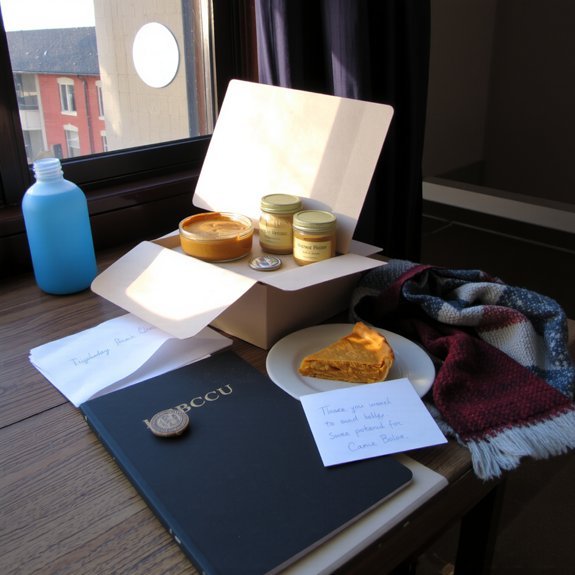
Funny coincidence: your kid texts you during finals exactly when you were about to microwave popcorn, so now you’re on call. You can send care packages with crunchy granola, a cold water bottle, or a tiny candle (no flames near dorms), and offer short walk breaks, earplugs, or a two-sentence pep text that actually helps. I’ll tell you how to tune their study space, lean on campus resources, and celebrate small wins — but first, breathe.
Key Takeaways
- Send small care packages with protein, fiber snacks, instant oatmeal, and electrolyte packets to support nutrition and hydration.
- Offer short, scheduled check-ins and brief supportive texts to reduce isolation without adding pressure.
- Encourage campus resources: tutoring centers, faith groups, peer mentors, and quiet study spaces in the student center.
- Help create effective study environments by decluttering, improving lighting, providing comfort items, and rotating study spots.
- Support mental health with active listening, breathwork or short walks, and celebrating small wins to boost resilience.
Understanding the HBCU Finals Experience
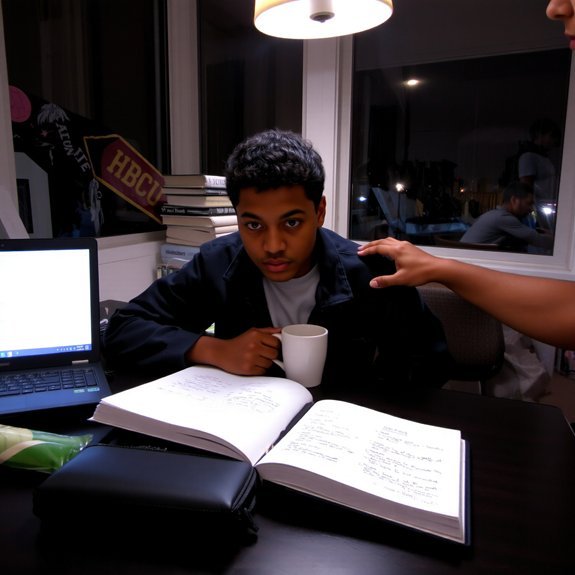
When finals hit at an HBCU, everything smells a little like cafeteria coffee and ambition — and yes, someone’s always frying fish down the hall. You’ll notice quiet clusters in the library, earbuds in, notebooks spread like battle plans, and you’ll learn the rhythm: group study at midnight, prayer circle at dawn, ramen at three. You watch texts fly, memes that say “you got this,” and a classmate pacing with a stack of flashcards like a drumline captain. You’ll call, you’ll visit, you’ll drop off a sticky note with a bad joke. Don’t fix everything, just listen, bring snacks, and laugh when they promise they’ll “definitely” sleep more. That’s solidarity, plain and simple.
Supporting Physical Health and Nutrition
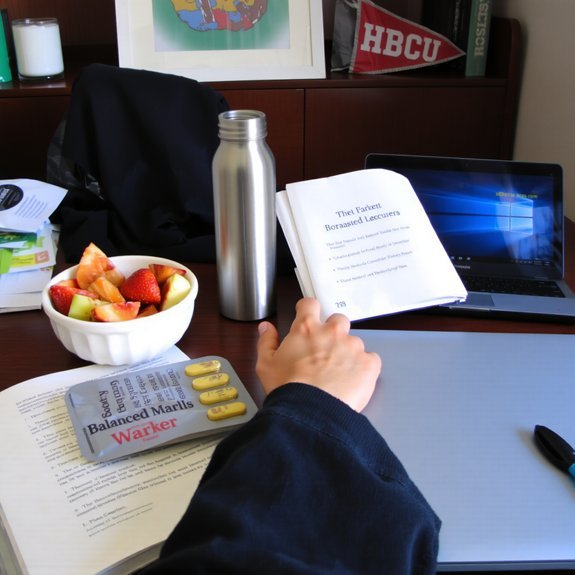
You’ve seen the midnight study huddle, smelled the cafeteria coffee, heard the ramen slurp — now let’s talk bodies, because brains don’t work on vibes alone. You can drop off a care package: granola bars, fruit, instant oatmeal, a thermos for tea. Pick snacks with protein, fiber, and color, not just neon sugar — your student will thank you later. Encourage short walks between chapters, or a quick stretch video, they reset focus like a browser refresh. Offer to cook a simple dinner, bring portioned meals, or share grocery runs; it’s practical love. Hydration matters — water bottle, electrolyte packets for late nights. Be playful about boundaries: “No caffeine after midnight?” Try humor, keep it kind, and follow up.
Encouraging Mental Health and Emotional Resilience
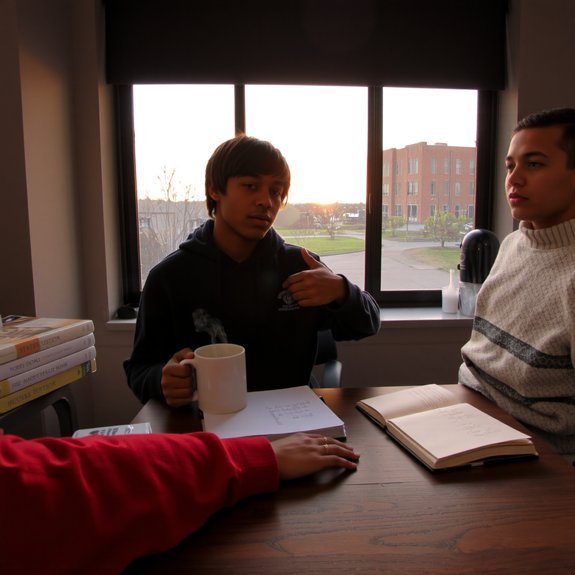
Although finals feel like a sprint through a noisy hallway, I promise you can be the calm voice in the chaos — and yes, that means showing up with more than advice. You listen, really listen, when they unload stress like grocery bags. Bring peppermint tea, offer a five-minute walk, or text a goofy meme that breaks the tension — small things, big impact. Say, “Tell me one win,” and mean it. Notice sleep, mood swings, missed meals, then gently nudge for campus counseling if needed, don’t act like you’ve got a PhD in feelings. Model breath work, set boundaries, celebrate tiny victories, and admit when you don’t know what to say. Be steady, warm, and oddly practical — they’ll notice.
Creating Effective Study Environments
If you want your student to actually get work done, don’t pretend a cramped dorm desk and three open tabs equal a study plan — help them build a space that says “focus” without yelling. I’ll be blunt: declutter, light, and comfort matter. Pull trash, stash snacks in a bin, swap harsh fluorescent bulbs for a warm desk lamp. Add a textured throw, a plant, noise-canceling earbuds, and a hard surface for writing. Set visual boundaries — a corkboard, a timer, a “do not disturb” sign that they’ll actually respect. Rotate spots: library booth for deep work, sunlit courtyard for reading. Pack a small kit — water, chargers, sticky notes, gum. You’re not micromanaging, you’re engineering success, one cozy, tidy square foot at a time.
Leveraging Campus Culture and Community Resources
When campus buzz ramps up, you should ride it — don’t pretend it’s background noise. I’ll say it straight: lean into traditions, join late-night study jams, and let the drumline’s rhythm pull focus when you need a beat. Walk the quad, smell coffee, hear laughter — those cues tell you energy’s high. Tap tutors, faith groups, and peer mentors; they know professors’ quirks, shared notes, and secret exam tips. Pop into the student center, ask for quiet rooms, snag stress-relief events. Send a quick text: “Need a 20-minute review partner?” You’ll look helpful, not hovering. Be present, not pushy. Celebrate small wins — a pizza slice, a goofy meme — and remember, community turns panic into teamwork, and finals into something survivable, even memorable.
Practical Logistics: Time, Money, and Communication
Since finals are a sprint, not a stroll, you’ve got to treat time, money, and communication like a relay team you’re coaching — and I’m the loud, slightly embarrassed assistant coach waving a towel. I tell you what to pack, when to call, and how to keep the rhythm without clapping too loud. You’ll set clear check-ins, stash a small emergency fund, and prep snacks that don’t crumble into keyboards. You’ll hear me nag, in a nice way, about alarms, chargers, and pocket-sized planner tricks that actually work.
- Schedule weekly checkpoints, brief and fixed, so stress doesn’t sneak up.
- Prep $50 for last-minute textbooks, rides, or ramen runs.
- Text short, supportive notes, not essays.
- Pack a charger, earplugs, and instant coffee.
- Plan a post-finals celebration, small but glorious.
Conclusion
You’ve got this, even when the brain feels like a soggy notebook. I’ll be the calm voice: pack the good snacks, insist on water, and drag you outside for five minutes—no arguing. I’ll tidy your desk while you breathe, text a tutor, and throw confetti for tiny wins. Finals are a grind, not a life sentence; we’ll treat stress like a guest—offer a comfy chair, then politely show it the door.