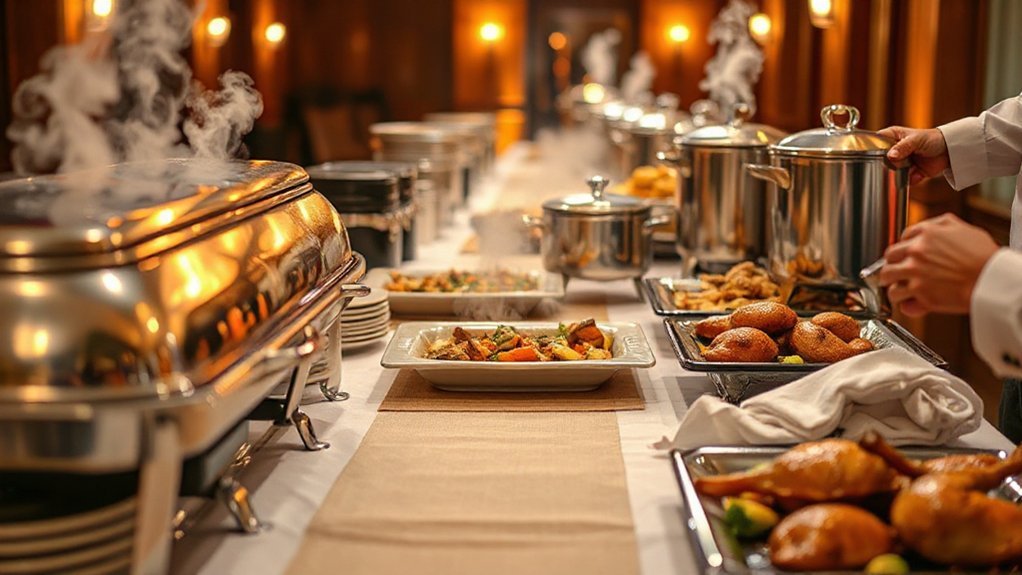
You’ve got people coming, plates clattering, and food that can’t go cold—don’t panic, plan. I’ll show you simple gear—chafers, thermal carriers, low oven tricks—and timing hacks that keep gravy glossy and veggies crisp, not sad and soggy; you’ll learn to stagger dishes, wrap trays, and taste just before service so nothing gets dull. Stick with me, and your buffet will steam, smell amazing, and actually stay hot—here’s where we start.
Key Takeaways
- Use chafing dishes or insulated carriers to hold and transport hot food above 140°F.
- Preheat serving pans, keep lids closed, and use hot water baths beneath pans for consistent heat.
- Stagger cooking and serve-by times; set up hot-holding stations near the serving area.
- Wrap trays in thermal blankets or towels and pad slow-cooker lids to reduce heat loss during transport.
- Monitor temperatures with thermometers and rotate or replenish trays to maintain safe, hot food.
Equipment Essentials for Keeping Food Warm
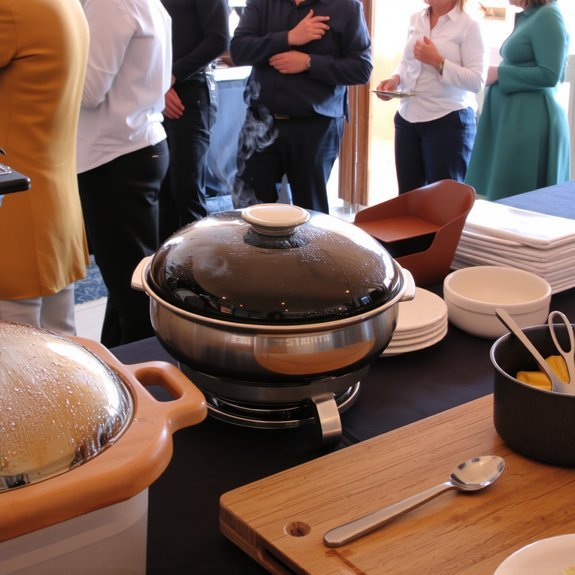
You’ll want the right gear before the first guest asks, “Is this supposed to be lukewarm?” I’m talking chafing dishes that actually hold heat, insulated carriers that don’t leak warmth like a bad toupee, and a few smart gadgets that make you look like you planned this. You’ll grab sturdy food warmers, place pans in water baths, and stir occasionally so sauces don’t skin. Wrap trays in thermal blankets when you move between rooms, they trap heat like a cozy blanket on a couch. I’ll admit, I once forgot a lid and paid in sad napkins, so lids matter. Keep thermometers handy, set temps, and arrange buffet flow so steam rises and aromas do the inviting work for you.
Timing and Staging Your Dishes

You’ll want a serve-by time plan so everything lands hot and in the right order, no last-minute smoke signals from the oven. Stagger your cooking schedule—start the slow-simmers early, prep the quick sizzles later, and let me be your guilty-pleasure timer while you sip something strong. Set up hot-holding stations—chafers, insulated carriers, even a warm oven shelf—and you’ll keep steam, sizzle, and bragging rights intact.
Serve-By Time Plan
Alright—think of the clock as your co-host. I’ll help you map a serve time plan so dishes hit the table at peak food temperature, not lukewarm sadness. Start by listing each dish, note ideal serve time, and the temp it needs to hold. I cue ovens, chafers, and slow cookers like stage managers, nudging things forward, back, or into a warming drawer. Taste-test one minute before serving, stir sauces, tent meats to trap steam, and give sides a quick reheat if needed. Call out a five-minute warning to guests — dramatic, useful. You’ll look calm, I’ll take the credit, and everyone eats hot food. Bravo, you timed it perfectly.
Staggered Cooking Schedule
If you want everyone to eat hot food without turning into a frantic oven jockey, start by staging your dishes like a small, well-rehearsed theater—I’m the director, you’re the stagehand, and the timer is the diva. I break the menu into acts, deciding what roasts, sides, and sauces need finish times, then plan staggered preparation so nothing crowds the oven. You’ll brown, rest, and tent meats while veggies get their turn, you’ll reheat sauces last. Coordinated timing means set alarms, write a simple timeline, and prep mise en place so you’re nudging each dish on cue. You’ll hear the sizzle, smell butter, and feel calm—not frazzled. Trust me, it’s theater with snacks, and you nailed opening night.
Hot-Holding Stations
When the oven’s quiet and guests are circling like hawks, hot-holding stations are your backstage crew, quietly keeping everything delicious and drama-free; I set up zones like a tiny restaurant, and you get to look like the culinary genius who planned it all. You’ll assign hot holding techniques by dish — soups in insulated pots, roasted veg on warm trays, meats under a tented foil on low racks. Label zones, jot ideal temperatures, and check with an instant-read thermometer, don’t guess. Rotate plates, replenish steam pans with a splash of stock, and stir sauces so they don’t sulk. Talk to your helpers like a director, hand off trays, cue arrivals. Guests eat warm food, you take a bow, I accept applause.
Slow Cookers, Crockpots, and Insulated Carriers
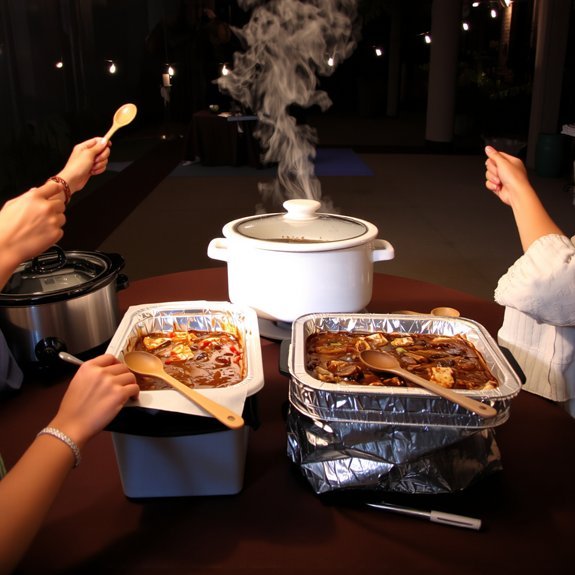
Because I can’t stand lukewarm chili at a party, I reach for a slow cooker like it’s my trusty, heated sidekick—thick steam curling up, aroma of cumin and garlic filling the room, guests drifting in on scent alone. You’ll love slow cooker benefits: set it, forget it, and still look like a culinary genius. Toss in ingredients, pick a crockpot recipes twist, then wander back to mingle. Use insulated carriers to move food, they hug heat tight, no awkward reheating on a hotplate. Keep lids sealed, pad with towels for extra insulation, and label each vessel so Aunt Mae doesn’t spoon salsa into the mashed potatoes. I bring tongs, ladles, napkins, a smile, and zero patience for cold food.
Using Oven, Stove, and Chafing Dishes Safely
I’ll walk you through keeping pans and dishes cozy without turning your kitchen into a sauna, starting with oven temps that keep food warm, moist, and not rubbery. Don’t guess with chafing dishes—use the right fuel, check water levels, and keep flames low so nothing scorches or goes cold mid-toast. Stay nearby, stir or tent as needed, and you’ll look like a pro while I take the blame for any singed napkins.
Oven Temperature Tips
If you want your roast to stay juicy and your gravy to stop sulking in a cold pan, you’ve got to treat heat like a guest — polite, predictable, and not allowed to scream into the room. I set the oven low, then tweak, because oven settings matter; you’ll want steady heat, not drama. Check food temperature with a probe, aim for holding temps (140–160°F) depending on dish, and resist cranking to reheat fast.
- Preheat to 200–250°F for casseroles and roasts.
- Use an oven-safe dish with a lid to keep steam.
- Tent with foil for crusted items, remove to refresh.
- Place a tray of hot water for moist heat.
You’ll taste the difference, and your guests will pretend it’s magic.
Safe Chafing Dish Use
When you’re juggling an oven, a stove, and a row of chafing dishes, think of me as the friend who won’t let the party become a slow-motion disaster — I’m standing by with tongs and a fire extinguisher (metaphorically, mostly). You set fuel cans snug, light them carefully, and listen for the gentle hiss, not a roar. I tell you to preheat inserts, stir lids-open to avoid steam surges, and keep thermometers in every pan so chafing dish safety isn’t a guess. Maintain safe food temperature above 140°F, rotate trays, and replenish hot water beneath pans to avoid cold spots. When a flame sputters, swap the can, not the pan. Speak up, move fast, and trust the thermometer — you’ll look calm, I promise.
Maintaining Texture and Flavor While Holding
Keeping food warm isn’t just about heat, it’s about mercy — for your guests and for your carefully prepared dishes. I say that because you want texture preservation and flavor enhancement, not sad, soggy leftovers masquerading as dinner. Keep lids on, stir gently, and check temps often. Rotate trays, don’t overcrowd pans, and rest fried items on a wire rack to keep crisp.
- Use low, steady heat, avoid wild temperature swings.
- Add butter or broth sparingly, to revive dryness.
- Hold sauced items separately, toss just before serving.
- Use vents or foil tenting to balance moisture.
You’ll taste the difference when crunchy stays crunchy, sauces stay bright, and your ego survives the party.
Serving Strategies and Guest-Friendly Setup
Since you want guests to eat like they care, set up stations that do more than just hold food — they invite folks to mingle, customize, and grab what they actually want. I tell you, layout matters. Place warmers near conversation hubs, label bowls, stack plates so people don’t hunt, and keep serving utensils obvious. For guest interaction, add a build-your-own taco or noodle bar, whispering spice choices and crisp textures. Use chafing dishes for steady heat, lamps for roast sheen, and insulated carriers where hands reach. Food presentation should look effortless: colorful garnishes, steam that beckons, neat spoons. Stand back, watch the flow, swap trays before emptiness happens. You’ll look like a pro, while I secretly enjoyed the chaos.
Conclusion
You’ve got this—think of your kitchen as a warm, humming stage and you’re the director, cueing chafers, ovens, and crockpots. Wrap trays, label them, and tuck carriers into thermal blankets like tiny sleeping dragons. Test temps, stir sauces, taste as you go. Keep hot-holding stations simple, let guests graze, and refresh textures with a quick oven blast. I’ll be over here, spoon in hand, cheering you on—don’t burn the garlic.