
You’re juggling forms, twin‑XL sheets, and a roommate text while wondering if the dorm really needs a mini-fridge (it does), and I’ll tell you how to make the move smooth, safe, and somehow sentimental without turning into That Overwrought Parent. Pack the essentials, lock down health records and banking, coach first‑day etiquette, and sprinkle in campus traditions so they’ll belong fast; I’ll walk you through the practical stuff, the money moves, and the pep talk you didn’t know you needed—but first, let’s talk roommate Wi‑Fi wars.
Key Takeaways
- Confirm housing details, move-in dates, roommate contacts, and bring a “first-night” kit with snacks and chargers.
- Pack dorm essentials: twin XL bedding, lamp, surge protector, laundry supplies, toiletries, and a small tool kit.
- Ensure health readiness: scan IDs, upload medical records, schedule immunizations, and register with campus health services.
- Set up finances: open a low-fee bank account, create a monthly budget, and complete FAFSA and scholarship tasks early.
- Prepare socially and academically: discuss roommate rules, encourage joining clubs/traditions, and plan study routines with campus support resources.
Before Move-In: Practical Preparations and Paperwork
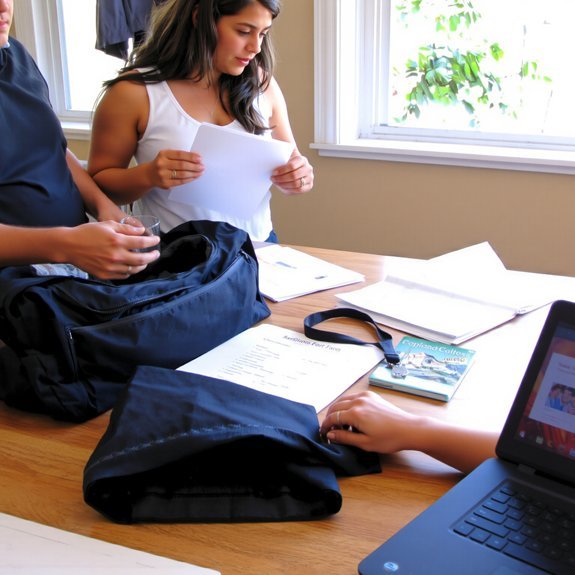
Alright — let’s get practical. You’re flipping through forms, I’m holding the clipboard of calm. First, confirm housing contracts, move-in dates, and roommate contacts — call, text, whatever it takes. Scan IDs, insurance cards, and medical records; tuck copies in an email to yourself and a paper folder that won’t fold under pressure. Schedule immunizations and campus health registration, don’t wait for a late-night panic. Set up student portal logins, meal plans, and emergency contacts; practice the passwords once, then swear them to memory. Pack a small “first-night” kit — snacks, phone charger, comfy socks — you’ll thank me. Walk the route to campus parking and dorm entrance; feel the breeze, note the stairs, and picture the first evening.
Essential Packing Checklist for an HBCU Dorm
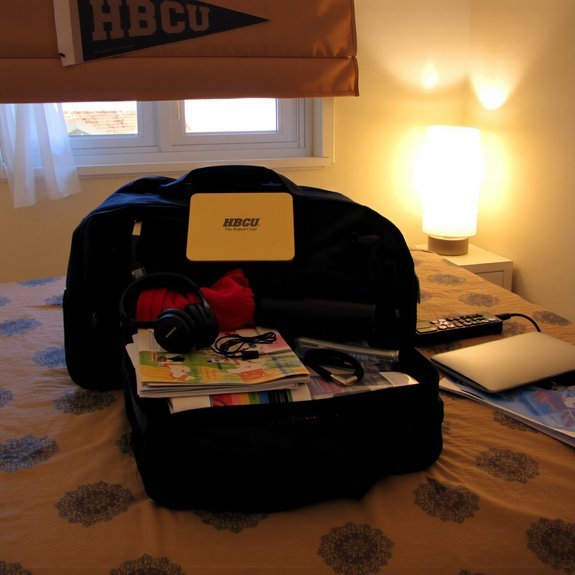
You did the paperwork, you walked the route, you’ve got the clipboard vibe down — now let’s talk about what actually lives in the room. Pack twin XL sheets, a snug comforter, and a mattress topper that feels like a hug after 8 a.m. classes. Bring a lamp with a warm bulb, surge protector, and a few extension cords; outlets hide like treasure. Stash clothing in bins, a laundry basket, detergent pods, and a stain pen — you’ll thank me. Add hangers, a small tool kit, first-aid basics, and a reusable water bottle. Don’t forget earbuds, a portable charger, and a few prints for the wall to make it yours. Keep a mini broom, snacks, and a welcome-card sense of humor.
Financial Planning: Budgeting, Banking, and Financial Aid Tips
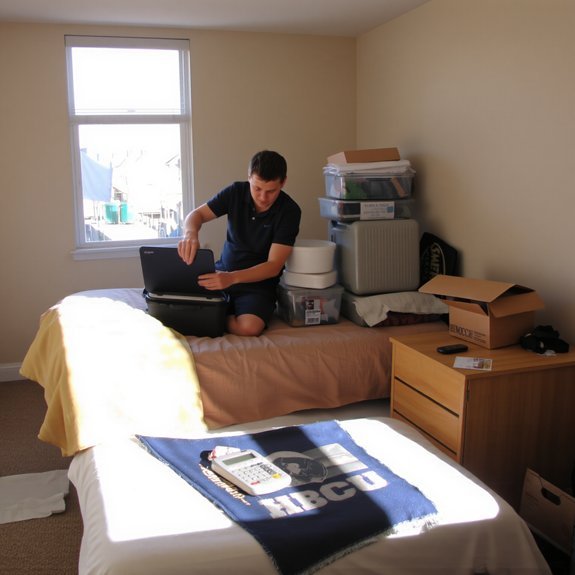
Think of money prep like packing a snack for a long road trip — you can’t predict every pit stop, but you can avoid starving. I tell you this because budgeting isn’t scary, it’s practical. Sit with your student, list monthly costs — food, laundry, supplies, social outings — and assign realistic amounts. Open a campus-friendly bank account together, choose a debit card with low fees, set up alerts, and practice mobile deposits; trust me, losing cash is dramatic and avoidable. Fill out the FAFSA early, track scholarship deadlines, and appeal awards when numbers don’t add up. Teach them to split savings into goals: emergencies, fun, and books. Small habits now mean fewer panicked texts at midnight.
Health, Safety, and Wellness Measures to Put in Place
You’ll want to know where campus health services are, the hours, and how to make an appointment, so you can get quick care when a fever hits at 2 a.m. I’ll push you to map a simple personal safety plan—routes, buddy check-ins, and a few bold “not today” phrases you can actually say out loud. Don’t forget mental wellness tactics too: routine, who to call, and small rituals that smell like home when stress smells like burnt toast.
Campus Health Resources
Because college life throws new freedom at your kid like confetti, I want to make sure they know where to turn when a sniffle, sprain, or stressed-out meltdown shows up, and yes, I’ll nag them about it. First, map the campus clinic, urgent care, and nearest ER on your phone, label them “sane” and “dramatic” so they laugh. Tell them to grab clinic hours, telehealth links, and insurance card info before midnight snacks happen. Encourage they meet the counselor, same as you’d meet a mechanic—quick tour, ask questions, check vibes. Pack a tiny health kit: meds, bandaids, laundry soap, thermometer. Teach them to report bug bites and mold early. Remind them: using resources isn’t weak, it’s smart.
Personal Safety Plan
If you want your kid to actually come home at the end of the semester, start with a personal safety plan that fits their personality, not a generic checklist that feels like homework. I’ll be blunt: you want them alert, not paranoid. Walk the dorm with them, point out exits, lighting, and the quiet spots where you can hear footsteps. Teach simple habits—lock the door, share location with a trusted friend, keep a charged phone in an easy pocket. Pack a tiny kit: flashlight, whistle, emergency numbers on a card. Role-play a late-night “I’m lost” text, practice a calm code word for pickup. Make it practical, repeatable, and their idea. Safety sticks when it feels doable, not dramatic.
Mental Wellness Strategies
Alright, you’re comfortable with locks, flashlights, and the “call me when you get in” code — now let’s talk about the quieter stuff: their mind. You’ll want a routine, simple and real — sleep, water, move, repeat. Pack a comfort object, a playlist that makes them grin, and a tiny journal for late-night thoughts. Teach breathing tricks, five counts in, five out, dramatic sighs included. Set regular check-ins, not lectures — text memes, ask one specific question, listen. Find campus counseling, faith groups, or a trusted RA, and pin that info where they can see it. Normalize asking for help; it’s brave, not broken. Remind them you’re a call away, even if you answer with bad jokes.
Roommate Communication and Building Positive Living Habits
You’re going to share a tiny kingdom—two beds, a mini-fridge humming like a caffeinated bee, and that one window that smells like campus in the morning—so let’s talk like grown-ups (or at least like slightly hungrier teenagers). You’ll start by setting rules together, quick and kind: lights-out window, snack-sharing policy, headphone hours. Say what you need, but listen twice as much; nod, ask, repeat back. Use a whiteboard for schedules, a hidden stash for emergency snacks, and a nightly two-minute room reset ritual—sweep, straighten, breathe. Speak up about smells, study zones, guests, before annoyance builds like laundry. Apologize fast, thank louder. Trust grows from tiny, steady acts; habit becomes harmony, and you get better roommates than your middle-school group chat ever promised.
Getting Involved: Clubs, Organizations, and Campus Traditions
You’ll want to jump into student organizations, scout the campus traditions, and try a leadership role sooner rather than later — think throwing your hat in the ring at a club fair, riding the homecoming parade, or volunteering to run one meeting. I’m telling you this because those moments give you loud, sticky memories you can taste and touch: the sweat of a step show, the thrill of a mic, the feel of new friends high-fiving in the quad. Say yes to one thing this week, even if you mess up; I promise the stories are worth the awkwardness.
Joining Student Organizations
Picture the student center buzzing—pizza smell, laughter, a DJ testing a beat—and you standing there, a slightly nervous satellite, phone in hand, plotting which table to orbit. You scan flyers, you eavesdrop on a debate, you laugh at a joke you half-heard, then you march up and introduce yourself. Say your name, ask one question, grab a signup sheet. Try one meeting, no commitment, just sampling. Join a club that fits your vibe, and another that scares you a bit — growth loves mild discomfort. Bring snacks to a first meeting, people love snacks and you’ll be memorable. Trade numbers, follow up within 48 hours, show up twice, then decide. Repeat until you find your crew. Trust curiosity; it’s your best campus map.
Exploring Campus Traditions
When I first stepped onto the quad and heard the drumline from three buildings over, I felt like I’d walked into a storybook where everyone already knew the chorus — and I didn’t, yet. You’ll hear that beat too, and you’ll learn to nod like you belong. Walk morning rituals, tailgate smells, and convocation chants into your senses. Ask, don’t assume; join a stroll with seniors, taste the signature punch, clap at homecoming rehearsals. Say yes to curious traditions, then pick what fits you. Tape flyers to your door, try the step show once (you might trip, laugh it off), and bring a notebook for names and quirks. Traditions are story starters; collect them, tell them, and add a line or two of your own.
Building Leadership Skills
If you want to lead, start by showing up — even if you’re first in line for the free pizza or only there because a friend begged you — because leadership here isn’t a title handed down, it’s a muscle you build in the mess of meetings, mixers, and midnight study sessions. You’ll join a club, grab a clipboard, and learn names fast, like the human version of speed-dial. Volunteer to plan one event, then another — feel the sticky tape, hear the laughter, taste victory in cheap punch. Say “I’ll do it” more than you’re comfortable with, fumble a flyer, fix it, then take a bow. Lead with listening, crack a joke, own mistakes, and watch others follow.
Academic Supports: Advising, Tutoring, and Time Management
Because college moves fast, you’ll want a game plan before the syllabus avalanche hits—trust me, I learned the hard way and I’m still finding paper crumbs in my backpack. You’ll meet an adviser who’s basically your academic GPS, so schedule that first appointment, bring questions, and don’t be shy. Drop into tutoring centers, they smell like coffee and serious focus, and sit near the front in tough classes. Carve out study blocks, use timers, and treat sleep like a non-negotiable assignment. I’ll nag, but gently: track deadlines on one calendar, prioritize tasks, and break big projects into chewable bites. Practice saying no to late-night distractions, and yes to office hours — professors actually help, promises made, promises kept.
Staying Connected to Home While Growing Independence
You’ll get good at syllabi and study blocks, and before you know it, home will feel both a phone call away and a different country. You’ll call, laugh, and then hang up with a plan, because routine tethers you. Schedule a weekly check-in, same time, same joke, so it’s reliable, not needy. Pack a box of familiar snacks, the scent becomes comfort on a midnight walk back from the library. Learn to text in short bursts, emojis allowed, no novel required. Visit when breaks align, but let new friends in too; independence is social practice. Remind them you trust their judgment, but ask one specific question—how did dinner go? That small detail keeps love practical, alive, real.
Conclusion
Think of this move like a drumbeat — steady, loud, and a little thrilling. You’ve checked forms, packed the twin XL sheets, and slipped snacks into a laundry basket; you’ll remind them to call home, but not too much. I’ll nudged you with budgeting tips, safety checks, and roommate talk, because you want them brave, not reckless. Breathe. Send them with a hug, a plan, and a little emergency cash — they’ll be okay.