
You’re juggling classes, campus life, family expectations, and that tiny bank account, and yeah—anxiety shows up like an unwanted roommate. I’ll talk straight: learn your triggers, lean on classmates and mentors, use counseling, sleep like it matters, and steal moments of joy—music, walk, cook—when your chest tightens. You’ll get practical steps and campus-ready tips next, so stay with me for the parts that actually help.
Key Takeaways
- Build a predictable routine with set study blocks, sleep hygiene, and short breaks to reduce overwhelm.
- Join cultural affinity groups or peer study teams to boost belonging and share coping strategies.
- Use campus counseling, drop-in hours, or mental health services early when anxiety symptoms rise.
- Communicate with professors and mentors about workload or deadlines to negotiate accommodations.
- Practice quick grounding rituals — walks, music, deep breaths, or laughter with friends — during stressful moments.
Understanding Anxiety in the HBCU Context

Even though I don’t have a crystal ball, I can tell when anxiety shows up on an HBCU campus — it sounds like hurried footsteps across brick, smells like instant coffee at 2 a.m., and feels like your stomach doing drum solos before a test. I watch you juggle pride, legacy, and deadlines, and I get it, I really do. You carry family hopes, campus traditions, and the pressure to excel, all while learning who you are. That mix can tighten your chest, make you whisper to yourself between classes, and convince you to skip lunch. Breathe with me, okay? Notice the small rituals that calm you — a walk under oaks, a laugh with a friend, a steady playlist. Keep those.
Recognizing Common Triggers and Warning Signs

You’ll notice your chest tightening before an exam, your hands fidgeting with a pen, or your stomach doing that familiar flip—that’s academic pressure talking, loud and persistent. You’ll also catch the sharp sting when conversations skirt your cultural identity, or when old campus jokes feel like tiny exclusions, and you’ll know those social and cultural triggers by the way your jaw clenches and your breath shortens. I’m saying pay attention, name the moments out loud, and don’t pretend they’re nothing—trust me, you’re not overreacting, you’re collecting clues.
Academic Pressure Signals
When deadlines pile up like laundry after a long weekend, you start noticing small things first — the jittery coffee sip, the page you can’t focus on, the way your heart skips during a group chat ping; I’m talking about the little alarms your body and schedule send before the full-blown panic show. You’ll catch yourself rereading a syllabus, palms sweating, calendar alerts multiplying like popcorn. Your sleep gets stolen by draft emails, your jaw clenches in class, you forget names you used to know. Grades feel heavier than they should, one quiz becomes Everest. You snap at roommates, then feel guilty. That tight chest? It’s real. Pause, breathe, jot one tiny to-do, and tell me you won’t let it snowball — we both know you won’t.
Social & Cultural Triggers
If you’ve ever walked into a campus event and felt your smile lock up, that’s your social radar pinging—loud and annoying. I notice you tense, breath shallow, shoulders hitch like you’re bracing for a splash. You’ll see crowds, loud music, or someone’s offhand comment trigger a loop: heat rises, thoughts race, you scan for exits. Maybe it’s cultural expectations—family pride, code-switching, fitting into legacy traditions—or microaggressions that sting like paper cuts. Watch for yawns that aren’t tiredness, avoiding eye contact, rehearsing lines in your head. Say it out loud, “I’m overwhelmed,” and take three steady breaths, step outside, or text a friend, I did this once and lived to tell the tale. Those little actions break the loop, fast.
Building Community Support Among Peers
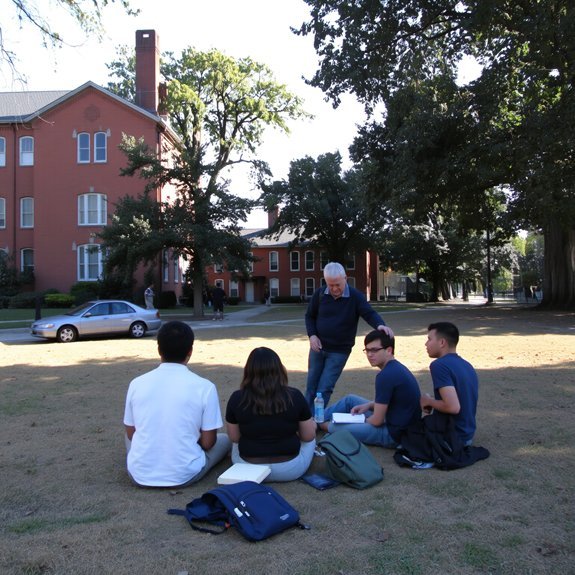
You can start a study group in the library, spread out your notes, and trade snack bribes for problem-solving—I’ll bring the pens, you bring the courage. Join a cultural affinity club too, where the room smells like coffee and conversation, and people actually get your jokes about home. Together, those small rituals make campus feel less like a puzzle and more like a team you belong to.
Peer Study Groups
Because college can be loud, messy, and full of late-night panic, I swear by peer study groups—they’re my secret weapon and my therapist, minus the couch. You show up, grab campus coffee that smells like hope and burnt beans, and open a textbook with people who get it. You quiz each other, joke when someone forgets a formula, and clap like it’s a tiny victory parade when someone finally explains mitochondria. Set a short agenda, rotate hosts, and use timers so you don’t spiral into five-hour tangents about campus drama. Speak up when you’re lost, admit confusion, ask for examples. The group becomes a rhythm, a safe noise, a place where stress shrinks and confidence grows, one shared snack at a time.
Cultural Affinity Clubs
How do we find home in a sea of dorm lights and frat parties? You join a cultural affinity club, you smell baked sweet potato pies at meetings, you hear laughter bounce off campus brick, and you breathe easier. These groups give you rhythms, rituals, and people who get your jokes, your prayers, your playlist. I’ll nudge you: show up once, bring snacks, stay for the awkward icebreaker — that’s where magic starts.
- Attend a meeting, sit front row, introduce yourself with a grin.
- Volunteer for an event, feel hands-on purpose, watch stress shrink.
- Share a story, get nodded into belonging, feel seen.
- Start a mini tradition, light candles, pass recipes, make it yours.
Connecting With Faculty and Mentors for Guidance
When I first stepped into Dr. Carter’s sunlit office, you’ll laugh, I nearly tripped on a stack of student essays. You can do this too: knock, smile, say your name. Talk about classes, anxiety triggers, career hopes, any small thing that feels heavy. Ask for feedback, notes, a study plan, or just a quick check-in email — faculty like concrete asks. Take sensory notes: his coffee aroma, the soft chair, the way he leans forward when you speak. Invite mentors to campus events, or grab campus coffee, and set recurring meetings. They’ll offer perspective, references, and practical coping tips. Don’t be scared of being “too much”; be human, be prepared, and follow up.
Using Campus Counseling and Mental Health Resources
You can find the campus counseling office near the student center, just follow the poster-studded hall and the smell of burnt coffee — I promise the waiting room is more comfy than it sounds. You’ll want to learn how to access drop-in hours, scheduled therapy, and other support services, and I’ll help you map those steps so it’s less “guessing game” and more “plan in your phone.” Stick with it, set up regular check-ins, and don’t be shy about asking for ongoing care — therapy’s not a one-off fix, it’s a relationship you build, like a study group that actually shows up.
Finding Campus Counselors
Looking for someone on campus who actually gets the weird mix of excitement and dread that comes with college? I promise, you’re not inventing this chaos. Go to the counseling center, peek through the window, sniff the coffee, and breathe—there’s a human behind that door who thinks your feelings make sense. Ask friends for names, check the wellness webpage, or stop a campus nurse and say, “Who should I talk to?” You deserve someone who listens.
- Drop by the counseling center, ring the bell, meet a real person.
- Read counselor bios online, pick someone whose voice feels honest.
- Ask professors or RAs for trusted referrals, people talk.
- Try a short intake session, it’s fine to shop around.
Accessing Support Services
So you found a counselor who doesn’t roll their eyes at your “I forgot to eat” panic—nice job, pat yourself on the back. Now, walk me to the student health center, peek at the glossy pamphlets, and let’s make those services work. Call ahead, book an intake, show up five minutes early, breathe the coffee-scented hallway air. Bring your ID, your class schedule, a note about symptoms. Ask about crisis hours, drop-in groups, insurance help, and teletherapy. Try a workshop or peer support first, if one-on-one feels tall. If paperwork bores you, bring a friend for moral support. Keep track of names and follow-up dates, set phone reminders, and don’t ghost the system—resources are there, use them, and claim this calm as yours.
Building Ongoing Care
If you want this to stick, treat therapy like class—show up, do the work, and don’t flake because the semester got loud. I’ll say it straight: counseling offices are your low-key lifehack. Walk into the waiting room, feel the carpet under your shoes, breathe, and claim that slot. Use drop-in hours, book weekly check-ins, and hand the counselor your messy truth. Track progress with notes, apps, or a quick voice memo after sessions. Tell a trusted professor you’re in care, for deadlines and mercy.
- Schedule a regular appointment, same day, same time.
- Use campus workshops, group therapy, or peer support.
- Tap emergency services and after-hours hotlines.
- Share access info with a roommate or ally.
Establishing Daily Routines That Promote Stability
When your days feel like a jumble of classes, texts, and late-night ramen, a steady routine is the small rebellion that actually helps — trust me, I learned this the hard way between all-nighters and the mysterious disappearance of my left sock. You make mornings predictable: alarm, shower, five-minute stretch, breakfast you can actually chew, not just inhale. Block study hours, leave gaps for walking between buildings, breathe when schedules bump. Pack a tote with water, lotion, headphones — tactile anchors. Honor sleep: lights dim, phone away, soft playlist, no scrolling. Checklists beat panic; cross things off, feel the weight lift. Routines don’t cage you, they steady you, like a friend who texts, “You got this,” and actually means it.
Stress-Reduction Practices Rooted in Black Cultural Traditions
Because we carry history in our bones, tapping into Black cultural practices for stress relief feels less like picking a trend and more like coming home — and trust me, that welcome hug is what you didn’t know your week needed. I want you to breathe into rhythms that ground you, smell warm sage or sweet tea, feel feet on wooden floors at a cookout, hear call-and-response laughter. Try these simple, soulful practices, they work like wipes for a messy brain.
- Gather for mini house parties, share stories, pass recipes, laugh loud — community medicine, no prescription.
- Light herbs or incense, set intention, breathe slowly, notice calm creeping in.
- Move to gospel or jazz, sway, stomp, let tension drop.
- Keep an ancestors journal, write, listen, answer back.
Managing Academic and Financial Pressure Effectively
While the textbooks pile up and the bank account sends you passive-aggressive emails, I’ll say this plainly: you can handle this without losing your mind or your sense of humor. You map out deadlines on a calendar, color-code like you’re painting a tiny victory flag, then tackle one tooth at a time. You negotiate with professors early, not at panic hour, and ask for extensions before caffeine fails you. You track spending with a simple app, trade three takeout meals for a home-cooked win, and let thrift-store finds feel like fashion statements. You build a pocket emergency fund, even five dollars counts, and swap study sessions with friends for accountability and laughs. Breathe, adjust, and keep moving—you’re resourceful, you’re learning, and you’ll get through this.
Navigating Stigma and Encouraging Help-Seeking
Okay, so you’ve got your planner, your thrifted jacket, and a ramen budget that’s basically performance art — now let’s talk about the other thing everyone tiptoes around: asking for help. I’ve stood in lines for counseling with you, heard whispers in dorm halls, felt that tightness when admitting you’re not fine. Stigma’s a shadow, it feeds on silence. Break it with small, loud moves: tell a friend, text a professor, lean into campus groups where your culture matters. Here are quick, doable steps to make reaching out less scary, more normal:
- Name it aloud to one trusted person, even if your voice shakes.
- Visit counseling, peek at the waiting room, then book a first session.
- Join a peer support group that feels like home.
- Share your story, quietly, on your terms.
Preparing for Transitions and Life After Graduation
If you’re anything like me, the idea of graduation hits your chest like a surprise drum solo — loud, exciting, and kinda terrifying — but you don’t have to let it blindside you. You make lists, yes, but you also practice small goodbyes, tuck favorite campus smells into memory, and say, “See you soon,” not “Goodbye forever.” Draft a resume, then workshop it with a mentor who’ll tell you the truth and laugh with you. Budget for rent like it’s a class with weekly quizzes. Set up LinkedIn, but talk to alumni in the cafeteria line first, real voices over polished profiles. Plan rituals: one last walk through the quad, a roommate dinner, a playlist that plays you out — sensory anchors that steady the leap.
Conclusion
You’ve got this, even when nights feel endless and your to-do list screams louder than a marching band. Lean into your people, talk to a trusted prof or counselor, and build tiny routines—sleep, move, breathe—so days feel steadier. Use campus groups and cultural practices that comfort you, ask for help early, and plan next steps one small swap at a time. I’ll say it plainly: you’re tougher than one bad semester, so keep going.