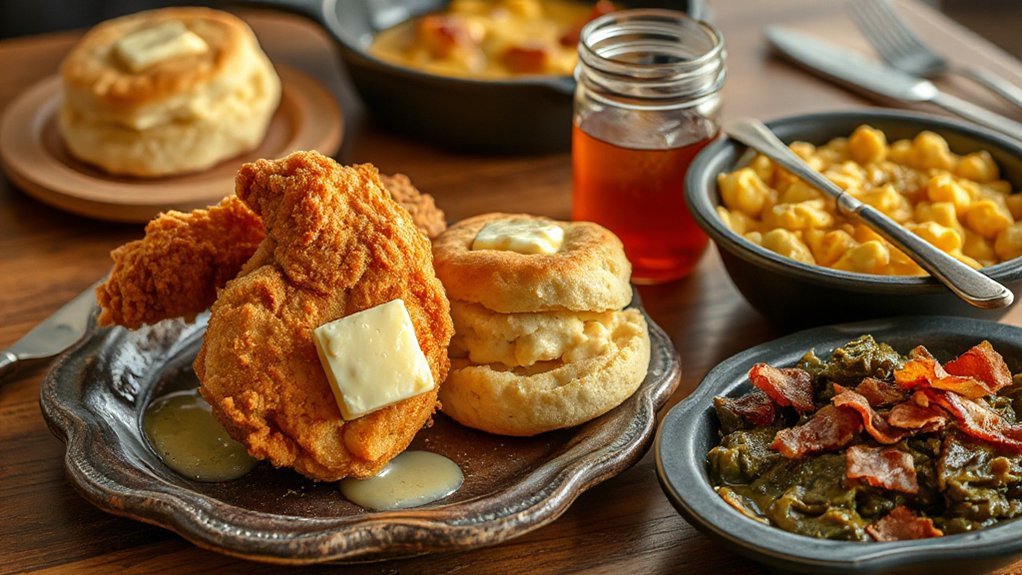
Did you know Nashvillians eat more biscuits per capita than almost any other city in the U.S.? You’ll smell butter and sawdust before you see the place, and I’ll take you to diners where gravy clings to your spoon, to barbecue joints that steam like summer, to soul spots where the chicken snaps when you bite it — but first, let me show you the one hole-in-the-wall where the pecan pie will make you rethink dessert.
Key Takeaways
- Seek classic diners serving flaky biscuits and peppery gravy for authentic Nashville comfort breakfasts.
- Try family-run barbecue joints where slow-smoked meats and regional wood choices define the flavor.
- Visit soul food restaurants for crispy fried chicken, slow-simmered collards, mac and hot sauce on the side.
- Sample Lowcountry and Creole kitchens for shrimp and grits, jambalaya, and buttery, bay-flavored seafood dishes.
- Stop by warm bakeries and cafés for pecan pie, fruit tarts, and gooey, breadcrumb-topped mac and cheese.
Classic Diners Serving Biscuits and Gravy
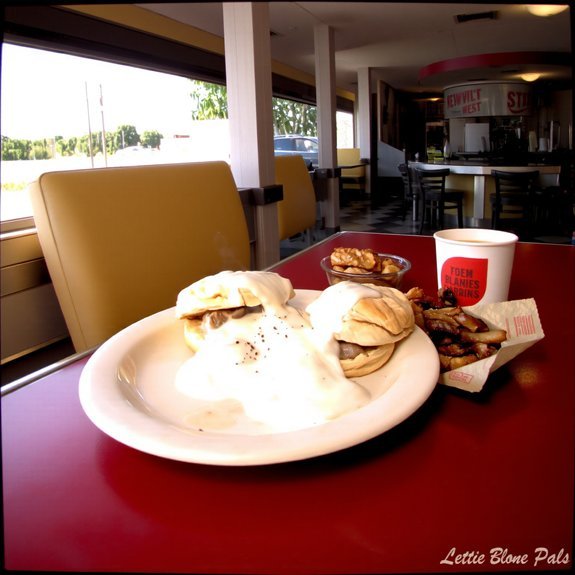
If you wander into a Nashville diner before sunrise, you’ll find two truths: the coffee’s strong enough to wake your regrets, and the biscuits and gravy will fix your life—at least for an hour. You slide into a vinyl booth, I nod like we’ve shared a secret, and the server sets down a plate steaming, butter pooling, gravy flecked with pepper. These classic breakfast spots know their craft; they lean on homemade biscuit recipes handed down, forgivingly flaky, salty at the edges. You tear into one, gravy clings, warmth spreads. I joke about my diet, you laugh, crumbs on your napkin. It’s honest food, no pretense, just comfort that talks back, and you leave a little braver.
Family-Run Barbecue Joints With Slow-Smoked Meats
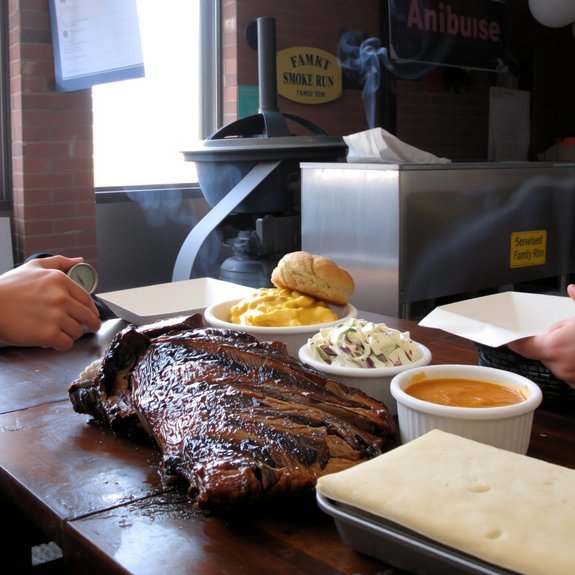
You’ll smell the smoke from the lot before you see the sign, and you’ll know it’s worth the detour. I’ve watched granddads tend coals with time-honored smoking methods, tasted family recipes passed down on wax paper, and seen meat go pit-to-plate still steaming — trust me, it hits different. Pull up a bench, order something messy, and let the flavors do the talking.
Time-Honored Smoking Methods
When I walk into a family-run joint and the smoke hits me like a warm, salty blanket, I know I’m in the right place—these pits have been tended for decades, not just because of tradition but because someone’s pride depends on it. You watch the pitmaster tend embers, and you learn quick: smoking techniques matter, from wood choice to airflow, and patience shapes flavor profiles you can’t fake. You smell hickory, feel bark crackle, see brisket bark form, and start to drool like a polite animal.
- Notice the wood: oak, hickory, apple — each shifts the mood.
- Watch the temp: low and slow, don’t rush love.
- Peek the smoke: thin blue, not billowy white.
- Try small cuts, compare nuances.
Family Recipes Passed Down
Because family recipes are guarded like treasure maps, I make a point of leaning in—literally—at the counter of every mom-and-pop smokehouse I can find. You’ll watch me nod like I know secrets, while the pit boss smiles and slides you a slab that smells like childhood and wood smoke. These joints use heirloom ingredients, small-batch sauces, and a stubborn pride in culinary traditions that don’t change with trends. You bite, your eyes widen, the sauce is familiar but sly. I’ll ask about the spice rub, they’ll joke, “It’s love,” and mean it. You hear clinking plates, kids arguing over cornbread, an old radio crooning. Stay, eat, tip well, and learn that slow food can feel urgent and honest.
Pit-to-Plate Freshness
Those family recipes are the map, but the pit is where the treasure gets earned. You’ll smell smoke first, sweet and sharp, then wood and brown sugar, and you’ll know you’re in the right lane. I lead you to family-run joints where slow-smoked meat meets farm to table sides, where seasonal ingredients show up on the plate like dependable friends.
- Watch the pitmaster, he talks to the coals, you listen and learn a little reverence.
- Order something messy, napkins at ready, the bark’s worth the stain.
- Pair brisket with pickles and a seasonal slaw, crisp and sneaky.
- Tip the family, ask about the wood, they’ll tell you stories, you’ll taste history.
Southern Seafood Shacks and Catfish Spots
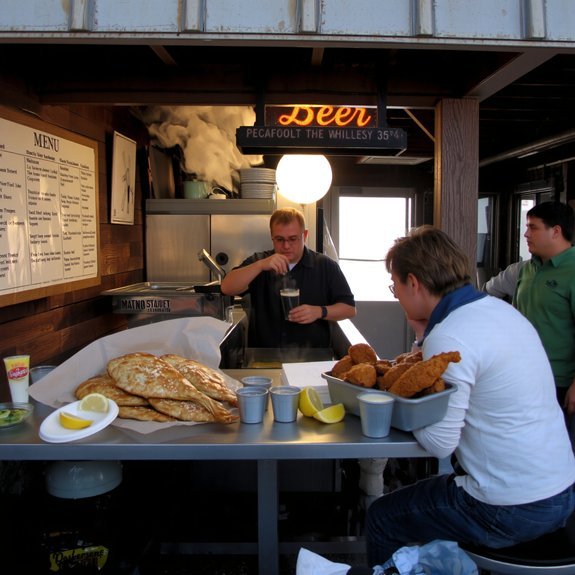
You’ll want to roll up your sleeves for Shoreline Catfish Classics, where the batter’s crisp, the fillets flake apart, and a lemon squeeze makes everything sing. I’ll point you toward Lowcountry Seafood Shacks next, because their shrimp is plump, the hush puppies are addicting, and you’ll probably get sauce on your chin. Finally, don’t miss the Riverfront Fried Favorites — order by the pier, listen to the river slap the pilings, and expect to leave with fry grease on your fingers and a stupid grin.
Shoreline Catfish Classics
When I first walked into Shoreline Catfish Classics, the air hit me like a friendly slap—hot oil, lemon zest, and a faint whiff of hush puppies that promised trouble for my diet, and I grinned. You’ll find shoreline catfish fried to order, the crispy batter singing under a squeeze of lime. You’ll grab a plastic tray, scout the sauces, and plan your strategy. I told myself I’d eat light. I lied.
- Order the catfish — flaky, hot, with that crackle you want.
- Try the slaw — tangy, cool, it saves lives.
- Dabble in the fries — salty, stubbornly enjoyable.
- Drink sweet tea — it’s basically dessert.
Sit, plunge in, don’t be shy.
Lowcountry Seafood Shacks
If you want seafood that tastes like it grew up on a porch swing, Lowcountry seafood shacks deliver — messy, honest, and loud in the best way. You walk in, smell hot batter and lemon, hear folks swap fishing tall tales, and you grin because you know you’re in the right place. I’ll point you to spots that serve shrimp so fresh you’ll forgive the napkin apocalypse, oysters opened on the spot, and catfish that’s crunchy, flaky, and unapologetic. Between bites you’ll hear about seafood festivals, see photos of shrimp boats, and maybe join a Saturday ritual. No pretension here, just hands-on food, cold drinks, and good company — exactly how Southern seafood should be.
Riverfront Fried Favorites
A few perfect afternoons are carved out for riverfront fried favorites, and I’m claiming one for us right now. You’ll want the breeze, the clack of docks, and that golden crunch. I’ll lead, you follow, and we’ll argue over hush puppies like adults with napkins. Riverfront dining means shrimp steam fog, lemon zing, and a plate of fried catfish that snaps with every bite. Bring paper towels. Expect sweet tea, salt on your lips, and a view that apologizes for nothing.
- Order the fried catfish, extra crunch, no shame.
- Share hush puppies, they disappear fast.
- Ask for tartar, but don’t hoard it.
- Sit by the rail, watch barges drift, relax.
Upscale Comfort Restaurants With Modern Southern Menus
Pull up a chair and wipe your hands on the napkin I’ve already judged you for using — these spots take Southern comfort and dress it up without losing the soul. You’ll walk in to warm wood, low light, and the smell of butter and citrus — yes, they pair. Chefs here do elevated comfort with modern twists: foie gras-topped biscuits, shrimp and grits reimagined with charred corn and a basil hit. Order the braised short rib, fork meets velvet. I’ll tell you what to expect: a parade of textures, smart plating, portions that hug you afterward. Servers talk you through the menu like friends with good taste. Toast with a craft cocktail, laugh at your napkin crime, and savor every clever, soulful bite.
Homey Cafés Known for Mac and Cheese
When you’re craving something that hugs you from the inside out, slide into one of Nashville’s cozy cafés that treat mac and cheese like a sacred rite; I mean, come on—this is where elbow macaroni gets an identity. You’ll smell butter and toasted breadcrumbs, see steam rising, and know you made the right decision. I point you to spots where cheesy goodness stretches like a welcome, where forks scrape bowls clean, and where creamy comfort is nonnegotiable. Sit at the counter, watch the cook, ask for extra cracker topping.
Slide into a cozy Nashville café where mac and cheese hugs you, buttered breadcrumbs crackling, cheese stretching like a welcome.
- Classic diner, sharp cheddar, crispy top, counter seating.
- Neighborhood café, smoked gouda blend, buttery crust.
- Retro spot, peppered bacon, velvet sauce.
- Late-night kitchen, truffle hit, gooey finish.
Bakeries and Pie Shops With Southern Pecan and Fruit Pies
Since southern pecan pie and fruit pies smell like holiday nostalgia and bad decisions in equal measure, I’m dragging you into Nashville’s warmest bakeries to make amends; trust me, you’ll forgive yourself after one gooey forkful. You step inside, warm flour on the air, pastry cases gleaming, and I nudge you toward the counter. Try a pecan pie that crackles when you slice it, buttery crust flaking on your tongue, caramel pooling like a tiny sin. Or grab fruit tarts stacked with glossy berries, lemon curd whispering bright against sweet. We stand at a mismatched table, talk nonsense, and share bites. You’ll leave sticky-fingered and smiling, convinced this is exactly the kind of trouble you deserve.
Soul Food Restaurants Dishing Fried Chicken and Greens
If you love food that slaps you awake and then tucks you in, you’re in the right part of town; I’ll lead you to places where the fried chicken is a glorious, crackling offense and the collards are slow-simmered comfort in a bowl. You’ll taste heat, salt, and that buttered aroma that makes sense of the world. I’ll point you to spots where servers know your name, and portions sit like proud relatives on the plate.
- Order a crispy fried chicken sandwich, napkins ready, juice running down your wrist.
- Pair it with tangy collard greens, cooked with ham hock and stubborn soul.
- Try sides: mac, black-eyed peas, hot sauce on standby.
- Leave elbow-grease stains, smiling.
Neighborhood Spots Famous for Fried Green Tomatoes
Pull up a chair and loosen your belt, because around here fried green tomatoes aren’t a garnish — they’re a neighborhood religion, and I’ll happily proselytize. You’ll wander into a corner diner, catch the smell of cornmeal and hot oil, and grin because you know you’re in the right place. I’ll point out the chalkboard specials, nod toward the back where jars of pickles glint, and tell you who buys from local farmers each week. Bite one, taste tangy tomato, crisp crust, warm center, and you’ll forgive me for everything. These spots swap fried tomato recipes like baseball cards, they swap stories louder. Pull up, talk to the cook, order the basket — you won’t be polite about sharing.
Lowcountry and Creole-Influenced Southern Kitchens
When you step into a Lowcountry- and Creole-influenced kitchen in Nashville, expect a friendly little hurricane of flavors — butter, bay, and enough thyme to make your grandmother nod in approval. You’ll smell caramelized onions, hear a pot sing, and want to dive spoon-first into shrimp and grits that hug your soul. I’ll tell you where to sit, what to order, and how to pronounce “jambalaya bowls” like you mean it.
- Take the bar seat, watch the saucier, ask for extra broth.
- Order shrimp and grits, don’t share unless you love regret.
- Try jambalaya bowls, they’re messy, glorious, inevitable.
- Finish with praline, wipe your chin, smile like you own Nashville.
Conclusion
You’ve got your map, you’ve got your appetite, and you’re ready. I’ll point you to flaky biscuits, smoky ribs, crispy catfish, gooey mac, and sweet pecan pie. You’ll bite into history, lick gravy from your fingers, and wipe barbecue sauce on your shirt like it’s a badge. Eat loudly, linger longer, order seconds. Trust me, you’ll leave full, smiling, and already planning your next plate.