Tag: decluttering tips

  • How Do I Organize After the Holidays

    How Do I Organize After the Holidays

    You’ve got glitter in the sink, half a cinnamon roll on the counter, and eight mismatched strings of lights—so let’s tame the chaos. Start by sorting into keep, toss, and donate piles, stash fragile bits in labeled bins, and roll ribbons onto spools so they don’t look like a hedgehog’s nest; I’ll show you the two-minute tricks that save hours, but first—what’s the one thing you dread putting away?

    Key Takeaways

    • Sort everything into keep, donate, or toss piles and set a timer to stay focused.
    • Pack decorations by category in labeled clear bins, protecting fragile items with tissue or bubble wrap.
    • Coil and secure holiday lights, then store them separately to prevent tangles and damage.
    • Create a single “new gifts” box and a donation bag by the door for immediate processing.
    • Reset routines: five-minute nightly sweeps and a quick seasonal inventory to prevent future clutter.

    Quick Triage: Sort What Stays, Goes, or Gets Donated
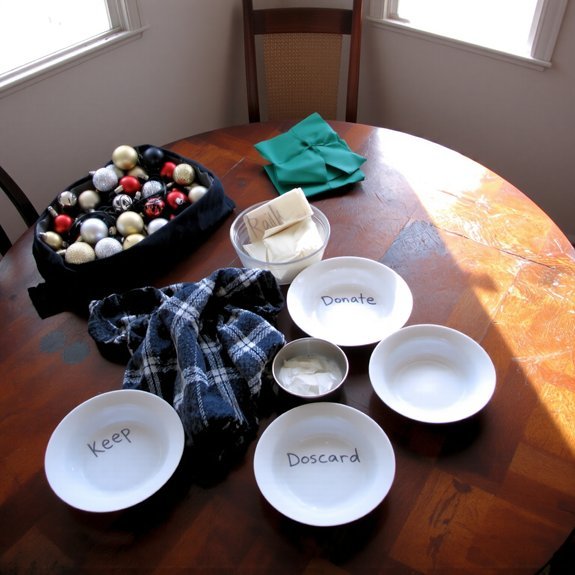
    declutter through keep toss

    If you’re staring at a mountain of wrapping paper and mismatched mugs, don’t panic—grab a big box and let’s play judge. I’ll talk you through quick triage: keep, toss, or donate. You touch each item, feel the weight, listen for usefulness; if it jingles memories but never gets used, it’s suspect. Use clear decluttering strategies—set timers, make three piles, be ruthless. For donation options, I’ll nudge you toward local shelters, thrift stores, or online groups that actually want your stuff; box it, label it, schedule a pickup. Say a tiny goodbye, do a victory lap with the empty counter, and move on. You’ll feel lighter, the kitchen smells fresher, and you’ve earned that celebratory snack.

    Efficient Gift Wrap and Ribbon Storage Solutions
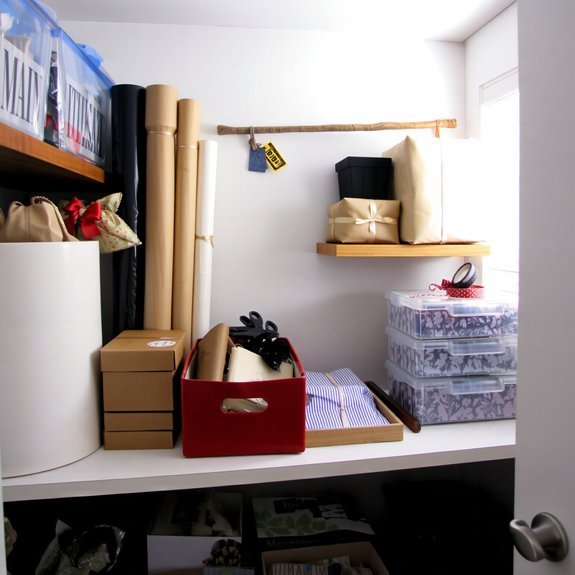
    organized gift wrap storage

    Alright, you’ve boxed up the donate pile and given the junk drawer a stern talking-to—now let’s wrangle the riot of rolls, ribbons, and rogue bows. You grab the kraft paper, feel the crinkle, then sort by size and pattern, stacking flat rolls vertically in a tall bin so they don’t sag. For ribbon organization, I swear by a shoe box with dowel rods threaded through spools — pull, cut, and no drama. Clear zip bags hold leftover bows and tags, labeled with a Sharpie, because trust me, memory lies. Use a tension rod in a closet for wrapping paper tubes, and a shallow drawer for tape, scissors, and extra gift wrap—everything visible, everything ready, gift-giving made smugly simple.

    Storing and Caring for Seasonal Decorations
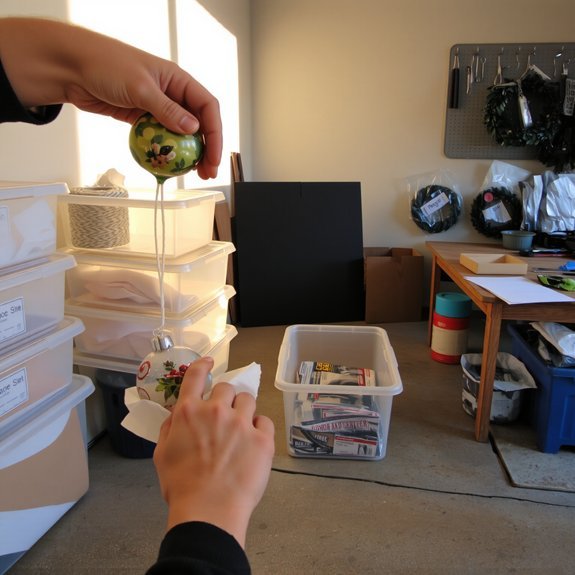
    organize and protect decorations

    You’ll want to sort decorations by type first — lights in one box, wreaths in another, ornaments together so you’re not rooting through the chaos next year. Wrap fragile pieces in tissue or bubble wrap, tuck them into divided bins so the glass ornaments don’t clink like maracas, and stash lights loosely coiled to avoid kinks. Label every container clearly, slap a season and a room on the lid, and thank me later when decorating feels like a party, not a treasure hunt.

    Sort by Decoration Type

    One box, one category, no excuses—let’s do this. You grab a tote, I grab the tape, and we attack ornament organization like pros with foam peanuts. Put glass bulbs together, wooden ornaments in a bin, and felt pieces in another; you’ll thank me when you’re untangling next year. For strings of lights, coil each strand neatly, secure with twist ties, and label the plug type—light storage that spares you curses in November. I’ll joke about my tangled disaster from last season, you’ll roll your eyes, we’ll laugh, then actually label. Stack labeled boxes where you can reach them, not where they’ll collect dust and regret. Quick, tactile, satisfying—this is organizing you can feel, see, and actually use.

    Protect Fragile Items

    Good—you’ve got ornaments sorted by type, labeled boxes stacked like tiny monuments to order. Now protect the fragile ones. You’ll wrap each bauble in tissue, then bubble wrap, snug as a burrito, no rattles allowed. Use cardboard dividers for glass, or repurpose egg cartons for small treasures; I confess, I’ve hugged a carton too. For fragile item protection, don’t skip padding the box bottom, then layer, then pad again. Close lids, seal with tape, and mark “fragile” in big letters — you’ll thank me when nothing shatters. Think humidity: silica packets keep metal from tarnishing, cedar blocks deter moths. Store boxes off concrete, on shelves or pallets, in cool, dry spots. These safe storage solutions save heartbreak and cleanup.

    Label Storage Containers

    I keep a Sharpie within arm’s reach like it’s a tiny sword — because labeling saves you from three Saturdays of excavating holiday chaos. You grab bins, feel the cool plastic, hear the lid snap, and write with confident strokes. Pick a label design that’s bold, legible, and a little fun — color-code by season or fragility, add a date, or sketch a tiny ornament. Try varied storage options: clear plastic tubs for visibility, vacuum bags for fabric, cardboard with reinforced bottoms for bulky pieces. Tape labels to lids and sides, and note contents and location, so you don’t have to open every box. Your future self will thank you, probably with coffee, maybe a parade of relieved sighs.

    Handling Sentimental Items Without the Stress

    If you’re anything like me, sentimental stuff sneaks up on you — a chipped ornament, a faded concert ticket, a mug that survived three moves and two exes — and suddenly your closet feels like an emotional obstacle course. You’ll want a system, so pick small bins for sentimental storage, label them honestly, and treat this like emotional decluttering, not a funeral. Touch each item, ask one clear question: does this spark joy or useful memory? Keep a display box for the wow pieces, a photo file for the bulky stuff, and a donate pile for things you’ll never miss.

    • Photograph oversized items, keep the picture instead.
    • Set a 30-second timer per object.
    • Limit keepsakes to two boxes per person.
    • Write a one-line story on each tag.

    Cleaning and Resetting Entertaining Zones

    Let’s tackle the entertaining zone like a short, furious party clean-up—because you’re not wading through confetti forever. You spot sticky counters, a stack of glasses, and that one tapas bowl pretending it left. I grab a trash bag, you clear plates, we hustle. Follow a quick cleaning checklist: clear surfaces, soak pans, wipe sticky spots, polish glassware, sweep crumbs. Put entertaining essentials back where they belong—napkins, serving spoons, that clever tray you love. Open a window, spray citrus cleaner, breathe like you aren’t exhausted. I joke about my apron of shame, you laugh, we scrub. Finish with a fresh cloth, candles reset, playlist queued for next time. The room looks ready, calm, and slightly smug.

    Recycling and Disposing of Holiday Waste Responsibly

    You’re going to sort recyclables right away, emptying soda cans, rinsing jars, and stacking cardboard before it turns into a sad soggy mess. Treat wrapping paper like a picky guest—keep the clean, uncoated stuff for recycling, stash glittery or taped pieces for trash, and yes, I grumble about ribbon too. When it comes to your tree, let’s be practical: bundle or chip it for curb pickup, or take it to a drop-off so needles don’t carpet the living room for months.

    Sort Recyclables Immediately

    After the last guest leaves and the paper confetti is still prickling under your socks, grab three boxes and get to work—now. I make this dramatic because you’ll thank me later; you’ll also feel oddly heroic. Sort recyclables immediately: rinse, squish, separate. Keep food scraps out, lids on jars, and foil flattened. These recycling tips help you avoid the sad, smelly bin pileup and score eco friendly options for curb pickup.

    • Label each box: glass, paper/cardboard, mixed containers.
    • Rinse greasy plates and cans quickly, water saves headaches.
    • Crumple cans, flatten bottles, tuck lids inside.
    • Check local rules on contaminated items before you toss.

    Do it fast, cleanly, with a smug sip of tea.

    Handle Wrapping Paper Properly

    You’ve tackled the recycling mountain, so now let’s face the glittery beast: wrapping paper. I’ll be blunt — not all paper wants to be recycled. Tear off tape, pull out bows, and smooth flats into a pile. If it’s shiny, metallic, or has plastic, it’s trash, not bin-ready. For simple paper, crumble a test ball; if it stays wadded, recycle it. Keep a small bin by the couch, you’ll thank me later. Consider eco friendly alternatives next year — fabric wraps, newspaper art, or reusable bags that look clever, not like charity chic. Say the line out loud: “Less glitter, more sense.” You’ll free space, skip guilt, and still look like a gift-giving pro.

    Dispose of Live Trees

    Let’s drag that piney beast outside and give it a proper send-off — not the curbside shame of needles scattered like confetti. You’re done with sap-smudged hands, tangled lights, ornaments clinking like tiny regrets. Don’t just abandon it; plan tree disposal, pick a spot, and feel a little victorious as you wrestle the trunk into the truck.

    • Call the city, ask about curbside pickup, or find drop-off sites with clear recycling options.
    • Trim the stand, shake loose the needles, wrap the tree in twine for safer handling.
    • Turn branches into mulch, feed garden beds, or make a rustic bird shelter.
    • If all else fails, barter: offer wood chips to a neighbor, there’s pride in being useful.

    You’ll breathe easier, the yard will forgive you.

    Creating a Post-Holiday Storage System That Works

    If you want holiday chaos to stop following you like glitter on a sweater, we’re going to build a storage system that actually behaves; I’ll talk through the bins, labels, and tiny rituals that save holidays and sanity, while you get to feel smug in a clean living room. Start by sorting: keep the cherished, toss the broken, donate the never-used. Choose clear bins for lights, opaque for fabric, small boxes for delicate ornaments. Label loudly, with a marker that actually shows up at midnight when you unpack. Stack by frequency: seasonal, occasional, sentimental. Wrap fragile items in tissue that smells faintly of cedar, tuck tags inside. Set a five-minute “put-away” ritual after every event. These storage solutions and organization tips will keep next year calm, promise.

    Resetting Routines and Spaces for the New Year

    Once the twinkle lights are tucked away and the last crumb of fruitcake has been bravely disposed of, it’s time to reset — for real — so your home stops feeling like a holiday hangover. You’ll tweak routines, nudge habits, and reclaim surfaces that hosted cookie trays and gift chaos. I tell you what to do, you do it—simple.

    • Map morning and evening routine adjustments, noting one small change at a time.
    • Clear a staging zone, sweep crumbs, wipe sticky counters, reclaim flat surfaces.
    • Reassign drawers and bins for seasonal gear, label boldly, test for two days.
    • Optimize closet and shelf layouts for flow, move frequently used items forward.

    You’ll sense order, breathe easier, and actually find your keys without dramatics.

    Preventing Future Holiday Clutter With Simple Habits

    Because you don’t have to wait for next December to decide holiday chaos won’t become a permanent roommate, I’m going to show you a few tiny habits that stop clutter in its tracks — no heroic clean-fests required. I’ll walk with you through pocket-sized rituals, things you’ll actually do. First, a five-minute evening sweep: touch three surfaces, toss one wrapper, rehome one ornament. Say it out loud, like a tiny spell. Next, label a single box for gifted items, smell of cinnamon still clinging to ribbon, and drop new extras there immediately. Keep one donation bag by the door, flopping open like a patient dog. These holiday habits build gentle clutter control, they save your sanity, and yes, you’ll thank me while sipping leftover eggnog.

    Conclusion

    You stood amid glitter and guilt, hands full of tinsel and triumph. I tell you: keep the sparkle, ditch the junk. Toss the broken bulbs, box the favorites, tuck ribbons like little promises. Breathe—cold air, pine scent, coffee mug warm in your palm—then label, stack, slide bins to the back shelf. You’ll stumble, laugh, learn. The room will calm, you’ll feel lighter, and next year’s mess will meet a smarter you.

  • How Do I Organize My Life for the New Year

    How Do I Organize My Life for the New Year

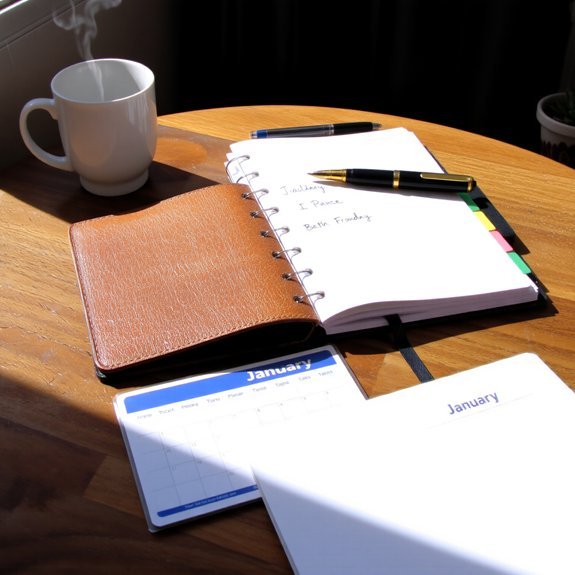
    You’re going to treat the new year like a small renovation: pick one corner at a time, make a plan, and actually finish it, no Pinterest shame. I’ll walk you through crisp goals you can hit in weeks, a ruthless declutter that smells like lemon, routines that don’t beg for willpower, and tiny checks to keep momentum—plus the accountability hacks I use when Netflix looks too tempting—so grab a mug and let’s map the first move.

    Key Takeaways

    • Set 3–5 SMART yearly goals, break them into weekly milestones, and schedule tasks in your calendar.
    • Declutter one zone at a time using quick decisions, grouping, and labeled storage.
    • Build simple daily and weekly routines with habit tracking and tactile rituals.
    • Prioritize with a brain dump, pick your top three tasks, and use time-boxed work sprints.
    • Conduct a ten-minute weekly review to note wins, adjust plans, and maintain momentum.

    Set Clear, Achievable Goals for the Year

    set achievable smart goals

    If you’re anything like me, the New Year feels like a fresh notebook—crisp, promising, and slightly intimidating—so start by naming what you actually want, not what sounds impressive. You’ll pick SMART goals, specific and measurable, then slice them into weekly personal milestones so progress smells like coffee and feels doable. Tape a tiny vision board near your mirror, photos and sticky notes fluttering, so you can’t pretend you forgot. Find accountability partners, people who’ll text you when you stall, and who you’ll shame with love when you miss a beat. Write tasks down, schedule them, celebrate small wins—five-minute dances count. Keep it vivid, keep it tiny, keep it honest; progress is louder than perfection.

    Declutter and Design Functional Spaces

    declutter for functional spaces

    Because clutter doesn’t magically pack itself into boxes, we’re going to wrestle your space into something that actually works for you—no sparkly Instagram makeovers, just practical wins you can live with. You start by touching things, feeling the fabric, smelling old paper, deciding fast. Keep, donate, toss. A minimalist approach doesn’t mean sterile, it means fewer choices and more calm. Next, group like with like, eye level for daily stuff, low shelves for bulky items. Invest in clever storage solutions: clear bins, labels, hooks, slim baskets that slide under beds. Swap a pile for a tray, hang the coat, corral the cords. You’ll see surfaces breathe, walk easier, find things, and laugh at how simple this all was.

    Build Daily and Weekly Routines That Stick

    simple routines build momentum

    1 simple routine beats ten great ideas you’ll never start. I tell you this because routines are muscles, not trophies, and you’ll want something you can actually flex. Start small: wake, hydrate, five minutes of breath, then a two-item priority list. Use habit tracking, check boxes that make your brain happy, and watch momentum build like a tiny, determined snowball. I like time blocking — calendar boxes that hold tasks like gentle clamps — and I’ll talk to myself in the morning, “Two blocks, then break.” Make rituals tactile: a kettle’s hiss, a pen that feels good, sunlight on your desk. When you mess up, shrug, reset, laugh a little. Keep it simple, repeat it, and your days will start behaving.

    Prioritize Tasks With Simple Planning Tools

    You’ve built a routine, felt that tiny snowball roll, now we make it go where you want. You’ll grab simple planning techniques, breathe in clarity, and watch disorder shrink. Use tools that don’t humiliate you—paper, app, or sticky note; whatever fits your hands.

    1. List: brain-dump quick tasks, scribble, don’t edit.
    2. Rank: pick top three, bold them, protect them.
    3. Block: time-box, use 25–50 minute sprints, feel the focus.
    4. Review: glance at wins, toss what’s stale, adjust.

    This is task management made human. You’ll smell coffee, tap a timer, and feel tiny victories stack. I’ll cheer, you’ll laugh at your old chaos, and we’ll keep the plan stupidly simple.

    Maintain Momentum With Regular Reviews

    When I set aside ten minutes every Sunday, my week stops careening and starts behaving—kind of like someone finally putting the dog on a leash. You’ll do the same, quick scan, cup of coffee cooling in your hand, list open. Note wins, suss out stumbles, mark what needs nudging. Progress tracking isn’t a spreadsheet sermon; it’s a simple tally, a sticky note, an app ping that tells you you’re moving. Build tiny feedback loops: try something for a week, judge it honestly, tweak or toss. Say aloud, “That worked,” or, “That was dumb,” and mean it. These rituals keep momentum humming, nerves calm, goals visible. Consistency beats inspiration, and you control the leash.

    Conclusion

    You’ve got a plan, channeling Athena and Marie Kondo in one tidy breath—set smart goals, clear the clutter, build routines, and check in like a pro. I’ll call shotgun on accountability, you grab the markers for your vision board, we’ll taste the quiet of a neat desk, and yes, we’ll celebrate tiny wins with a guilty snack. Repeat weekly, tweak as needed, and watch your year stop feeling chaotic and start feeling owned.

  • How Do I Declutter Before the New Year

    How Do I Declutter Before the New Year

    You’re going to clear space before the New Year, and yes, you can do it without crying into a trash bag; I’ll be blunt and helpful. Start with your closet—feel the hangers, smell the sweaters, try on the one shirt you keep “just in case” and decide. Set a 20-minute timer, sort into keep, donate, recycle, trash, and celebrate the small pile that leaves. Keep reading for a simple room-by-room plan that actually works.

    Key Takeaways

    • Start small: set a ten-minute timer per spot to tackle counters, drawers, or a shelf for quick, satisfying progress.
    • Sort fast using four bins — keep, donate, recycle, trash — and decide without overthinking.
    • Begin with your closet: remove items not worn in two seasons and box donations immediately.
    • Make daily 5-minute sweeps of surfaces and a weekly reset to prevent clutter from returning.
    • Celebrate tiny wins and visualize spaces as fresh starts to keep motivation and momentum.

    Why Decluttering Before the New Year Matters

    declutter for mental clarity

    Even if you’re not a minimalist, clearing stuff before the New Year gives you a weird little hit of freedom; I know, I’ve chased that high. You walk room to room, fingers dusty, and the air smells faintly of old paper and cinnamon from last month’s candle — small comforts, but they crowd your head. You’ll notice mental clarity settle like sunlight on a table when you toss or donate items that don’t spark joy or purpose. It’s a ritual, a tidy shove toward a fresh start, and yes, it feels oddly ceremonial. You’ll bin impulse buys, fold sweaters you forgot you owned, and feel lighter. I talk fast, you act, we both get the payoff: space, breath, and a grin.

    Quick Mindset Shifts to Make Decluttering Easier

    decluttering as playful rebellion

    If you treat decluttering like a chore, you’ll stall — but if you treat it like a tiny rebellion, you’ll actually have fun. I tell you this because mindset motivation matters; you’ll swap dread for curiosity, and that’s half the battle. Picture the drawer as a treasure chest, not a landfill; touch each item, listen to the small click of decision. Say aloud, “Keep, donate, toss,” like a quirky auctioneer, and move fast. Set a ten-minute timer, sprint through a shelf, feel the relief like cool air after a muggy day. Celebrate tiny wins with a silly fist pump, because your declutter mindset needs rewards. You’ll be surprised how playful choices turn chaos into calm, and yes, it’s oddly satisfying.

    Room-by-Room Decluttering Checklist

    ruthless closet decluttering process

    Alright, you’re starting with the closet — I’ll make you ruthless, quick, and slightly smug about it. Run your fingers across hangers, feel for the weights and memories, toss anything that pinches, stains, or hasn’t seen daylight in two seasons. Then sweep the surfaces, clear flat spots into labeled bins, and actually put things where they belong—no more mystery piles, promise.

    Closet Purge Strategy

    One closet, one hour — that’s my promise and your tiny miracle. I tell you, grab a trash bag, two boxes, and a loud playlist. You pull everything out, feel the fabric, smell the season — yes, literally sniff that wool sweater — and sort into keep, donate, repair. I coach you through closet organization: uniform hangers, strategic shelves, labeled bins. Don’t overthink, try pieces on, be honest, and laugh when something still has a price tag. Make a seasonal rotation plan, stash off-season clothes in vacuum bags or high shelves, swap twice a year. You’ll wipe down the empty space, sweep, then rehanger with breathing room. One hour, less chaos, more mornings that actually feel calm.

    Surfaces and Storage

    Surfaces are where your life lands — keys, coffee rings, mystery crumbs, and the remote that always vanishes when you actually need it — and I’m here to make those flat lands behave. You’ll clear counters, tables, and dressers, touching each item, asking: keep, relocate, or ditch. Surface organization means defining zones — a morning station for keys and mail, a night zone for chargers and glasses — and refusing clutter’s slow creep. I’ll show you quick wins: tray corals for loose things, shallow baskets for mail, a catchall bowl for coins. Then you’ll pick storage solutions that match the room’s rhythm, label boldly, and commit: five minutes daily, one sweep nightly. It’s tidy, not tortured, and you’ll absolutely notice.

    Sorting Techniques: Keep, Donate, Recycle, Trash

    Think of sorting like triage for your stuff—you’ll touch fabrics, sniff old candles, hear the clink of glass, and make fast, honest calls. I tell you, decluttering strategies work best when you set four sorting categories: keep, donate, recycle, trash. Start loud: grab a box for each, label them, and move through a surface or shelf. If you use it weekly, keep it. If it’s intact but unloved, donate. If it’s paper, plastic, or broken glass, recycle. If it’s moldy, stained, or safety-risk, trash. Say aloud, “Nope,” like a tiny referee. I’ll nag you: don’t overthink. Feel textures, test zippers, sniff candles — decisions get easier with action, and your space thanks you.

    How to Handle Sentimental Items Without Overwhelm

    When you open that box of childhood treasures, your stomach might do a tiny backflip — and that’s okay, I promise; I do the same thing, hands hovering, breathing in faded birthday cake and old marker, feeling the crinkle of paper and the dent in a plastic toy that once ruled your afternoons. You don’t have to keep everything. Touch each item, ask one sharp question: does this spark joy, or does it spark guilt? Photograph bulky things for memory preservation, tuck prints in a slim album, or pick one token to represent a set. Tell the story out loud, even if it sounds ridiculous. Set a small limit, label a “maybe” box, revisit in a month. Honor emotional attachment, not clutter. Simple, brave, done.

    Time-Saving Tools and Supplies to Have on Hand

    I’ll show you the few supplies that make sorting fast and painless — think sturdy boxes, bright labels you can actually read, and a trash bag that gets used. You’ll want a couple of clever gadgets too, like a cordless label maker that sings your choices into tidy strips, and a timer so you don’t wander off mid-sort. Grab these, set a sixty-minute sprint, and we’ll turn chaos into a neat, sniffable victory.

    Essential Sorting Supplies

    Okay — let’s arm you for battle. I’ll hand you the kit: sturdy sorting bins for keep, toss, donate, and maybe “not sure”—they click, they stack, they make choices feel real. Grab labeling supplies, a bold marker, and colored tape; slap labels on lids like you mean it, your future self will thank you. Have a timer, gloves, a small trash bag, and a box for quick desk tools. Keep a microfiber cloth nearby, you’ll wipe surfaces and feel victorious. Play upbeat music, talk to the socks if it helps, I won’t judge. Move briskly, sort by sight and touch, toss what smells off, donate what sparks neutral. Celebrate tiny piles, they’re progress, not shame.

    Time-Saving Gadgets

    Because you want speed without chaos, arm yourself with gadgets that do more than look cool on a shelf — they save minutes, and minutes become hours. I tell you, start with smart organizers that clip, label, and hide chargers; you’ll feel the weight lift when cables stop staging a rebellion. Grab a portable label maker, a compact vacuum for crumbs and dust bunnies, and a cordless scanner for receipts — quick scans beat piles of paper every time. For screens, I swear by apps for digital decluttering, batch-unsubscribe, and one-touch file sorting — it’s like a spa day for your phone. You’ve got this, and these tools will make the job fast, oddly satisfying, and even a little fun.

    Where to Donate, Sell, or Recycle Unwanted Items

    Where do you start when every drawer feels like a small museum of things you don’t need? You grab a box, breathe, and whisper to yourself, “Be brave.” Donate items that still spark usefulness to local charities; you’ll feel lighter, and someone else will score a win. Sell higher-value stuff on online marketplaces—snap bright photos, write clear descriptions, price to move, and watch notifications ping like tiny triumphs. Recycle electronics at designated drop-offs, toss textiles at fabric bins, and take hazardous waste to scheduled events; smell-free, safe, responsible. If an item’s sentimental, bag it, date it, stash it—don’t altar your whole closet for old ticket stubs. I’ll cheer you on, and yes, we’ll laugh when you find that long-lost mug.

    Maintaining a Clutter-Free Home After the Reset

    Set three tiny rules and call it your new domestic religion—no dramatic vows required. I’ll be blunt: keeping a reset home means tiny, steady practices, not epic Saturday marathons. You’ll build decluttering habits that feel like breathing, not a chore. Touch surfaces, sniff the warm linen, decide fast. Use clear organization systems, bins you can open with one hand, labels you actually read.

    Set three tiny rules. Small, steady habits—touch, decide, stash—keep your home calm without heroic cleaning binges.

    1. Daily 5-minute sweep: counters, shoes, mail.
    2. One-item-in, one-item-out: clothes, gadgets, knickknacks.
    3. Weekly reset: laundry, surfaces, donation box.
    4. Monthly audit: toss, repair, reorder supplies.

    You’ll learn to spot clutter triggers, laugh at past hoarding, and keep the calm you earned.

    Conclusion

    You’ll sweep out more than dust; you’ll clear the attic of your mind. I’ve been there—half a box of memories, half a pizza slice—and you’ll sort with scissors and love. Set a timer, toss what’s stale, cradle what’s precious, give the rest a new home. The closet becomes a shoreline, each kept thing a smooth stone. Breathe in the clean air, smile, and step into the New Year lighter, louder, yours.