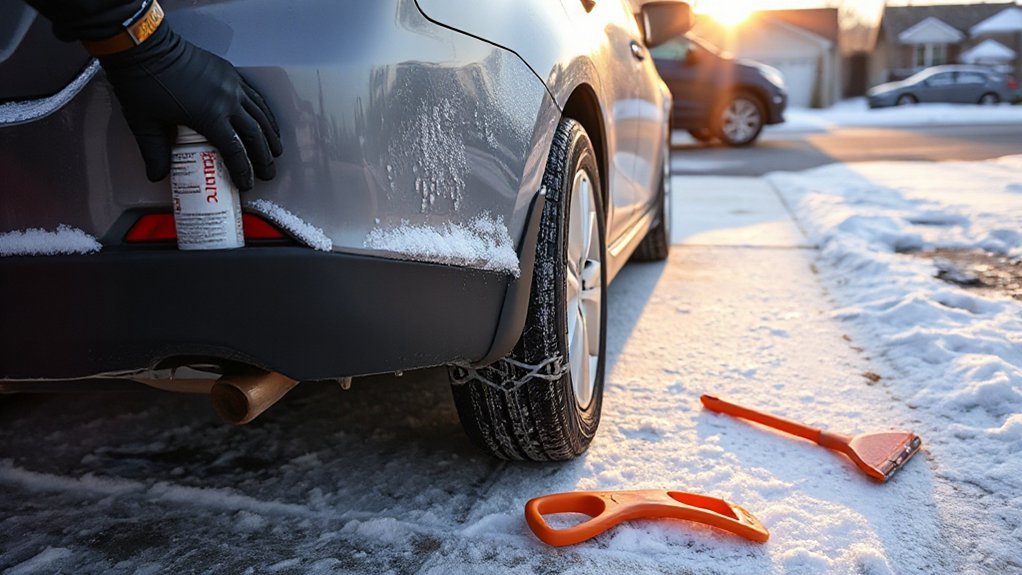
You’ll want to get your car winter-ready before the first surprise snowstorm hits, so let’s walk the steps fast and with a little swagger: check tire tread and pressure, swap to winter tires if you can, test the battery and lights, top off antifreeze and winter washer fluid, and make sure the heater and defroster actually work—then toss blankets, snacks, a shovel, and jumper cables in the trunk. Ready to dig into the how-to?
Key Takeaways
- Inspect tires for tread depth, uneven wear, and cuts; fit winter tires if tread is shallow and inflate to the owner’s recommended psi.
- Test battery and terminals for corrosion, secure connections, and measure resting voltage or have a shop perform a load test.
- Top off and inspect fluids: antifreeze/coolant, oil, brake and transmission fluids, and use winter windshield washer fluid.
- Verify heating and defrost systems work, replace worn wiper blades, and clear vents to ensure proper airflow and visibility.
- Pack an emergency winter kit: blanket, warm clothing, shovel, jumper cables, traction mats, flashlight, snacks, water, and a power bank.
Inspect Tires and Check Tire Pressure
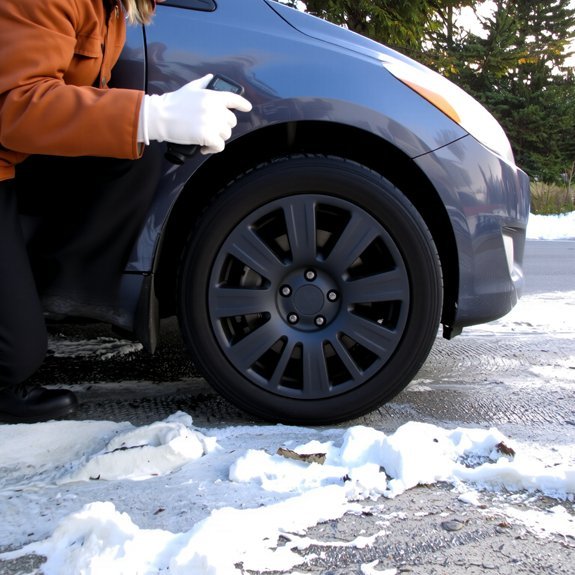
One quick check can save you from a lot of cold-weather drama. You step into the driveway, hose breath fogging the air, and squat by each wheel; you’re looking for tire tread depth, cuts, and odd wear patterns. Press a penny or use a gauge, listen to your own impatience, and swap to winter tires if the tread’s shallow—don’t gamble on bald rubber. Check tire pressure cold, not after a drive, because pressure drops with temperature; you’ll need a reliable gauge, fingers that don’t complain, and the right psi from the owner’s sticker. Rotate tires if they look uneven, tighten lug nuts, and jot down any weird vibration. You’ll drive warmer, safer, grinning at the sky.
Test Battery and Electrical System
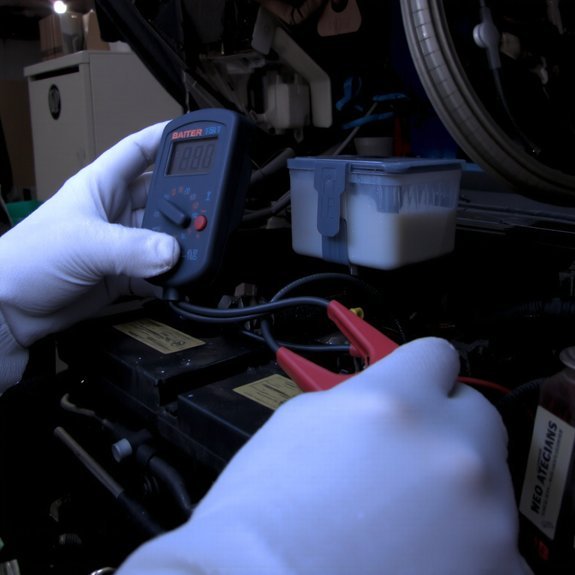
Three quick checks will save you from a frozen-start meltdown that makes you want to swear at the steering wheel. I’ll walk you through testing battery health and basic electrical connections, so you won’t stand in snow, cursing, while your car coughs politely and dies. Listen, it’s simple: inspect terminals, look for corrosion, wiggle cables, and note any dim lights. If you’ve got a multimeter, great; if not, many shops’ll test it fast.
- Clean terminal corrosion with a brush and baking soda paste
- Tighten loose clamps, don’t over-torque them
- Measure resting voltage with a multimeter
- Check interior and headlight brightness for drain signs
- Listen for parasitic draws with everything off
Do it now, thank me later.
Replace or Top Off Fluids
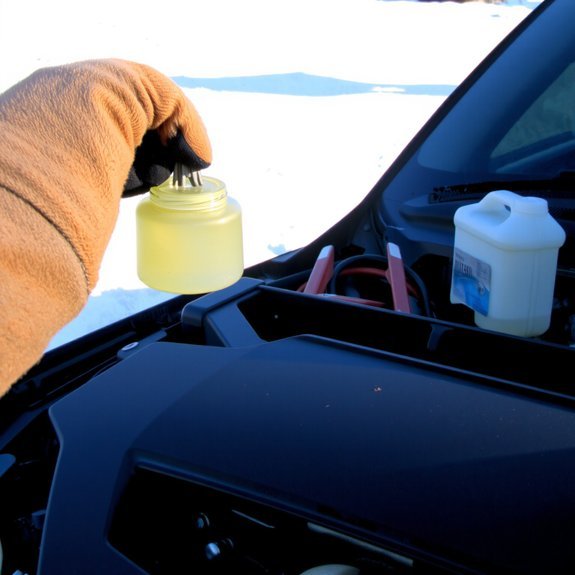
Okay, you checked the battery and didn’t cry in the snow—nice work. Now, pop the hood with me, feel that cold metal under your glove, and scan fluids like a pro. Check coolant levels first, they should sit between marks; low means risk of freezing, which is ugly and expensive. Top off with the right mix, not straight water—read the cap. Next, inspect oil; dark and gritty? Change it. Brake fluid and transmission fluid deserve a glance too, clean and full keeps systems talking. Don’t forget the windshield washer reservoir — use winter formula so it won’t freeze when you need clear glass fast. I’ll admit, fluid checks aren’t glamorous, but they’re cheap insurance against winter misery.
Maintain Heating, Defrosting, and Wipers
Several simple checks will save you from icy breath and fogged-up panic attacks when you hit the road. I tell you, test the heating system now—feel warm air on low, then high, and listen for odd rattles. Clear the defroster vents, aim airflow at glass, and watch fog vanish like magic. Replace worn blades before snow, that’s basic wiper replacement wisdom; streaks are betrayal. Keep washer fluid full, buy winter formula, and spray to scrub slush and salt. Check rubber for cracks, pry off ice gently, don’t tear things.
- Test heater in minutes, note unusual smells or sounds
- Inspect and change wipers every season
- Use winter washer fluid only
- Clear vents and cabin filters
- Practice quick defrost routine before driving
Stock an Emergency Winter Driving Kit
You’ve tuned the heater, cleared the vents, and banished fog from your windshield—nice work, you’re already halfway to winter survival. Now pack an emergency kit like you mean it. Toss a bright blanket, warm gloves, hat, and handwarmers into a crate, add nonperishable snacks, water, a flashlight with fresh batteries, and a small shovel that actually digs. Include jumper cables, traction mats, and a tow strap, plus a compact first aid kit and a whistle. Stash a fully charged power bank, ice scraper, and a bag of kitty litter for traction. Keep contact info for roadside assistance on paper, and mark your car with reflective tape for slick nights. Check and refresh supplies every season — don’t be the person shivering and surprised.
Know When to Visit a Mechanic
If your car starts coughing, whining, or acting like it forgot how to be a car, don’t play hero — bring it to a mechanic. I’m blunt: ignore weird noises, and winter will punish you with cold, stranded misery. Learn the common mechanic signs — dashboard lights, odd smells, sluggish starts — and trust them. Track service frequency, don’t guess. I check oil, brakes, battery, belts, and tires like clockwork, and you should too.
- Squeals when braking or turning
- Repeated battery slow-cranks
- Persistent engine warning lights
- New leaks or sweet antifreeze smell
- Smoke, white or blue, from exhaust
Go early, get it fixed, drive warm and smug.
Conclusion
Think of your car as a stubborn, loyal dog: you groom it, feed it good food, and check its paws before a blizzard. You’ll inspect tires, top fluids, test the battery, clear the windows, and pack blankets and snacks. I’ll nag you like a practical friend, because slippery roads aren’t polite. Do the simple chores now, and later you’ll ride warm, confident, and smug — while other drivers fumble.