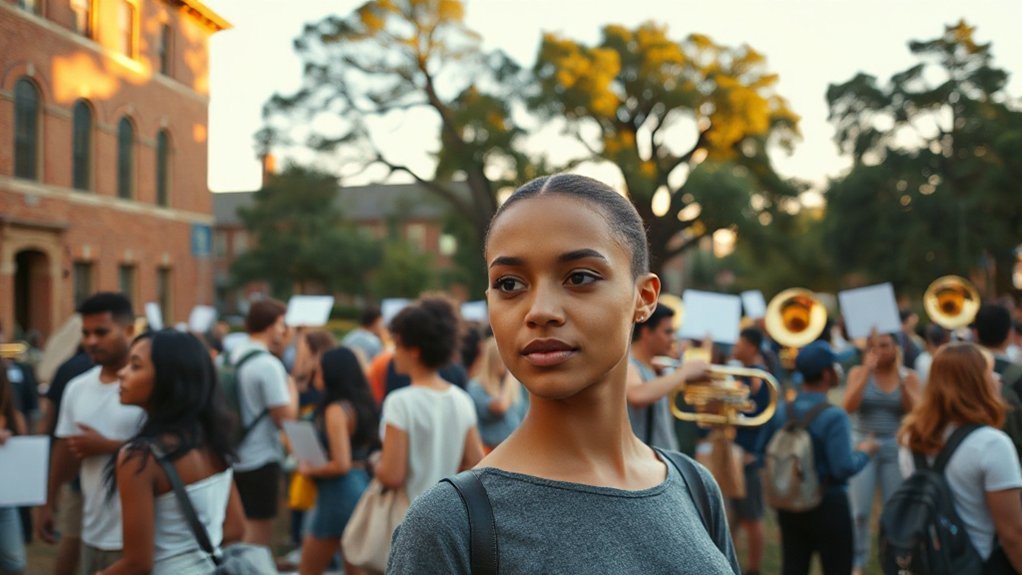
Did you know nearly half of recent campus protests happened at HBCUs? I’ll tell you why that’s not a surprise: you walk into a quad humming with history, feel posters rustle in the breeze, hear students trade sharp ideas over too-strong coffee, and you get organizers who don’t wait— they teach, march, and draft policy at once. Stick around, I’ll show how classes, counselors, alumni, and the community turn outrage into change.
Key Takeaways
- HBCUs organize campus rallies, teach-ins, and freedom-song traditions to mobilize students and honor activist legacies.
- Faculty and community elders mentor organizers while curricula integrate social justice case studies and experiential learning.
- Student coalitions use digital campaigns, livestreams, and tactical planning for coordinated protests and outreach.
- Counseling centers and peer networks provide culturally responsive mental health support and post-action debriefs.
- Partnerships with local organizations and strategic donor engagement amplify resources, storytelling, and sustained advocacy.
Historical Roots of Activism on HBCU Campuses
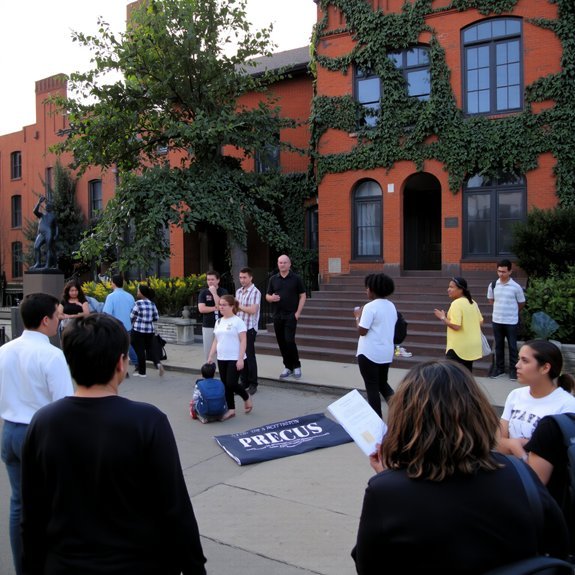
If you walk onto an HBCU quad at dawn, you’ll feel it before you hear a word—the cool brick underfoot, the smell of coffee and jasmine, the soft murmur of people who’ve been planning for months; that low, steady hum is history rubbing its eyes. You notice banners, old and new, stories stitched into fabric. I point out a plaque, you read aloud, we trade a knowing grin. Students have sat here plotting protests, publishing flyers, arguing till sunrise. Faculty coached, elders counseled, and sometimes someone played piano to keep nerves steady. You can almost hear freedom songs threading through study sessions. It’s gritty, proud work, handed down like a baton. You feel both weight and lift, ready to act, not just study the past.
Curriculum Changes and Academic Programs Focused on Social Justice
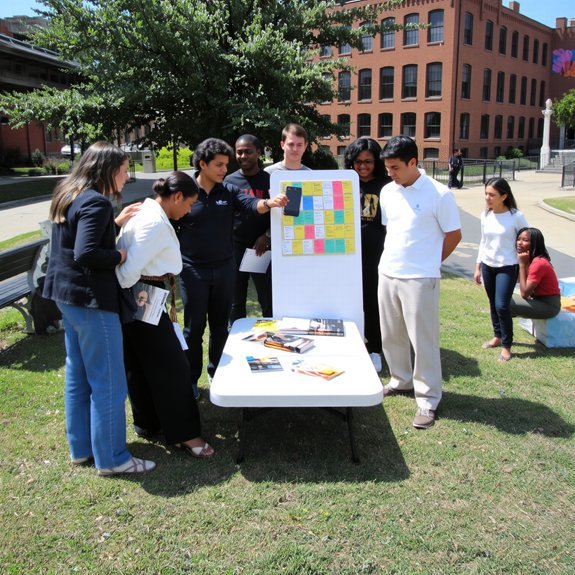
While the quad still smells like coffee and last night’s flyers, classrooms are where the real changes are getting elbow grease on them—I’ve watched syllabi go from dusty to defiant. You walk in, and professors swap passive lectures for case studies that sting. You touch a textbook, it feels new. You listen to guest speakers, you hear urgency and laughter. You enroll in courses that name systems, name pain, name repair.
- A seminar where archival photos rustle under your fingers, voices from the past talk back.
- A lab mapping redlines, you trace maps with a marker, it’s unnerving.
- A poetry workshop that smells like ink and confession.
- A practicum placing you in clinics, you act, you learn.
- An interdisciplinary minor, stitched from history, law, art, and strategy.
Student-Led Protests and Organizing Strategies
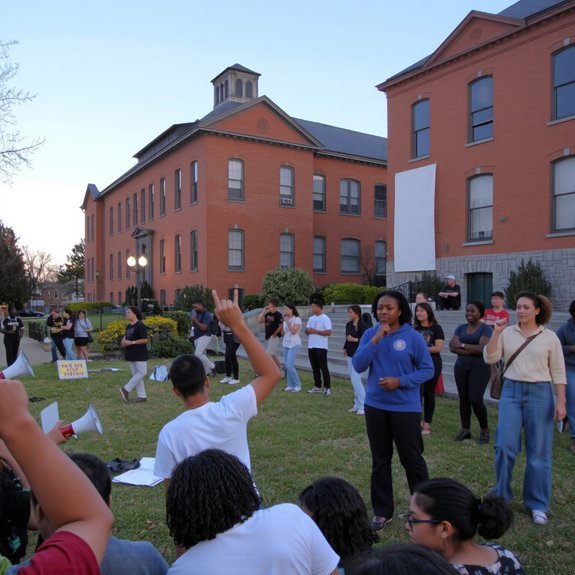
You see how students flood quad lawns, hand out flyers, and chant until your throat goes raw — that’s campus mobilization in full swing, and you’ll learn how to make it smart not just loud. You’ll also hear how coalitions form — student groups, faculty allies, and nearby community leaders trading trust like mixtapes, negotiating goals, and covering each other’s backs. Finally, we’ll map the digital playbook you use: sharp posts, secure DMs, and livestreams that turn strangers into supporters overnight.
Campus Mobilization Tactics
Let’s get loud: I’ve stood on HBCU quads when chants rolled like thunder and felt the pavement hum under our feet, that crisp fall air smelling of coffee and protest signs, so you know I’m not just talking theory. You learn quick how to marshal energy, pick routes, and time a march so it lands like a drumbeat. You train people to lead chants, to de-escalate, to document—simple, urgent skills. You make signs that snap, playlists that keep legs moving, and meeting scripts that don’t put anyone to sleep.
- Voice checks, warm-ups, call-and-response beats
- Hand signals, medics on standby, water stations
- Route maps, campus landmarks, timed pauses
- Phone trees, GIF-ready moments, quick press lines
- Debrief circles, hot tea, honest laughter
Coalition Building Efforts
Because coalitions are the secret sauce that turns one loud voice into a neighborhood orchestra, I start by finding the folks who already care — not just the usual suspects, but dining hall workers, campus ministry, the improv troupe, and that professor who always brings doughnuts to office hours. You then invite them to a kitchen-table meeting, breathe in coffee and fryer oil, and listen more than you talk. You map shared goals, assign simple tasks, and trade jokes to keep spirits up. You rehearse chants quietly, plan routes that avoid lawns at night, and practice de-escalation scripts. You borrow folding chairs, tape posters that won’t ruin paint, and celebrate small wins with too-sweet punch. It’s messy, human, effective, and honestly kind of fun.
Digital Organizing Practices
After a kitchen-table meeting smells like strong coffee and victory, the fight for attention moves online where screens hum and algorithms choose who notices you. You post, you DM, you hilo between platforms, and I watch you turn hashtags into marching orders. You craft pixels like placards, write captions that bite, and schedule tweets at 2 a.m. when the city sleeps but justice doesn’t. Your phone buzzes, you smile, then sprint.
- A neon flyer, finger-smudged, shared six times in ten minutes
- A voice note, urgent, breathy, “Meet at the quad, now”
- A thread that stitches history to the present, links clacking
- Livestreams where faces glow, chants ripple, rain taps screens
- Anonymous spreadsheets, names, roles, escape routes, hope mapped
Campus Support Services and Mental Health Response
When campus life gets loud — protests chanting, dorm halls buzzing, professors debating like referees — you need support that actually hears you, not a polite pamphlet shoved under your door; I’m talking counselors who’ll sit with you on a couch that smells faintly of coffee and lemon cleaner, peers who’ll text back at 2 a.m., and staff who’ll help you file a complaint without making you feel like you’re explaining your whole life story. I tell you, at HBCUs the counseling center can be a lifeline, warm lighting, weighted blankets, intake forms that don’t read like an exam. You’ll meet someone who knows your history, trades jokes, offers grounding breaths, and connects you to academic accommodations fast — real care, no bureaucracy theater.
Partnerships With Community Organizations and Grassroots Movements
If you want real change, don’t expect it to come from a press release or a podium alone — you’ve got to link arms with the folks already doing the work on Main Street and in church basements, the organizers who know the city’s rhythms by heart. I’ll say it plainly: you show up, you listen, you bring coffee. You learn neighborhood names, smell fry grease at the corner cookout, hear kids laugh in a muraled alley. Partnering means shared tables, not stamped memos. Picture quick scenes:
- A folding table under a canopy, flyers flapping, someone handing out water.
- A pastor’s laugh, a hymn drifting, organizers swapping numbers.
- Chalked sidewalks, tiny shoes, pedal squeaks.
- Late-night strategy over pizza and burnt coffee.
- A shared mic, counting off demands.
You act humble, you stay steady.
Institutional Policy Reform and Governance Changes
Because real change needs more than good intentions, you’ve got to overhaul the rules that run the place, not just cheer from the sidelines. You push for clearer grievance procedures, revise hiring policies to widen searches, and insist on transparent budget lines that you can actually read without a PhD. You walk into meetings, tap the table, say plainly what students and staff already know, and demand timelines. You sketch new bylaws, vote in oversight committees with teeth, and recruit trustees who answer texts at midnight — yes, accountability now includes late-night check-ins. You draft amnesty clauses for protest records, set regular policy reviews, and train leaders to listen, not lecture. It’s practical, gritty work, but it changes the campus pulse.
Alumni Engagement and Philanthropic Support for Advocacy
Since alumni hold deep institutional memory and pockets, you’ve got to court them like you’d court a very opinionated aunt — with respect, snacks, and a clear ask. You tap into reunion energy, send warm invites, and show impact, not just rhetoric. You speak plainly, you listen, you offer tangible roles.
- A handwritten note, perfume of old chapel candles, asking for time.
- A campus tour at twilight, breeze, laughter, new mural revealed.
- A targeted fund for student activists, brief, transparent, with updates.
- A small donor circle that meets over coffee, strong, hot, slightly bitter.
- Naming opportunities that honor legacy, not ego, in visible places.
You make donors feel useful, proud, and part of change, not just billed.
Leveraging Media and Digital Platforms for Advocacy
Three things matter when you go after attention: a clear story, a sharp image, and your voice—loud but tuned. You post with purpose, you film from eye level, you caption like you’re whispering a secret that matters. I tell you, don’t spray content, sculpt it. Use short videos, subtitles, bold thumbnails, and threads that pull people down the rabbit hole. Tag partners, call out actions, give next steps—donate, show up, share receipts. Smell the coffee on a livestream, hear the crowd swell in clips, feel the urgency in a DM. You’re quick, you’re human, you mess up sometimes, laugh it off, fix it fast. Track metrics, pivot, celebrate wins, and keep the story on brand, and on justice.
Conclusion
You’ve seen the history, the protests, the curriculum shifts — it’s not nostalgia, it’s living work. I know you’ll say “Can one campus really change much?” — yes, and you’ll feel it: chants vibrating under your feet, flyers crisp in your hands, late-night strategy talks smelling of coffee and courage. So join in, give time or cash, listen hard, and watch how small acts stack into thunder. We keep the pressure, and we keep hope.