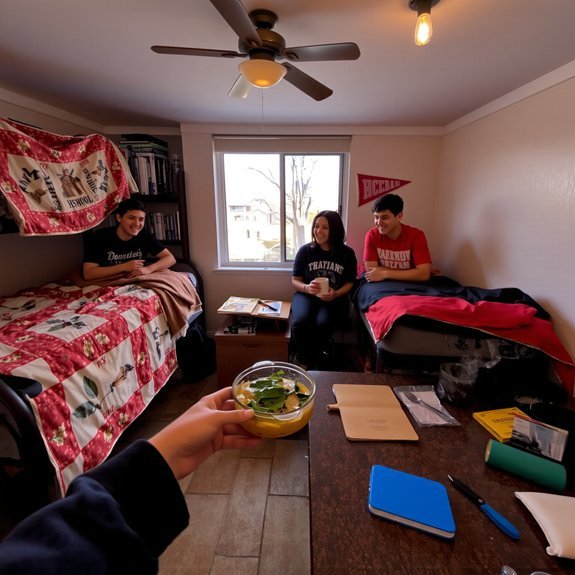
Tag: HBCU dorm life

  • How to Prepare Your Child for Moving Into an HBCU Dorm

    How to Prepare Your Child for Moving Into an HBCU Dorm

    You’re juggling forms, twin‑XL sheets, and a roommate text while wondering if the dorm really needs a mini-fridge (it does), and I’ll tell you how to make the move smooth, safe, and somehow sentimental without turning into That Overwrought Parent. Pack the essentials, lock down health records and banking, coach first‑day etiquette, and sprinkle in campus traditions so they’ll belong fast; I’ll walk you through the practical stuff, the money moves, and the pep talk you didn’t know you needed—but first, let’s talk roommate Wi‑Fi wars.

    Key Takeaways

    • Confirm housing details, move-in dates, roommate contacts, and bring a “first-night” kit with snacks and chargers.
    • Pack dorm essentials: twin XL bedding, lamp, surge protector, laundry supplies, toiletries, and a small tool kit.
    • Ensure health readiness: scan IDs, upload medical records, schedule immunizations, and register with campus health services.
    • Set up finances: open a low-fee bank account, create a monthly budget, and complete FAFSA and scholarship tasks early.
    • Prepare socially and academically: discuss roommate rules, encourage joining clubs/traditions, and plan study routines with campus support resources.

    Before Move-In: Practical Preparations and Paperwork
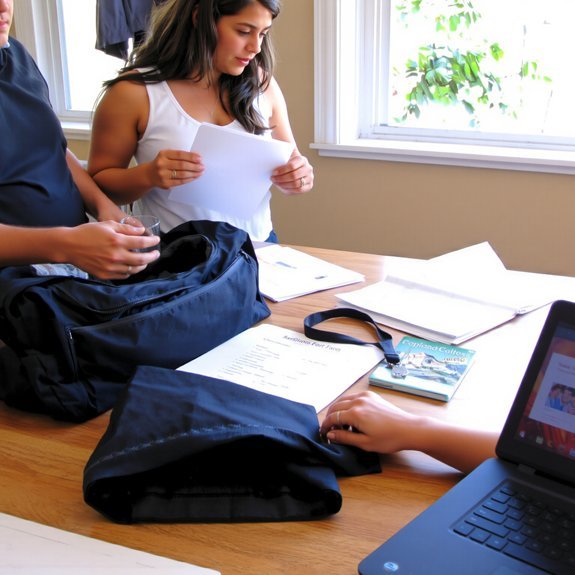
    practical preparations for moving

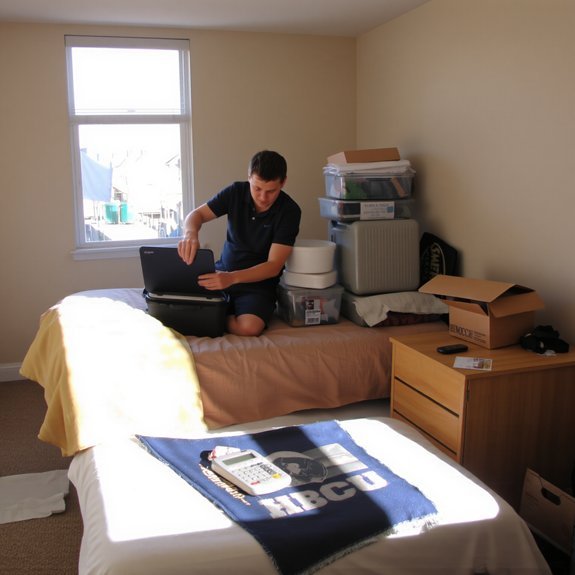
    Alright — let’s get practical. You’re flipping through forms, I’m holding the clipboard of calm. First, confirm housing contracts, move-in dates, and roommate contacts — call, text, whatever it takes. Scan IDs, insurance cards, and medical records; tuck copies in an email to yourself and a paper folder that won’t fold under pressure. Schedule immunizations and campus health registration, don’t wait for a late-night panic. Set up student portal logins, meal plans, and emergency contacts; practice the passwords once, then swear them to memory. Pack a small “first-night” kit — snacks, phone charger, comfy socks — you’ll thank me. Walk the route to campus parking and dorm entrance; feel the breeze, note the stairs, and picture the first evening.

    Essential Packing Checklist for an HBCU Dorm
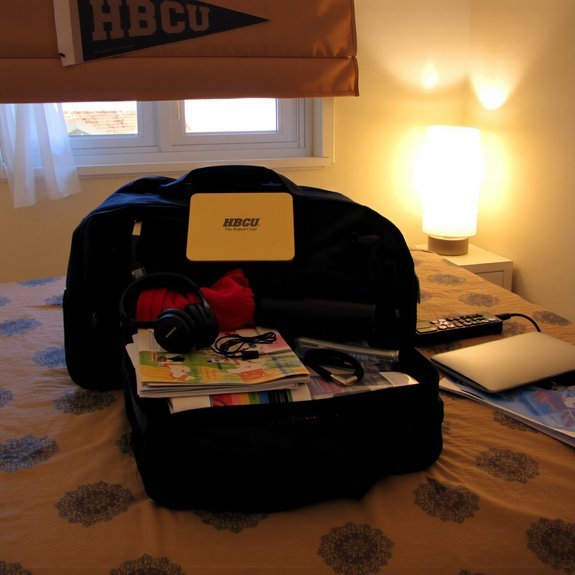
    dorm essentials packing list

    You did the paperwork, you walked the route, you’ve got the clipboard vibe down — now let’s talk about what actually lives in the room. Pack twin XL sheets, a snug comforter, and a mattress topper that feels like a hug after 8 a.m. classes. Bring a lamp with a warm bulb, surge protector, and a few extension cords; outlets hide like treasure. Stash clothing in bins, a laundry basket, detergent pods, and a stain pen — you’ll thank me. Add hangers, a small tool kit, first-aid basics, and a reusable water bottle. Don’t forget earbuds, a portable charger, and a few prints for the wall to make it yours. Keep a mini broom, snacks, and a welcome-card sense of humor.

    Financial Planning: Budgeting, Banking, and Financial Aid Tips
    effective student financial planning

    Think of money prep like packing a snack for a long road trip — you can’t predict every pit stop, but you can avoid starving. I tell you this because budgeting isn’t scary, it’s practical. Sit with your student, list monthly costs — food, laundry, supplies, social outings — and assign realistic amounts. Open a campus-friendly bank account together, choose a debit card with low fees, set up alerts, and practice mobile deposits; trust me, losing cash is dramatic and avoidable. Fill out the FAFSA early, track scholarship deadlines, and appeal awards when numbers don’t add up. Teach them to split savings into goals: emergencies, fun, and books. Small habits now mean fewer panicked texts at midnight.

    Health, Safety, and Wellness Measures to Put in Place

    You’ll want to know where campus health services are, the hours, and how to make an appointment, so you can get quick care when a fever hits at 2 a.m. I’ll push you to map a simple personal safety plan—routes, buddy check-ins, and a few bold “not today” phrases you can actually say out loud. Don’t forget mental wellness tactics too: routine, who to call, and small rituals that smell like home when stress smells like burnt toast.

    Campus Health Resources

    Because college life throws new freedom at your kid like confetti, I want to make sure they know where to turn when a sniffle, sprain, or stressed-out meltdown shows up, and yes, I’ll nag them about it. First, map the campus clinic, urgent care, and nearest ER on your phone, label them “sane” and “dramatic” so they laugh. Tell them to grab clinic hours, telehealth links, and insurance card info before midnight snacks happen. Encourage they meet the counselor, same as you’d meet a mechanic—quick tour, ask questions, check vibes. Pack a tiny health kit: meds, bandaids, laundry soap, thermometer. Teach them to report bug bites and mold early. Remind them: using resources isn’t weak, it’s smart.

    Personal Safety Plan

    If you want your kid to actually come home at the end of the semester, start with a personal safety plan that fits their personality, not a generic checklist that feels like homework. I’ll be blunt: you want them alert, not paranoid. Walk the dorm with them, point out exits, lighting, and the quiet spots where you can hear footsteps. Teach simple habits—lock the door, share location with a trusted friend, keep a charged phone in an easy pocket. Pack a tiny kit: flashlight, whistle, emergency numbers on a card. Role-play a late-night “I’m lost” text, practice a calm code word for pickup. Make it practical, repeatable, and their idea. Safety sticks when it feels doable, not dramatic.

    Mental Wellness Strategies

    Alright, you’re comfortable with locks, flashlights, and the “call me when you get in” code — now let’s talk about the quieter stuff: their mind. You’ll want a routine, simple and real — sleep, water, move, repeat. Pack a comfort object, a playlist that makes them grin, and a tiny journal for late-night thoughts. Teach breathing tricks, five counts in, five out, dramatic sighs included. Set regular check-ins, not lectures — text memes, ask one specific question, listen. Find campus counseling, faith groups, or a trusted RA, and pin that info where they can see it. Normalize asking for help; it’s brave, not broken. Remind them you’re a call away, even if you answer with bad jokes.

    Roommate Communication and Building Positive Living Habits

    You’re going to share a tiny kingdom—two beds, a mini-fridge humming like a caffeinated bee, and that one window that smells like campus in the morning—so let’s talk like grown-ups (or at least like slightly hungrier teenagers). You’ll start by setting rules together, quick and kind: lights-out window, snack-sharing policy, headphone hours. Say what you need, but listen twice as much; nod, ask, repeat back. Use a whiteboard for schedules, a hidden stash for emergency snacks, and a nightly two-minute room reset ritual—sweep, straighten, breathe. Speak up about smells, study zones, guests, before annoyance builds like laundry. Apologize fast, thank louder. Trust grows from tiny, steady acts; habit becomes harmony, and you get better roommates than your middle-school group chat ever promised.

    Getting Involved: Clubs, Organizations, and Campus Traditions

    You’ll want to jump into student organizations, scout the campus traditions, and try a leadership role sooner rather than later — think throwing your hat in the ring at a club fair, riding the homecoming parade, or volunteering to run one meeting. I’m telling you this because those moments give you loud, sticky memories you can taste and touch: the sweat of a step show, the thrill of a mic, the feel of new friends high-fiving in the quad. Say yes to one thing this week, even if you mess up; I promise the stories are worth the awkwardness.

    Joining Student Organizations

    Picture the student center buzzing—pizza smell, laughter, a DJ testing a beat—and you standing there, a slightly nervous satellite, phone in hand, plotting which table to orbit. You scan flyers, you eavesdrop on a debate, you laugh at a joke you half-heard, then you march up and introduce yourself. Say your name, ask one question, grab a signup sheet. Try one meeting, no commitment, just sampling. Join a club that fits your vibe, and another that scares you a bit — growth loves mild discomfort. Bring snacks to a first meeting, people love snacks and you’ll be memorable. Trade numbers, follow up within 48 hours, show up twice, then decide. Repeat until you find your crew. Trust curiosity; it’s your best campus map.

    Exploring Campus Traditions

    When I first stepped onto the quad and heard the drumline from three buildings over, I felt like I’d walked into a storybook where everyone already knew the chorus — and I didn’t, yet. You’ll hear that beat too, and you’ll learn to nod like you belong. Walk morning rituals, tailgate smells, and convocation chants into your senses. Ask, don’t assume; join a stroll with seniors, taste the signature punch, clap at homecoming rehearsals. Say yes to curious traditions, then pick what fits you. Tape flyers to your door, try the step show once (you might trip, laugh it off), and bring a notebook for names and quirks. Traditions are story starters; collect them, tell them, and add a line or two of your own.

    Building Leadership Skills

    If you want to lead, start by showing up — even if you’re first in line for the free pizza or only there because a friend begged you — because leadership here isn’t a title handed down, it’s a muscle you build in the mess of meetings, mixers, and midnight study sessions. You’ll join a club, grab a clipboard, and learn names fast, like the human version of speed-dial. Volunteer to plan one event, then another — feel the sticky tape, hear the laughter, taste victory in cheap punch. Say “I’ll do it” more than you’re comfortable with, fumble a flyer, fix it, then take a bow. Lead with listening, crack a joke, own mistakes, and watch others follow.

    Academic Supports: Advising, Tutoring, and Time Management

    Because college moves fast, you’ll want a game plan before the syllabus avalanche hits—trust me, I learned the hard way and I’m still finding paper crumbs in my backpack. You’ll meet an adviser who’s basically your academic GPS, so schedule that first appointment, bring questions, and don’t be shy. Drop into tutoring centers, they smell like coffee and serious focus, and sit near the front in tough classes. Carve out study blocks, use timers, and treat sleep like a non-negotiable assignment. I’ll nag, but gently: track deadlines on one calendar, prioritize tasks, and break big projects into chewable bites. Practice saying no to late-night distractions, and yes to office hours — professors actually help, promises made, promises kept.

    Staying Connected to Home While Growing Independence

    You’ll get good at syllabi and study blocks, and before you know it, home will feel both a phone call away and a different country. You’ll call, laugh, and then hang up with a plan, because routine tethers you. Schedule a weekly check-in, same time, same joke, so it’s reliable, not needy. Pack a box of familiar snacks, the scent becomes comfort on a midnight walk back from the library. Learn to text in short bursts, emojis allowed, no novel required. Visit when breaks align, but let new friends in too; independence is social practice. Remind them you trust their judgment, but ask one specific question—how did dinner go? That small detail keeps love practical, alive, real.

    Conclusion

    Think of this move like a drumbeat — steady, loud, and a little thrilling. You’ve checked forms, packed the twin XL sheets, and slipped snacks into a laundry basket; you’ll remind them to call home, but not too much. I’ll nudged you with budgeting tips, safety checks, and roommate talk, because you want them brave, not reckless. Breathe. Send them with a hug, a plan, and a little emergency cash — they’ll be okay.

  • Dorm Life at HBCUs: What It’s Really Like

    Dorm Life at HBCUs: What It’s Really Like

    Funny coincidence: your roommate loves the same show you pretended to hate in high school, so you start arguing about the best episode at midnight. You’ll learn to navigate tiny closets, shared shampoo, and bold hallway traditions, you’ll catch impromptu study groups that turn into dance-offs, and you’ll argue with an RA who’s secretly your best ally—there’s noise, curry, laughter, and enough late-night wisdom to mess with your plans, and that’s only the first week.

    Key Takeaways

    • Dorm life blends close-knit community rituals, late-night bonding, and shared traditions that build lasting friendships and campus identity.
    • Roommates negotiate space, boundaries, and routines while learning conflict resolution and personal growth through daily interactions.
    • Late-night study sessions, group projects, and snack-fueled collaboration create academic camaraderie and mutual support.
    • Resident Advisors organize events, offer emotional support, and connect students to resources, shaping dorm culture and safety.
    • Shared meals, kitchen etiquette, and hallway traditions foster belonging, activism, and memories that extend beyond graduation.

    First Nights and Roommate Realities

    college roommate first night

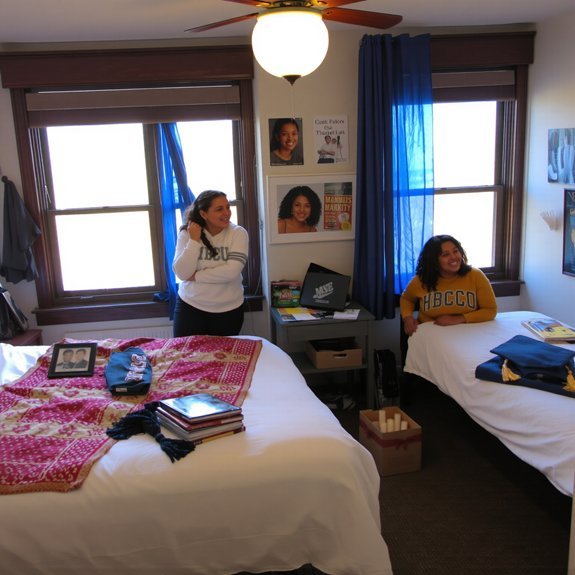
    Someone will always claim they slept like a baby on their first night — don’t believe them. You lug boxes, stake your corner, arrange photos, and then the hallway sounds start; laughter, a slammed door, someone’s playlist leaking bass. You and your roommate size each other up with mutual awkward smiles, handshakes that feel like auditions. You’ll negotiate lamp placement, closet turf, and quiet hours like diplomats, you’ll joke about shared snacks, then hide your favorite mug because you’re petty and hungry. Nights feel alive, a mix of whispering plans, the rustle of chips, the microwave’s little beep. You learn to apologize fast, forgive faster, and sleep with one ear open — because college is loud, but mostly kind.

    Building Community in the Halls

    hallway connections create community

    How do hallways become home? You learn names fast, you leave shoes by the door like tiny flags, you trade snacks across thin walls, laugh so loud you apologize later. I’ll nudge you: knock on a neighbor’s door, bring extra dessert, start a playlist that everyone slowly steals. You’ll notice smells — instant coffee, incense, someone’s laundry — and they’ll feel oddly familiar. You swap pins, stories, advice at midnight, nothing heavy, just real. Seasons change, roommates move, but the rhythm stays: hallway hello, quick lend, shared elevator silence that turns into jokes. You’ll build rituals, quirky and small, and before you know it, this corridor holds more history than your phone. Welcome home, seriously.

    Late-Night Study Sessions and Group Projects

    midnight collaboration chaos reigns

    You’ve been up past midnight, papers spread like a conspiracy on your dorm floor, and your roommate is whispering corrections while stealing your snacks. I’ll say it straight: those midnight collaboration hustles feel chaotic, they glow under your desk lamp, and somehow the best group projects are born from pizza-fueled panic. So tell me, when the coffee kicks in and the group chat explodes, do you lead the chaos or try to referee it?

    Midnight Collaboration Hustle

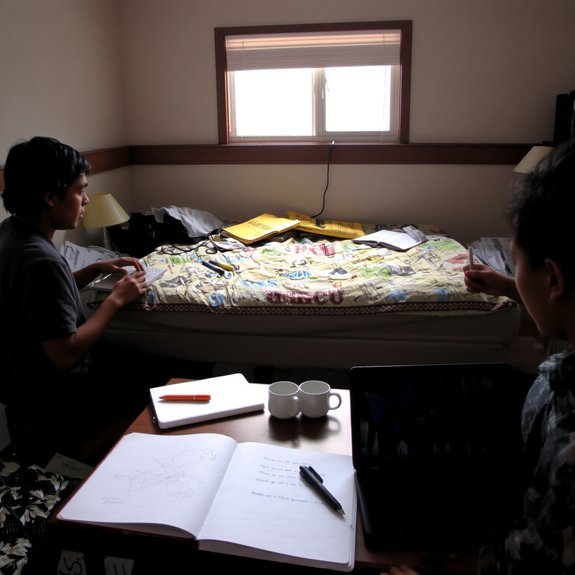
    When the clock slides past midnight and the dorm lobby dims to a suspiciously serious kind of quiet, that’s when the real work—er, the midnight collaboration hustle—kicks in; I’m talking laptops glowing like tiny alien suns, sticky-note confetti plastered on the walls, and the low hum of group chat notifications sneaking in like background percussion. You pile into a corner couch, I grab markers, someone brews instant coffee that actually tastes brave, and we sprint through slides as if a professor might pop in. You debate thesis lines, I mock-argue ridiculous examples, then we land on something smart. Ideas ping, edits fly, laughter breaks tension. At dawn, bleary but triumphant, you file the project, and it’s oddly yours.

    Roommate Study Dynamics

    If you’ve ever crammed for an exam with the person whose socks live under your bed, you know roommate study dynamics are a whole mood—part improv, part negotiation, part emotional mediation. You set up lamps, spread notes like a paper city, and argue about silence like it’s a limited resource. One of you hums, the other taps a pen, someone microwaves ramen at 2 a.m., perfume and coffee mix, and suddenly chemistry isn’t just a subject. You trade flashcards, quiz each other in the dark, and bicker about group project roles until one of you volunteers to be the “organizer” (translation: does everything). You learn empathy fast, and how to say “I need quiet” kindly but firmly. These nights make friends and grades.

    Food, Cooking, and Shared Meals

    You’re gonna learn the best spots on campus for soul food, late-night fries, and the salad bar that somehow tastes like home, and I’ll point out my embarrassing first-time tray choices. In the dorm kitchen, wipe your spills, label your Tupperware, and don’t be the ghost who borrows the good spatula without asking — seriously. Share a meal sometimes, trade a recipe, and you’ll turn microwave beep symphonies into actual memories.

    Campus Dining Options

    Because food is the unofficial campus currency, I learned fast that your dorm’s smells tell their own story — microwave popcorn at midnight, garlic from a roommate who swears they’ll only cook for ten minutes, and the brave scent of instant noodles trying to pass for dinner. You’ll learn dining halls on campus like a map, find your go-to station, and trade salad for mac-and-cheese without guilt. Lines move fast, conversations bubble, trays clack. You’ll also scout late-night spots, food trucks, and campus cafes that save study sessions.

    1. Regular dining hall: reliable, filling, social hub.
    2. Specialty station: curry, vegan bowls, or grill artistry.
    3. Off-hours bites: coffee, pastries, greasy comfort wins.

    Dorm Kitchen Etiquette

    When the dorm kitchen door swings open, you’ll smell last night’s garlic, someone’s burnt toast, and the tiny hope that today’s pasta won’t be a glue trap. You’ll learn the rules fast: label your food, wipe the counter, and never, ever microwave fish at midnight. I’ll call dibs on the best spatula, but I’ll share it if you clean it. Hear the clatter, say “excuse me,” don’t stage a stove takeover during finals week. Trade snacks, not germs. Rotate shifts for deep cleans, post a whiteboard schedule, and don’t judge the mystery casserole—unless you want to offer a helpful forkful. Kitchen time becomes social class, survival, and occasional culinary triumph. Be kind, be tidy, and bring extra napkins.

    Step Shows, Practice, and Cultural Expression

    If you think stepping is just loud feet and matching jackets, think again—it’s a full-body language, loud as a brass band and sharp as a drumbeat. You’ll watch teams rehearse in basements and parking lots, palms slapping, voices calling cadence, breath steaming on cool nights. I stand near, pretending I don’t hold my phone up, feeling the floor vibrate under my sneakers.

    1. You learn rhythm, timing, and pride, sweat dripping, shoes squeaking, eyes locked.
    2. You practice chants until your throat rasps, then laugh it off with water and elbow bumps.
    3. You craft moves that tell stories—history, jokes, love, crowning moments.

    You join in, you clap, you belong, even when you mess up, which you will.

    Dorm Traditions and Campus Lore

    You’ll learn the beat of the building by midnight, when shoes whisper in the hall, pizza boxes thud, and someone taps the radiator like a metronome. I’ll tell you about the mascot that supposedly prowls the stairwell—half joke, half dare, complete with a rumor about a feathered hat and a muffled laugh at 2 a.m. Stick around, you’ll laugh, you’ll squint into the dark, and you’ll start your own tiny legend.

    Midnight Hallway Routines

    Ever notice how silence in an HBCU dorm never really means “quiet”? I wander halls at midnight, heels clicking, laughter tucked under my breath, and you know the drill—someone’s playing a sax, someone’s baking cereal, someone’s retelling a prank. You smell incense, warm pizza, old textbooks. You step into ritual.

    1. You tap doors, trade secrets, swap snacks.
    2. You join a popped chorus, clap in rhythm, learn a new shout.
    3. You slide notes under doors, leave candles (legal ones), promise to wake a friend.

    I narrate these moments like I’m on a scavenger hunt. Light filters through stairwell windows, voices rise and fall, and you feel part of a pulse that never fully sleeps. You’re home, slightly tired, perfectly alive.

    Dorm Mascot Legends

    Remember how a hallway could hide a legend? You duck past posters, smell popcorn from a late movie, and someone whispers about the dorm mascot — a bedraggled raccoon, a ghostly teddy, or Mrs. Greene’s old marching hat that “moves” at midnight. I swear, I tested them all. You’ll hear a dare, join a stakeout, shiver when floorboards creak, and laugh when the culprits turn out to be freshmen with too much energy. You’ll polish a patched mascot, stitch on a missing button, and parade it down the hall, loud and proud. These rituals bind you, teach you to care for silly things, and give you stories — the ones you’ll tell later, louder, with a grin.

    Balancing Activism, Academics, and Social Life

    When activism knocks on your dorm door—loud shoes, flyers stuck to the bulletin board, someone chanting in the hallway—you learn fast how to juggle passion, papers, and parties without dropping the coffee or your GPA. You sign petitions between class notes, you rehearse chants while washing dishes, you RSVP to socials and still carve out study time, because balance isn’t neat, it’s tactical. I’ll tell you what helps:

    1. Block your calendar for study sprints, and honor them like a meeting with destiny.
    2. Buddy up for protests and group projects, trade notes and watch each other’s backs.
    3. Treat downtime like an assignment—rest isn’t optional, it’s credit.

    You’ll stumble, laugh, refocus, and keep showing up, louder and smarter.

    Resident Assistants and Peer Support Networks

    If you’ve ever stumbled into a 2 a.m. hallway debate about tuition or hair care, you know RAs are the glue—equal parts hall counselor, hype person, and rule enforcer—and I’ll admit, they save more midnight meltdowns than coffee does. You’ll spot them knocking softly, clipboard in hand, sneakers squeaking, offering ramen, advice, or a wink that says, “You got this.” They mediate roommate crises with surprising patience, plan movie nights that actually pull people out of rooms, and hang flyers with enthusiasm you’ll secretly admire. Peer networks form around study groups, gospel brunch plans, and last-minute ride shares. Lean in, text them when you’re lost, and trade stories in the lounge — that’s where lifelong friendships begin.

    Personal Growth and Identity Formation

    RAs hand you a bowl of ramen and a pep talk, but the real work happens when you start asking who you are between classes and late-night hustle. You wake up to the microwave hum, spray of coffee, posters peeling—then notice the ways you bend, resist, change. You try pronouns in the mirror, test beliefs in hallway debates, laugh when you flub a speech.

    1. Notice patterns: what calms you, what drains you, what makes you glow.
    2. Try roles: study group leader, open-mic poet, lab partner, messy chef.
    3. Set limits: say no to extra shifts, yes to self-care rituals.

    I watch you grow, stumbling and proud, trading old scripts for choices that fit.

    Lifelong Friendships and Alumni Connections

    Because you learn names over late-night pizza runs and graduation tassels still feel heavy, those dorm bonds don’t dissolve when you pack the last box. You call a roommate at midnight, because you forgot how to do taxes, and they actually answer. I still get invites to cookouts where the air smells like charcoal and Auntie’s coleslaw, and alumni reunions feel like time travel — same jokes, new gray. You trade study group memes for job leads, and someone always knows someone who can help. You’ll crash on couches, wake to coffee brewing, and hear, “Remember when?” like a warm punch. These connections turn into mentorship, networking, lifelines. They’ll show up, celebrate, and keep you honest — that’s the real dorm diploma.

    Conclusion

    Think dorms are just noisy rooms and bad pizza? I tested that theory—and you’ll be relieved, or annoyed, to hear it’s false. You’ll stumble into midnight study huddles, heated step-practice debates, and someone’s soulful cooking that smells like home. You’ll cry, laugh, and plot protests in the same week. I watched friendships form in bunk-bed whispers and messy kitchens. So yes, it’s chaotic, loud, messy—and exactly where you become yourself.