
Choose grilled over fried, choose colorful over beige, choose flavor over guilt—you’re already halfway there. I’ll walk you through tray-line tactics, snack swaps, and sneaky ways to bulk up veggies so your plate actually looks like a meal, not cafeteria camouflage; picture steam rising from a perfectly charred sweet potato, a lemon wedge squeezed just so, and you shrugging at the dessert table because you planned ahead. Stick around — I’ve got the shortcuts that actually work.
Key Takeaways
- Choose grilled, roasted, or steamed options and add extra veggies from the salad bar to reduce fried-food calories.
- Batch-cook proteins and grains on weekends and store dorm-friendly portions for quick reheats during busy weekdays.
- Pack nutrient-dense snacks like Greek yogurt, nuts, or apple slices to avoid vending machines and energy crashes.
- Read labels and pick whole-grain, high-fiber items with minimal added sugars and moderate sodium when available.
- Plan weekly meals, label leftovers with dates, and involve friends to share prep, reduce waste, and stay consistent.
Making the Most of Tray Lines and Buffet Stations
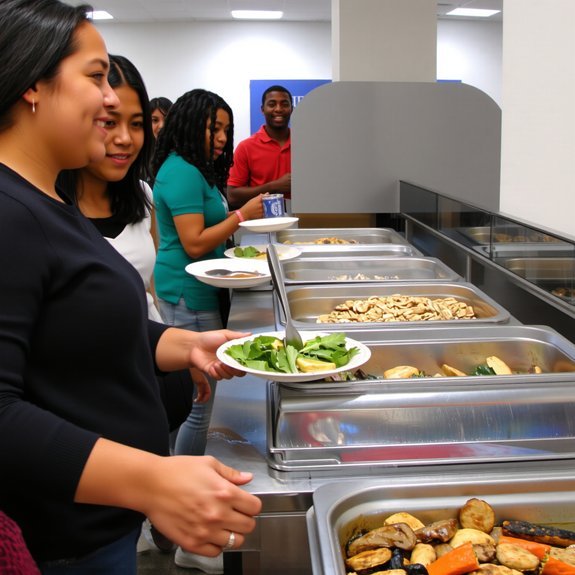
One trick I learned fast? You scan the tray line like it’s a treasure map, eyes darting, plate ready, fork poised; you grab colorful veggies first, because they fill you up without knocking you out. I nudge past steam, inhale garlic and citrus, smile at the cook—small charm, big payoff. Swap creamy for vinaigrette, pick grilled over fried, and don’t feel bad about sampling one guilty pleasure; balance beats deprivation. Hear clatter, see friends debate mac and cheese, you laugh, you choose a modest scoop. Use smaller plates, stack greens, ask for dressings on the side. When dessert calls, you taste, you savor, you move on—satisfied, not stuffed, owning the meal plan like a pro.
Smart Snacking Strategies Between Classes
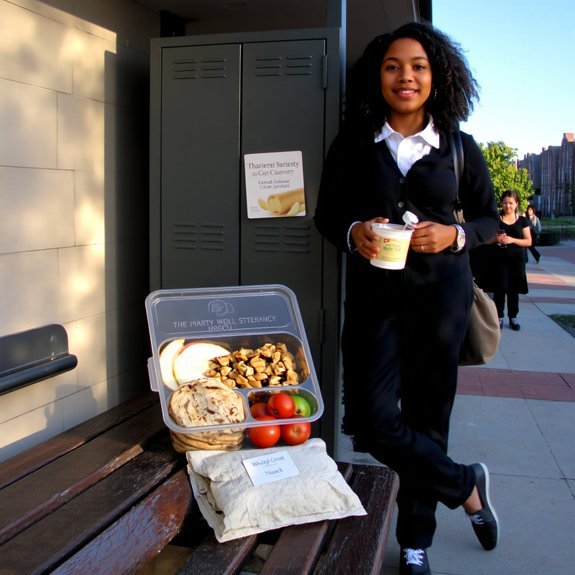
You’ve got two minutes between classes, a hungry brain, and a meal plan that won’t judge you — so grab something that actually helps, like yogurt with berries or a handful of nuts and sliced apple. Pack those in small containers the night before, so you’re not scavenging the vending machine with dramatic regret. Trust me, your future self (and your attention span) will thank you — and you’ll avoid the hangry confessions in the hallway.
Choose Nutrient-Dense Options
If you’re racing between a 9 a.m. lecture and a club meeting, don’t let vending-machine chips be your sidekick — grab something that actually powers you. You want snacks that taste good, keep you sharp, and don’t flop on you by midclass. Think Greek yogurt with berries, crunchy apple slices with peanut butter, or a handful of roasted chickpeas — salty, sweet, and surprisingly satisfying. I tell you this like a friend: pick protein, fiber, and a little healthy fat. They stick around longer, curb hanger, and help you focus when your professor drones on. Smell the cinnamon, hear the crunch, feel the energy boost. Small moves, big payoff — you’ve got this.
Prep Portable Portions
Pack a snack, stash it in your bag, and don’t let your stomach stage a protest during that two-hour gap between classes. I keep mason jars with layered yogurt, berries, and granola — spoon-ready, no drama. You’ll love prepped hummus cups with carrot sticks; dip, crunch, repeat. Toss roasted chickpeas into a small bag, they rattle like tiny maracas and taste like victory. Portion out trail mix into snack-sized zip bags, label them if you’re fancy, or just hide them from roommates. Cold-pressed juice fits a thermos, apples travel whole, cheese sticks survive dorm heat surprisingly well. Prep on Sunday, rehearse the sprint to campus, snack like a pro, and watch your focus stop wobbling mid-lecture.
Reading Labels and Choosing Better Options
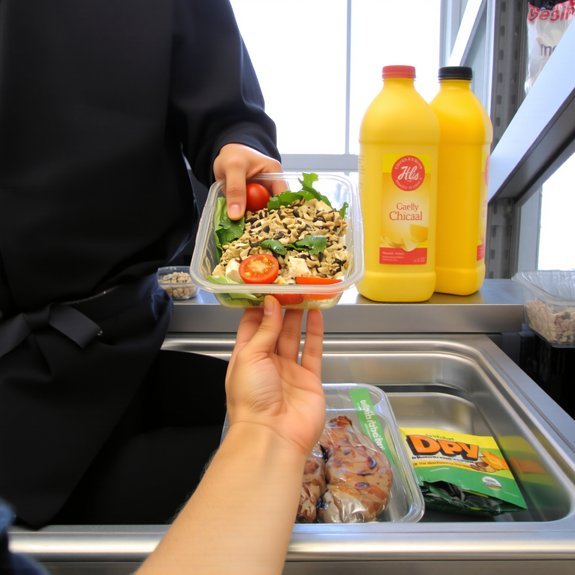
Where do you start when every shelf screams “deal” and your stomach grumbles for something real? I tell you to breathe, grab a package, read the front, then flip it like a detective. Look for fiber, protein numbers, and short ingredient lists — if you can’t pronounce half of it, don’t pretend it’s food. Check serving sizes; that “one bag” often means three servings, and math will humble you. Scan sodium and added sugars, they hide like guilty secrets. Prefer whole grains, real fruit, recognizable oils. Smell your choices when possible, squeeze a mango, feel a roll’s heft. Trust your eyes and instincts, but let labels be the tiebreaker. You’ll shop smarter, not sadder — promise.
Quick, Affordable Grocery Staples to Supplement Your Plan
Staple staples — rice, beans, eggs — are my grocery cart’s version of a mic drop; they’re cheap, forgiving, and oddly comforting when the dining hall’s curry is a mystery. You’ll grab a bag of rice, hear the rustle, imagine steam rising, taste the plain comfort. Canned beans pop open like tiny treasure chests, protein-packed and ready to salsa with whatever’s left in your mini-fridge. Eggs are magic: scramble, boil, dunk in hot sauce, feel instantly adult. Toss in frozen veggies for color, yogurt for tang, oats for mornings that don’t implode. Peanut butter and bananas team up for a no-fail snack. Salt, pepper, hot sauce — small jars, huge mood shifts. You’ll shop smart, nibble better, and still have cash for campus life.
Meal-Prep and Time-Saving Hacks for Busy Students
You can save hours and sanity by batch-cooking a few proteins and grains on Sunday, so your week smells like garlic and victory instead of burnt ramen. Toss portions into dorm-safe containers — think stackable BPA-free tubs and a mini cooler — and you’ll grab balanced meals between classes like a pro. Trust me, you’ll feel fancy reheating food from a container while everyone else wrestles the dining hall line.
Quick Batch Cooking
If I can turn a single Sunday into five dinners, you can too — and yes, you’ll still have time to binge one episode before bed. I’m talking big-batch proteins roasted with spice, rice simmered until fluffy, and veggies charred for crunch. You chop, you season, you set timers, and the kitchen smells like victory. Portion with the confidence of someone who’s survived sophomore chemistry. Reheat in a pan for crisp edges, or toss cold into salads when you’re late. Swap sauces to keep things interesting — soy, hot honey, lemon tahini — boom, five different meals. Clean one pan as you go, reward yourself with iced coffee, and strut to class knowing dinner’s already handled. Quick, simple, genius.
Dorm-Friendly Storage
While you’re juggling classes, study groups, and that mysterious laundry pile, I’ll show you how to tame your dorm fridge and tiny cabinet into a meal-prep fortress that actually saves time—and sanity. You’ll line shelves with clear containers, stackable like Lego, so you see last week’s quinoa without crying. Label lids with masking tape, sharpie, and a smug sense of control. Keep a mini basket for condiments, another for snacks—no more reaching for two-week-old ketchup. Use a soft cooler for overflow after grocery runs, ice packs included, because your hall’s temp is a mood. Hang a spice rack on the door, install tension rods under the sink for pans. These tiny moves make cooking possible, even when you’re sleep-deprived and brilliant.
Balancing Macronutrients for Energy and Focus
Because my brain runs on snacks as much as caffeine, I’ve learned that balancing carbs, protein, and fat isn’t a math problem — it’s a survival skill. You’ll grab a tray, scan the options, and I’ll whisper, “Protein first,” like it’s a secret handshake. Pick lean protein — chicken, beans, eggs — then add whole grains for steady fuel, feel the warm chew of brown rice or the nutty snap of quinoa. Don’t skip healthy fats, a few nuts or avocado, they keep focus from wobbling at 3 p.m. Mix colors on your plate, hear the crunch, smell the seasoning, it anchors you. Snack smart between classes: Greek yogurt, hummus with carrots, or a banana and peanut butter.
Navigating Special Diets and Campus Resources
Even if your diet reads like an instruction manual for a picky robot, you can eat well on campus — and not just survive the dining hall roulette. I’ll walk you through finding options, talking to staff, and making swaps that actually taste good. You’ll sniff warm spices, see colorful salad bars, and score dependable staples without drama. Ask for ingredient lists, flag allergies, or request vegan proteins — staff usually help, once you speak up. Map the markets near campus, learn meal plan flex rules, and pack smart snacks for late-night study sessions.
Even picky eaters can thrive on campus — find labeled stations, ask staff, and pack smart snacks.
- Talk to dining managers, show your needs, and ask for custom meals.
- Use campus nutritionists, they’ll plan real food, no judgment.
- Scout labeled stations, pick grilled, roasted, and steamed.
- Keep protein bars, nuts, and a reusable container for leftovers.
Conclusion
You’ve got this. I’ll say it plain: treat the tray line like a lab, test flavors, mix veggies with grains, watch portions, laugh at your dorm microwave mistakes. Snack smart — Greek yogurt, nuts — stash them where you’ll see them. Prep once, eat twice, maybe thrice. Ask dining staff about swaps, skim labels like a pro. You’ll balance energy and fun, and by semester’s end, you’ll eat like you planned it all along — even when you didn’t.