Tag: HBCU resources

  • How to Handle Roommate Conflicts at an HBCU

    How to Handle Roommate Conflicts at an HBCU

    You’re sharing a tiny dorm with another human—congratulations, and condolences. I’ll admit, I’ve learned more about boundaries over microwave popcorn and late-night playlists than any lecture, so let’s get real: set rules early, speak in “I”s, and schedule check-ins before passive-aggression becomes decor. Hear me out—learn to laugh, but don’t ignore the smell of dishes piling up or the roommate who uses your toothbrush like it’s a communal relic—and if it blows up, know who to tap for backup.

    Key Takeaways

    • Start with a calm, private conversation using “I” statements to describe specific behaviors and desired changes.
    • Create a written roommate agreement covering chores, quiet hours, guests, and bill responsibilities.
    • Schedule weekly check-ins to address issues early and adjust expectations collaboratively.
    • Use campus resources—RAs, housing staff, and counseling—for mediation or safety concerns.
    • Respect cultural differences, share traditions, and approach conflicts with curiosity and openness.

    Understanding Common Sources of Roommate Conflict
    roommate conflicts and irritations

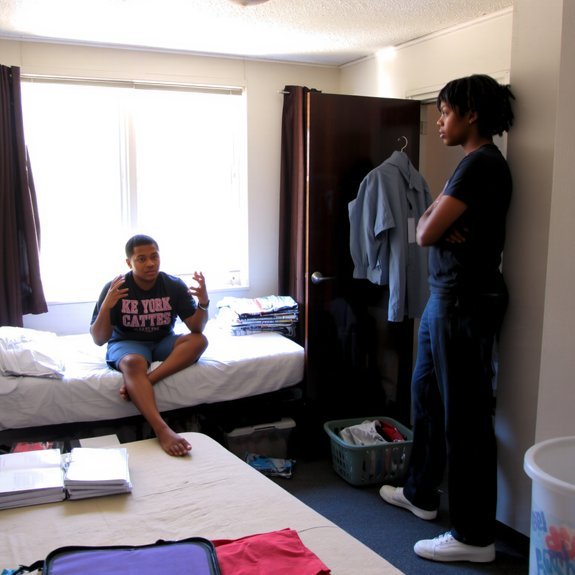
    If you’re like me, you thought roommate drama was something only TV shows had—until you wake to someone blasting a playlist at seven a.m., and suddenly you’re wide-eyed, coffee half-spilled, and plotting polite revenge. You notice patterns fast: noise, dishes, and different sleep schedules collide. Smells hit you—curry at midnight, gym socks by the door—and you flare up, because small irritations pile into big grudges. Money talks get awkward, when rent or food splitting turns into texts you dodge. Privacy vanishes when guests arrive unannounced, or when your notes get read aloud like gossip. Cultural clashes and habits matter too; college life mixes backgrounds and expectations, and misread signals spark fights. You learn to spot roots before they bloom into drama.

    Setting Clear Expectations Early On

    set clear roommate expectations

    Because nobody wants passive-aggressive Post-its stacked like tiny landmines on the fridge, I start roommate season like a slow-motion fire drill: we sit down, I brew coffee or grab a soda, and we lay out what actually matters. You’ll name the tiny stuff — overnight guests, noise after 11, who owns the Roomba — and the big stuff, like bills and cleaning. Say what you need, and listen when they answer; nod, sip, laugh at your own dramatic examples. Use concrete phrases: “I need quiet study time from 9–11pm” beats “be respectful.” Repeat agreements aloud, so they land. If someone hesitates, pause, ask why, and tweak till it feels fair. Early clarity saves late drama.

    Creating a Shared Roommate Agreement

    roommate agreement creation process

    When things are calm, I make us do the roommate agreement like it’s a group project with snacks — you show up, I bring the pens and a playlist, and we actually write stuff down. You’ll list sleep hours, cleaning turns, guest rules, and who claims the prime shelf, with sticky notes and a laugh when someone writes “no judgment” as a rule. I’ll insist we sign and date it, then take a photo for backup — because phones never lie, right? Add a simple plan for chores, noise, shared groceries, and emergency contacts. Keep clauses short, concrete, and flexible. Revisit the paper each month, tweak what’s not working, and reward yourselves with pizza when you follow it for a week.

    Communicating Effectively and Respectfully

    You’ll want to set clear expectations from the jump—who cleans, who cooks, quiet hours—so nothing sneaks up on you at 2 a.m. Use “I” statements when something’s off, like “I feel overwhelmed when dishes pile up,” it keeps things honest without turning the room into a courtroom. Schedule quick weekly check-ins, five minutes with coffee or tea, and you’ll catch small stuff before it storms into a full-blown argument.

    Set Clear Expectations

    If we’re going to share a tiny kingdom of ramen bowls and late-night playlists, let’s cut the guessing game now — say what you expect, and mean it. I want you to walk into the room, point at the cluttered desk, and say, “This is my study zone,” not whisper hopefully. Name routine stuff: quiet hours, guest policies, who waters the plants, when dishes get done. Put it on paper, or a sticky note on the fridge, so you can both see it at 2 a.m. when tempers flare. Check in weekly, sip cold coffee, laugh at your past stubbornness, tweak the plan. Clear expectations aren’t romance, they’re a map — follow it, and you’ll avoid most detours.

    Use “I” Statements

    I’m not here to lecture — I’m here to hand you a phrase that actually works: start sentences with “I” instead of pointing fingers. Say, “I feel overwhelmed when the music’s loud at midnight,” not “You’re always too loud.” Your words land softer, like a knock instead of a shove. You lower defenses, you invite problem-solving. Look them in the eye, breathe, name the feeling, state the need: “I’m distracted, I need quiet.” Add a concrete action: “Can we agree on volume after 11?” Use calm tone, not guilt or sarcasm — sarcasm smells like passive-aggression, trust me. If you mess up, own it: “I said that poorly, I’m sorry.” That kind of honesty builds trust faster than ultimatums ever will.

    Schedule Regular Check-ins

    Try setting one regular check-in a week — five minutes over cereal, ten after dinner, whatever fits. I tell you, it’s like oil for the roommate engine. You sit, breathe the coffee, joke about the sock situation, then get real: what’s working, what’s loud, what’s smelling weird (yes, I mean that mystery Tupperware). Keep it short, specific, and kind. You ask, they answer. You set one or two small goals: quieter music after 11, dishes within a day, sharing the thermostat. Scribble decisions on a sticky note, hang it on the door like a tiny treaty. If things flare, you pause, take five, reschedule. These check-ins stop grudges, build trust, and make dorm life less dramatic, more doable.

    When you walk into our dorm room and smell someone’s cinnamon candles clashing with my grandmother’s spicy stew memory, don’t look surprised — you’re in a cultural soup, and we’re both tasting it. You notice my photos, I notice your playlist, we both notice the different ways we say hello. Say what you need, without sounding like a textbook. Ask curious questions, not interrogation ones. Point out habits that bug you, I’ll try to explain where they come from. Trade recipes, swap songs, claim a shelf for incense and one for hot sauce, compromise like grown-ups who still giggle. Laugh when you mess up, apologize fast, mean it. Celebrate differences as tools, not threats. You’ll learn, I’ll learn, we’ll live better.

    De-escalation Strategies for Heated Moments

    When things heat up, you’ve got to slow your breathing, count to four, and feel the room settle—no heroic speeches, just oxygen. Use “I” statements to name what you feel, not what they did, and say, “I’m getting loud, can we pause?” If that’s still too tense, step out, grab air, and agree to revisit the conversation in thirty minutes, because calmer you is the smarter you.

    Stay Calm, Breathe

    Even if your palms are sweating and your voice wants to sprint, you can slow the room down—right now—by taking a breath that actually counts; I mean a solid, belly-filling inhale, hold for two seconds like you’re stalling for time, then let it out slow enough to hear the whoosh, and repeat. Do it again, and notice your shoulders drop, your jaw unclench, the fluorescent hum softens. Say to yourself, “One breath,” like a tiny command center. Anchor to the chair under you, the carpet fibers underfoot, the mug’s warm rim. Count quietly, tuck your elbows in, soften your eyes. You’ll sound calmer, even if you still want to win. It buys space, clarity, and a chance to pick your next words.

    Use “I” Statements

    You’ve slowed your breathing, felt your shoulders unclench, and now you need words that won’t light the room on fire—so try talking like you’re reporting a small truth about yourself, not indicting someone else. Say, “I feel frustrated when dishes pile up,” not, “You never wash anything.” Speak plainly, picture the clink of a mug, the stale popcorn smell, the small pile on the sink. Use short lines: “I need help keeping the kitchen tidy,” then pause, look away, soften your tone. That tiny tweak flips blame into problem-solving, invites cooperation, and saves dignity. Keep it honest, specific, nonjudgmental. You’ll sound grown-up, human, relatable—yes, even charming—while steering the convo toward solutions.

    Pause and Revisit

    If a conversation’s heating up and your chest feels like it’s staging a protest, call a time-out—literally. Step back, breathe through a paper cup if you must, and say, “I need five.” You’ll sound human, not volatile. Walk to the window, feel the cool sill under your palm, count to thirty, and let your voice settle. Text a roommate, “Pause? Coffee in ten?” or wash your face, splash cold water, anything tactile to break the loop. When you return, set a rule: no yelling, one person speaks at a time. If you botched the pause before, laugh about it, own it, and try again. You’ll preserve respect, reduce drama, and actually fix things.

    When to Involve Resident Advisors or Housing Staff

    When roommate drama starts smelling like burnt popcorn and passive-aggressive sticky notes, don’t stew in silence—call in the folks who can actually do something about it. If you’ve tried calm talks, timed chores, and polite texts, and tensions still sizzle, knock on your RA’s door. Say, “We need help,” describe specifics — late-night noise, broken lock, safety concerns — bring receipts: screenshots, photos, dates. Housing staff step in when rules get broken, when anyone feels unsafe, or when problems drag on past your patience. They mediate, enforce policies, arrange room changes, and sometimes just act like adults you desperately need. Be clear, stay factual, ask about next steps, and breathe — you don’t have to carry this alone.

    Using Campus Support Services and Counseling

    Even if you’re proud of your DIY conflict-resolution skills, don’t treat campus counseling like a last-resort, dusty file in the back of your brain — go see them. I say that because you’ll get neutral ears, not more drama. Walk into the counseling center, feel the cool air, sit on the soft chair, and say, “My roommate and I keep clashing.” They’ll help you map the problem, teach breathing tricks that actually work, and role-play tough talks so you don’t sound defensive. Use mediation services, drop-in hours, or group workshops. You’ll leave with a plan, a follow-up date, and maybe a worksheet that makes you roll your eyes — but it helps. Trust me, it beats passive-aggressive sticky notes.

    Conclusion

    You’ll handle this like you’d untangle a knotted charger—patient, a little annoyed, and oddly satisfied when it works. I want you to say what you need, listen like you mean it, and write a roommate pact you both can actually follow. Check in, use “I” lines, and laugh at the small stuff. If things boil, pull in an RA or counseling. You’re not fixing the world, just making your room livable.

  • How to Use HBCU Resources as a Part-Time Student

    How to Use HBCU Resources as a Part-Time Student

    Did you know part-timers make up nearly a third of HBCU enrollments? You’ll feel the campus pulse—late-night study lamps, coffee steam, advisors who actually get your schedule—and I’ll show you how to mine it without losing sleep or sanity. Swing by advising, nab evening labs, text a tutor, ask a professor for five minutes, and start stacking scholarships; trust me, there’s a rhythm here you’ll want in on—so stick with me.

    Key Takeaways

    • Schedule advising and classes around work using personalized course maps and evening/weekend options.
    • Leverage text-accessible advisors and faculty office hours for quick guidance outside work hours.
    • Use sliding-scale counseling, peer tutors, and campus workshops for affordable academic and mental-health support.
    • Join study groups, lab benches, and café meetups to build peer and faculty connections that open opportunities.
    • Apply for FAFSA, HBCU scholarships, tuition plans, and work-study to make attendance financially sustainable.

    Understanding Part-Time Student Services at HBCUs

    supportive services for part time students

    Because you’re balancing classes, work, and a life that refuses to pause, you need the quick version of what part-time student services at an HBCU actually look like—and I’m going to give it to you straight. You walk in, audio of campus bustle under your shoes, and staff greet you like they know you, even if they don’t. There’s a hub for registrations, tech help, and sliding-scale counseling, all set up for people who pop in between shifts. You’ll find evening study rooms smelling of coffee, advisors who text back after midnight, peer tutors who’ll explain that one concept in plain English, and veteran students who share hacks, real-talk style. It’s practical, warm, efficient — made to fit your life, not the other way around.

    Flexible Academic Advising and Degree Planning

    personalized flexible academic advising

    You’ll get a personalized course map, sketched out like a road trip with pit stops for work, life, and sleep — I promise, it’s not a mystery novel. Ask for a part-time advisor who’s on your schedule, someone you can text between shifts, then meet over coffee or Zoom to tweak that map. I’ll say it plainly: with flexible advising, you won’t be juggling blindfolded, you’ll be steering with a GPS that actually knows your detours.

    Personalized Course Mapping

    If you’re juggling a job, family, and a social life, let’s map your courses so they actually fit into your week instead of busting it. You’ll list must-have classes, note deadlines, and smell the campus coffee as you plan — okay, maybe that last part’s wishful thinking, but you get the vibe. I’ll show you how to slot lectures around work shifts, pick labs on low-energy days, and batch readings for focused Sundays. You’ll use the academic calendar, syllabi, and a simple color-coded planner, then tweak when life throws curveballs. Say it out loud: “This semester is mine.” You’ll protect study blocks like VIP tickets, and celebrate small wins, loud and proud.

    Part-Time Advisor Access

    When life’s handing you work shifts, kids’ soccer, and a roommate who eats your snacks, you deserve advising that actually bends—so I’ll make sure it does. I meet you where you are, on campus steps, by the vending machine, or via a video call while you stir dinner. We’ll map semesters around your schedule, slot in night classes, and flag accelerated options that save time and money. I text reminders, draft degree plans, and call your bluff when you say “I’ll figure it out later.” You’ll get flexible hours, clear checklists, and someone who knows the catalog inside out. Bring your calendar, your coffee, and your messy questions — I’ll sort the rest, no judgment, just results.

    Scheduling: Evening, Weekend, and Online Course Options

    flexible evening and weekend classes

    Because life rarely lines up with a 9-to-5 bell, I carved out a schedule that actually fits me — evening classes after work, a weekend seminar for when my brain’s fresh, and a few online modules I can knock out between errands. You’ll learn to scout the course grid like a pro, snagging 6–9 p.m. lectures that leave your mornings free, and reserving Saturdays for labs that feel more like workshops than tests. Online units become your stealth study sessions, headphones on, coffee warm, kids chasing the dog in the background. You’ll mix live campus energy with flexible screens, and you’ll finish semesters feeling less frazzled, more proud, and oddly accomplished.

    1. Sunset classroom, chalk dust, quiet nods.
    2. Saturday studio, hands-on, laughter echoes.
    3. Laptop on a porch, breeze, notes typed.
    4. Midnight review, sticky notes, triumphant yawns.

    Financial Aid, Scholarships, and Tuition Strategies for Part-Timers

    Alright, you’ve got your evening classes and porch‑laptop rhythm down — now let’s talk money without making your brain want to nap. I’ll be blunt: part‑time students get creative, and so should you. Scan FAFSA deadlines, file on time, and call the financial aid office — they actually like helpful callers. Hunt HBCU‑specific scholarships, tap alumni funds, and email that faculty member who loves mentoring; yes, ask for leads. Consider tuition payment plans, stacking small awards, and auditing a class for skill without full cost. Work-study might fit odd hours; campus jobs can be quieter than retail. Keep receipts, appeal for exceptions if life hits, and negotiate like you’re bargaining at a farmers’ market — politely, persistently, and with snacks.

    Campus and Virtual Tutoring Resources

    You’ll find on-campus tutoring centers buzzing with fluorescent lights and helpful faces, where you can sit with a tutor, open your laptop, and actually understand that stubborn concept. If you’re juggling work and classes, virtual tutoring platforms let you book quick sessions, share screens, and get answers without changing out of your pajamas. I’ll show how to match hours and tech to your schedule, and yes, I’ve missed my own 8 a.m. appointment twice — you’re not alone.

    On-Campus Tutoring Centers

    1. A quiet room, fluorescent hum, whiteboard covered in arrows and erased mistakes.
    2. A friendly tutor, worn hoodie, patient smile, coffee stain on a notebook.
    3. Shared table, laptop glow, murmured “try this” exchanges.
    4. Success fist-bump, relieved laugh, homework conquered.

    Virtual Tutoring Platforms

    Three clicks, a blinking cursor, and you’re in—no campus map required. You log on, headset snug, coffee cooling, and a friendly tutor greets you by name. Virtual platforms stream live sessions, screen-share problem sets, and drop annotated PDFs right into your chat—like having a whiteboard in your lap. You can record explanations, rewind tricky steps, and replay until it clicks. I’ll bet you’ll appreciate instant feedback, real-time typing corrections, and the way a cursor highlights the exact phrase that confused you. Some sites match you to grad students, others offer peer tutoring; try both, see what fits. Don’t be shy, ask for examples, request slower pacing, and save sessions for finals—your future self will thank you.

    Scheduling and Accessibility

    Okay, so you loved the instant replay of virtual tutoring—me too—but now let’s talk about fitting those golden sessions into your life. You’ll map a weekly grid, color-code with highlighters, and set alarms that won’t let you snooze your future. I nudge, you laugh, we pick realistic slots.

    1. Morning campus lab, coffee steam, walk-in tutor waves you over.
    2. Lunch-hour virtual check-in, headphones, chat window buzzing.
    3. Evening booked block, calendar invite, do-not-disturb on.
    4. Weekend deep-dive, campus study room, quiet hum of printers.

    You balance commute, work shifts, and family, you prioritize rhythm over perfection, and you claim tutoring like it’s yours—because it is.

    Career Services, Internships, and Employer Partnerships

    Think of campus career services like a backstage pass you didn’t know you needed, and I’m here to drag you behind the curtain. You’ll find sharp résumés under fluorescent lights, mock interviews with honest feedback that stings a little, and internship listings pinned like secret flyers. Go in, say you’re part-time, and watch them pivot — they’ve helped night students, working parents, and people who commute with coffee stains. Tap employer partnerships for projects, informational interviews, and part-time roles that actually respect your schedule. I’ll nag you: RSVP, follow up, and bring a portfolio you can flash in five seconds flat. These offices love results, they’ll connect you, and yes, they’ll brag about you when it matters.

    Building Support Through Peer and Faculty Mentoring

    You’ve just left career services buzzing with business cards and a to-do list, now let me show you the people who’ll keep you honest about actually doing the work. I’m talking peers who read drafts at midnight, professors who answer one more question after office hours, mentors who nudge you toward deadlines, and friends who bring snacks when you forget to eat. You’ll find them in study rooms, lab benches, and campus cafés, voices low, coffee steam warm, pages rustling like tiny applause.

    1. A study buddy who flags errors with a laugh, sticky notes like confetti.
    2. A faculty mentor who sketches ideas on the whiteboard, marker squeaking.
    3. A peer tutor who rehearses presentations with you, timing you with a grin.
    4. A lab partner who saves your data, and your sanity.

    Leveraging Alumni Networks and Professional Connections

    If you want shortcuts through the maze, alumni are the secret doors — and yes, some of them still remember what it’s like to pull an all-nighter in the library. I tell you this because you should knock, not lurk. Send a crisp email, mention a shared professor, and say hello like a human. Go to mixers, feel the coffee buzz, swap business cards with a laugh. Ask for 15 minutes, then show up early, take notes, follow up. Use LinkedIn smartly: comment, congratulate, request advice, don’t pitch. Offer value — proofreading, event help, introductions — reciprocity wins. Keep tabs, celebrate wins, and call them by name. Those connections often open doors you didn’t know existed.

    Conclusion

    You’ve got this—half workday, half classroom, all hustle. Did you know nearly 30% of HBCU students attend part-time? That’s a crowd of comrade-students juggling shifts, kids, and dreams—so don’t feel like you’re alone. Use evening rooms, ping a tutor, pull up advising online, and slide into a professor’s office hour with confidence. I’ll cheer for you (loudly, awkwardly), but you’ve already done the biggest thing: you showed up.

  • How to Find Support as an LGBTQ+ Student at an HBCU

    How to Find Support as an LGBTQ+ Student at an HBCU

    About 40% of LGBTQ+ students at HBCUs report feeling only somewhat supported on campus, which means you’re probably not alone — and yes, that stings. I’ll talk straight: start by sneaking into the student center, ask about queer groups, grab coffee with a professor who seems kind, and find the counselor who actually listens; small moves add up, trust me — you’ll want the next steps, because safety, privacy, and real friends don’t just fall into your lap.

    Key Takeaways

    • Locate campus LGBTQ+ centers, student organizations, or affinity groups through the student activities office or campus calendar.
    • Connect with supportive faculty, RAs, and staff by requesting meetings and sharing pronouns and support needs.
    • Use counseling services and peer support groups, clarifying confidentiality and available LGBTQ+-affirming counselors.
    • Build safety plans: identify allies, safe routes, documentation methods, and when to prioritize privacy over disclosure.
    • Expand support online and nationally via moderated forums, virtual meetups, and LGBTQ+ national organizations for mentorship and resources.

    Understanding Campus Climate and Policies

    campus climate and policies

    If you want to know what campus life really feels like, don’t just read the student handbook — walk the quad at noon, listen to laughter spill from the student center, and notice who’s standing alone by the fountain. You’ll sense vibes fast. Policies live on paper, but people make the climate. Ask professors about housing rules, read nondiscrimination statements, and check whether pronouns are respected in class rosters. Notice tone: are advisories supportive, or do they use vague legalese? Talk to campus safety, they’ll tell you how complaints are handled, awkward as that sounds. Peek into residence life guides, they matter. Trust your gut. If you encounter microaggressions, document dates, names, words. That record will save you more than apologies ever will.

    Finding and Connecting With Lgbtq+ Student Organizations

    connect with lgbtq groups

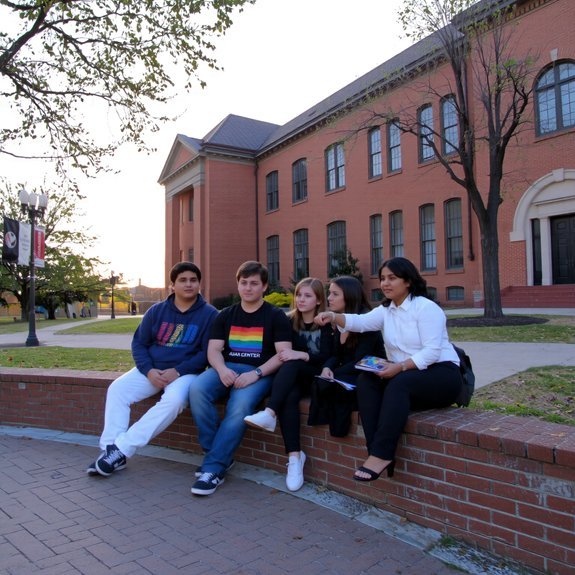
    You can start by scouting campus—check the student activities board, the LGBTQ+ center, or that group table by the student union that always smells like free pizza. Go to a first meeting, say hi, listen, ask one bold question (I promise you won’t die), and take a name or two for coffee later. Then stitch together allies—faith groups, cultural clubs, and faculty sponsors—so you’ve got backup, snacks, and someone to text when you need it.

    Locate Campus Groups

    Three quick steps usually do the trick: scan the student org fair, stalk the campus calendar, and slide into a few DMs — I say “slide” like it’s effortless, but we both know it comes with sweaty-palmed courage. Start by smelling the coffee at the fair, read flyers pinned to the student center, and note meeting rooms. Use the online directory, search “LGBT,” “queer,” “ally,” and your campus-specific slang. Ask your RA or that classmate who seems chill, they’ll usually point you right. Peek at club pages for photos and event vibes, watch short videos, and save contacts. When you find options, map them on your phone, rank by comfort level, and plan a low-stakes intro message. You got this.

    Attend Initial Meetings

    Because stepping into a new room feels like walking onto a stage, I always tell folks to treat that first meeting like a curious, low-stakes audition — not a lifetime commitment. You’ll peek in, feel the air, hear chairs scrape, and maybe catch a laugh that loosens your shoulders. Say hello, give your name, and clap when someone shares; tiny actions show you belong. Ask simple questions: “What do you do here?” “Is there food?” Listen more than talk, but bring one honest line about yourself, even if it’s awkward. Take notes on names, meeting rhythm, and where people hang out after. Leave when you need to, text a friend, and come back if it felt like home.

    Build Intergroup Alliances

    Anyone curious about finding queer community at an HBCU should think of it like scouting a neighborhood block party — walk the route, knock on doors, listen for music, and don’t be surprised if you end up dancing on someone’s porch. I tell you, start small: drop into meetings, bring snacks, and notice who lights up talking about activism or art. You’ll find clubs, faith groups, cultural orgs, even study tables that welcome you.

    • Share goals, don’t hog the mic, build trust over coffee and chaos.
    • Cross-post events, swap contacts, make alliances that feel like mutual aid.
    • Partner on panels, fundraisers, talent shows — let creativity glue you.
    • Celebrate wins loudly, grieve together quietly, keep the porch light on.

    Building Relationships With Allies and Supportive Faculty

    building supportive academic relationships

    Trust is the secret handshake here — you’ll know it when a professor holds the door and actually waits, or when an advisor remembers your pronouns and asks how your weekend went; those small, human moments add up fast. You lean into those gestures, say thanks, and keep a mental list. Invite a prof for coffee, bring a question, watch their eyes light up — that’s your cue. Be candid about needs, but don’t demand an FAQ; offer quick context, a pronoun line in email, a simple “I’d like your support.” Notice who defends you in class, who follows up, who checks your syllabus language. Keep it mutual: share wins, ask for feedback, and return favors — allies grow when you water them.

    Accessing Mental Health and Wellness Resources

    You’ve probably walked past the counseling center a dozen times, nerves humming, and wondered if it’s actually for you — it is, and you deserve that quiet, air-conditioned room and someone who listens without judgment. Try a drop-in session or ask about LGBTQ+-affirming counselors, and if you’d rather test the waters first, join a peer support group where people get it, crack jokes, and pass tissues like it’s a sport. I’ll say it plainly: get help early, lean on the crew around you, and don’t worry, awkward small talk is part of the healing.

    Campus Counseling Services

    If campus counseling feels intimidating at first, don’t worry—I’ve tripped over the intake form too. You walk in, clutch a tote, feel the AC hum, and wonder if they’ll get you. Be direct, ask about confidentiality, and tell them your pronouns—small moves, big relief. I’ll admit, I once joked about needing a therapist for my roommate’s drum practice; they laughed, then helped me map coping strategies.

    • Ask about LGBTQ+-affirming counselors, and if none, request referral.
    • Check appointment types: drop-in, sliding scale, telehealth options.
    • Clarify limits of confidentiality, mandatory reporting, emergency procedures.
    • Bring notes, examples, or a friend for support, if that helps.

    You’ll leave steadier, one small step at a time.

    Peer Support Groups

    When I first wandered into a peer support group, my palms were sweaty and my voice sounded like I’d swallowed a kazoo, but I stayed—because these rooms hum with something honest and low-key hopeful. You’ll find chairs in circles, sticky coffee cups, a bulletin board of tiny, hopeful flyers. Sit, listen, breathe out. People share short, sharp truths, then laugh, then pass tissues. You’ll talk about coming out at family dinner, bad pronoun slips, campus microaggressions—real stuff, no textbook. Leaders keep things grounded, they’ll remind you of confidentiality, of breaks, of grounding exercises. If a group feels off, try another; if you need one-on-one, ask the facilitator. These groups are practice, refuge, and weirdly fierce community—all in one.

    Because college is loud — dorm hallways smell like ramen and laundry detergent, campus quad chatter bounces off brick, and every calendar seems to be shouting events at you — deciding how much of your queer life to show is its own kind of choreography. You learn quick, you test the water, you stash pride pins for nights out. Trust your gut, carry backups, and make low-stakes disclosures first. I’ll say it plain: safety beats being “authentic” in risky spots.

    • Scope it: name, pronouns, and outfits, each released on your terms.
    • Check signals: tone, jokes, and who laughs, they’re data.
    • Map exits: safe rooms, allies, and routes off the quad.
    • Archive proof: texts, dates, and witnesses, just in case.

    Engaging With Local Community and Off-Campus Resources

    You don’t have to keep your queer life boxed inside the dorm. Walk down the block. Find the little cafe with rainbow stickers on the window, smell espresso, hear laughter—you’ll spot folks who get it. Go to local LGBTQ+ centers, drop in for meetings, pick up pamphlets, ask about queer-friendly health clinics and therapists. Volunteer at Pride events, meet DJs, practice your small talk, cringe and then laugh about it. Check community boards at libraries and churches that welcome you, call ahead if you need safety. Bring a friend or go solo; both work. Keep a list: names, numbers, safe routes. I promise, leaning into the neighborhood gives you practical help, surprising allies, and a few good stories.

    Using Online Networks and National Organizations for Support

    If you’re short on local options or just craving a wider queer choir, hop online — I promise the internet’s not all doomscrolling and karaoke fails. You can find national groups, moderated forums, and mentorship programs that actually listen. I’ll show you quick ways to plug in, without the noise. Join an org, sign up for a newsletter, DM a mentor, or drop into a Zoom—feel the relief of voices that match yours, even miles away. I’ve scrolled late nights for allies, cried into my laptop, then found community at dawn. Here are practical routes that helped me breathe easier, and might do the same for you.

    If local options fall short, go online—find moderated groups, mentors, and virtual meetups that actually listen.

    • Join national orgs for policy support and scholarships
    • Use moderated forums for safety and shared tips
    • Attend virtual meetups to practice coming out language
    • Find online mentors for career and wellness guidance

    Conclusion

    I know you’re thinking, “HBCUs aren’t welcoming,” but hear me: you’ll find pockets of fierce love if you look. Walk into a meeting, say hi, grab a cookie—feel the carpet under your shoes, the hum of voices—then ask one person for coffee. I’ll bet they listen. Use counseling, faculty allies, online groups, and local centers. It’s not instant, it’s real work, and yes, you belong here.

  • How to Use the Library and Academic Resources at an HBCU

    How to Use the Library and Academic Resources at an HBCU

    You’ll think the library is the size of a cathedral — and it kind of is, until you learn the secret back stair. I’ll walk you through the study nooks that actually get quiet, the librarians who’ll save your paper at midnight, and the hidden databases that make professors nod in approval, but first — grab a campus map, your ID, and a stubborn streak, because you’re about to claim every helpful corner.

    Key Takeaways

    • Take a guided tour to learn library layout, study rooms, peak hours, and where services like printing and tech loans are located.
    • Meet your subject librarian for personalized research help, database navigation, citation support, and saved-search setups.
    • Use tutoring centers and writing labs for assignment feedback, test-prep strategies, and time-management workshops.
    • Access special collections by searching the archive catalog, contacting archivists, and requesting materials in advance with proper handling tools.
    • Use the library’s digital resources and off-campus access for remote databases, embedded course support, and hands-on research workshops.

    Getting to Know Your Library: Services, Hours, and Staff

    explore library services confidently

    If you’re like me, you’ll think the library is a quiet maze until you actually walk in and start poking drawers and asking questions — and that’s the fun part. You’ll learn the hours fast, because late-night cram sessions and coffee runs shape your week, and you’ll notice the hum of printers, page rustle, and soft footsteps. Ask the desk about borrowing limits, room bookings, and tech loans, they’ll smile and tell you the hacks. Staff know the shortcuts, but you’ve got to show up, say hello, and admit when you’re lost. Tour the space, test the scanners, peek in study rooms, and note peak times. You’ll leave feeling less intimidated, more equipped, and oddly proud.

    Research Help and Subject Librarians

    research assistance from librarians

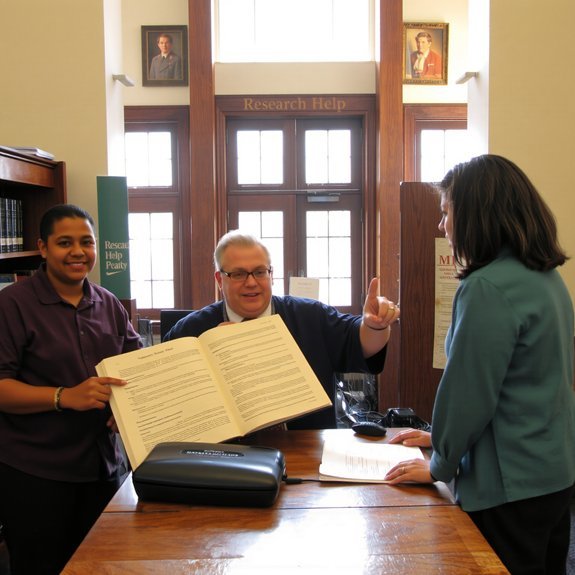
    When you’re stuck on a topic and staring at a blinking cursor like it’s judging you, go find a subject librarian — they’re the friendly research ninjas who actually enjoy untangling citation knots. I’ll say it straight: you don’t have to suffer alone. Walk into the quiet hum of the stacks, smell the paper, tap the desk, and ask. They’ll show databases, suggest keywords, pull obscure journals, and demo citation tools, fast and without the lecturing vibe. Here’s what you should expect:

    Stuck with a blinking cursor? Tap a subject librarian — research ninjas who find sources, demo tools, and save your sanity.

    1. Personalized research consultations, scheduled or drop-in, tailored to your assignment.
    2. Database navigation help, with hands-on demos and saved searches.
    3. Source evaluation tips, so you spot strong evidence quickly.
    4. Citation guidance, from APA to Chicago, with export-ready files.

    Tutoring Centers, Writing Labs, and Academic Support Programs

    hands on academic support services

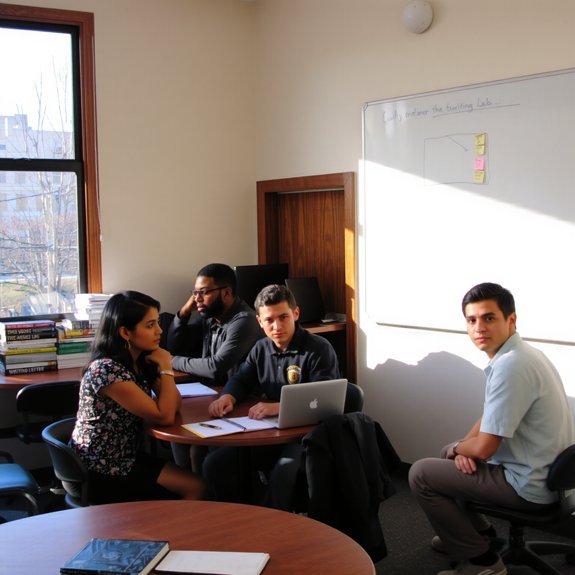
    Alright — you’ve got your subject librarian in your corner, and that’s amazing, but let me show you where the real tag team happens: tutoring centers, writing labs, and academic support programs. You walk in, smell coffee, hear quiet confidence — tutors tapping keys, counselors flipping syllabi. Ask for a math walk-through, and someone’ll sketch a graph on the whiteboard, patient and proud. Bring a draft to the writing lab, they’ll read aloud, point out the clunky sentence, you’ll laugh and fix it. Sign up for workshops on study skills, time management, test anxiety — they hand you templates, timers, tiny victories. Drop-in or appointment, peer or pro, it’s hands-on help that meets you where you are, and nudges you forward.

    Accessing Special Collections and Archives at an HBCU

    You’ll start by scanning the archive catalog, eyes on the screen, fingers ready to bookmark anything that screams “you.” Then you’ll fill out a request form or email the special collections staff, because yes, some boxes need permission and a friendly human to gain entry to them. I’ll stand with you at the reading table, we’ll smell that old-paper tang, and I’ll whisper tips on access rules so you don’t accidentally pet a fragile scrapbook.

    Finding Archival Materials

    Because archives don’t usually leap off a shelf and shout “look at me,” you’ve got to be a little sleuthy — and I’ll admit, I enjoy the hunt. You’ll start by scanning catalogs, special collections guides, and finding aids, eyes skimming for names, dates, and places that make your pulse quicken. I’ll poke around online databases, then wander the stacks, fingers tracing box spines, breathing that paper-and-glue smell like it’s perfume. Talk to archivists, they’re the secret maps. Bring notebooks, gloves, and patience; archival work rewards slow curiosity.

    1. Search online catalogs and finding aids first.
    2. Note collection numbers and scope notes.
    3. Consult archivists for hidden gems.
    4. Prepare proper tools: pencil, gloves, camera (if allowed).

    Requesting Special Access

    Okay, now that you’ve sniffed out boxes and chatted up the archivists, it’s time to actually get in the room where the magic happens. You’ll request special access by filling a form, showing ID, and saying why you need the materials — be specific, not vague. I’ll tell you to book a visit ahead, because archives don’t do walk-ins like coffee shops. Expect gloves, pencil-only tables, dim lamps, a hush that feels holy. I’ll remind you to state handling needs, reproduction permissions, and any deadlines. If a restricted file needs supervisor approval, don’t panic, just follow their steps, politely nag if needed. You’ll leave with photos, notes, and the smug joy of having earned the privilege.

    Digital Tools, Databases, and Remote Research Resources

    If you want to dig up solid sources without trekking across campus in the heat, start here — the library’s digital toolbox is your new best friend, and yes, it talks back (kind of). You’ll log in, click databases, and the screen will hum with options. Don’t panic. I’ll show the quick moves: what to search, how to filter, and where PDFs hide — like finding snacks in a dorm drawer.

    1. Use subject databases first, they’re focused and save hours, trust me.
    2. Enable off-campus access, so you can work from bed, coffee in hand.
    3. Save searches and set alerts, your future self will thank you.
    4. Try citation managers, they stop your bibliography from becoming a train wreck.

    Workshops, Instruction Sessions, and Course-Integrated Support

    I’ll show you how the library’s workshops sharpen your research skills, whether you’re hunting down primary sources or taming citation chaos—come for the handouts, stay for the “aha” moment. You can book me or a librarian to visit your class, or we’ll embed sessions into your course so support shows up right where you work, on your syllabus and in your inbox. Bring questions, bring snacks if you want, and we’ll turn messy assignments into clear steps, one focused session at a time.

    Research Skills Workshops

    When you show up to a library workshop—coffee in hand, laptop half-asleep—you’ll get more than a slideshow; you’ll get hands-on skill training that actually sticks. You’ll learn to trace sources, tame databases, and build search strings that don’t puke results. I talk you through live demos, you riff on class examples, we all laugh when citations misbehave. Expect quick practice, messy drafts, and honest feedback that actually helps.

    1. Learn database tricks, filters, and boolean searches.
    2. Practice evaluating sources, bias, and credibility.
    3. Build annotated bibliographies, step by steady step.
    4. Get citation tools, templates, and time-saving hacks.

    Show up curious, leave armed, and yes, bring more coffee.

    Embedded Course Support

    Because we want you to actually use the library, not just visit it on exam week, I slide myself into your class schedule—literally or virtually—and we build research muscles together. You’ll see me at the front, laptop glowing, or popping into your Zoom like that one friend who brings snacks. We map assignments, break down prompts, and pick sources you can actually explain aloud. I demonstrate quick database tricks, then hand the controls to you, watching fingers fly, pride and mild terror mixed. We run mini-workshops, scaffolded activities, and tailored handouts that smell faintly of copier toner and possibility. You get feedback on drafts in real time, citation help that doesn’t make your eyes glaze, and a partner who won’t ghost you before finals.

    Building Relationships and Using Library Spaces for Collaboration

    If you want people to actually help you, start by showing up like you mean it — I stroll into the library, breathe that paper-and-coffee-smell, and make eye contact with the staff instead of pretending I’m invisible. You’ll learn names, snag tips, and get invited to study nights. Sit in shared rooms, bring snacks (ask first), and claim a whiteboard like it’s your tiny kingdom. Talk to librarians, not just Google. They know the archives, and they’ll laugh at your panicked citation voice.

    1. Introduce yourself, ask one specific question, follow up.
    2. Reserve rooms early, bring chargers, clean up.
    3. Join or start a study group, schedule meets.
    4. Share resources, give credit, say thanks.

    Conclusion

    You’ve got this—use the stacks, the tutors, the tech loans, and the librarians like they’re on speed dial. I’ll be blunt: 90% of students who meet a subject librarian report better grades, so don’t wing it alone. Walk the quiet study rooms, smell the coffee, snag a comfy chair, and ask for that citation help. I’ll cheer you on, I’ll laugh at your late-night notes, and I’ll remind you: ask early, ask often.