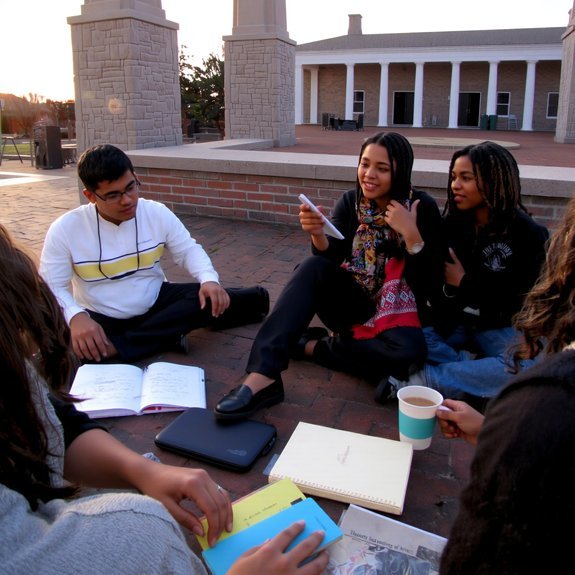
You’ve got exams coming, and you’re not gonna wing this — not this time. Map your calendar, block study slots on your phone, and gather a study crew that actually does the work (yes, that means firing flaky folks). Hit tutoring, nab quiet library corners, pack snacks that don’t melt, and breathe for two minutes when panic hits; I’ll show you how to stack priorities, protect your sleep, and turn cram panic into calm—but first, what’s your worst class?
Key Takeaways
- Map the semester on a big calendar, marking exams, projects, and mini-deviews to chunk study tasks weekly.
- Form diverse study groups, rotate roles, use tutoring centers, and engage librarians for research and citation help.
- Block focused study slots, prioritize real tests over busywork, and set mini-deadlines two days before each exam.
- Protect mental health with short breaks, grounding techniques, peer check-ins, and celebrate micro-wins to sustain motivation.
- Fuel your brain with whole foods, hydrate, move daily, and simulate exam conditions for timed practice.
Creating a Semester-Wide Study Plan

If you want to stop cramming at 2 a.m., start by mapping the whole semester like it’s a treasure hunt, because honestly, that’s less stressful than pretending you’ll remember every due date. I tell you, grab a big calendar, sticky notes, a highlighter that’s too bright, and lay everything out on your desk so it smells like paper and finals. You’ll label exams, projects, practice quizzes, then chunk them into weekly bites. Say aloud, “I’ll tackle this chapter on Tuesday,” like you mean it. Add buffer days, flag hard classes with red, and celebrate small wins—yes, a mini dance counts. You’ll tweak the map each week, stay flexible, and avoid the panic spiral. Trust the plan, you’ve got this.
Prioritizing Coursework and Exam Dates

Because your semester won’t magically sort itself, I start by treating every due date like a VIP guest at a chaotic party: you get priority seating. You’ll list exams, papers, quizzes, and demos, then color-code them — red for “don’t mess this up,” yellow for “steady,” green for “easy win.” I tell you to block study slots on your phone, smell coffee, hear the library hum, and sit down like you mean it. Move tasks by impact, not crushable pride; drop busywork when real tests loom. Check syllabi every week, compare dates, and call your professor if something clashes — don’t be shy. Make a mini-deadline two days before each exam, so you review, nap, and walk in crisp, calm, prepared.
Building Culturally Affirming Study Groups
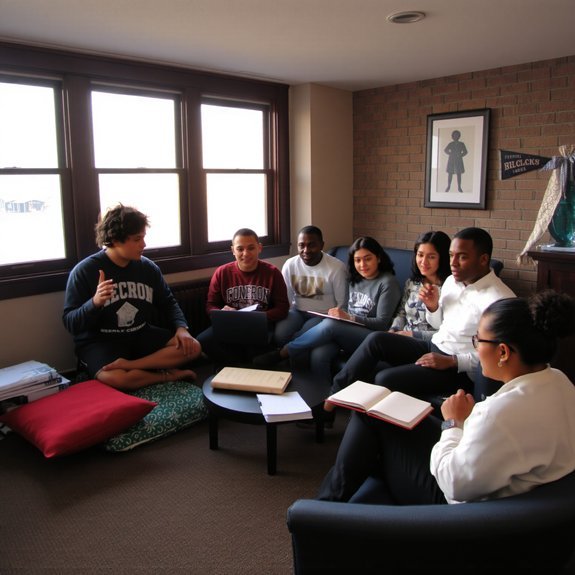
When you walk into a study session that actually gets things done, you should smell snacks, hear different accents, and see people bring pieces of their culture to the table—this is how a culturally affirming group starts, messy and gorgeous. You invite classmates who share background or perspective, and those who don’t, because contrast sharpens thinking. You set norms: callouts are okay, jokes land gently, and everyone’s pronouns matter. You rotate roles—quiz master, explainer, snacks czar—so no one’s stuck parroting facts alone. You swap study tips tied to heritage, like mnemonic rhymes in dialects, then jump into problems. You celebrate small wins with high-fives or a side-eye, keep feedback honest, and leave feeling seen, smarter, and full.
Using Campus Academic Support Resources
You should swing by the tutoring center, it’s usually a bright room with whiteboards and helpful people who’ll untangle that problem set faster than you can groan. I’ll point out the librarians next, they’re secret research ninjas who’ll show you the best databases, cite stuff properly, and even help you find that one article hiding behind paywalls. Go early, ask silly questions, and watch your panic turn into a plan.
Tutoring Center Access
If you’ve ever stared at a problem set so long your brain felt like overcooked pasta, come with me to the tutoring center — it’s brighter than you expect, smells faintly of coffee and dry-erase markers, and it’s where the panic melts into doable steps. You walk in, sign a sheet, and someone greets you like you’ve already done the brave part. Tell them the exact thing that’s tripping you up. They’ll sketch, ask one sharp question, and suddenly a knot loosens. Use drop-in hours, book a slot, or snag a study group table. Bring notes, old quizzes, and snacks—brain fuel matters. Don’t be shy; asking is faster than guessing, and that’s straight-up smart.
Library Research Help
After a solid session at the tutoring center, I usually wander over to the library like it’s the calm after the storm—soft carpet underfoot, the hum of printers, a faint whiff of old books and peppermint gum. You follow, lugging your backpack and ten tabs open, and we head to the reference desk. Librarians are secret weapon allies; ask them for databases, citation help, or primary sources, and watch them work magic. Reserve a study room, grab a noise-canceling headset, and scan the course reserves. Use interlibrary loan when your topic’s niche, and save screenshots of useful pages. Keep a running doc of search terms, note pile locations, and call numbers. Trust the library; it’s quietly on your side.
Balancing Work, Organizations, and Study Time
How on earth do you cram a full-time job, two clubs, and a still-growing social life into the same week as midterms? I’ve been there, palms sweaty, schedule a mess, but you can hack it. Start with these steps, clear and brutal:
- Block study sprints: 50 minutes, phone in the drawer, coffee in hand.
- Prioritize tasks: paid work, exams, meetings—say “no” to the rest.
- Sync calendars: color-code commitments, spot gaps, protect two deep-focus blocks.
- Micro-rests: five-minute walks, cold water on your face, text a friend for one laugh.
You’ll trade a few FOMO nights for calm, sharp focus. I promise, you’ll still have stories, just better ones.
Active Study Techniques That Stick
Crank open your notes, toss your phone in a drawer, and let’s make studying feel less like punishment and more like a heist you actually enjoy: you’re not passively re-reading—you’re interrogating the material. You sketch quick mind maps, fingers smudged with highlighter, whispering key terms like they owe you answers. Quiz yourself aloud, pretend the textbook is on trial, call out definitions, wait for silence to answer. Teach a friend, or your roommate, with dramatic flair; if they stare blankly, you know where you messed up. Use flashcards, but spice them: draw tiny cartoons, write one-line mnemonics, shuffle like a deck of winning bets. Sprint through 25-minute Pomodoros, then reward with coffee steam and a grin. Repeat, refine, and lock the facts in.
Managing Stress and Protecting Mental Health
If your brain feels like a buzzing phone, I’m with you — let’s quiet it down before it throws up notifications in the middle of an exam. You’ve got a lot on your plate, and stress loves to micromanage your thoughts, so breathe, name one fear, and send it packing for ten minutes. I keep things simple, rough edges and all. Try these quick, sharp moves to protect your focus:
- Schedule two short breaks, step outside, feel the sun, count colors.
- Use a five-minute grounding routine: touch a textured surface, smell something sharp, name three sounds.
- Text a friend one-sentence check-in, get real, laugh if you can.
- Set a tiny, do-able goal, then celebrate it.
Optimizing Sleep, Nutrition, and Exercise for Exam Performance
Keep your sleep schedule steady, not heroic—same bedtime and wake time most days, so your brain learns when to focus and when to shut off. Eat real food that lasts—oats, eggs, nuts, colorful veggies—and move your body, even a brisk 20-minute walk will clear fog and boost memory (no, caffeine can’t do all the work). I’ll walk you through simple routines and snacks that actually help, and yes, we’ll laugh at my pathetic attempt to meditate for five seconds.
Sleep Consistency Matters
Even though you might feel like cramming is a superpower at 2 a.m., I’ve learned the hard way that sleep consistency actually runs the show—the brain files memories and sharpens focus when your body gets the same cue night after night. You’ll notice the difference: words stick, moods settle, and your morning coffee stops feeling like rescue breath. I talk to my roomie, I set a timer, I dim lights, I pretend my phone is a jealous ex. Try this simple routine:
- Go to bed within the same hour every night, yes even weekends.
- Wake up at a steady time, sunlight first, alarm second.
- Wind down 30–60 minutes, no screens, soft music or reading.
- Keep your sleep space cool, dark, and sacred.
Fuel and Move
Alright, now let’s talk about the stuff you put in and do with your body, because sleeping like a champ only gets you so far — food and movement finish the job. You’ll eat like fuel, not punishment: bright fruit, whole grains, a little protein, and water that actually tastes like victory. Skip the sugar crash pretzel parade before a test. Move daily, even ten minutes counts — jog, stretch, dance in your room like nobody’s grading you. Walk between classes, chew gum to wake your brain, breathe deep when things get spicy. I’ll be blunt: caffeine is a tool, not a life partner. Plan meals, pack snacks, set a mini workout habit, and treat your body like the study partner it is — reliable, loud, and useful.
Preparing for Different Exam Formats (Essays, Multiple Choice, Labs)
When exams switch formats, you can’t use the same sleepy study routine and expect different results — that’s not how brains work, or miracles. You’ve got to shift gears fast, tune senses, and practice the actual test vibes. I talk through quick, usable moves you can do in your dorm or library alcove.
- For essays, outline aloud, smell coffee, type a thesis, then handwrite a practice in 40 minutes.
- For multiple choice, drill question stems, eliminate bad answers, listen for trap words.
- For labs, touch equipment, sketch setups, rehearse protocols, say steps out loud.
- For timed combos, simulate the clock, pack snacks, wear headphones, stay steady and watch the pulse.
Celebrating Progress and Staying Motivated During Finals
You just practiced the heck out of essays, drilled a stack of multiple-choice blunders, and ran the lab steps until your fingers remembered them — now let’s celebrate that mileage. I’m proud of you, honestly. Pause, stretch, brew that terrible dorm coffee, and high-five yourself in the mirror. Count micro-wins: a clean outline, a timed practice score, a lab run without spilling anything — they matter. Reward smartly: twenty minutes of music, a walk under live oaks, a slice of pizza that isn’t cardboard. When motivation dips, call a study buddy, swap silly buzzer sounds, complain for two minutes, then get back at it. Keep rituals, track progress with stickers or notes, and remember: momentum loves small, steady steps.
Conclusion
You’ve got this — map your calendar, block study time, and call your squad for a 7 p.m. library huddle. Fun fact: students who study with peers retain about 60% more info, so those group texts actually help. I’ll be your nag and your hype-person: take breaks, eat something green, move your body, sleep like you mean it. Celebrate small wins, keep a steady pace, and show up for finals like the boss you are.