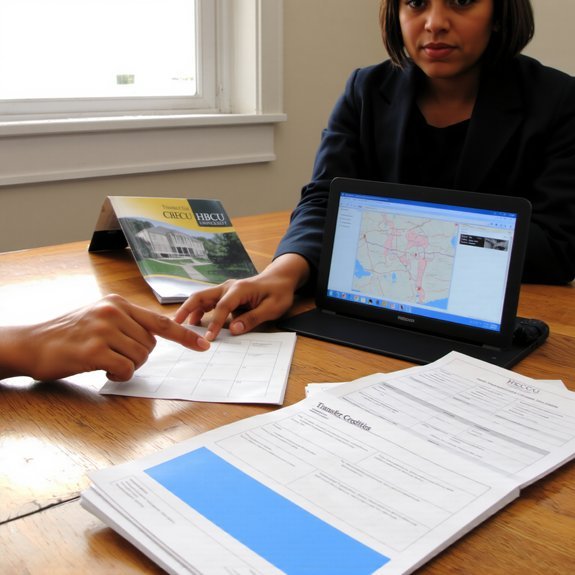
Most people don’t realize HBCUs often make exceptions for credits from nontraditional programs, so don’t assume your classes are doomed to the credit graveyard. You’ll want to gather transcripts, syllabi, and a game plan, then talk to admissions and an advisor—serious talk, not the polite small talk you use at family reunions—because that’s where credits get vetted, negotiated, and sometimes resurrected. Stick around; I’ll show you how to make them stick.
Key Takeaways
- Confirm the HBCU’s regional accreditation and its acceptance of transfer credits before applying.
- Request official, sealed transcripts from all previous institutions sent directly to the HBCU registrar.
- Gather and submit syllabi, course descriptions, credit hours, and lab details to support equivalency evaluations.
- Meet with admissions and an academic advisor early to review transferability and get a preliminary degree audit.
- If credits are denied, appeal with documented learning outcomes, graded work, and instructor contact information.
Understanding HBCU Transfer Policies

Curious how your credits will actually behave when you show up at an HBCU? You’ll want to walk in like you own a map, but expect detours. I tell you straight: policies vary by school, department, and sometimes by the advisor’s mood. Bring syllabi, transcripts, and patience, smell of coffee in advising offices included. You’ll sit across a table, point to courses, and negotiate equivalencies; some classes slide right in, others need syllabi gymnastics. Core requirements often transfer cleaner than electives, lab work can cause drama, and residency rules may force you to take the final chapters on campus. Keep copies, ask for written decisions, and follow up. You’ll leave smarter, slightly bruised, but ready.
Confirming Accreditation and Transferability

You’ll want to check that your current school is regionally accredited, so you’re not sending credits into a black hole — I’ll say it like a friend who’s squinting at a transcript. Then, compare course syllabi and equivalency guides, note mismatched outcomes, and make a list of what actually lines up. Bring those documents to an advisor, ask the blunt questions, and don’t be surprised if you end up playing academic matchmaker for an afternoon.
Verify Institutional Accreditation
Before you get attached to any course descriptions or pretty campus photos, let’s check the one thing that decides whether those credits actually matter: accreditation. You’ll want to confirm the HBCU holds regional or national accreditation, because that stamp opens doors and keeps your transcript from becoming wallpaper. I’ll walk you through quick checks, so you don’t learn the hard way.
- Visit the U.S. Department of Education or CHEA website to search the institution, trust the official listings.
- Check the HBCU’s homepage for accreditor names, then verify on the accreditor’s site.
- Call admissions, ask directly, take notes—record name and date.
- Save screenshots and emails, store them with your transcripts.
Do this first, breathe easier later.
Check Course Equivalency
How do you know that that Art History lecture you loved will actually count at your chosen HBCU? I’d call the registrar, pronto, and ask for a course equivalency guide — yes, that dusty PDF hides your future. Take your syllabus, highlight outcomes, readings, grading rubrics, then email it like you mean it. Say, “Does this match your ART 201?” Attach scans, be polite, be pushy. Ask for a formal evaluation, timelines, and appeal steps. If they send a denial, don’t sulk: request a faculty review; bring your syllabus to office hours, charm a professor, argue specific competencies. Keep copies, log every call, and celebrate small wins. Transfer battles are paperwork with personality — you’ve got this.
Evaluating Course Equivalencies

If you’re transferring into an HBCU, don’t expect a magic wand — expect a checklist, a few forms, and me nagging you like a helpful, mildly sarcastic friend. You’ll compare syllabi, not vibes. Lay courses side-by-side, scan topics, credits, and learning outcomes. Touch the paper, trace the headings, notice lab hours and assessment types. Ask faculty about depth, not just titles. Don’t guess.
- Match learning outcomes, not just names.
- Check credit hours and contact time.
- Note prerequisites and sequencing traps.
- Flag content gaps for advisors.
I’ll tell you when something’s close enough, or when it’s a square peg. Push for written equivalency decisions, keep photos, and breathe — you’ve got this, methodically and with style.
Preparing Official Transcripts and Records
You’ll want to request official transcripts from every school you’ve attended, and yes, that means making a few phone calls and filling out online forms while you sip bad coffee. I’ll walk you through verifying course descriptions so credits line up, and we’ll stash syllabi, lab reports, and any other proof in a neat digital folder like a tiny, organized hoard. If the admissions office asks for secondary documents, don’t panic — you’ll know exactly which scans to send, how to certify them, and when to follow up with a friendly, mildly heroic email.
Requesting Official Transcripts
Alright — time to wrangle those transcripts. You’re calling registrars, tapping keyboards, and bracing for hold music while I coach you through the clean, official request. Ask for sealed, official copies sent directly to the HBCU’s admissions office, specify delivery method, and confirm fees. Keep receipts; you’ll thank me later.
- Request electronic and paper options, if available, to speed things up.
- Include your student ID, dates of attendance, and program name for clarity.
- Verify recipient address, contact person, and any campus codes the school uses.
- Note processing times, expedite choices, and tracking numbers so nothing vanishes.
You’ll feel accomplished when that confirmation hits your inbox. I’ll celebrate with you, quietly, over bad coffee.
Verifying Course Descriptions
Because course titles can lie and syllabi love to stretch the truth, you should treat course descriptions like tiny legal documents that can make or break a transfer—so let’s get cozy with them. I want you to scan every line, squint at jargon, and sniff out outcomes. Compare learning objectives to your HBCU’s catalog, highlight matching verbs — analyze, synthesize, design — not just “introduce.” Photograph or copy paragraphs, circle credit hours, note prerequisites. Talk to professors if a description reads vague, ask for a syllabus summary, and keep a dated email trail. Pack these found bits with your transcript packet, crisp and labeled. You’ll feel nerdy, but you’ll also own the proof when transfer evaluators call.
Securing Secondary Documents
Okay, now we go file-hunting. You’ll gather transcripts, immunization records, and any grade reports that survived your dorm move, and you’ll do it fast. I pace the hallway in my head, you breathe, we call registrars — firm, polite, slightly desperate. Ask for sealed, official copies, electronic where possible, stamped if they still like stamps. Pack them neatly, label envelopes, scan everything, and keep originals safe.
- Request official transcripts directly from former schools.
- Get course syllabi and exam summaries when available.
- Collect ID, enrollment dates, and proof of degree or certificates.
- Prepare signed release forms for third-party requests.
I’ll remind you, proof matters. You want clarity, not chaos, when the HBCU reviews your file.
Meeting Application and Transcript Deadlines
When do you want your future to start—next semester or the one after that? Pick a date, then work backward. I tell you this because deadlines aren’t polite; they bite. Mark application cutoffs, transcript request windows, and any priority review dates on your calendar, set alarms, and breathe. Call your previous registrar, ask for official transcripts, watch for hold-up emails, and track shipping so you’re not chasing ghosts. Some HBCUs want electronic files, others paper; double-check formats, signatures, and processing times. If you miss a deadline, beg politely and offer proof of intent, but don’t count on miracles. Be proactive, chip away daily, and you’ll turn deadline dread into a neat, handled box on your to-do list.
Navigating Residency and Credit Residency Rules
If you want your credits to actually count at an HBCU, you’ve got to treat residency rules like a picky landlord—read the lease, know the quirks, and don’t assume charm will get you out of a fee. I’ll walk you through what matters, quick and loud: residency often affects graduation credit totals, tuition rates, and which transferred classes actually apply. Smell the campus air, peek at the registrar’s policy, then act. Check deadlines, collect proof, and photograph documents — don’t rely on memory. Know that residency isn’t just address, it’s intent and time.
- Bring utility bills, lease, and dates that prove physical presence.
- Track course residency limits, some rules cap transfer credits.
- Flag residency re-evaluation windows early.
- Save everything, scanned and dated.
Working With Admissions and Academic Advisors
Because you’re about to tango with paperwork and personalities, let me say this: learn the rhythm before you step onto the dance floor. You’ll call admissions first, breathe into the phone, and ask direct questions: which credits transfer, who signs off, what documents they need. I watch you jot notes, feeling oddly heroic. Then, you meet an academic advisor, in a small office that smells like coffee and possibility. Sit down, share your syllabus highlights, explain your goals, and listen — really listen — when they draw your roadmap. Take photos of degree audits, request written confirmations, and follow up with concise emails. Trust builds slowly, through clarity, courtesy, and persistence. You’ll leave with a plan, and maybe a new favorite pen.
Appealing Transfer Decisions and Submitting Syllabi
Got a credit denial that made your jaw drop? I tell you, I’ve been there, pacing the kitchen, syllabus in one hand, cold coffee in the other. You’ll appeal, and you’ll win more often if you’re crisp and calm. Gather course descriptions, stamped transcripts, and that blessed detailed syllabus. Submit it like evidence, highlight outcomes, line-by-line. Ask for a meeting, bring printouts, speak plainly.
- Show how your course matches learning outcomes, not just titles.
- Include graded work samples, dates, contact info for the instructor.
- Use polite, firm language; be concise, add timestamps for submission.
- If denied, request a review committee hearing and document everything.
You’ll feel sweaty, then relieved, and you’ll sleep better after.
Planning Degree Progress After Transfer
When you walk onto campus after your credits finally land, you’ll want a map — not metaphorical, an actual plan with dates and alarms, because I’ve learned the hard way that optimism doesn’t register with the registrar. You’re juggling degree audits, advisor meetings, and that one professor who hates exceptions. First, print your audit, circle missing requirements, highlight repeatable courses, set calendar alerts. Then, meet your advisor, bring coffee, say, “Here’s my plan,” and listen — actually listen — to tweaks. Block study time, stash syllabi in a folder, track prerequisites like tiny checkpoints. If a course’s seats vanish, have backups ready. Reassess each semester, celebrate small wins, adjust deadlines, and don’t be shy to petition — I do, loudly, for us both.
Conclusion
You’ve got this. Think of the process like packing a suitcase—neat, intentional, no mystery socks. I’ll remind you: gather transcripts, syllabi, call advisors, file appeals if needed, watch deadlines, and map degree needs. Picture yourself on campus, sunlight on brick, handing over paperwork with a grin. I’ll be blunt: it’s work, not drama. Do the steps, stay organized, ask questions, and you’ll land where you belong—ready, confident, degree-bound.