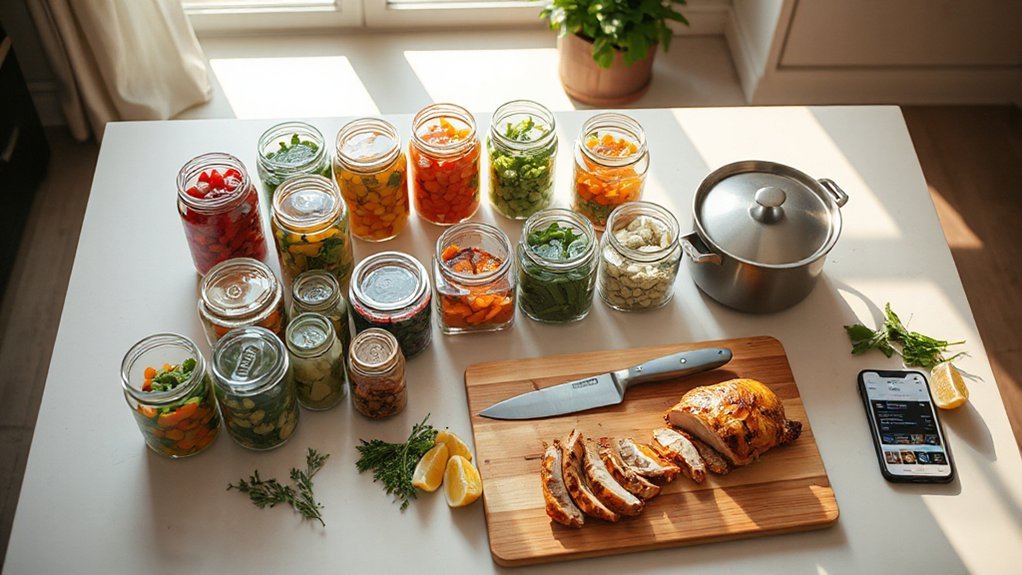
You think meal prepping is too rigid or time-consuming—it’s not, I promise; you can start small and still eat like a boss. Picture a row of glass containers, steam rising as you tuck roasted veggies beside lemony chicken, the fridge humming like a tiny, obedient orchestra—easy lunches waiting. I’ll show you a simple, flexible plan that fits your week, saves money, and actually tastes good, so keep going and I’ll walk you through the smart steps.
Key Takeaways
- Start small: pick one protein, two vegetables, and one sauce to prep for 3–5 days to build consistency.
- Choose a realistic schedule (weekly batch cook or daily assembly) that fits your lifestyle to avoid burnout.
- Plan balanced meals with macronutrient targets and simple swaps to maintain variety and nutrition.
- Shop smart: make a pantry-focused list, buy versatile ingredients, and resist impulse purchases.
- Store safely: use shallow labeled containers, cool before sealing, and reheat thoroughly for freshness.
Set Realistic Meal Prep Goals for the Year
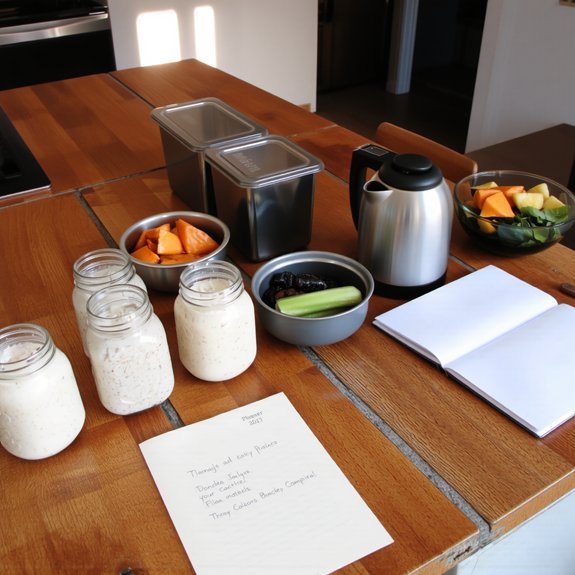
If you want meal prep to stick this year, start small and stop pretending you’ll become a freezer-batch superhero overnight. You and I both know enthusiasm fades, so set realistic expectations: one protein, two veges, a sauce you actually like. I’ll cheer when you hit achievable milestones, like prepping lunches for three days, then five. Picture the crisp sound of lids snapping shut, the steam rising from a warm soup on Sunday, the fridge smelling faintly of garlic — satisfying. Say out loud, “I’ll try one shopping list, one cooking session.” You’ll feel less dread, more control. Celebrate tiny wins, high-five the empty sink, laugh at the browned edges, and plan the next small, doable step.
Choose a Prep Schedule That Fits Your Week

You’ll want to pick a rhythm that actually fits your life, not one you feel guilty about skipping. Some people batch-cook on Sunday, others chop and assemble every night, so try weekly vs. daily prep and see which saves time and sanity — I usually time-block an hour on Sundays, headphones in, oven humming, coffee gone cold. If that’s too dreamy, break it into 15–30 minute sessions through the week, you’ll still win dinner without turning your kitchen into a disaster movie.
Weekly vs. Daily Prep
While some folks swear by a Sunday marathon of chopping and roasting, I prefer a system that actually fits my week — not one that makes my fridge look like a meal-prep shrine to regret. You’ll choose between weekly efficiency and daily convenience, and both have smells, sounds, and little wins. Weekly saves time later, you get roasted vegetables that sing, sauces that deepen overnight. Daily prep feels fresh, like morning coffee and warm toast, you toss together salads, heat proteins, plate with flair.
- A stack of glass containers, steam rising when you open one
- A cutting board scattered with citrus, herbs, and stubborn onion layers
- A skillet sizzling, garlic perfume filling the kitchen
Pick what makes you actually eat the food.
Time-blocking Your Sessions
You’ve picked whether you’re a Sunday-roast champion or a five-night freestyle chef, so now let’s map that energy onto a prep schedule that actually fits your life. I want you to treat meal prep like a series of short, labeled appointments. Block one long session for roasting and sauce-making, or split into three 40-minute bursts for chopping, cooking, and packing. Use a timer, because nothing humbles you like a burnt pepper. This is practical time management, not a hobby. Write down session planning notes: what’s urgent, what’s freezer-worthy, what’s a weekday rescue. Picture the sizzling pan, the citrus zing, the stack of labeled containers cooling on the counter. You’ll stay sane, save cash, and eat better — without turning your kitchen into a disaster zone.
Build a Flexible, Balanced Meal Plan
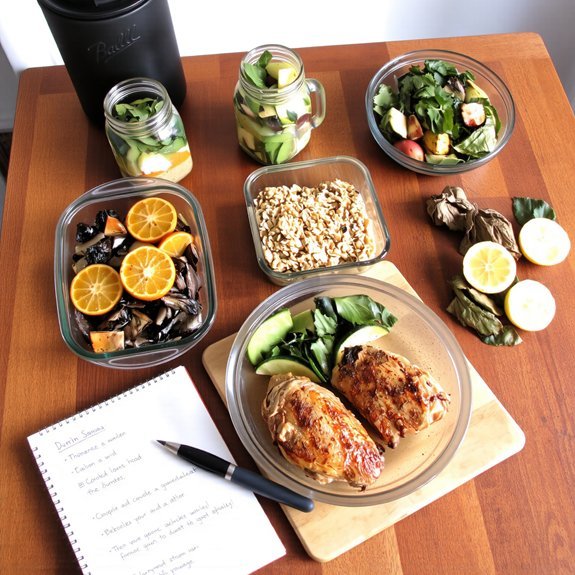
You’ll want targets for carbs, protein, and fat that keep you full and energetic, not chasing spreadsheets while the fridge mocks you. I’ll show swaps—chicken for tofu, quinoa for rice—so your meals stay interesting, colorful, and actually tasty when reheated. Roll with the plan, tweak it like a chef with a sense of humor, and you’ll eat better without turning cooking into a circus.
Macronutrient Targets
If you want your meals to feel like teamwork instead of a nutritional mystery, start with macronutrient targets—those are the carbs, proteins, and fats that do the heavy lifting for energy, muscle, and satiety. You’ll pick protein sources that satisfy, carb choices that fuel, and fat ratios that keep you full; I’ll show you how to balance them for meal diversity and fit dietary preferences. Use portion control, and practice nutrient timing so snacks and meals play nice. Track progress weekly, don’t panic when numbers wobble.
- Picture roasted salmon, quinoa, and steamed greens, steam rising, fork ready.
- Imagine a bowl of oats, berries, nut butter, spoon clinking.
- Visualize a tiled prep table, labeled containers, neat macronutrient stickers.
Swap-Friendly Recipes
When I say “swap-friendly,” I mean meals that bend like a good yoga class—sturdy, reliable, and forgiving when life throws you a leftover curry or a rogue sweet potato. I want you to build bowls and trays that laugh at last-minute changes. Roast a tray of seasoned veggies, cook a grain, toss a protein—then mix and match. Offer clear swap options: chickpeas for chicken, quinoa for rice, tahini for mayo. Teach yourself quick flavor substitutions so sauces and dressings rescue anything—acid, heat, salt, sweet. Smell the citrus, hear the sizzle, taste the comfort. I’ll coach you through swaps, and you’ll learn to improvise without panic. It’s practical, playful, and oddly empowering—yes, even on Tuesday.
Master Smart Grocery Shopping and Pantry Staples
Since I’m not a magician, I plan ahead: I stroll into the grocery store like a small, confident general, list in hand, nostrils filled with the sweet, fluorescent hum of produce and bakery, and I don’t leave until the pantry’s future is secure. You follow my lead, check your grocery list essentials, and buy smart: staples that stretch, season, and rescue dinners. You organize shelves by use, label jars, and stack cans so nothing hides in shame. You smell spices, squeeze avocados, and resist impulse snacks (mostly).
- Row of glass jars, golden quinoa, and sunlit pasta ribbons.
- Stacked cans, cheerful labels, a tinny chorus.
- Mason jars of beans, earthy, waiting.
Pantry organization saves you time and money, trust me.
Batch-Cooking Techniques for Time Savings
Because I don’t trust evenings to magic themselves into dinner, I batch-cook like I’m setting a tiny, edible army to work for me all week. You’ll grab a multi cooker, pull a sheet pan, and lean into one pot recipes that save time and dishes, while you sing off-key and feel very domestic. Use batch seasoning early, taste as you go, and layer flavor infusions—garlic, citrus, smoked paprika—so leftovers don’t sigh. Embrace cooking techniques that double duty: roast veggies for bowls, crisp proteins for tacos. Think ingredient versatility: beans become soups, salads, or mash. Mind portion control so servings are ready, not guesswork. When you freeze meals, freeze smart: label, stack, and reclaim your evenings with slightly smug joy.
Safe Storing, Labeling, and Reheating Practices
If you want your weeknight victories to taste as good on Thursday as they did on Monday, you’ve got to treat storage, labeling, and reheating like a kitchen ritual, not an afterthought. I’ll walk you through safe storage, effective labeling, and proper reheating, with food safety front and center. Use shallow containers, cool hot food before sealing, and stash meats lowest in the fridge—no mysteries, no spills. Label each box with contents and date, in bold, because you’ll forget. Reheat to steaming hot, stir midway, check center temperature, don’t cram the microwave. You’re not heroic for eating questionable leftovers; you’re clever when you plan.
- A clear glass dish, steam fogging the lid.
- A bold marker, bright tape around plastic.
- A fork testing a bubbling stew center.
Meal Prep Ideas for Different Diets and Budgets
Want variety without chaos? I’ll walk you through meal prep ideas for different diets and budgets, so you won’t stare at takeout menus at midnight. Start with a plan: pick a protein, a grain, two veggies, spice it up. For keto, swap rice for cauliflower rice, drizzle butter, sear salmon till it sings. For vegetarian, roast chickpeas, toss with quinoa, add bright lemon, feta if you want joy. On a tight wallet, embrace budget friendly recipes: beans, frozen veg, bulk oats, slow-cooked stews that smell like victory. I give diet specific tips—portion sizes, easy swaps, simple seasonings. Prep in batches, label, chill, then reheat confidently; you’ll eat well, save money, and brag a little.
Quick Breakfasts and Grab-and-Go Lunches
When morning hits like a speeding train, you’ll thank me for the tiny revolutions we build before dawn—coffee already brewed, jars lined up like little soldiers, and a cramped Tupperware army ready to go. I show you fast breakfasts that actually taste like breakfast, not cardboard. Make overnight oats in mason jars, layer fruit, nuts, a drizzle of honey, shake, chill. Prep smoothie packs—frozen fruit, spinach, protein—so you blitz and bolt. Lunches? Think sturdy wraps, Mason jar salads, and egg muffins you can eat cold if life demands it.
When mornings roar, tiny pre-dawn revolutions—brewed coffee, mason-jar oats, smoothie packs, Tupperware troops—save the day.
- A row of glass jars, oats gleaming, berries popping like confetti
- Smoothie packs, frosty and humming promise in the freezer
- Tupperware stacked, a compact, delicious defense against hangry afternoons
Tips to Prevent Burnout and Keep It Sustainable
You’ve got the jars, the smoothie packs, the glorious Tupperware fortress—bravo, you superstar of mornings. Keep it fun, not frantic. Rotate seasonal ingredients for flavor and cost savings, add recipe inspiration notes on lids, and practice mindful eating so each bite actually lands. I recommend weekly mini-cooks, not marathon Sundays; short sessions protect cooking skills, and they save your soul. Use variety inclusion—different grains, proteins, colors—to avoid boredom. Tap community support: swap meals, trade tips, laugh about disasters. Build motivation strategies: calendar rewards, photos, tiny wins. Prioritize stress management and self care practices—walk, breathe, nap when needed. Make meal enjoyment the goal. Your fridge should cheer, not judge.
Conclusion
You’ve got this. Imagine opening your fridge and being greeted by cheerful mason jars, sizzling aromas already waiting, and lunch high-fiving your future self. Start small, cook smart, label like a pro, and celebrate tiny wins — I promise it’ll taste like victory. If you slip, shrug, reboot next batch, and keep going. You’ll save time, money, and calories, and feel ridiculously proud every single week. Welcome to your new, delicious routine.