
You walk across campus, palms sweaty, and half expect someone to tap you and say “wrong room” — sounds familiar, right? I’ll tell you straight: imposter feelings show up loud at HBCUs because you care, you endeavor, and you notice every glance; don’t erase that, use it. Start small — name one win each morning, join a study table that smells like coffee and laughter, ask a senior for honest tips — do that, and the doubt loosens. Keep going — there’s more.
Key Takeaways
- Name your inner critic, reframe its messages, and respond with culturally affirming affirmations and humor.
- Build a supportive circle: form study groups, seek mentors, and join clubs that reflect your identity and goals.
- Track wins daily: journal small achievements in native idioms and celebrate measurable progress.
- Use campus resources—tutoring, writing centers, and office hours—to replace doubt with competence through action.
- Counter microaggressions with communal support, mirror work, and routines that reinforce belonging and confidence.
Recognizing What Imposter Syndrome Looks Like on HBCU Campuses
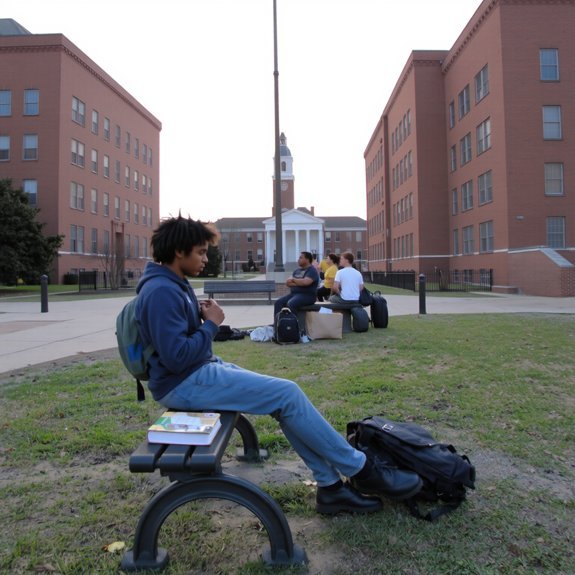
Ever walked into a packed lecture hall at your HBCU and felt like you somehow took the wrong bus? You blink, scan faces, clutch your notebook like a lifeline, and whisper, “Do I belong here?” That knot in your stomach, the voice saying you’re a fraud, the extra hours studying while everyone else seems relaxed — that’s imposter syndrome showing up in cap-and-gown terrain. You compare grades, outfits, legacy stories, and minimize wins. You dodge office hours because you’re “bothering” professors, you downplay praise, you rehearse answers till your tongue hurts. But you notice patterns: avoidance, perfectionism, discounting compliments, constant comparison. Recognizing these moves is half the battle, you see them, name them, and start to call them out.
Understanding Why It Persists Despite Your Achievements

Even when your resume looks like a highlight reel and your professors call you by name, that little voice keeps muttering that you snuck in the back door — and it’s not because you’re weak, it’s because the world keeps handing you reasons to doubt. I watch you shrug off applause, tuck your achievements into your bag, and step into rooms where curricula, headlines, and stereotypes hum like fluorescent lights. Microaggressions buzz; old narratives snap at your ankles. You taste bitter coffee at 2 a.m., proof of hustle, and still your mind whispers fraud. Comparison scrolls through your phone, loud as a stadium chant. Family hopes and historic pressure sit heavy on your shoulders, and even success feels borrowed. That’s why the doubt keeps knocking.
Culturally Affirming Strategies to Quiet the Inner Critic

You’ve been carrying that doubt the way you carry a tote bag — full, heavy, and somehow stylish, but it’s time to put it down. I’ll say this plainly: your voice matters. Name the critic — give it a ridiculous nickname, laugh at it, then call it out when it whispers. Surround yourself with cultural touchstones: play familiar songs, cook a recipe that smells like home, wear a color that makes you stand tall. Journal in your native idioms, recap wins in quick bullets, celebrate with small rituals — snap fingers, clap twice, take a victory bite. Mirror work. Say affirmations that sound like you, not like a speech. Practice switching the script: “I belong” replaces “I don’t” until it sticks.
Building Community, Mentorship, and Academic Support That Fits You
When the doubt starts whispering that you don’t belong, don’t go it alone — build a crew that proves it wrong. You find peers who get your hustle, snag mentors who speak truth with a laugh, and join study spots that smell like coffee and possibility. I’ll say it plain: matching support to you beats copying someone else’s playbook. Try roles, test vibes, drop what drains you. Notice who celebrates small wins, who asks hard questions, who texts you the tricky answer at midnight. Concrete moves matter: email one professor, sit in on a lab, show up to a cultural org meeting.
- Buddy up with classmates for weekly problem-solving sessions
- Seek mentors who share culture and career vision
- Use campus tutoring, drop-in hours, and writing centers
- Join clubs that spark joy, not just résumé shine
Practicing Daily Habits to Strengthen Confidence and Belonging
Alright — you’ve got your people, your mentors, your late-night study squad; now let’s make small, repeatable moves that turn belonging from a mood into a habit. I want you to start each morning naming one win out loud, even if it’s “I didn’t burn my toast,” say it like you mean it. Walk campus with purpose, notice the brick smell, the coffee steam, nod at a familiar face. Schedule a ten-minute review of what you learned today, jot one awkward question to ask tomorrow. Celebrate tiny steps with real treats, not just mental pats. When doubt creeps in, text a mentor the single sentence you’re afraid to say. Repeat, rinse, repeat — daily rituals anchor confidence, they add up, trust me.
Conclusion
You’re not an imposter, you’re a student carving your name in warm clay. I’ve seen you doubt, pace the quad, rehearse answers in the mirror — now stop. Celebrate tiny wins, call a study buddy, ask a mentor one blunt question. Say affirmations like you mean them, journal one honest line, join that campus event. You belong here. Breathe, smile, take the next step — loud, proud, real.