
You’re planning January like it’s a mission, and I’m here to keep you honest — set one clear goal, scout your week for real time, and pick three things: cardio that gets your heart humming, strength you can feel the next day, and mobility that actually loosens your shoulders. Picture brisk morning air, keys clinking, shoes crunching the first walk; imagine a 20-minute circuit in your living room that burns but doesn’t break you. Ready for the exact week-by-week map?
Key Takeaways
- Start with tiny, specific monthly goals you can realistically hit (e.g., three 20-minute workouts or one extra vegetable daily).
- Assess current fitness honestly with simple tests and map weekly free time before scheduling workouts.
- Build a balanced weekly plan mixing cardio, strength, and mobility, assigning each day a clear focus.
- Progress gradually by small load or duration increases, alternating hard days with active recovery and one weekly rest day.
- Track workouts on a visible calendar, celebrate micro-wins, and adjust targets to stay motivated through January.
Setting Realistic Goals for the Month
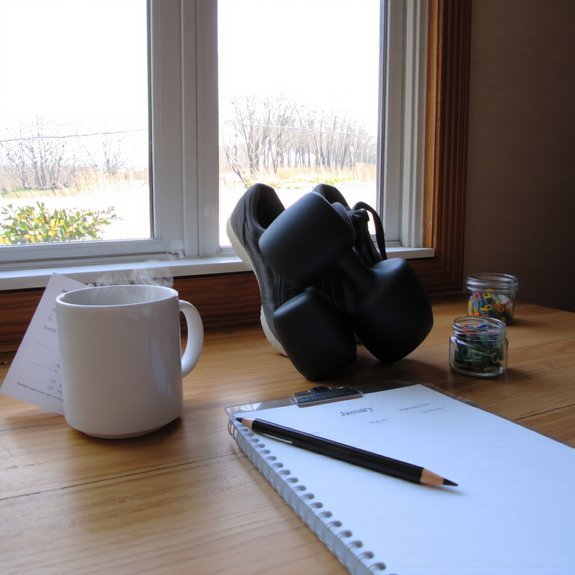
If you’re anything like me, January starts with big, shiny promises—and three days later the yoga mat is a glorified dust-catcher—so let’s make this month different. You’ll set realistic expectations, not apocalypse-level targets, and you’ll sketch a simple plan that actually fits your life. Start with tiny monthly milestones: three 20-minute workouts a week, a brisk 30-minute walk on weekends, or adding one extra vegetable at dinner. Picture the mat under your feet, feel the breath steady, hear the door click shut on excuses. Write it down, schedule it like a dentist appointment, and celebrate small wins with something silly—high-five the mirror, play your favorite song. Keep it doable, keep it human, and you’ll surprise yourself.
Assessing Your Current Fitness and Schedule
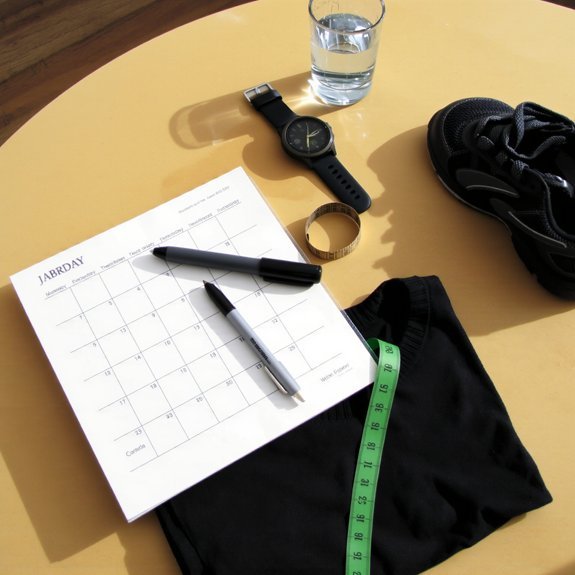
I want you to be honest: lace up your shoes, try a brisk two-minute jog or a few push-ups, and notice how your lungs and legs feel — that tells us your current fitness level. Next, grab your calendar, circle the pockets of free time you actually have each week, and don’t lie to yourself about evening Netflix marathons. Together we’ll match real workouts to real hours, so your January plan actually happens, not just looks good on paper.
Current Fitness Level
Start by being brutally honest—no gym selfies, no humble-bragging—just a clear snapshot of where you’re actually at: how many workouts you hit last week, whether your knees ache when you climb stairs, and what time your brain lets you move (6 a.m. zombie shuffle or 7 p.m. buzzed energy?). You’ll run a quick fitness assessment, jot down personal benchmarks, then use them to pick sensible goals. Imagine this:
- A crumpled hoodie, breath loud, two slow stair steps before you pause.
- A stopwatch, sweaty palm, three push-ups that wobble.
- A calendar with one lonely green dot, last Tuesday.
- A pair of shoes, new-ish, mocking you from the corner.
You keep it real, you set tiny tests, you celebrate tiny wins. That’s how you build confidence, not fantasy.
Weekly Time Availability
Okay, you’ve named your starting point — congratulations, you’re honest and slightly out of breath. Now, look at your week like a detective. I want you to scan calendars, feel the paper or tap the screen, note commute times, work meetings, kids’ pickup, happy hour—everything. Time management isn’t sexy, but it’s honest work. Block real slots, not wishful thinking. Decide your weekly commitment: three 30-minute sessions, five 45s, whatever fits without guilt. Say it out loud, write it down, put alarms on your phone that nag like a friendly coach. Start small, build rhythm, respect rest days. If a plan feels impossible, tweak it. You’ll know it’s right when it feels challenging, not cruel, and you actually show up.
Building a Balanced Weekly Plan: Cardio, Strength, Mobility
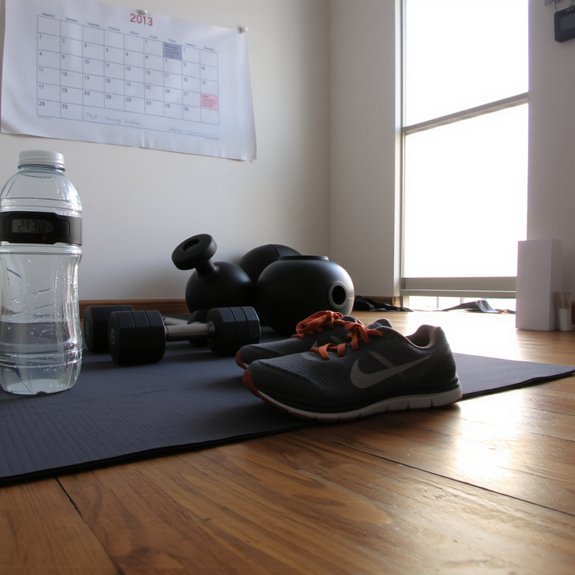
If you want a week that actually makes you stronger, faster, and more bendy without turning you into a soggy gym cliché, we’ll mix cardio, strength, and mobility like a decent playlist—upbeat, steady, and with a mellow cooldown. I’ll sketch a weekly map you can actually follow, and you’ll smell sweat, hear your breath, feel bands tug at tight hips. Use cardio variety—interval runs, brisk walks, bike spins—to keep things spicy. Pick strength types—compound days, accessory work, bodyweight circuits—for real progress. Rotate, don’t mash everything into chaos.
- Monday: short intervals, tongue-out effort, quick shower
- Tuesday: heavy lifts, barbell clanks, focused breaths
- Thursday: mobility flow, hip openers, slow stretches
- Saturday: long aerobic ride, sun on your face, steady rhythm
Progression and Intensity: Avoiding Burnout and Injury
Because you want gains without turning into a hobbling disaster, I’m going to make progression simple and sneaky, the kind that quietly stacks strength while keeping your joints and willpower intact. You’ll add load in small, predictable steps — 5% a week or an extra rep every session — so your body adapts, not revolts. Listen to soreness vs sharp pain, rest when things flare, ice or mobility roll if a joint nags. Rotate hard days with easier ones, toss in active recovery, and schedule one full rest day. That’s injury prevention and burnout management in plain English. Keep a humble ego, not a hero complex, calibrate effort, and enjoy steady wins — no dramatic collapses, I promise.
Tracking Progress and Staying Motivated Through Winter
When gray mornings and cold winds try to put your plans on mute, you’ve got to get clever about keeping score and staying stoked — I’ll be your slightly sarcastic scoreboard. You’ll track winter workouts like a detective, noting breath fog, warm hands, and the small victories that feel huge. Use simple logs, and celebrate micro-wins, because motivation techniques are tiny rituals that add up.
- A frosty 20-minute run, cheeks burning, headphones loud.
- A hot-cocoa reward, steam and smugness, after a tough set.
- A calendar X-chain, satisfying, visible, stubbornly grown.
- A selfie progress grid, honest lighting, proud face.
I’ll nag gently, remind you to adjust targets, praise effort, and keep it fun.
Adjusting Your Plan as You Improve
You’re getting stronger, so nudge your workouts up slowly—add a few more reps, a little more weight, or an extra minute on the bike—don’t sprint straight into pain. I’ll check in with you regularly, we’ll reassess goals, swap stubborn habits for smarter ones, and celebrate tiny wins with that triumphant, slightly breathless grin. Keep it playful but honest: if something feels off, we’ll tweak the plan, not your pride.
Gradual Intensity Progression
If we want progress without hobbling ourselves, we nudge intensity up like we’d turn a radio dial—slow, deliberate, and with a hand that knows what it’s doing. I’ll coach you through a gradual increase that keeps intensity balance front and center, so you get stronger, not battered. Feel your breath deepen, notice taut muscles, smile when the weights behave.
- Add 5–10% load, like sliding a weight plate into place.
- Up reps by one or two, hear the rhythm of your set.
- Shorten rest by 10–15 seconds, feel the burn build.
- Swap an exercise for a tougher cousin, try a single-leg or tempo change.
You’ll adjust, test, and celebrate small wins, no drama, just steady gains.
Reassess Goals Regularly
Because goals don’t stay still, I want you to stop treating yours like a tattoo and start treating them like a playlist—freshen, skip, repeat. You’ll check in weekly, a quick goal reflection with a coffee-scented breath, jotting wins and weird setbacks. I’ll ask, does this still light you up? If not, tweak it. Run a monthly performance evaluation: time a sprint, note reps, feel muscle soreness, record it. Then adjust sets, rest, or targets, like tuning a guitar before a gig. Be honest, not brutal. Celebrate tiny wins, trash what drags you down. Talk back to your plan, say “this is working,” or “nah, try again.” Keep it playful, practical, and under control—you’re steering, not hoping.
Conclusion
You’ve got this—think of January as your own mini Odyssey: not one giant leap, but steady steps. I’ll nudge you, you’ll show up, we’ll swap couch sighs for brisk morning air, feel the burn and the grin. Set small goals, schedule workouts like a meeting, stretch, lift, sprint, rest. Track wins, tweak the plan, celebrate the tiny victories with a smug high-five. Keep it simple, keep it fun, and don’t quit.