
You want order, but not the boring kind—so grab a plain notebook and a pen that feels right, sit at your kitchen table with coffee cooling, and let me show you how to make a system that actually works for your messy life; I’ll teach you the three symbols that save time, how to set up an index and a future log in five minutes, build monthly and weekly spreads that you’ll actually use, toss in a habit tracker that won’t guilt you, and then—well, you’ll want to try one small trick I never admit in public.
Key Takeaways
- Choose a simple notebook and refillable pen to prioritize usability and sustainability over aesthetics.
- Number pages and create an index so you can quickly locate collections and logs.
- Set up a future log for major dates, then a monthly spread to map goals and events.
- Use rapid-log symbols for tasks, events, and notes, and migrate unfinished tasks weekly.
- Add a tiny weekly routine: habit tracker, a brief reflection, and five-minute weekly tidy maintenance.
Why Bullet Journaling Works

Clarity greets you like warm sunlight through a cracked window, and I promise it’s not just fluff—bullet journaling works because it turns scattered brain-noise into a quiet, tidy map you can actually follow. You flip open pages, feel paper between fingers, and the chaos shrinks. You get mental clarity, stress relief, and a place for creative expression that doesn’t judge your doodles. You track goals with simple dots, you practice mindfulness, you carve out time for personal reflection. You sketch a to-do, feel your chest unclench. Time management becomes a game you can win, and self discipline grows, one checked box at a time. I’m telling you, it’s portable therapy with pens, and yes, it’s oddly satisfying.
What You Really Need to Begin
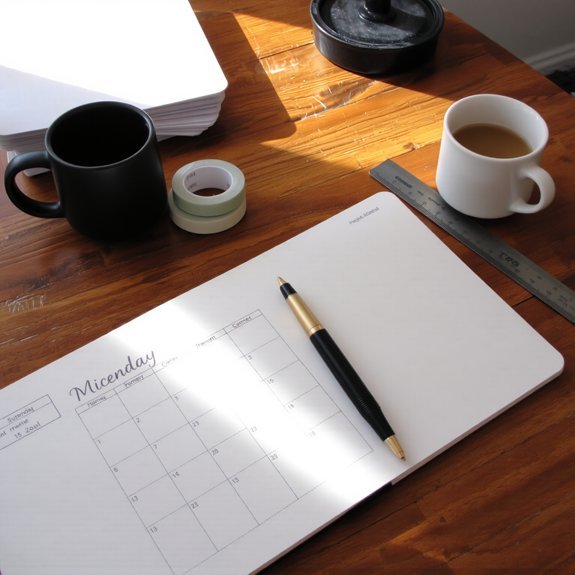
You felt that neatness settle, right? I promise, you don’t need a shrine of stationery to start—just the basic supplies and a willing page. Grab a notebook you like, any size that fits your bag and mood, and a pen that glides without drama. A ruler helps for tidy lines, an eraser for human mistakes, and maybe a pencil for sketching ideas before they’re permanent. Keep it simple, keep it usable. Open the cover, breathe in the paper smell, feel the spine creak—this is yours. Don’t hunt for perfect pens, or color-coded chaos. Your bullet journal wants honesty, not fanfare. Start small, make it habitual, let it grow as you do.
Understanding the Core Symbols
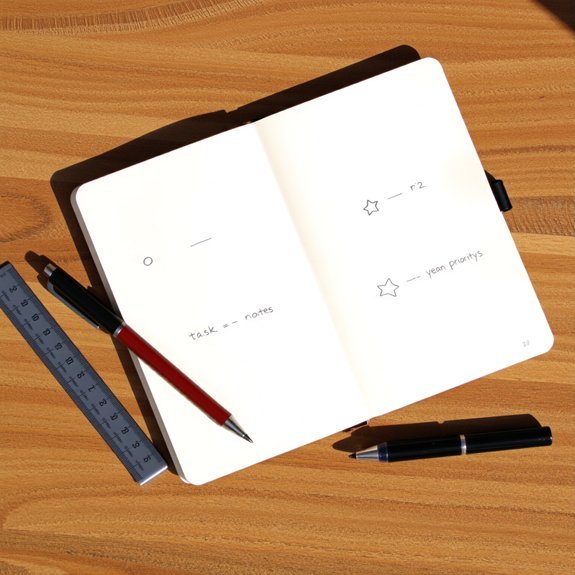
Think of symbols as the shorthand handshake between you and your future brain. You’ll pick a few core symbols—dot for tasks, circle for events, dash for notes—and you’ll feel pleasure, weirdly, when pages make sense. I tell you this while tapping a pen, hearing the paper whisper. Memorize essential meanings, keep them simple, change them if they lie to you. When a task turns done, fill the dot, hear a tiny victory. Migrate with a neat arrow, admit defeat with an X, mark priorities with an asterisk that winks. You’ll sketch them at the front, or on a sticky note, so they’re legal in your world. I promise, once they’re ritual, your chaos looks classy.
Setting Up Your Index and Future Log
Okay, let’s do this: grab your notebook, flip the first few pages, and make some room for the index—your bullet journal’s GPS. Start by numbering pages, run your finger along the edge, feel the paper. Reserve two to four pages, write “Index” at the top, leave spacing for sections. I’ll tell you what I do: jot topic titles, then their page numbers, update as you add spreads. Clean, quick index organization keeps you from hunting through a paper jungle.
Now flip ahead, sketch a future log across two spreads. Block months, pencil in big dates, birthdays, appointments. Keep it sparse, revisit monthly. It’s the place for life’s bookmarks, simple and reliable.
Creating Monthly and Weekly Spreads
Once you’ve penciled in the future log, it’s time to get cozy with monthly and weekly spreads — they’re the map and the motor of your month. I like to start each month with a splash of color, a tiny doodle, and a clear monthly themes line, so the vibe’s obvious at a glance. Flip to weekly spreads next, lay out boxes or columns, and list weekly goals in bold, like little mission briefs. Write appointments, habit trackers, and a brain-dump corner that smells faintly of fresh paper and ambition. I talk to myself in the margins, make a joke, cross things out with satisfying violence. Keep it simple, tweak layouts as you go, and own the month—imperfections make it yours.
Daily Logs That Keep You Focused
If you want to actually get things done, daily logs are where the magic — and the mess — happens, and I promise they’ll save your week more often than your planner app ever will. You’ll open a fresh page, hear the scratch of pen, and decide what today deserves. Jot tasks, appointments, tiny wins, and the single big thing you’ll protect like a VIP. Use bullets, checkboxes, arrows, whatever feels good. Pause for daily reflections at evening, scan what stuck, what wandered off, and tweak tomorrow. This practice sharpens time management, keeps your rhythm, and prevents panic-sprints. I’ll admit, some days I scribble nonsense, then salvage gold. That’s the point: you’re building a habit, not a perfect museum piece.
Simple Habit and Mood Trackers
You’re going to love how simple this gets: draw a tiny checkbox grid for daily habits—drink water, stretch, read—and tick them off like a tiny, satisfying victory. I’ll show you a bright, color-coded mood key too, so one quick swipe of color tells you if today was sunny, moody, or full-on grumpy; it’s visually loud and strangely calming. Keep it small, keep it silly, and watch patterns pop up, like fingerprints of your life.
Daily Habit Checkboxes
Habit checkboxes are the tiny, ridiculous heroes of your bullet journal — I stick them on a page, tap the pen to paper, and suddenly habits look conquerable. You’ll feel clever, like you’ve tricked yourself into consistency. For habit tracking, draw neat rows of boxes, one per day, or a compact grid for the month, keep checkbox design simple so your eyes don’t cry. Use short labels — “water,” “walk,” “read” — and a satisfying marker stroke each evening. If you miss one, shrug, don’t self-flagellate; the visual will nudge you tomorrow. I like the scratch of ink, the small ritual of checking off, the tiny victory sound in my head. Start tiny, repeat, celebrate.
Color-Coded Mood Key
Okay, so you’ve been checking boxes like a tiny, determined robot. Now let’s add color, because feelings deserve flair. You pick a simple mood color schemes palette—five shades, vivid and named—and assign each one to a feeling. I’ll whisper my cheat sheet: sunny yellow for energized, calm teal for peaceful, mellow mauve for content, stormy gray for meh, and ember red for stressed. Draw a tiny legend, slap it on your monthly page, then color each day’s square or dot. You’ll see patterns pop, like constellations of your life. Emotional color meanings help you decode trends fast, they don’t judge. Repeat, tweak, and laugh when you realize Mondays are literally mauve. It’s low-effort, honest, and oddly satisfying.
Custom Collections and Project Pages
You’ll want collections that fit you, not some cookie-cutter template, so think habit lists, reading logs, recipe stashes, or a tiny travel brain-map—whatever sparks a little joy when you flip the page. For projects, I’ll show you a simple structure: a clear goal at the top, a short checklist of steps, deadlines and tiny milestones, plus a weekly progress box you actually update. Trust me, it’s satisfying to watch messy plans turn into neat wins, like making a cluttered closet suddenly behave.
Personalized Collection Types
Think of a custom collection like a tiny, stubborn room in your journal that you get to decorate and lock down with purpose; I’ll show you how to build those rooms so they actually earn their keep. You’ll make themed collections for hobbies, travel, or book lists, and seasonal collections that shift with pumpkin spice and sunscreen. Pick a title, sketch a border, drop down a quick index, then fill it with sensory cues: the scratch of pen, the smell of paper, a doodle that makes you laugh. Use sticky tabs, color codes, tiny checkboxes. I swear it’s satisfying. When you open that page, you should feel a plan, a mood, a tiny ritual—like brewing tea before tackling life.
Project Page Structure
Three parts, tops: a clear goal, the next actions, and a progress snapshot—anything else is just decorative confetti. I tell you this like a drill sergeant who loves glitter. Your project layout should sit on one spread, bold title, deadline, and a one-line purpose that smells like sunlight and fresh paper. List the next actions, short bullets, checkboxes—no essays. Add a tiny timeline, a splash of color for urgency, and a progress bar you can actually fill with a marker. For goal tracking, log wins and setbacks in the margin, honest and small. Flip back weekly, update, celebrate with a dramatic pen flourish. This is your custom collection, your project page, functional, forgiving, and oddly satisfying to stare at when you need courage.
Tips for Keeping It Sustainable
If you want your bullet journal to stick around longer than a good intention and a fancy pen, treat it like a low-maintenance pet, not a high-drama masterpiece. I tell you, pick sustainable materials and eco friendly options—recycled paper, refillable pens, a sturdy cover that won’t cry after three trips in your bag. Keep spreads simple, habit trackers small, and color splashes intentional, not accidental explosions. I write a one-line daily check, tuck receipts behind a page, press a leaf now and then for texture. Set a five-minute weekly tidy, don’t edit every thought. You’ll avoid burnout, save money, and feel smugly responsible. It’s practical, tactile, and yes, oddly comforting—like a plant you remember to water.
Creative Ideas Without the Pressure
Anybody can make a spread that looks like it took hours, and I’m here to prove you can do it in ten minutes flat without crying into your markers. You grab a pen, flip to a blank page, breathe in that paper-smell, and decide to play. I toss in three creative prompts: a color you felt today, a tiny triumph, and a doodle you’ll brag about. No perfection, just texture — a smear of watercolor, a sticker, a ruled box. That tiny ritual gives pressure relief, honestly. If you mess up, turn it into a border, or confess to your page, like a dramatic roommate. You’ll laugh, you’ll tinker, and your bujo will look lived-in, not staged. Try it, ten minutes.
Conclusion
You’ve got this — grab a simple notebook, a comfy pen, and plunge into it; I promise it’s less scary than a dentist visit and twice as satisfying. I’ll walk you through an index, a future log, monthly and weekly spreads, few symbols, and a tiny habit tracker, then step back so you can make it yours. Keep it playful, keep it useful, and don’t sweat perfection — beauty’s in the messy details.