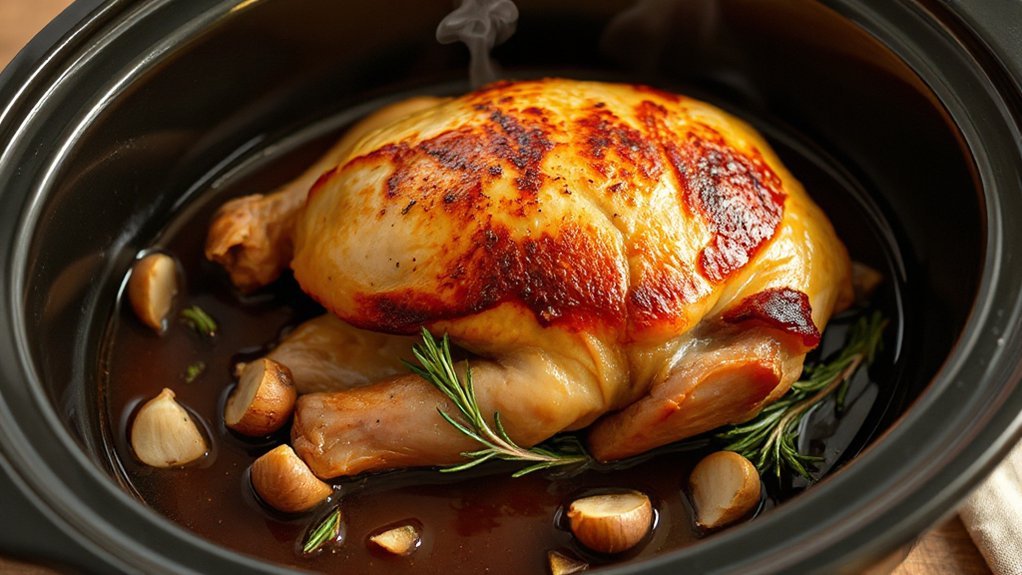
Like a cozy sequel to Thanksgiving, you’ll get perfect turkey without the drama — and I’ll show you how. You’ll trim and rub the breast, tuck herbs under the skin, and dump a splash of broth and garlicky aromatics into the slow cooker, then let low heat work its quiet magic for hours while your house smells like heaven. It’s easy, forgiving, and worth the tiny bit of patience — but first, a few pro tricks.
Key Takeaways
- Choose a bone-in turkey breast (6–8 lb) for better flavor and even slow-cooker cooking, or a smaller boneless for quicker shredding.
- Trim excess fat, pat meat dry, and tuck thin edges for uniform thickness and even cooking.
- Rub or spread a compound butter or seasoning blend (herbs, garlic, citrus zest, salt) under and over the skin.
- Cook in a 6–8 quart slow cooker on LOW 4–6 hours (or HIGH 2–3) until internal temperature reaches 165°F.
- Rest 10–15 minutes, slice against the grain, and store leftovers in shallow airtight containers in the fridge.
Choosing the Right Turkey Breast Cut
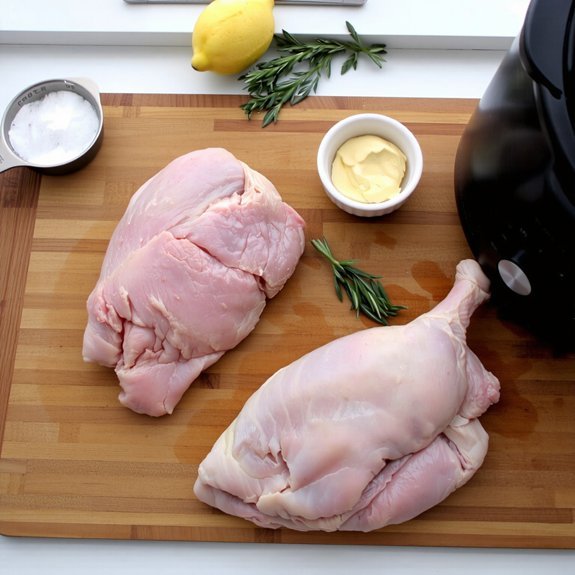
If you want juicy, no-fuss turkey, start with the cut—you can’t fix a stubbornly dry bird with spices and wishful thinking. I tell you straight: pick the right breast type, bone-in for flavor, boneless for speed. You’ll feel the heft, smell faintly of iron, imagine slicing glossy meat. I show you both options, compare textures, note how skin crisps or doesn’t. Think about portions, single breast or split, and how each plays with various cooking methods. Want shreddable, choose a larger, slower-friendly piece; want slices, grab firm, chilled breast. You’ll touch it, weigh it, make the call like a tiny food judge. Trust me, the cut sets the whole outcome.
Essential Tools and Slow Cooker Types
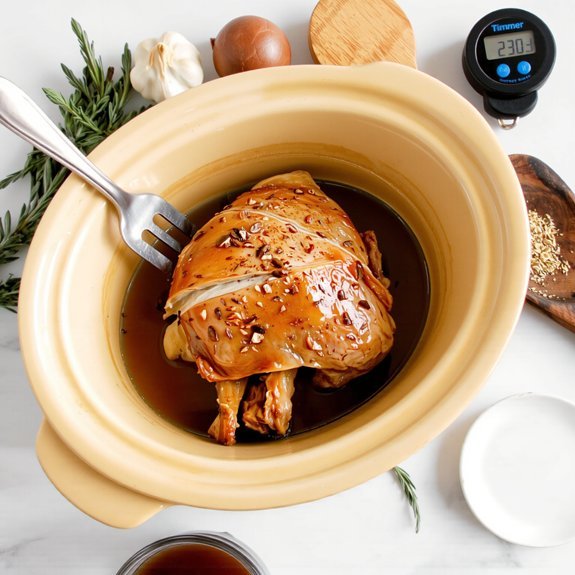
You’ll want a slow cooker that fits the bird without cramming it — think roomy 6–8 quart for a whole breast, smaller for halves, and yes, size matters when browning and basting. I like ceramic inserts for even heat and that gentle, gravy-friendly finish, but metal ones heat fast and slide right into a broiler if you want crisp skin (just don’t yell at me when you forget the oven mitts). Gather a good thermometer and sturdy tongs, because you’ll be poking, flipping, and tasting like a proud, slightly nervous chef who’s about to serve dinner.
Slow Cooker Sizes
Because size actually matters when you’re slow-cooking a turkey breast, I’m going to make this short and practical: pick the right pot and you’ll get juicy meat, pick the wrong one and you’ll be poking sad, dry slices at the table. You want a snug fit, not a wrestling match. Small cookers are great for single breasts, they cradle the meat, keep juices close, and heat evenly — ideal for two to four people. Large cookers handle bigger breasts or bone-in pieces, they give room for aromatics and liquid without overflowing, but too much empty space dries things out. I say measure first, tuck the breast in, pour in a splash of broth, and don’t overfill. Simple, effective, tasty.
Insert Materials
Tools matter. You’ll want a few essentials, trust me — they actually save you from dried-out drama. I grab tools that let me season, sear, and nestle the breast into cozy cooking liquids. Sensory payoff: sizzling oil, fragrant turkey seasoning, steam that smells like victory.
- Heavy skillet for browning, gives flavor, crispy edges you’ll brag about.
- Instant-read thermometer, no guessing, poke once and you’re gold.
- Slow cooker with removable insert, easy cleanup, steady low heat.
- Tongs and a wide spatula, gentle handling keeps juices inside.
Pick a casserole-style slow cooker for even heat, or a tall one if you’re stuffing aromatics around the breast. You’ll be smug, and your guests will ask for seconds.
Preparing and Trimming the Turkey Breast

One solid thing before we even reach the slow cooker: trim that turkey breast like you mean it. I tell you this because trimming techniques matter — you want even thickness, no dangling fat, no ragged silver skin that puckers when cooked. Lay the breast skin-side down, feel for fat and cartilage, and slice them away with a sharp knife. Pat the meat dry, don’t skip this; a dry surface helps browning later and lets your preparing marinade stick better. If you find a tendon, tug gently and cut. Tuck thin edges under so the breast heats evenly. I talk you through each snip, small confident motions, like surgery but less dramatic. Now it’s ready for the slow cooker, smelling clean and hopeful.
Seasoning Blends and Herb Butter Options
If you want that turkey breast to taste like it actually remembered being alive, you’ll need seasoning and fat that know what they’re doing — and that’s where herb butter and smart spice blends come in. I tell you, smearable butter is magic; you’ll tuck it under the skin, press it in, and hear silence as flavor settles in. Herb blends lift brightness, thyme and parsley whispering, while Spice rubs bring bold edges, smoked paprika and garlic marching in.
- Classic herb butter: butter, rosemary, thyme, lemon zest, salt.
- Spicy rub: smoked paprika, cayenne, brown sugar, cumin.
- Citrus-herb twist: orange zest, sage, olive oil, pepper.
- Garlic-parsley compound: butter, parsley, roasted garlic, lemon.
Aromatics, Liquids, and Flavor Boosters
You’ve lathered that herb butter under the skin and rubbed the spicy mix into crevices, now let’s give the slow cooker something to sing about: aromatics, liquids, and a few sneaky boosters that make the whole thing taste like you actually tried. I toss halved onions, smashed garlic, celery ribs, and thick carrot chunks around the breast so steam carries savory depth, and those herb combinations you chose get echoed in the pan. Pour in low-sodium chicken stock, a splash of white wine, or apple cider—enough to come halfway up the meat, not drown it. Add a couple bay leaves, a few peppercorns, maybe lemon slices for brightness. For umami, a dash of soy or Worcestershire works wonders. Smell check. You’re winning.
Searing vs. No-Sear: Pros and Cons
While I love a good sizzle, I won’t pretend searing is a magic spell — but it sure does give the breast a gorgeous, brown crust and a mouthwatering roasted aroma that makes dinner sound like a triumph before you even carve it. You’ll notice Searing benefits right away: texture, color, flavor depth. But skipping that pan has perks too, so here’s the trade-off, plain and useful:
- Searing benefits: crisp, caramelized crust, tempting aroma, added savory Maillard notes.
- No sear advantages: faster cleanup, less fuss, juicier interior when you’re pressed for time.
- Searing costs: extra step, splatter, a hot pan to babysit.
- No sear costs: paler look, milder surface flavor, but still tasty and simple.
Slow Cooker Settings and Cook Times
Okay, so you’ve got that beautiful breast, maybe seared, maybe not — either way, it’s time to talk slow cooker settings and cook times, which are more like a gentle nudge than a rule book. I tell you straight: low or high are your friends, pick based on schedule. Low gives plush, fall-apart meat, high speeds things up when life’s chaotic. Watch your slow cooker temperature—most dial lows sit around 200°F, highs near 300°F, but check your manual, mine lies to me like an old friend. For a 3–4 pound breast, expect a cooking duration of roughly 3–4 hours on high, or 5–7 on low. Add aromatics, resist peeking, and enjoy the slow crescendo of smell.
Checking Doneness and Food Safety Tips
Let’s not romanticize this — food safety is sexy when it saves you from a week of regret. I tell you straight: don’t guess doneness. Use a probe, stick it into the thickest part, avoid touching bone, and rely on temperature checks. You’ll hear the slow cooker hum, smell the browned edges, and you’ll want to plunge in — don’t.
- Use a calibrated thermometer, aim for 165°F in the thickest spot.
- Keep juices contained, wipe spills immediately, practice safe handling.
- Chill leftovers within two hours, shallow containers cool faster.
- Never rinse raw turkey, you’ll splash bacteria around.
I keep it simple, I keep it clean, and I sleep better knowing you will too.
Resting, Slicing, and Serving Suggestions
After you pull the turkey breast from the slow cooker, give it a beat—resting isn’t optional, it’s the ticket to juicy slices, and I promise you it’s worth standing there like a vigilant turkey bodyguard for ten to 20 minutes. I tuck foil loosely over the bird, whispering encouragement, and use simple resting techniques: tent loosely, leave undisturbed, let internal juices redistribute. When you slice, use steady slicing methods: long smooth strokes with a sharp knife, cut against the grain, trim thin or thick depending on your mood. For serving ideas, think warm gravy drizzle, crisp herbs, bright citrus. Plating suggestions: stagger slices, add roasted veg, sprinkle crunchy crumbs. Serve confident, smile, take a bow—you earned this.
Storing and Reheating Leftover Turkey Breast
If you want your leftover turkey to taste like it went on a spa retreat instead of a math test, treat storage and reheating like a ritual, not an afterthought. I’ll walk you through simple storing methods, so the meat stays moist, fragrant, and ready. Cool it quickly, slice against the grain, and pack in airtight containers with a splash of stock. I talk fast, I joke more, but I mean it.
Treat leftover turkey like a spa day: cool fast, slice against the grain, pack airtight with a splash of stock.
- Refrigerate within two hours, use shallow containers, label with date.
- Freeze in portions, wrap tight, use within three months for best flavor.
- Reheat techniques: low oven at 300°F with foil and broth.
- Microwave: cover, short bursts, let rest between zaps.
Conclusion
You’ve got this—slow cooker turkey breast is forgiving, like a good friend who never judges. I promise the meat will be tender, juicy, and smelling like Sunday dinner, if you trim, season, and give it time. Use broth and aromatics, cook low, check for 165°F, then rest before slicing. Serve hot, watch the happy silence, and stash leftovers promptly. It’s simple, reliable, and delicious—comfort on a plate, every time.