
Ever notice how one simmering pot can make a room feel like a holiday movie set? You’ll grab a fruity red, toss in cinnamon, star anise and cloves, peel an orange with purpose, and let the kitchen fill with sticky, warm spice — it’s simple theater, really, and you’ll look like you know what you’re doing. I’ll show you how to simmer gently, sweeten smartly, and serve it so everyone pretends you planned this.
Key Takeaways
- Choose a fruity, mid-range red (or dry white) and discard any wine that smells off.
- Combine wine, citrus peel, whole spices (cinnamon, cloves, star anise), and a sweetener in a heavy pot.
- Warm gently to 65–75°C without boiling, simmering slowly to extract flavors and tasting as you go.
- Sweeten last with honey, maple, liqueur, or brown sugar to balance acidity and spice.
- Strain, serve garnished with citrus, berries, and a cinnamon stick, and store refrigerated up to 3 days.
Choosing the Right Wine

If you want the mulled wine to taste like a cozy hug instead of a boiled mystery, start with the right bottle. You’ll pick a red wine for depth, something fruity, not tannic, because you don’t want grit stealing the show. I’d avoid super-expensive labels — this isn’t a sommelier’s parade, it’s winter comfort. If you prefer a lighter approach, try a dry white wine, it mulls surprisingly well with citrus and a touch of honey, bright and cheeky. Smell the bottle, pour a sip, and trust your nose; if it smells off, don’t force it. I keep a reliable mid-range red and a crisp white on hand, so when cold hits, I’m ready, no panic, just pour and heat.
Essential Spices for Mulling
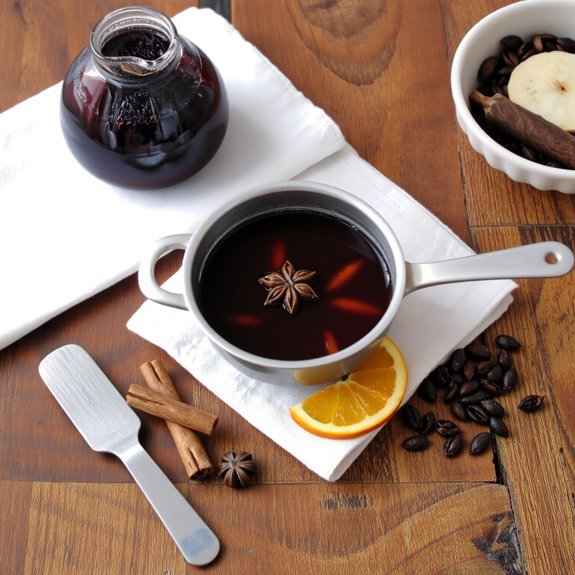
You’ll want whole spices—sticks of cinnamon, star anise, and clove studs—so you can smell them hit the pot before you even turn on the heat. Decide between fresh and dried: fresh citrus peels and whole nutmeg give bright, zesty punch, dried bay or ginger add steady backbone, and I’ll warn you, too many cloves will boss the room. Start with modest quantities—one cinnamon stick, three cloves, a half-apple slice worth of nutmeg—and taste as you heat, because mulling is negotiation, not warfare.
Whole Spices Selection
Although I won’t promise your kitchen won’t smell like a holiday movie in ten minutes, choosing the right whole spices is where the magic starts, and I’ll walk you through it like a mildly obsessed friend whispering secret recipes. You’ll grab cinnamon sticks for warm backbone, star anise for that licorice twang, whole cloves for sharp perfume, and a couple of nutmeg seeds to grate over the top. Toss them in a saucepan, bruise the cinnamon, press the cloves into citrus, give star anise a little nod, and hold the nutmeg like a tiny fortune. You’ll simmer gently, taste, and tweak. Don’t go overboard; mulled wine is a suggestive art, not a punch to the face.
Fresh vs. Dried
Wondering whether to reach for the jar of whole cloves or the sad little packet of ground spice? I’ll be blunt: fresh herbs sing, dried ones whisper. You’ll notice fresh herb benefits immediately — bright citrus thyme, glossy bay leaves, crushed star anise that snaps. They lift aroma, they look pretty in the pot, they make you feel fancy and competent. But dried herb convenience is real; you’ll grab, toss, and never worry about wilting. I mix approaches, because life’s messy and so is my spice drawer.
- Use fresh for aroma and visual drama, when you’ve got time and flair.
- Use dried for pantry ease, quick weekday mulls.
- Combine both to balance pop and steadiness.
- Bouquet garni hides whole bits, neat and classy.
Spice Quantities Guide
One neat rule I follow: start with small, then build — you can always add, you can’t take away. I tell you this because spices are sneaky, and you’ll thank me when your kitchen doesn’t smell like a cinnamon factory. Use 2-3 star anise, 3-4 cloves, 1-2 cinnamon sticks per bottle of wine. Add a thumb-sized slice of fresh ginger for bite, a strip of orange peel for brightness. If you like it sweet, a tablespoon of sugar, honey, or maple balances tannins. Taste as it warms, tweak gently. Try classic spice combinations—cinnamon-clove-orange—or bolder mixes with cardamom and star anise. You’ll learn which flavor profiles sing for you, and you’ll mess up once, laugh, then nail it.
Sweeteners and Flavor Enhancers
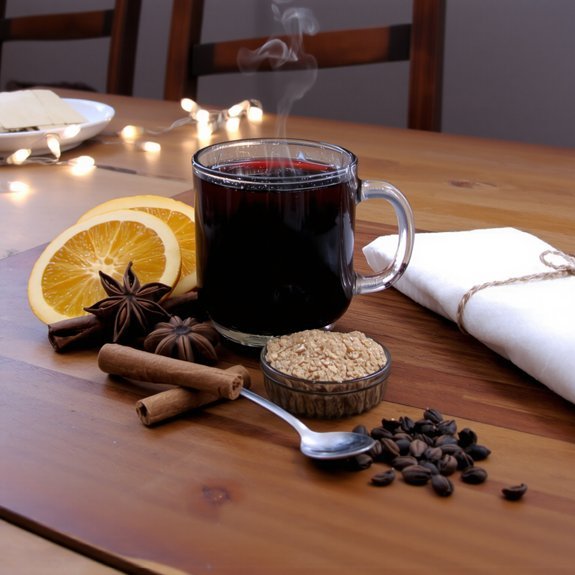
Sweetness is your friend here, and I’m not talking about polite sugar—think molasses-thick honey, bright maple, or a splash of liqueur that makes you grin. I like to test honey alternatives and different sugar types, so you won’t get bored. You’ll taste depth, not just sweetness. Add gradually, stir, and sip warm, not scalding.
- Use honey or maple for viscosity and warmth, they coat the tongue, comfort like a blanket.
- Try brown sugar or demerara for toffee notes, they give body, they don’t hide.
- Add a spoon of jam or liqueur for complexity, it’s cheating that works.
- Don’t overdo it, you can always add more, but you can’t take it back.
Fruit Additions and Garnishes
Looking for a little brightness to cut through all that cozy spice? You’ll toss in citrus fruits—orange twists, lemon slices—to wake the aroma, I promise it snaps awake. Add berry blends, frozen or fresh, for a playful color and a tart pop, stir gently so they don’t turn to mush. Dried fruits like apricots or figs give body, they soak up spice and sweeten slowly, which I love. For contrast, tuck in a sprig of rosemary or thyme for herbal notes, it smells like a garden crashed your kitchen party. Aim for flavor balance: don’t overdo any one thing. Garnish with a citrus wheel, a few berries, a cinnamon stick, and you’re handing people winter in a mug.
Step-by-Step Mulled Wine Method
Start by grabbing a heavy-bottomed pot and a good mug—you’ll want something that holds heat and feels honest in your hands, not some dainty teacup pretending to be festive. I walk you through a clear, cozy method that honors mulled wine history and modern festive traditions, no pomp, just smell and warmth.
- Combine wine, sugar, citrus, and spices in the pot, stir gently, listen to the tiny hiss as flavors meet.
- Add a cinnamon stick and star anise, press scents into the liquid, imagine old markets and holiday lanes.
- Simmer slowly, taste and tweak sweetness, wink at ritual, don’t rush the letting-be.
- Strain, pour into your mug, garnish, sip, sigh—mission accomplished.
Temperature and Timing Tips
If you let the wine flirt with heat too aggressively, it sulks and turns bitter, so I keep things gentle and precise. You’ll want to aim for a low simmer, around 70–80°C (160–175°F), and resist the urge to boil; temperature control saves aroma, keeps spice oils lively, and avoids that burned-edge taste. I stir, I sniff, I taste — every ten minutes at first, then every five when you’re nearing perfect. Use a kitchen thermometer, set a timer, and don’t walk off. For larger batches, add a bit more time, for single mugs, subtract a few minutes; those are basic timing techniques that actually help. When it smells like holiday magic, you’re done — pull it off heat and serve.
Nonalcoholic and Low-Alcohol Alternatives
Want the mulled-wine vibe without the buzz? I’ve got you. You’ll still get steam, cinnamon perfume, and that cozy, sock-sliding warmth, minus the wobble. Try nonalcoholic wines as a base, they mimic body and fruit, you’ll stir in orange and clove and taste comfort. Or, if you want a whisper of kick, add low alcohol spirits, a splash, not a dive.
- Heat nonalcoholic wines gently, don’t boil, you’ll lose aroma.
- Infuse with citrus, cinnamon, star anise, simmer low, smell the room sigh.
- Use low alcohol spirits sparingly, for complexity, not intoxication.
- Finish with honey or maple, taste, adjust, and serve warm, smug and proud.
Scaling the Recipe for a Crowd
You’re throwing a party, I’m pouring for a crowd, and we’ve got to pick the right volume so no one’s left waving an empty cup. Keep your spice and infusion ratios steady as you scale—more wine isn’t license to drown the cinnamon, so taste as you go and smell for that warm, orange-clove hit. Think about heating and serving logistics too: big pot or urn, gentle low heat, ladle-ready cups, and a clever friend to man the station so you can sip one warm yourself.
Choosing the Right Volume
One simmering pot serves six people, but that’s just the polite dinner-party answer; I plan for two cups per guest, because everyone naps on leftovers and I don’t trust manners. You’ll think in liters or quarts, and you’ll think about volume considerations and party sizes before you buy the wine. Measure cups, count guests, add a little extra for seconds and sneaky refills.
- Estimate demand: sober guests take one, thirsty guests take two.
- Buffer rule: add 10–15% extra for spill and seconds.
- Vessel choice: use a stockpot for 12+, a saucepan for small groups.
- Reheat plan: warm smaller batches on the stove, keep a thermos hot.
I narrate like a friend, practical, slightly cheeky, hands-on, precise.
Spicing and Infusion Ratios
If you’re scaling mulled wine for a crowd, think of spices like a band—each instrument needs its time and volume, or the whole thing sounds wrong. You’ll want clear spice balance: cinnamon leads, star anise and cloves solo sparingly, orange peel fills the harmony. I recommend per liter: 1 cinnamon stick, 2 cloves, half a star anise, a strip of peel. For 10 liters, multiply, but don’t go linear—reduce cloves a touch, they bite. Use infusion techniques: tied sachets for easy removal, cold maceration overnight for gentle melding, or brief simmering for punch. Taste as you go, trust your nose, adjust sugar last. You’ll serve warm smiles, not a spice crime scene.
Heating and Serving Logistics
When you’re serving mulled wine to a crowd, plan like you’re running a tiny, festive railway—trains (and people) need smooth arrivals, clear platforms, and a boss who looks like they know the timetable. I pick a primary heating method, then a backup kettle, because crowds are cheerful, impatient, and will test your patience. Keep a thermometer nearby, watch serving temperatures, aim for 65–75°C, never boiling, so spice oils sing not scorch. Ladle with rhythm, announce pours, make each cup feel curated.
- Use a slow cooker for steady heat, and a saucepan for quick top-ups.
- Batch in large pots, label vats, rotate to keep flavor even.
- Station one server, one cashier, one trash wrangler.
- Prep mugs, garnishes, napkins — speedy theater.
Serving Suggestions and Pairings
Since mulled wine’s already doing the heavy lifting with heat and spice, I like to keep the rest of the scene simple and a little theatrical, like I’m hosting a cozy mystery where everyone’s guilty of drinking too much warmth. For holiday gatherings, set out mugs, cinnamon sticks, and citrus slices, let guests garnish their own, it’s interactive and avoids your pretending to be a bartender. For cozy evenings, dim lights, light a clove-studded orange, and hand someone a blanket — instant atmosphere, minimal effort. Pair with salty cheeses, roasted nuts, dark chocolate, or spiced shortbread, they’ll cut the sweetness, boost the spice, and make you look thoughtful. If someone asks for a sober option, offer warm spiced apple cider, and wink like it’s your best improvisation.
Storing and Reheating Mulled Wine
Because mulled wine tastes best warm and a touch naughty, you’ll want to store and reheat it like you’re protecting a cozy secret, not hoarding leftover soup. I cool it quickly, stirring occasionally, using simple cooling techniques: ice bath, shallow pan, gentle fan. Then I decant into clean storage containers, glass jars work best, lids tight, spices tucked in.
- Cool fast, but don’t shock the flavor—let aromas settle.
- Use glass storage containers, label date, keep in fridge up to 3 days.
- Reheat low and slow on stovetop, don’t boil, taste and tweak sugar or spice.
- For parties, warm in slow cooker, keep lid on, stir before serving.
You’ll sip, grin, and pretend it was effortless.
Conclusion
You’ve nailed it — warm, spiced, and impossibly cozy. Keep the heat low, taste as you go, and don’t drown good wine in sugar. Fun fact: mulled wine sales jump about 30% each winter in many countries, so you’re joining a global cozy club. Make a pitcher, strain it, garnish with orange and cinnamon, then watch faces light up. I’ll take credit for the smell; you take the applause.