Tag: New Year’s resolutions

  • How Do I Make New Year’s Resolutions Stick

    How Do I Make New Year’s Resolutions Stick

    Ever notice how your resolutions start with fireworks and end up in a junk drawer? I’ll tell you how to pick one clear goal, chop it into tiny steps, cue it into your day—think a sneaker by the door, not a guilt trip—and track it with checkboxes you actually enjoy ticking; you’ll learn to plan for slip-ups without self-flagellation, rope in a buddy, and make the new habit feel like who you already are, so you stop promising yourself things and start proving them.

    Key Takeaways

    • Pick one clear, specific goal with measurable milestones and write it down where you’ll see it daily.
    • Break the goal into tiny, actionable steps and schedule the easiest next action in your calendar.
    • Create consistent routines and visible cues (time, place, objects) to trigger the new habit automatically.
    • Track progress with a simple visual system and celebrate tiny wins to build momentum.
    • Plan common obstacles and a shame-free reset strategy so setbacks become adjustments, not failures.

    Choose One Clear, Specific Goal
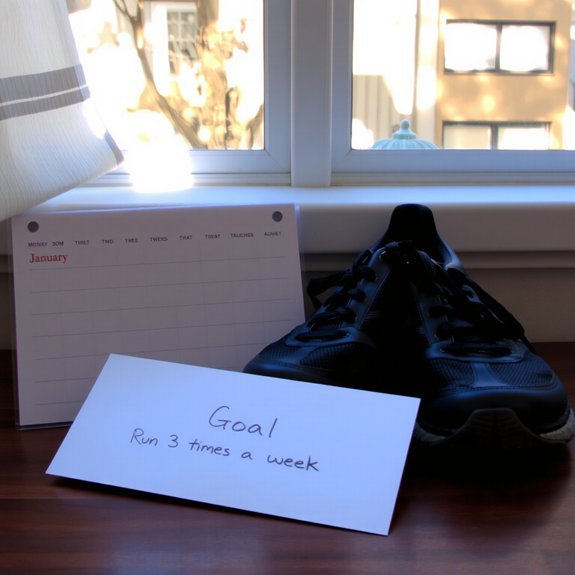
    one clear specific goal

    Think of it like a compass: you need one clear point to aim at, not a handful of fuzzy directions. You’ll pick a single goal, feel it in your chest, and set goal clarity like a lens—sharp, simple, unflinching. I’ll nudge you: name it, say it aloud, write it on a sticky note and slap it on the mirror. Then carve out specific milestones—tiny, visible wins that ping with satisfaction, like checking off boxes. Picture the smell of coffee on morning runs, the click of a calendar reminder, the text you’ll send when you hit week one. You’ll laugh at setbacks, adjust course, and keep the story tight. One goal, clear view, measurable steps—no drama, just steady progress.

    Break It Into Small, Actionable Steps
    small wins build momentum

    Nice—one clear goal is your compass. Now chop it up. I tell you this because big goals scare you, and me, too. Pick small milestones you can see, taste, touch: run two minutes, buy fresh shoes, log meals for three days. Write them down, stack them like Lego, each piece a win. Use actionable strategies: set a 10-minute start, remove a roadblock, celebrate with a silly fist pump. Picture the scene—your phone buzzes, you lace up, cold air hits your face, you go. If you stumble, shrug, adjust the step, keep moving. I keep it human, blunt, kind. Small wins build momentum, and momentum beats motivation every time.

    Build a Consistent Routine and Cue System
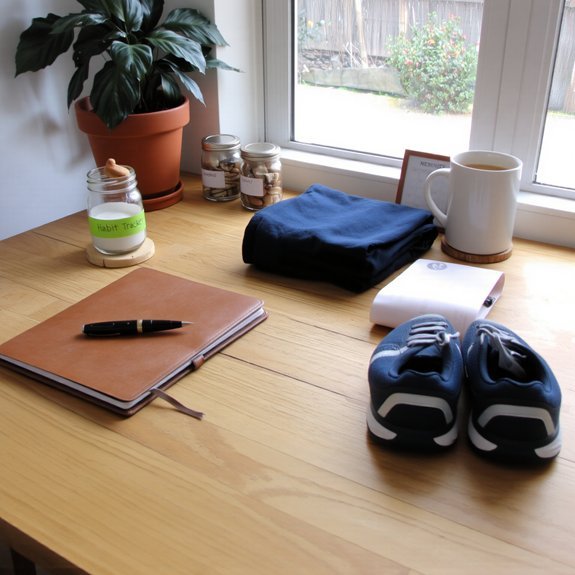
    morning ritual and cues

    You’re going to grab your mornings by the shoulders and give them a ritual: a hot coffee, three deep breaths, one tiny habit you actually enjoy, done before your brain wakes up to object. Then you’ll layer visible cues — a water bottle on the counter, your workout shoes by the door, a sticky note on the mirror — so your eyes nag you in a friendly way. I’ll keep you honest, promise to be a bit smug when you succeed, and remind you that small, repeated scenes win the year.

    Morning Anchor Rituals

    One simple thing you can do every morning will tilt your whole day in the right direction; I call it an anchor ritual, and yes, it sounds fancier than it is. You wake, breathe, and ground yourself with morning mindfulness — five slow breaths, feet on cool floor, light on your face. Then you grab a pen, do gratitude journaling for two minutes, three lines — specific, not vague. That tiny, repeatable sequence becomes your cue, your micro-habit, and it nudges choices all day. Keep it sensory: the pen’s scrape, coffee steam, sunlight on your wrist. Don’t overthink it, don’t wait for motivation, just show up. Over time that little ritual becomes your reliable launchpad.

    Visible Behavior Cues

    Think of visible cues as tiny signposts you leave for future-you — sticky notes, a water bottle on the counter, your running shoes by the door — they do the remembering so you don’t. I want you to place visual reminders where you’ll trip over them: the kettle whistle, the phone alarm, a brightly colored band on your mirror. These environmental triggers pull you into action without negotiation. Put your journal on the pillow, set a mug by the laptop, drape workout shorts over a chair. When you see the cue, pause, breathe, move. It feels silly at first, like training a pet, but it works. Celebrate tiny wins, tweak the setup, and soon the routine runs on its own—quietly, reliably, like a well-trained habit ninja.

    Track Progress and Celebrate Tiny Wins

    A tiny chart on the fridge, a marble in a jar, or a quick note in your phone—these small, visible markers turn vague intentions into something you can actually see and touch, and that changes everything. You’ll want clear progress metrics, and fun celebration strategies, so you don’t lose steam. I talk to you like a buddy who’s tried every trick, and yes, I’ve failed spectacularly. You’ll track, you’ll smile, you’ll keep going.

    1. Mark daily wins: tick boxes, timestamped photos, a marble dropped with a satisfying clack.
    2. Measure weekly progress: short charts, simple metrics, nothing nerdy—just useful.
    3. Celebrate tiny wins: a celebratory snack, a five-minute dance, a shout-out to a friend.

    Plan for Obstacles and Reset Without Shame

    When things go sideways—and they will, because life loves a plot twist—don’t freak; plan. I tell you this like a friend handing over an umbrella, because obstacle anticipation is half the battle. Picture spilled coffee, a missed alarm, a mood that eats motivation; name the snag, sketch a tiny workaround, rehearse it once. Say aloud, “Okay, pause.” Then do a shame free reset: three deep breaths, jot one realistic step, and restart. Keep your toolkit visible — sticky note, timer, comfy shoes for a quick walk — little sensory cues that yank you back. I’ll be honest, it feels weird at first, like practicing for life. Stick with it, you’ll get slicker, less dramatic, and oddly proud.

    Use Accountability and Social Support

    You don’t have to go it alone — grab an accountability partner who texts you smug reminders and celebrates the tiny wins with a GIF. Join a supportive group, whether it’s a sweaty weekend class, a chatty online forum, or a neighborhood walking crew, so you get real voices, real tips, and the occasional roast when you slack. I’m with you, cheering from the sidelines and handing out honest kudos when you actually show up.

    Find an Accountability Partner

    Somebody to report to makes habits stick—trust me, I’ve tried talking to myself and the mirror gives terrible feedback. I want you to feel the accountability benefits, so pick someone who’ll call you out kindly, show up, and celebrate the small wins with loud, silly enthusiasm.

    1. Choose wisely: partner selection matters — a friend who texts, a coach who listens, or a neighbor who knocks when you skip the jog.
    2. Set clear check-ins: five-minute calls, a photo proof, or a shared app update, whatever smells like commitment and not punishment.
    3. Make it fun: trade badges, wager a coffee, narrate progress like a tiny victory parade — and yes, roast each other gently when you flake.

    Join a Supportive Group

    If you want resolutions that actually stick, don’t go it alone—find a group that’s loud, messy, and oddly reliable, like a tiny village cheering for your weird little victories. I want you in a room that smells like coffee and sneakers, where clapping is normal and failures get pizza. Join a meetup, class, or online crew that builds supportive environments, where group motivation spikes when one person shares progress. Show up, say one honest sentence, then listen. Trade tips, swap tiny bets, set shared deadlines. When you wobble, someone will text you a gif and a reminder, which is oddly comforting. You’ll feel accountable, seen, and less dramatic about setbacks. Try it—bring snacks, then conquer one small goal together.

    Make the Goal Part of Your Identity

    When you start seeing the goal as part of who you are, not just something you check off a list, everything changes—your choices line up like obedient ducks. You notice habits snap into place, you feel a tiny thrill when a choice matches your story. That’s identity transformation—slow, stubborn, satisfying. Tie the goal to your personal values, tell yourself “I’m the kind of person who…,” and watch momentum build.

    1. Act like it: pick one habit, do it in the same spot, with the same cue, five minutes at a time—consistency sculpts identity.
    2. Narrate it: say it aloud, write it on a sticky, use first-person lines, make your brain believe you.
    3. Reward smartly: small sensory treats, a celebratory stretch, honest praise, rinse and repeat.

    Conclusion

    Think of your resolution as a small plant you swear you won’t kill this year. I’ll remind you: water it daily, trim the dead leaves, set the light where you’ll see it, and celebrate each new leaf like it’s tiny confetti. When you forget, shrug, reset, and keep going—no guilt. Invite a friend to peek at the pot, make a pact, and soon that sapling becomes a tree you recognize when you pass by.


  • How Do I Set Realistic New Year’s Resolutions

    How Do I Set Realistic New Year’s Resolutions

    You’re not starting with a blank slate, you’ve got habits, tastes, and a cozy pile of excuses—so let’s pick goals that actually fit your life. I’ll help you choose one to three values-driven priorities, chop them into ten-minute moves, set small milestones you can see, and plan for the potholes—plus celebrate tiny wins so you don’t bail at week two. Stick with me and you’ll have a plan that feels doable, not punitive, and a sweet little victory to chase first.

    Key Takeaways

    • Choose one to three goals that reflect your core values and excite you, not what others expect.
    • Define clear, measurable outcomes and deadlines so success is objectively trackable.
    • Break each goal into tiny, prioritized tasks you can do in ten minutes or less.
    • Anticipate obstacles, create backup actions, and plan quick recovery steps after setbacks.
    • Track progress daily or weekly with simple logs and celebrate small wins to sustain motivation.

    Choose Goals That Reflect Your Values

    reflect personal values authentically

    Pick one, or three—whatever feels honest. I’ll say this plainly: you’re picking goals that should sit right in your chest, not in someone else’s calendar. Do a quick personal reflection, sit by a window, smell coffee, jot what matters—kindness, curiosity, sleep. Test each idea for value alignment: does it match your day-to-day choices, your awkward jokes, the way you spend Saturday mornings? If not, toss it. Pick specific actions: call once a week, walk twenty minutes, read one chapter. Say them out loud, feel them in your mouth, imagine the small wins. I’ll admit I sometimes aim too high; you’ll laugh, adjust, and keep the ones that actually fit your life. Simple, honest, steady.

    Focus on a Few Priorities, Not Everything at Once

    focus on key resolutions

    Pick one to three resolutions you actually care about, not a laundry list that makes you sneeze just looking at it. I’ll help you break each into measurable milestones—small wins you can touch, track, and high-five when they happen. Then we’ll schedule regular check-ins, a quick calendar ping and a sit-down with your coffee, so you can course-correct before enthusiasm goes extinct.

    Pick One to Three

    One to three goals—no more, no less—are all you need to start the year without collapsing into overwhelm. I want you to pick the sharpest resolution types, the ones that buzz when you think of them, and forget the rest. I’ll show goal examples that feel possible, not heroic. You’ll touch them daily, like tasting coffee—small, precise sips.

    1. Choose one health goal, say morning walks, and schedule them.
    2. Pick one skill, like 20-minute guitar practice, and keep a log.
    3. Select a money habit, maybe automate savings, watch it grow.
    4. Reserve one social aim, call a friend weekly, notice the warmth.

    You’ll focus, you’ll breathe, you’ll actually finish something.

    Set Measurable Milestones

    Good—you’ve narrowed your list to a handful of buzzy goals that actually feel doable; now let’s give them a map. You pick the priority, I cheer wildly, we get specific. Break each goal into bite-sized milestones, name measurable outcomes like “lose 8 pounds” or “read 12 books,” and set dates that make sense. Picture stickers on a calendar, the satisfying tug of a checked box. Use simple tools for progress tracking—a notebook, app, or sticky notes on the fridge—whatever you’ll actually use at 6 p.m., tired. Celebrate small wins, adjust if a milestone feels ridiculous, and be honest when you slip up. You’ll build momentum, not guilt. I promise, it’s more rewarding than whining about vague ambitions.

    Schedule Regular Check-Ins

    Think of this like date night with your goals — regular, predictable, and slightly romantic in its commitment. I tell you, set a clear check in frequency, weekly or biweekly, so momentum smells like fresh coffee, not panic. Pick a quiet corner, calendar visible, phone off. Bring concrete wins, failures, and next steps. Loop in accountability partners, a friend or coach, someone who asks the blunt questions.

    1. Choose frequency: weekly for fast habits, monthly for big projects.
    2. Keep it short: 20–30 minutes, focused on progress, not excuses.
    3. Bring specifics: numbers, receipts, photos — sensory evidence.
    4. Debrief and reset: decide one micro-action, set a deadline, celebrate small wins.

    You’ll laugh, adjust, and keep moving.

    Make Goals Specific and Measurable

    set measurable fitness goals

    You’ll want to name what success looks like, not just hope it happens — “lose weight” is fuzzy, “lose 10 pounds in three months” tells you when to celebrate. Mark progress with measurable checkpoints you can actually see and feel, like weighing in every two weeks, logging workouts, or counting servings of veggies. I’ll hold you to it, gently, with reminders, tiny rewards, and the occasional sarcastic cheer.

    Define Clear Success Criteria

    If you want that New Year’s promise to actually stick, don’t mumble a wish—define success like a tiny referee with a clipboard. I want you to name success indicators, set goal benchmarks, and picture the win so clearly you can almost hear the confetti. Be concrete, not vague. Say, “I’ll hit X,” not “I’ll do better.” Measure outcomes you can see, touch, or count. Commit to one clear finish line, then describe it.

    1. List the exact outcome, with numbers or visible proof.
    2. State the deadline, calendar date, and final scene.
    3. Note what counts as partial wins, and what’s a fail.
    4. Keep the rules simple, review them weekly, adjust if needed.

    You’ll thank yourself later, trust me.

    Set Measurable Progress Markers

    A few clear checkpoints will save your goal from becoming a dusty promise in drawer three of life—trust me, I’ve checked. You’ll pick tiny, measurable outcomes, like “run 3 miles twice a week” instead of “run more.” I’ll nudge you to name the numbers, deadlines, and evidence you’ll show yourself, a sweaty shoe, a calendar sticker, a spreadsheet row. That’s progress tracking, plain and useful. Set weekly mini-goals, log them, review every Sunday, celebrate with a treat that doesn’t undo progress. If a marker’s too hard, shrink it; too easy, stretch it. I promise bluntness: you won’t guess your way to change. Do the small checks, watch momentum build, and feel the satisfying click of real progress.

    Break Each Goal Into Small, Actionable Steps

    While big goals feel thrilling, they also choke on vagueness—so I break them down into tiny, chewable bites you can actually swallow without gagging. You’ll laugh, then act. Start with a clear goal breakdown, naming the outcome, then slice it into actionable steps you can do in ten minutes. Picture sticky notes, a pen that squeaks when you press too hard, and a timer clicking like a tiny coach.

    Big goals choke on vagueness—break them into ten-minute bites, sticky notes, squeaky pen, tiny-timer momentum.

    1. Define the exact win you want, write it down, smell the paper.
    2. Split that win into daily micro-tasks, each under 15 minutes.
    3. Order tasks by effort, tackle the smallest first, build momentum.
    4. Track one completed step, celebrate with a dramatic fist pump.

    Build Routines and Cues to Support New Habits

    Because habits don’t just happen, I build tiny rituals that nudge me like a polite but persistent roommate. You’ll do the same: link a new habit to something you already do, that’s habit stacking, and it’ll feel oddly inevitable. Put your running shoes by the door, brew one coffee right when you wake, leave a sticky note on the bathroom mirror. Use environmental cues—sight, smell, touch—to trigger action, not guilt. Start tiny, celebrate instantly, then add five extra seconds. I whisper, “You’ve got this,” to my toothbrush and mean it. Set a simple sequence: cue, action, reward. Repeat until it’s automatic. It’s boring, steady work, like folding laundry, but way more satisfying.

    Plan for Obstacles and Setbacks

    You’ll hit a snag — and sooner than you think — so let’s plan like a tiny, cheerful army would. I picture you, coffee cup in hand, spotting the first obstacle identification on the path — a late meeting, a cold, a snack attack — and you sigh, then smirk, then act. You’ll name the snag, breathe, and pick a simple counter.

    You’ll hit a snag — smile, name it, breathe, and pick a tiny, cheerful counter to keep moving.

    1. Anticipate: list likely obstacles, sensory triggers, times of day, people involved.
    2. Reduce friction: lay out clothes, prep snacks, set buffer time, make the default easy.
    3. Backup plans: three tiny alternatives you can do in five minutes.
    4. Recovery script: a quick pep line and a next-step you can actually do.

    These setback strategies keep you moving, not stalled, with dignity intact.

    Track Progress and Celebrate Milestones

    Now that you’ve sketched the path, track it like a friendly detective: eyes on the breadcrumbs, coffee mug next to your notebook, pen tapping when you spot progress. I want you to log tiny wins, snap a photo, jot a sentence, or tick a box. Progress tracking isn’t glamorous, but it’s proof. Set weekly check-ins, calendar alerts, and a simple chart you’ll actually update. Reward yourself, not with guilt, but with small milestone celebrations — a favorite snack, a movie night, a new pair of socks that make you feel heroic. Say aloud, “I did that.” Celebrate, then reset the aim. Keep it sensory, honest, and slightly ridiculous; you’ll laugh, and you’ll keep going.

    Conclusion

    You’ll nail this, I promise — maybe not on day one, but like, probably by day seven if you’re honest. Pick what matters, chop it into tiny ten-minute wins, and set a little alarm that smells like progress (figuratively). I’ll check in with a calendar cue, you’ll do the short task, we’ll high-five over coffee. Adjust when life sneaks up, celebrate the tiny victories, and keep the goals real — you’ve got this, seriously.