
The first time I nailed a prime rib, it behaved like a diva—lots of fuss, then a standing ovation when it sliced cleanly—so you can expect drama and reward. You’ll pick a well-marbled cut, season it boldly, roast it steady, and watch the thermometer like a hawk, and yes, you’ll smell butter and garlic before anyone sits down. I’ll walk you through timing, temp, and the resting trick that makes it sing, but first—stop fretting.
Key Takeaways
- Choose a well-marbled, bone-in rib roast (USDA Prime or Choice) sized 10–12 oz cooked per person.
- Trim excess silverskin, leave ~1/4″ fat cap, and tie the roast for even cooking and neat presentation.
- Season generously with coarse salt, freshly ground pepper, and an herb-garlic rub; let rest after seasoning.
- Roast low and slow (about 15–20 minutes per pound) or reverse-sear, using an instant-read thermometer to target desired doneness.
- Rest the roast 20–30 minutes tented in foil, then slice against the grain and serve with jus or horseradish.
Choosing the Right Cut and Grade
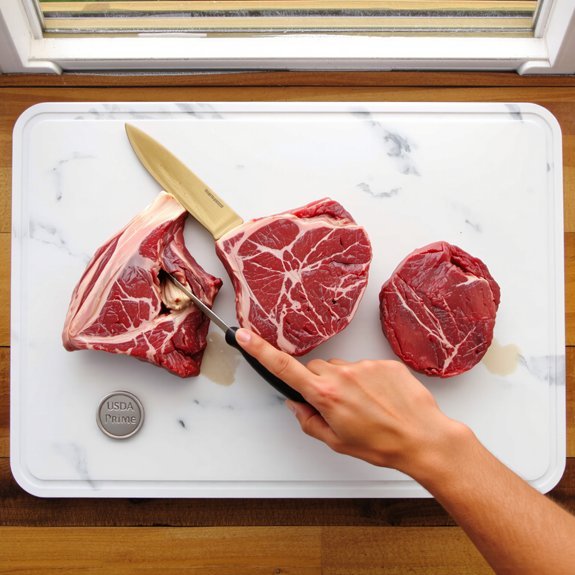
Okay, let’s get picky. You’ll start by eyeballing the rib section, feeling the marbling under your fingers, because cut selection matters—don’t pick a sad-looking slab. I’ll tell you straight: better marbling equals juicier bites, richer aroma when it hits the pan, and that glorious crust you’ll brag about. Know the grade differences, USDA Prime pushes flavor, Choice is solid and wallet-friendly, Select you’ll politely decline at dinner. You’ll imagine the sizzle, the butter pooling, the rosemary scent—sales pitch? Nope, sensory homework. Trim minimal fat, leave the cap for flavor, tie if it flops. You’ll shop with purpose, not panic, ask the butcher one confident question, and walk out like you own Sunday dinner.
Understanding Bone-In Vs Boneless Roasts

One clear choice you’ll face is whether to keep the bones — and yes, those ribs change everything. I’ll tell you straight: bone in benefits aren’t just bragging rights. The bones add flavor, they steady the roast on the rack, and they make a prettier, more dramatic carve. You’ll hear richer aromas as it roasts, see juicier slices, and feel proud handing it to guests. But I get it, I’ve slipped on a carving knife too. Boneless convenience wins when you want faster prep, easier carving, and neater portions. You’ll trim and tie, slide it onto the pan, and relax. So pick what fits your ego and your kitchen skills—either way, you’re about to eat very well.
Calculating Portion Sizes and Cooking Time

Think of servings like a shopping list for happiness: plan on about 10–12 ounces of cooked prime rib per person if you want generous portions, 6–8 ounces if you’re pairing it with hearty sides and frugal guests. You’ll do quick portion calculations, then factor cooking times by weight and desired doneness. I’ll walk you through it like a friendly drill sergeant.
- Weigh the roast, subtract ~20% for bone and shrinkage.
- Divide edible ounces by desired portion size.
- Estimate oven time: about 15–20 minutes per pound for medium-rare after sear/low-heat phases.
- Use a probe thermometer, rest 20–30 minutes, slice against the grain, serve steaming.
Trimming and Tying the Roast
Grab a sharp knife and a length of butcher’s twine—this is where the magic (and the mild swearing) starts. You trim silverskin and excess fat, feel the meat under your fingertips, hear the scrape of the blade, and breathe a tiny sigh of victory. Use simple trimming techniques: pare fat to about 1/4 inch, remove funky bits, leave the cap if you want juiciness. Then tie. I loop twine every inch or so, snug but not strangling, tuck loose ends, and make a neat butcher’s knot. Tying methods matter: single loop for stability, figure-eight for shape, trussing for even roast. It’s hands-on, a little theatrical, and yes, oddly satisfying—your roast now looks like you mean business.
Seasoning and Marinades for Maximum Flavor
You’re about to build flavor like a pro, starting with a simple salt-and-pepper crust that snaps and stains the air with toasty, savory perfume as it sears. Then we’ll smear on an herb-garlic rub—bright parsley, thyme, minced garlic, a splash of olive oil—that melts into the meat and gives each slice a fragrant, garlicky hug. Trust me, it’s bold, easy, and a little showy, but that’s the point: big taste, no drama.
Salt-And-Pepper Crust
Salt-and-pepper crust is the short, brilliant trick that turns a good roast into something people whisper about—trust me, I learned this the hard way with a sad, rubbery rib that tasted like regret. You’ll start by thinking about salt selection and why coarse salt sticks and seasons differently than fine; grab kosher or flaky sea salt, it gives texture and bite. Then press freshly ground black pepper into the meat, really massage it, watch the crust formation happen as proteins meet heat. Follow this quick checklist:
- Pat meat dry, room temperature.
- Generously salt, let sit 45–60 minutes.
- Press pepper into surface, don’t be shy.
- Roast hot, finish at lower temp, rest well.
Herb-Garlic Rub
One good rub can make a prime rib sing, and I’m talking herbs and garlic that hit like a chorus line—bright, savory, and impossible to ignore. I want you to pick herb selection like it’s a playlist: rosemary for punch, thyme for depth, parsley to freshen the aftertaste. Smash garlic, choose from garlic varieties —soft-roasted for sweetness, raw for bite—then mix with coarse salt, cracked pepper, olive oil, maybe a squeeze of lemon. Rub every crevice, press hard, don’t be shy, you’re massaging flavor in. Let it rest, fridge overnight if you can. When you roast, aromas will rise, the crust will sing, and you’ll wink because yes, you did all that.
High-Heat Searing Techniques
You’ll want to pat the roast bone-dry, no dampness left to steam your crust away, because a dry surface gives you that snap. I preheat the pan or oven spot until it’s screaming hot, you should see heat shimmer and a faint scent of oil just before it smokes. Then we hit every side, flip with confidence, and listen for that loud, caramelized sizzle that says you nailed the sear.
Dry the Surface
Think of the crust as the coat of armor for your prime rib — the part that snaps, sizzles, and makes people stop mid-bite. You’ll want to remove surface moisture before searing, I promise it pays off. Pat the roast dry with paper towels, press firmly, keep at it until no damp spots remain. Use drying techniques like air-dry in the fridge for a few hours, towel patting, gentle blotting with a clean cloth, or a quick saline brine that you dry off completely.
- Pat thoroughly.
- Air-dry uncovered.
- Don’t crowd the pan.
- Salt early, then dry.
This creates a brown, crackly crust, not a sad, steamed mess. You’ll thank me when everyone goes silent.
Preheat Extremely Hot
You’ve dried that roast until the skin snaps under your fingers, so now we crank the heat and make the crust happen. I tell you, you don’t mess around here: preheat oven to an ideal temperature that’ll torch the exterior without overcooking the middle later. I set mine high, wait until the gauge sings, and watch the light go steady — that’s your cue. Use a sturdy rack, a roomy pan, and gloves like a grown-up, because this is hot, glorious work. The room smells like promise, you hear the metal sigh as it warms, and your confidence rises. Quick, decisive action wins—get that oven screaming, then we’ll move fast, no hesitations.
Sear All Sides
Grab that roast like you mean it, then slap it onto a screaming-hot surface and let the magic begin. You’ll hear that sizzling technique sing, and you’ll smile — I do. You’re building flavor fast, sealing juices, creating a brown crust that snaps when you slice.
- Heat pan or grill until it smokes lightly, oil it, don’t crowd the meat.
- Press each face to the heat, count to 45–60 seconds, flip with confidence.
- Use tongs, not forks, keep your hands back, watch for flare-ups.
- Finish edges upright, hit fat cap last, rest the roast before carving.
I’ll give you searing tips: watch color, trust smell, don’t overcook, and own the process.
Low-and-Slow Roasting Method
If you want a prime rib that’s tender all the way through and cooks to a perfect rosy edge, low-and-slow roasting is your secret weapon, and yes, it’s worth the patience—trust me. You’ll set a low temperature, slide the rib in, and let time do the heavy lifting. The gentle heat breaks down collagen, keeps juices where they belong, and rewards you with a butter-soft bite. I pat the roast dry, season boldly, then pop it fat-side up so flavors baste as it goes. Expect long, quiet hours, fragrant steam, the kitchen smelling like success. You’ll resist peeking, I know, but that restraint equals better moisture retention and a uniformly pink center. Slice slowly, savor loudly.
Using a Thermometer for Perfect Doneness
One tool will save your roast more reliably than prayer or Pinterest tips: a good instant-read thermometer, and I’ll tell you how to wield it like a pro. You’ll poke the thickest part, avoid bone, and watch for temperature accuracy — that tiny difference decides everything. I’m blunt: don’t guess.
A good instant‑read thermometer will save your roast — probe the thickest part, avoid bone, and stop guessing.
- Calibrate first, ice-water or boiling check, so readings don’t lie.
- Probe depth matters, mark the spot, steady hand, quick read.
- Know doneness levels, aim for targets, and trust the numbers over feel.
- Sweep multiple spots, record temps, adjust oven time as needed.
You’ll hear a sizzle, smell roasted fat, and relax when numbers match intent, because precision beats luck every time.
Resting and Carving Like a Pro
You’ve got the thermometer out, the roast hit your target temp, and yes, you can finally stop hovering like a nervous hawk — now comes the part that makes or breaks dinner: resting and carving. Sit the prime rib on a carving board, tent loosely with foil, and let those juices redistribute — that’s basic resting techniques, and yes, patience is a flavor. I pace, I sip, I stare at the couch like it’s doing work. After 20–30 minutes, reveal the glorious crust. Use a sharp slicing knife, steady your hand, cut against the grain, and aim for even slices. My carving methods are simple: thin for tenderness, thicker for show, keep a pan ready for jus. Don’t rush, savor the reveal.
Serving Suggestions and Leftover Ideas
Lots of ways to plate prime rib so it looks like you meant to be fancy. You slice across the grain, watch the juices bead, and drape meat over roasted veggies like it’s a tuxedo. Serve it with horseradish cream, au jus, or a chunky chimichurri, and don’t be shy about browned butter asparagus — it sings.
- Thin slices, warm plate, bright chimichurri — instant elegance.
- Thick cuts, jus on the side, roasted potatoes — stick-to-your-ribs comfort.
- Leftover sandwiches: shred cold meat, add mustard, pickles, toasted ciabatta.
- Prime rib salads: mixed greens, shaved beef, blue cheese, vinaigrette.
You’ll have dinner applause, and tomorrow’s lunch will taste like a happy accident.
Conclusion
You’ve got this—season well, roast steady, and watch the thermometer like a hawk. I once under-salted, learned quickly, then nailed a perfect 130°F medium-rare that made my neighbor applaud mid-bite (yes, really). Rest it, slice against the grain, smell that buttery crust, taste that juicy pink center. Serve with horseradish or pretend you planned the sides. Leftovers? Sandwiches that’ll make you forgive past mistakes. Cook, enjoy, repeat.